Indonesia Formwork Market Summary
The indonesia formwork market was estimated at USD 268 Million in 2025 and is projected to reach USD 352 Million by 2032, growing at a CAGR of 5.0% from 2026 to 2032.
Indonesia Formwork Market Year-wise Growth Rate and Key Drivers
This graph highlights how the Indonesia Formwork Market has steadily grown over the years, supported by major growth factors.
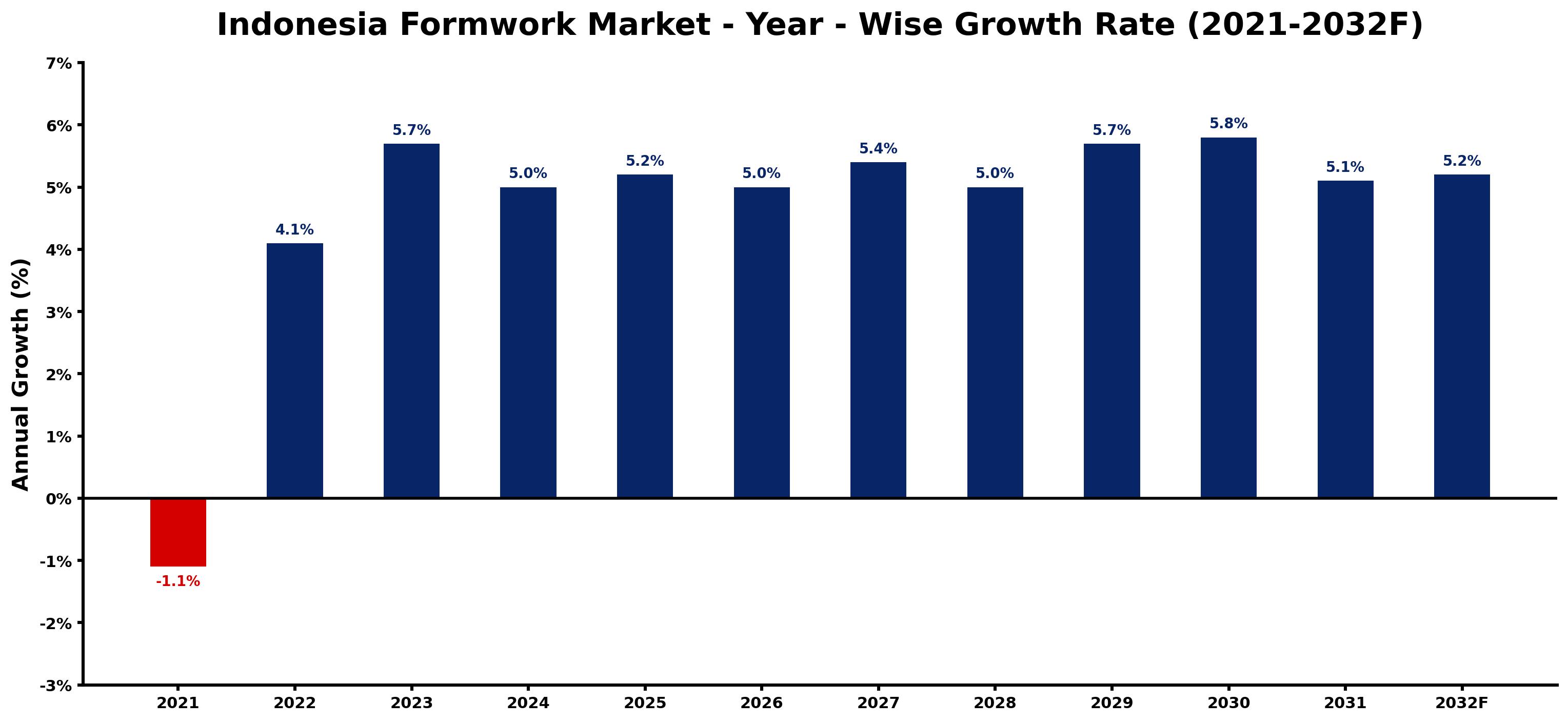
The table below presents the year wise growth rates along with the key drivers influencing the market
| Year | Growth Rate | Major Drivers |
| 2021 | -1.1% | Increased construction delays due to pandemicrelated restrictions hindered project completions, dampening formwork demand. |
| 2022 | 4.1% | Investment in infrastructure development accelerated, enhancing urban connectivity and commercial spaces. |
| 2023 | 5.7% | Local manufacturers increased formwork production, reducing dependency on imported materials significantly. |
| 2024 | 5.0% | Urbanization trends indicated a shift towards high-rise buildings, boosting formwork requirements. |
| 2025 | 5.2% | Sustainable building practices gained popularity, leading to innovative formwork solutions in the market. |
| 2026 | 5.0% | Major construction companies prioritized efficiency, investing in advanced formwork technologies and systems. |
| 2027 | 5.4% | The growing population necessitated affordable housing projects, increasing demand for versatile formwork. |
| 2028 | 5.0% | Government focus on smart cities led to enhanced funding for construction tech and formwork. |
| 2029 | 5.7% | Partnerships between local firms and global players strengthened, introducing cutting-edge formwork methods. |
| 2030 | 5.8% | Technological advancements in materials improved durability, gaining interest from eco-conscious developers. |
| 2031 | 5.1% | Training programs for skilled labor in formwork application boosted workforce proficiency and reliability. |
| 2032 | 5.2% | Sustainability regulations emerged, pushing the market towards eco-friendly formwork options and practices. |
Note - Market size estimations and growth projections presented in this report are based on 6Wresearch's advanced forecasting approach, validated with industry datasets as of June 2026.
Indonesia Formwork Market Synopsis
The Indonesia Formwork Market is projected to reach 5.0% and witness significant growth during the forecast period (2026-2032). This expansion is driven primarily by the escalating demand for high-quality infrastructure projects across the nation, which encompasses residential and commercial buildings, bridges, highways, and tunnels. The Indonesian government plays a pivotal role in this growth trajectory, having committed substantial resources towards infrastructure development initiatives. This financial backing has created a fertile ground for formwork companies to provide essential solutions tailored to meet the needs of these expansive projects.
Indonesia Formwork Market Growth Drivers
Key factors propelling the Indonesia Formwork Market include:
- Government Infrastructure Investment: The Indonesian government has prioritized infrastructure as a cornerstone of its national development strategy, allocating significant funds for construction projects to stimulate economic growth.
- Rising Urbanization: Rapid urbanization trends in Indonesia necessitate the construction of new residential and commercial facilities, thereby increasing the demand for effective formwork solutions.
- Technological Advancements: Continuous innovation in construction materials and methods enhances the efficiency of formwork systems, which is essential for meeting the growing demand in the market.
- Foreign Investment: The interest from international investors in Indonesian infrastructure projects is expected to further invigorate the formwork market, creating opportunities for local businesses to grow.
- Sustainability Trends: As sustainability becomes a focus in construction, the shift towards eco-friendly formwork solutions aligns with ongoing governmental goals, promoting an increase in demand.
Indonesia Formwork Market Trends and Opportunities
Emerging trends within the Indonesia Formwork Market reflect a forward-looking attitude toward modernization and efficiency. Notable trends include:
- Pre-fabricated Formwork Systems: There is a growing preference for pre-fabricated formwork solutions that offer speed and cost-effectiveness through reduced on-site labor requirements.
- Digital Construction Techniques: The adoption of Building Information Modeling (BIM) and other digital tools is transforming traditional construction practices, enhancing planning and execution in formwork.
- Hybrid Formwork Systems: The development of hybrid systems that combine different materials, such as steel and wood, is gaining traction, optimizing performance while minimizing waste.
- Customization and Flexibility: There is an increasing demand for customized formwork solutions that can cater to unique project requirements, enhancing project efficiency.
- Training and Skill Development: Investment in training programs for construction workers in modern formwork techniques is also anticipated, as skilled labor is essential for the successful implementation of advanced systems.
Indonesia Formwork Market Challenges and Restraints
Despite the positive outlook, the Indonesia Formwork Market faces several challenges that could impede its growth:
- Supply Chain Disruptions: Global supply chain challenges can lead to delays in the availability of essential materials and components required for formwork.
- Market Competition: Intense competition among local and international companies can lead to price wars, affecting profitability.
- Regulatory Hurdles: Navigating through various regulations and securing necessary approvals can complicate project timelines and increase operational costs.
- Labor Shortages: A shortage of skilled labor can slow down project execution, impacting the overall timeline for infrastructure development.
- Environmental Concerns: Increased scrutiny on environmental impacts could lead to stricter regulations regarding the types of materials and methods used in construction.
Indonesia Formwork Market Government Investment and Initiatives
The Indonesian government is actively pursuing policies that support infrastructure development, significantly affecting the formwork sector. Key investments include:
- Infrastructure Development Plans: Comprehensive plans aimed at expanding transportation and urban infrastructure drive demand for formwork solutions.
- Public-Private Partnerships (PPPs): The government encourages private sector involvement in infrastructure projects, thereby boosting investment potential and enabling greater efficiency.
- Funding Mechanisms: Various funding avenues, including loans and grants, have been established for infrastructure projects, ensuring the availability of financial resources for formwork applications.
- Skill Development Programs: The government has initiated programs to enhance the skills of the construction workforce, directly addressing labor shortages in the formwork domain.
- Sustainability Initiatives: Policies promoting sustainable construction practices align with the increasing demand for eco-friendly formwork solutions.
Indonesia Formwork Market Latest Developments (May 2025 - June 2026)
The period from May 2025 to June 2026 has seen significant shifts within the Indonesia Formwork Market. Recent developments include:
- Integration of Smart Technologies: The introduction of smart formwork technologies is revolutionizing project management and execution, allowing for real-time monitoring of construction progress.
- Collaborative Industry Efforts: Various stakeholders in the construction sector are increasingly collaborating to tackle common challenges, sharing best practices and innovative solutions.
- Increased Focus on Safety: Enhanced safety protocols are being implemented in response to rising safety concerns, positively impacting formwork system designs and usage.
- Regulatory Changes: New regulations aimed at improving construction standards and sustainability are being enacted, which could lead to shifts in preferred formwork materials and methods.
- Market Consolidation: The period has also witnessed some consolidation among formwork companies, enabling enhanced competitiveness and resource allocation.
Indonesia Formwork Market - Key Attractiveness of the Report
- 10 Years of Market Numbers
- Historical Data Starting from 2022 to 2025
- Base Year: 2025
- Forecast Data until 2032
- Key Performance Indicators Impacting the Market
- Major Upcoming Developments and Projects
Key Highlights of the Report:
- Indonesia Formwork Market Outlook
- Market Size of Indonesia Formwork Market, 2025
- Forecast of Indonesia Formwork Market, 2032F
- Historical Data and Forecast of Indonesia Formwork Revenues & Volume for the Period 2022-2032F
- Indonesia Formwork Market Trend Evolution
- Indonesia Formwork Market Drivers and Challenges
- Indonesia Formwork Price Trends
- Indonesia Formwork Porter's Five Forces
- Indonesia Formwork Industry Life Cycle
- Historical Data and Forecast of Indonesia Formwork Market Revenues & Volume By Product Type for the Period 2022-2032F
- Historical Data and Forecast of Indonesia Formwork Market Revenues & Volume By Traditional timber formwork for the Period 2022-2032F
- Historical Data and Forecast of Indonesia Formwork Market Revenues & Volume By Engineered Formwork System for the Period 2022-2032F
- Historical Data and Forecast of Indonesia Formwork Market Revenues & Volume By Re-usable plastic formwork for the Period 2022-2032F
- Historical Data and Forecast of Indonesia Formwork Market Revenues & Volume By Others for the Period 2022-2032F
- Historical Data and Forecast of Indonesia Formwork Market Revenues & Volume By Applications for the Period 2022-2032F
- Historical Data and Forecast of Indonesia Formwork Market Revenues & Volume By Buildings for the Period 2022-2032F
- Historical Data and Forecast of Indonesia Formwork Market Revenues & Volume By Transportation for the Period 2022-2032F
- Historical Data and Forecast of Indonesia Formwork Market Revenues & Volume By Industrial Facilities for the Period 2022-2032F
- Indonesia Formwork Import Export Trade Statistics
- Market Opportunity Assessment By Product Type
- Market Opportunity Assessment By Applications
- Indonesia Formwork Top Companies Market Share
- Indonesia Formwork Competitive Benchmarking By Technical and Operational Parameters
- Indonesia Formwork Company Profiles
- Indonesia Formwork Key Strategic Recommendations






































