Indonesia Fragrance Market Growth Rate Analysis (2025 - 2031)
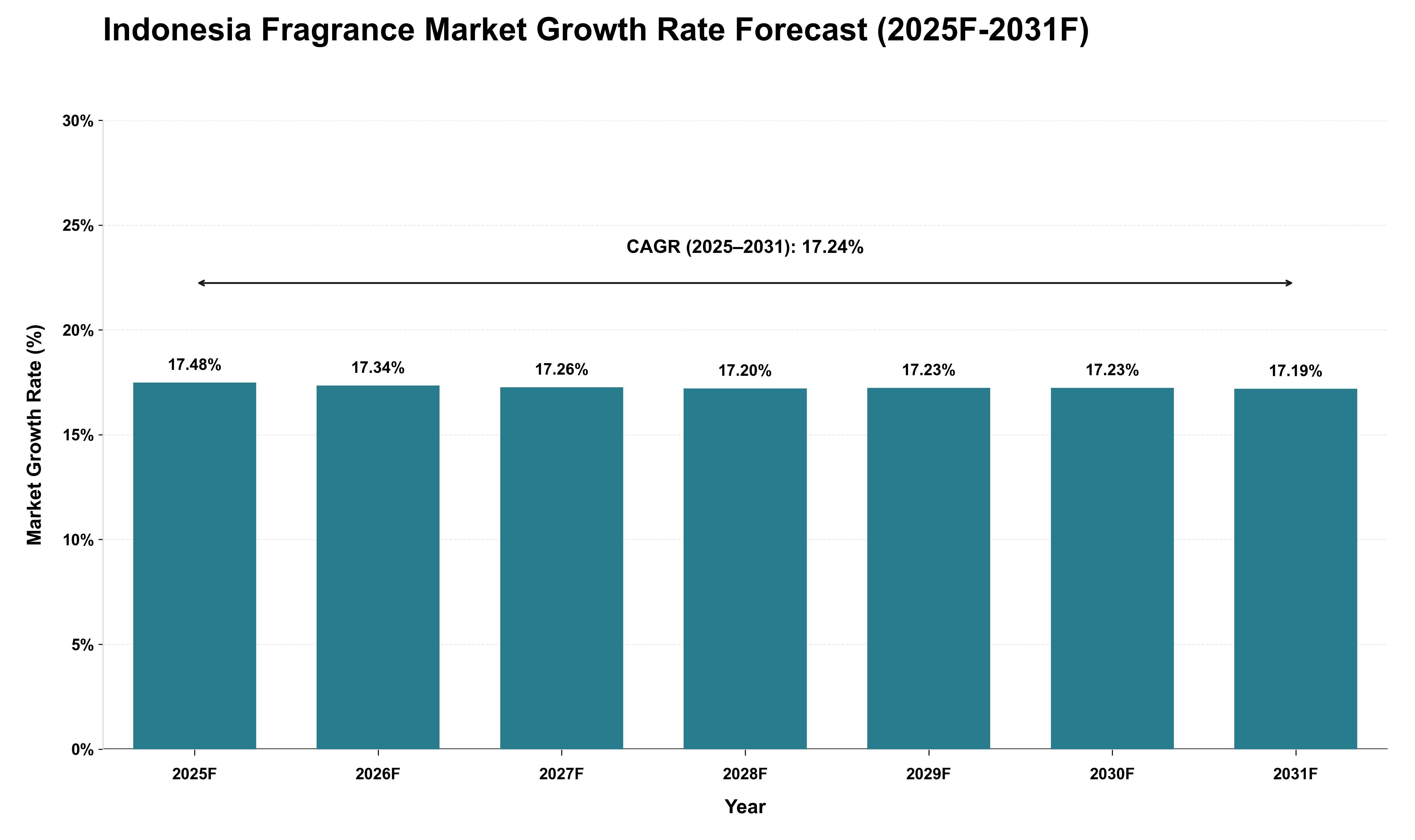
The Indonesia fragrance market is poised to experience robust growth driven by evolving consumer preferences and increasing disposable incomes, which will significantly influence purchasing behaviors from 2025 to 2031. The forecasted compound annual growth rate (CAGR) of 17.24% reflects a strong demand trajectory, supported by a projected annual growth rate that remains consistently above 17% throughout the period. This sustained expansion can be attributed to macroeconomic factors such as urbanization, rising middle-class demographics, and heightened exposure to global beauty trends. Additionally, import dependencies on raw materials for fragrance production may create fluctuations in pricing and availability, impacting market dynamics. As the economy continues to recover from global disruptions, cyclical trends in consumer spending are expected to favor premium and niche fragrance segments, further enhancing market resilience and driving innovation within the sector.
Key Highlights of the Report:
- Indonesia Fragrance Market Outlook
- Market Size of Indonesia Fragrance Market, 2025
- Forecast of Indonesia Fragrance Market, 2032
- Historical Data and Forecast of Indonesia Fragrance Revenues & Volume for the Period 2022-2032F
- Indonesia Fragrance Market Trend Evolution
- Indonesia Fragrance Market Drivers and Challenges
- Indonesia Fragrance Price Trends
- Indonesia Fragrance Porter's Five Forces
- Indonesia Fragrance Industry Life Cycle
- Historical Data and Forecast of Indonesia Fragrance Market Revenues & Volume By Product Type for the Period 2022-2032F
- Historical Data and Forecast of Indonesia Fragrance Market Revenues & Volume By Deodorants for the Period 2022-2032F
- Historical Data and Forecast of Indonesia Fragrance Market Revenues & Volume By Perfumes for the Period 2022-2032F
- Historical Data and Forecast of Indonesia Fragrance Market Revenues & Volume By Others for the Period 2022-2032F
- Historical Data and Forecast of Indonesia Fragrance Market Revenues & Volume By Application for the Period 2022-2032F
- Historical Data and Forecast of Indonesia Fragrance Market Revenues & Volume By Personal Care for the Period 2022-2032F
- Historical Data and Forecast of Indonesia Fragrance Market Revenues & Volume By Household Care for the Period 2022-2032F
- Historical Data and Forecast of Indonesia Fragrance Market Revenues & Volume By Others for the Period 2022-2032F
- Historical Data and Forecast of Indonesia Fragrance Market Revenues & Volume By Distribution Channel for the Period 2022-2032F
- Historical Data and Forecast of Indonesia Fragrance Market Revenues & Volume By Offline for the Period 2022-2032F
- Historical Data and Forecast of Indonesia Fragrance Market Revenues & Volume By Online for the Period 2022-2032F
- Indonesia Fragrance Import Export Trade Statistics
- Market Opportunity Assessment By Product Type
- Market Opportunity Assessment By Application
- Market Opportunity Assessment By Distribution Channel
- Indonesia Fragrance Top Companies Market Share
- Indonesia Fragrance Competitive Benchmarking By Technical and Operational Parameters
- Indonesia Fragrance Company Profiles
- Indonesia Fragrance Key Strategic Recommendations






































