Indonesia Glass Fiber Reinforced Concrete Market: Import Trend Analysis
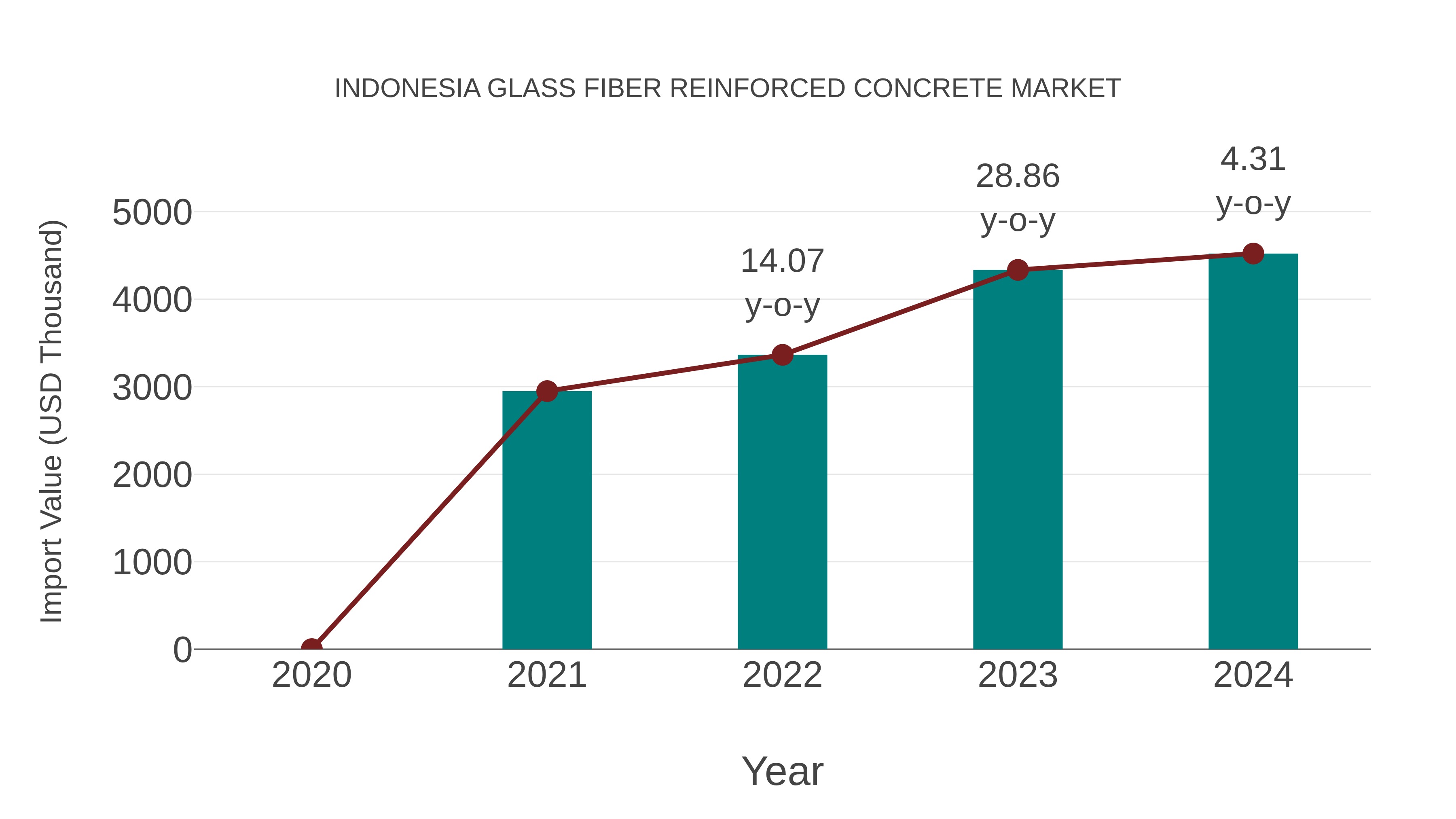
Indonesia`s glass fiber reinforced concrete market witnessed a 4.31% import growth rate from 2023 to 2024, with a compound annual growth rate (CAGR) of 15.31% from 2020 to 2024. This import momentum can be attributed to the increasing infrastructure projects and construction activities in the country, driving demand for these materials despite market fluctuations.
Indonesia Glass Fiber Reinforced Concrete Market Synopsis
Glass Fiber Reinforced Concrete Market in Indonesia is estimated to rise during theperiod. It is a type of concrete that has been reinforced with glass fibers to increase its strength and durability. This material is widely used in the constructiondue to its various advantages such as high tensile strength lightweight low cost and excellent fire resistance properties. In Indonesia Glass Fiber Reinforced Concrete has become an increasingly popular building material among architects and builders due to its ability to withstand extreme weather conditions like hurricanes and earthquakes. Furthermore GFRC is also resistant to corrosion and chemical damage which makes it a perfect choice for areas close to the sea or industrial zones.
Key Factors Driving the Market
The major driver for theof the Indonesia Glass Fiber Reinforced Concrete market are increasing demand from both public infrastructure projects as well as private residential projects across Indonesia. Additionally government initiatives towards promoting these materials are aiding their adoption rate throughout the country. The improvement in living standards along with rising disposable incomes of people in urban centers have led to increased spending on housing construction activities which has further propelled this market?sover recent years. Moreover advances made in production technologies are helping reduce costs associated with manufacturing GFRC products making them more accessible than ever before.
Challenges Facing the Market
Despite these drivers however there still exist several challenges that impede this market`s expansion within Indonesia such as difficulty in obtaining raw materials needed for creating GFRC due largely to expensive import taxes placed on foreign suppliers by local governments; additionally most manufacturers tend not be very eco-friendly thus contributing heavily towards environmental pollution which could create difficulties for long-term sustainability of this sector; furthermore lack of proper knowledge concerning usage techniques amongst domestic workers can lead too mistakes being made during installation processes leading up additional costs down line when repairs need done later on; finally despite efforts made by authorities financial support given out remains inadequate especially at lower levels meaning small businesses struggle remain competitive within the marketplace.
Key Highlights of the Report:
- Indonesia Glass Fiber Reinforced Concrete Market Outlook
- Market Size of Indonesia Glass Fiber Reinforced Concrete Market, 2023
- Forecast of Indonesia Glass Fiber Reinforced Concrete Market, 2030
- Historical Data and Forecast of Indonesia Glass Fiber Reinforced Concrete Revenues & Volume for the Period 2020-2030
- Indonesia Glass Fiber Reinforced Concrete Market Trend Evolution
- Indonesia Glass Fiber Reinforced Concrete Market Drivers and Challenges
- Indonesia Glass Fiber Reinforced Concrete Price Trends
- Indonesia Glass Fiber Reinforced Concrete Porter's Five Forces
- Indonesia Glass Fiber Reinforced Concrete Industry Life Cycle
- Historical Data and Forecast of Indonesia Glass Fiber Reinforced Concrete Market Revenues & Volume By Process for the Period 2020-2030
- Historical Data and Forecast of Indonesia Glass Fiber Reinforced Concrete Market Revenues & Volume By Spray for the Period 2020-2030
- Historical Data and Forecast of Indonesia Glass Fiber Reinforced Concrete Market Revenues & Volume By Premix for the Period 2020-2030
- Historical Data and Forecast of Indonesia Glass Fiber Reinforced Concrete Market Revenues & Volume By Hybrid for the Period 2020-2030
- Historical Data and Forecast of Indonesia Glass Fiber Reinforced Concrete Market Revenues & Volume By Applications for the Period 2020-2030
- Historical Data and Forecast of Indonesia Glass Fiber Reinforced Concrete Market Revenues & Volume By Architecture for the Period 2020-2030
- Historical Data and Forecast of Indonesia Glass Fiber Reinforced Concrete Market Revenues & Volume By Civil Construction for the Period 2020-2030
- Historical Data and Forecast of Indonesia Glass Fiber Reinforced Concrete Market Revenues & Volume By Engineering for the Period 2020-2030
- Historical Data and Forecast of Indonesia Glass Fiber Reinforced Concrete Market Revenues & Volume By Commercial for the Period 2020-2030
- Historical Data and Forecast of Indonesia Glass Fiber Reinforced Concrete Market Revenues & Volume By Residential for the Period 2020-2030
- Historical Data and Forecast of Indonesia Glass Fiber Reinforced Concrete Market Revenues & Volume By Building for the Period 2020-2030
- Historical Data and Forecast of Indonesia Glass Fiber Reinforced Concrete Market Revenues & Volume By Defense for the Period 2020-2030
- Historical Data and Forecast of Indonesia Glass Fiber Reinforced Concrete Market Revenues & Volume By Others for the Period 2020-2030
- Indonesia Glass Fiber Reinforced Concrete Import Export Trade Statistics
- Market Opportunity Assessment By Process
- Market Opportunity Assessment By Applications
- Indonesia Glass Fiber Reinforced Concrete Top Companies Market Share
- Indonesia Glass Fiber Reinforced Concrete Competitive Benchmarking By Technical and Operational Parameters
- Indonesia Glass Fiber Reinforced Concrete Company Profiles
- Indonesia Glass Fiber Reinforced Concrete Key Strategic Recommendations






































