Indonesia HVAC System Market Size Growth Rate
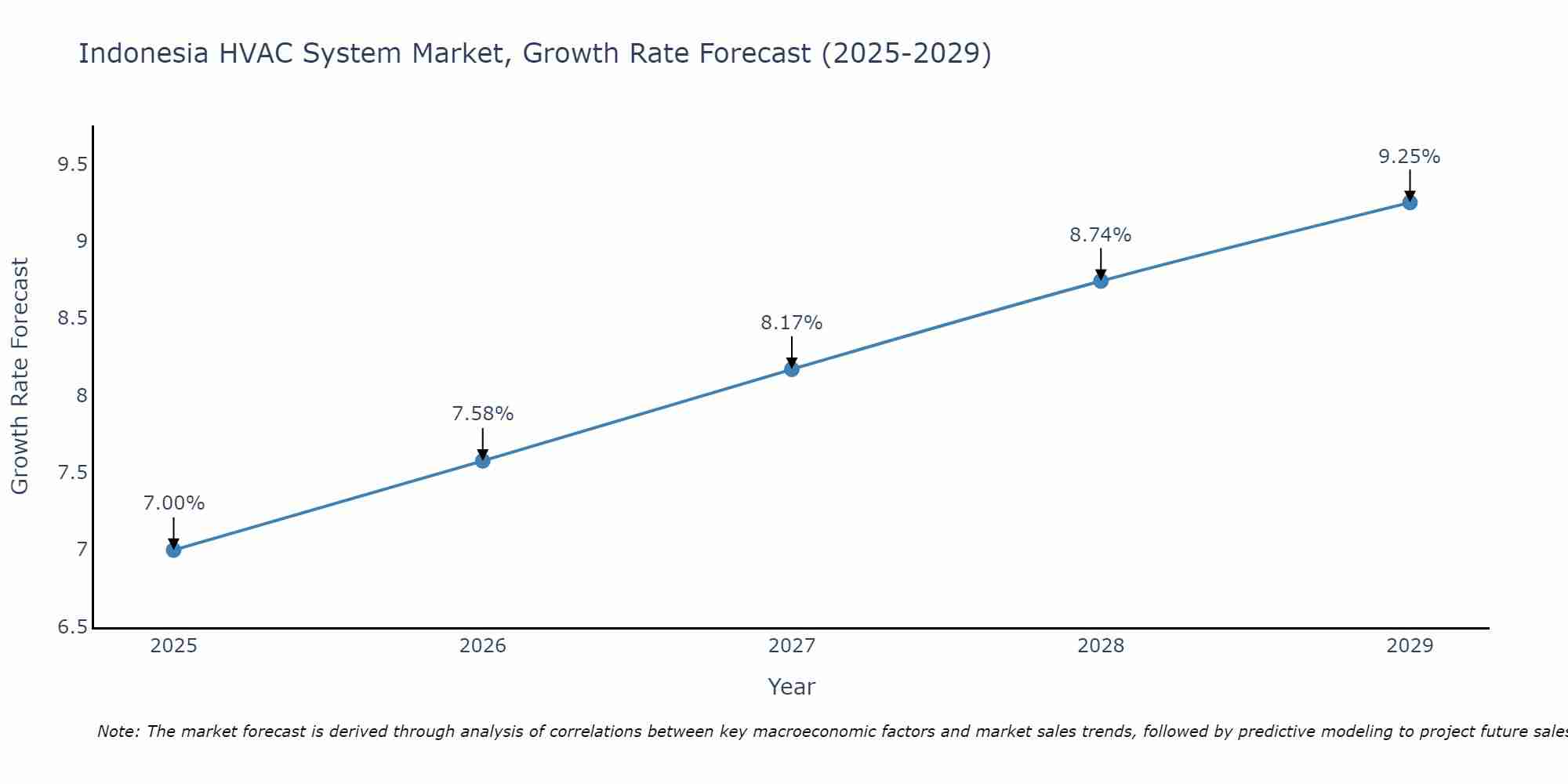
The Indonesia HVAC System Market is poised for steady growth rate improvements from 2025 to 2029. From 7.00% in 2025, the growth rate steadily ascends to 9.25% in 2029.
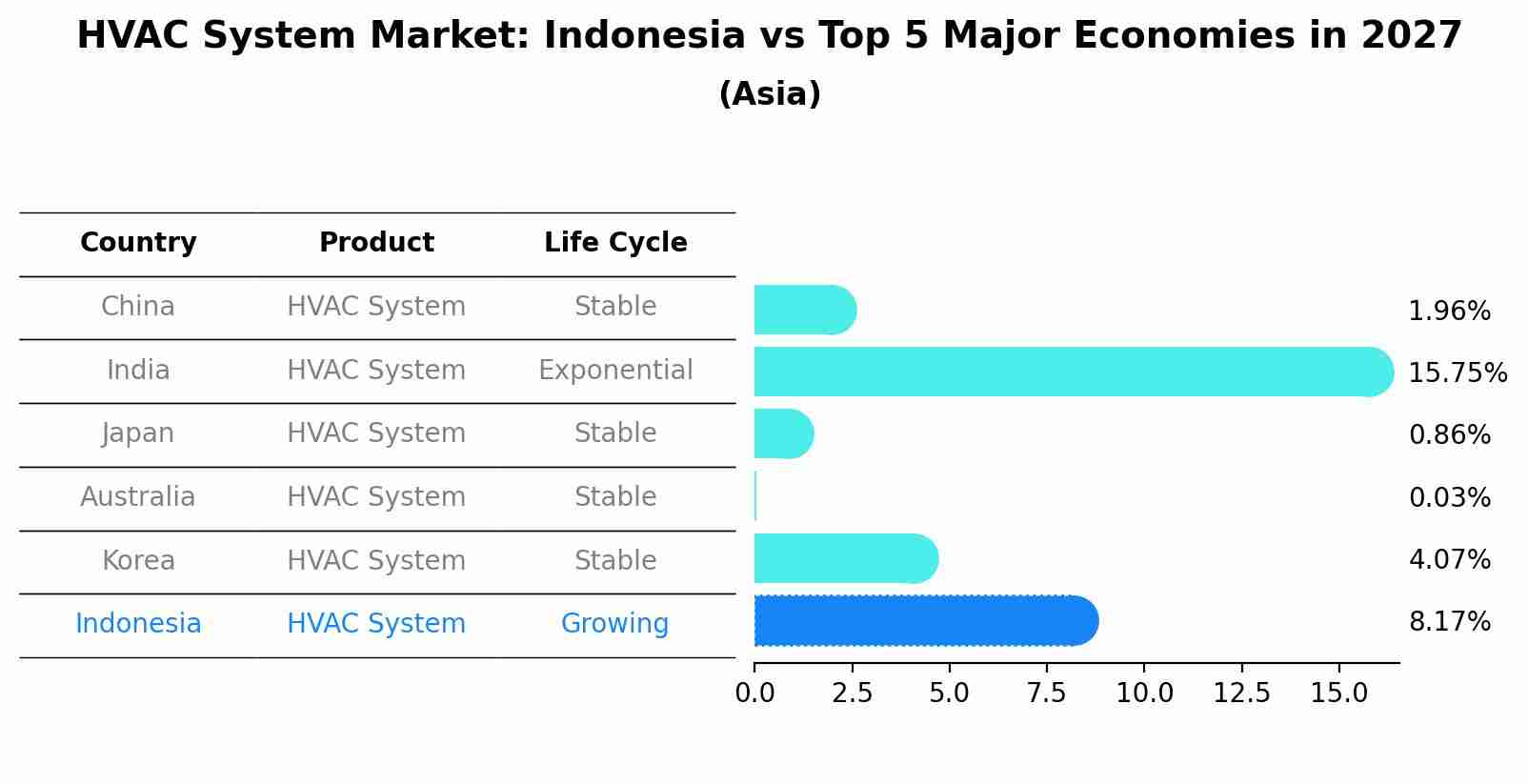
HVAC System Market: Indonesia vs Top 5 Major Economies in 2027 (Asia)
By 2027, Indonesia's HVAC System market is forecasted to achieve a growing growth rate of 8.17%, with China leading the Asia region, followed by India, Japan, Australia and South Korea.
Indonesia Hvac System Market Synopsis
The Indonesia HVAC system market is expected to grow at a CAGR of 5.8% during the forecast period 20202026. The growth of the market is attributed to increasing awareness about energy efficiency and rising disposable income in the country. Additionally, growing investments from both public and private sector along with government support for infrastructure development are driving the demand for HVAC systems in Indonesia.
In terms of product type, split AC segment accounted for major share in 2019 owing to its energy efficient features along with better cooling capacity as compared to other variants available in market such as window/wall ACs and VRF systems amongst others.. Geographically, Jakarta region held significant share followed by Bali & West Java region on account of presence various manufacturing facilities there. Furthermore, rising construction activities coupled with focus towards green buildings have made this area more attractive destination among international players operating in industry like Daikin Industries Ltd., Carrier Corporation etc
Key Highlights of the Report:
- Indonesia HVAC System Market Outlook
- Market Size of Indonesia HVAC System Market, 2019
- Forecast of Indonesia HVAC System Market, 2026
- Historical Data and Forecast of Indonesia HVAC System Revenues & Volume for the Period 2016 - 2026
- Indonesia HVAC System Market Trend Evolution
- Indonesia HVAC System Market Drivers and Challenges
- Indonesia HVAC System Price Trends
- Indonesia HVAC System Porter's Five Forces
- Indonesia HVAC System Industry Life Cycle
- Historical Data and Forecast of Indonesia HVAC System Market Revenues & Volume By Product Type for the Period 2016 - 2026
- Historical Data and Forecast of Indonesia HVAC System Market Revenues & Volume By Heating for the Period 2016 - 2026
- Historical Data and Forecast of Indonesia HVAC System Market Revenues & Volume By Cooling for the Period 2016 - 2026
- Historical Data and Forecast of Indonesia HVAC System Market Revenues & Volume By Ventilation for the Period 2016 - 2026
- Historical Data and Forecast of Indonesia HVAC System Market Revenues & Volume By End-User for the Period 2016 - 2026
- Historical Data and Forecast of Indonesia HVAC System Market Revenues & Volume By Residential for the Period 2016 - 2026
- Historical Data and Forecast of Indonesia HVAC System Market Revenues & Volume By Commercial for the Period 2016 - 2026
- Historical Data and Forecast of Indonesia HVAC System Market Revenues & Volume By Industrial for the Period 2016 - 2026
- Indonesia HVAC System Import Export Trade Statistics
- Market Opportunity Assessment By Product Type
- Market Opportunity Assessment By End-User
- Indonesia HVAC System Top Companies Market Share
- Indonesia HVAC System Competitive Benchmarking By Technical and Operational Parameters
- Indonesia HVAC System Company Profiles
- Indonesia HVAC System Key Strategic Recommendations






































