Indonesia Hydraulic Motors Market: Import Trend Analysis
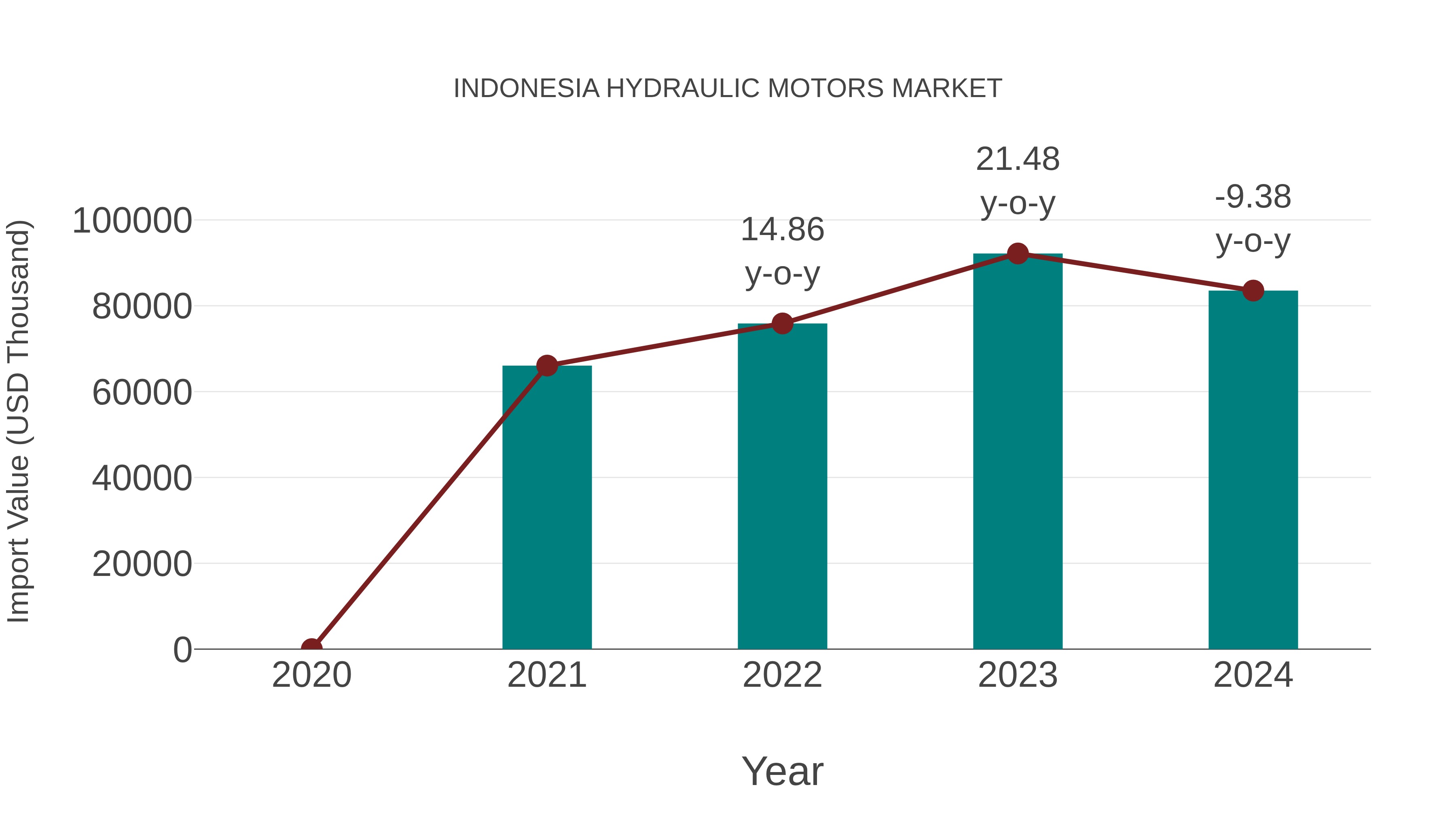
In the Indonesia hydraulic motors market, the import trend experienced a decline from 2023 to 2024, with a growth rate of -9.38%. However, the compound annual growth rate (CAGR) for the period 2020-2024 stood at a positive 8.14%. This decline in import momentum could be attributed to shifts in demand patterns or changes in trade policies affecting market stability.
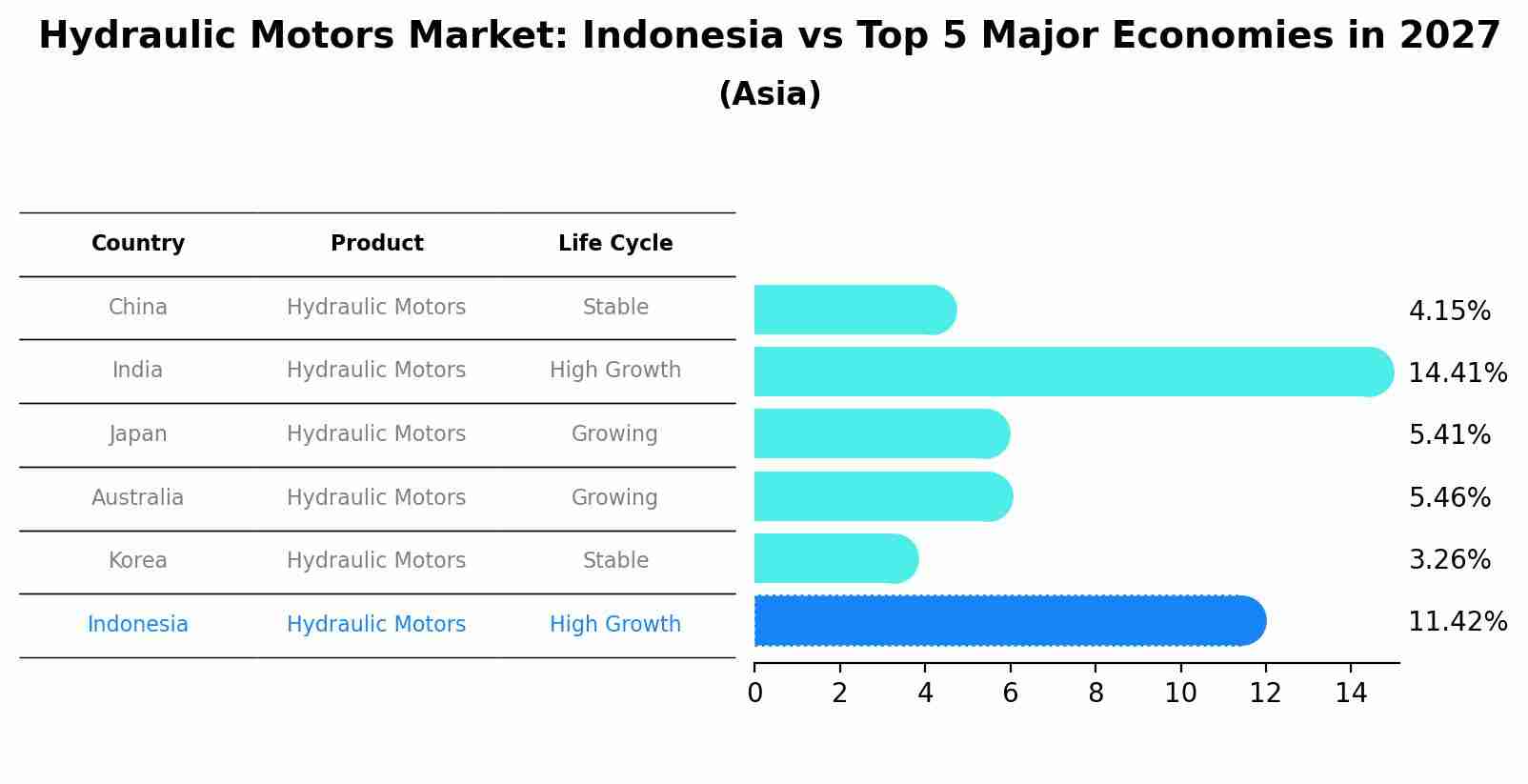
Hydraulic Motors Market: Indonesia vs Top 5 Major Economies in 2027 (Asia)
The Hydraulic Motors market in Indonesia is projected to grow at a high growth rate of 11.42% by 2027, within the Asia region led by China, along with other countries like India, Japan, Australia and South Korea, collectively shaping a dynamic and evolving market environment driven by innovation and increasing adoption of emerging technologies.
Indonesia Hydraulic Motors Market Synopsis
Indonesia hydraulic motors market is estimated to have a value of US$ 89.5 million in 2025, which is expected to increase at a compound annual growth rate (CAGR) of 4.3% over 2025-2031. The demand for hydraulic motors has been driven by the increased use in industrial machinery, such as motor graders, loaders and excavators used in construction and mining activities.
Drivers of the Market
The Indonesia hydraulic motors market is anticipated to be propelled by the industrial sector`s expansion, particularly in manufacturing, agriculture, and construction. Hydraulic motors are integral components of machinery and equipment used in these sectors, and as these industries grow, the demand for hydraulic motors is likely to increase. Additionally, the adoption of hydraulic systems in various applications due to their efficiency and power transmission capabilities may further drive market growth.
Challenges of the Market
The Indonesia hydraulic motors market is influenced by industries such as manufacturing, agriculture, and construction. Yet, managing energy efficiency and addressing maintenance complexities are potential challenges, particularly as the market demands more reliable and environmentally friendly motor solutions.
COVID-19 Impact on the Market
The Indonesia Hydraulic Motors market has experienced significant growth due to the expanding industrial sector and rising adoption of hydraulic systems in various applications. Hydraulic motors are widely used in machinery, agriculture, and marine industries for their high torque, efficiency, and reliability. The Covid-19 pandemic impacted the market as well, leading to a temporary slowdown in manufacturing activities and equipment demand. However, with the resumption of economic activities, the market is likely to recover and continue its growth trajectory.
Key Players in the Market
The Indonesia Hydraulic Motors market is driven by various industries such as manufacturing, agriculture, and construction. Key players might include Bosch Rexroth, Eaton, Parker Hannifin, and Danfoss Power Solutions.
Key Highlights of the Report:
- Indonesia Hydraulic Motors Market Outlook
- Market Size of Indonesia Hydraulic Motors Market, 2025
- Forecast of Indonesia Hydraulic Motors Market, 2032
- Historical Data and Forecast of Indonesia Hydraulic Motors Revenues & Volume for the Period 2022-2032F
- Indonesia Hydraulic Motors Market Trend Evolution
- Indonesia Hydraulic Motors Market Drivers and Challenges
- Indonesia Hydraulic Motors Price Trends
- Indonesia Hydraulic Motors Porter's Five Forces
- Indonesia Hydraulic Motors Industry Life Cycle
- Historical Data and Forecast of Indonesia Hydraulic Motors Market Revenues & Volume By Type for the Period 2022-2032F
- Historical Data and Forecast of Indonesia Hydraulic Motors Market Revenues & Volume By Vane Motor for the Period 2022-2032F
- Historical Data and Forecast of Indonesia Hydraulic Motors Market Revenues & Volume By Gear Motor for the Period 2022-2032F
- Historical Data and Forecast of Indonesia Hydraulic Motors Market Revenues & Volume By Piston Motor for the Period 2022-2032F
- Historical Data and Forecast of Indonesia Hydraulic Motors Market Revenues & Volume By Others for the Period 2022-2032F
- Historical Data and Forecast of Indonesia Hydraulic Motors Market Revenues & Volume By Application for the Period 2022-2032F
- Historical Data and Forecast of Indonesia Hydraulic Motors Market Revenues & Volume By Oil & Gas Industry for the Period 2022-2032F
- Historical Data and Forecast of Indonesia Hydraulic Motors Market Revenues & Volume By Marine/Shipyard for the Period 2022-2032F
- Historical Data and Forecast of Indonesia Hydraulic Motors Market Revenues & Volume By Processing Units for the Period 2022-2032F
- Historical Data and Forecast of Indonesia Hydraulic Motors Market Revenues & Volume By Bulk Material Handling for the Period 2022-2032F
- Historical Data and Forecast of Indonesia Hydraulic Motors Market Revenues & Volume By Others for the Period 2022-2032F
- Indonesia Hydraulic Motors Import Export Trade Statistics
- Market Opportunity Assessment By Type
- Market Opportunity Assessment By Application
- Indonesia Hydraulic Motors Top Companies Market Share
- Indonesia Hydraulic Motors Competitive Benchmarking By Technical and Operational Parameters
- Indonesia Hydraulic Motors Company Profiles
- Indonesia Hydraulic Motors Key Strategic Recommendations






































