Indonesia Inactive Dried Yeast Market: Import Trend Analysis
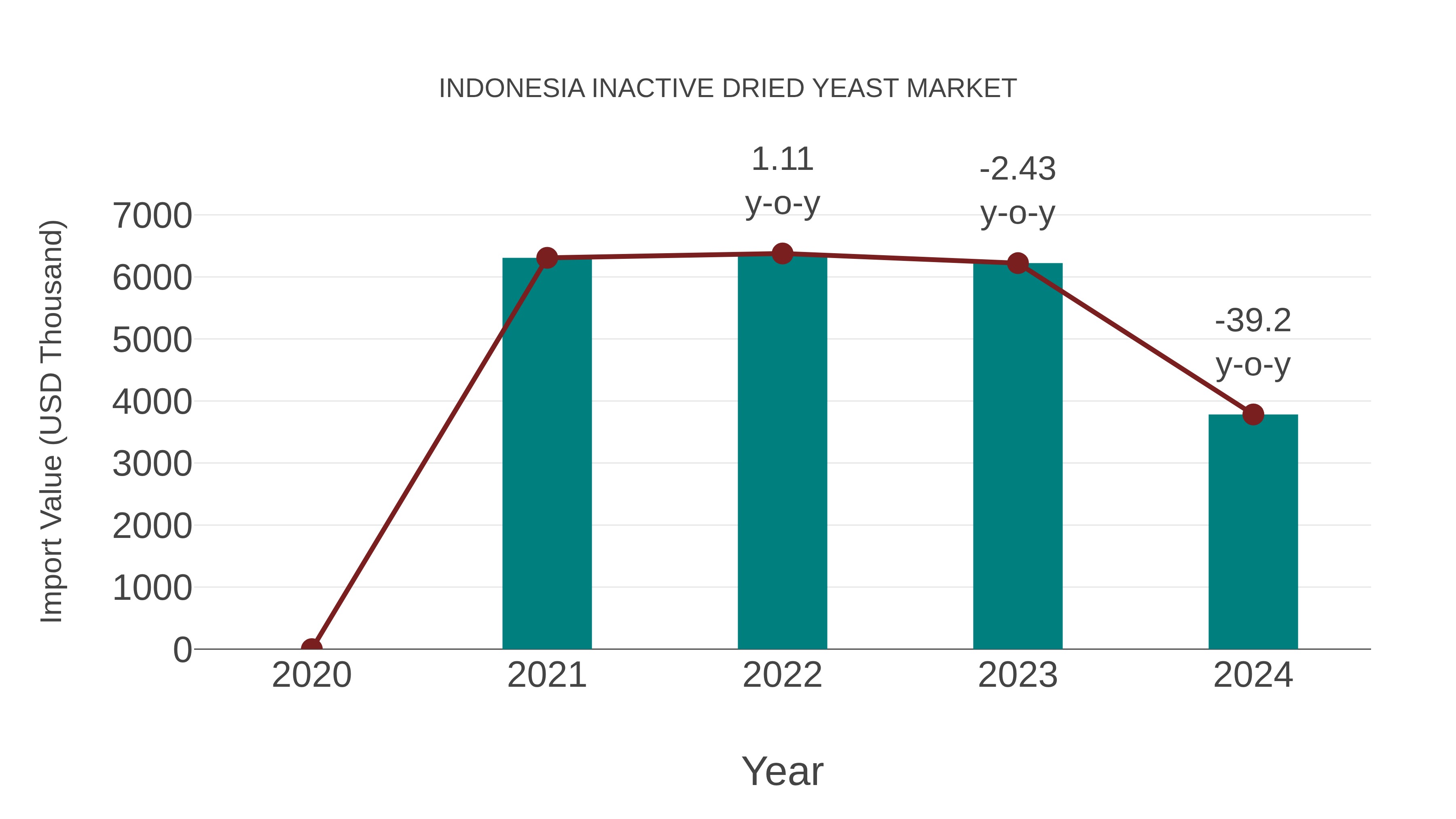
In the Indonesia inactive dried yeast market, the import trend experienced a decline from 2023 to 2024, with a growth rate of -39.2%. The compound annual growth rate (CAGR) for the period 2020-2024 stood at -15.67%. This negative import momentum may be attributed to shifting demand patterns or evolving trade policies impacting market stability.
Indonesia Inactive Dried Yeast Market Synopsis
The inactive dried yeast market in Indonesia has witnessed growth due to its application in the bakery and food processing sectors. Inactive dried yeast is utilized as a leavening agent and flavor enhancer in various products.
Drivers of the Market
The inactive dried yeast market in Indonesia is experiencing steady growth, primarily due to its widespread use in the bakery and brewing industries. Inactive dried yeast is used as a leavening agent in bakery products, contributing to their volume and texture. In the brewing industry, inactive dried yeast is used for fermentation during beer production. The growing bakery and brewing sectors in Indonesia are driving the demand for inactive dried yeast. Additionally, the increasing interest in home baking and brewing activities has further boosted the market`s expansion.
Challenges of the Market
The inactive dried yeast market in Indonesia faces challenges related to consumer awareness and acceptance. While inactive dried yeast offers health benefits, consumers may not be familiar with its usage and potential applications. Competing with active yeast and other leavening agents can be a challenge for the market. Manufacturers must differentiate the benefits of inactive dried yeast to gain consumer interest.
COVID-19 Impact on the Market
The inactive dried yeast market in Indonesia likely witnessed a surge in demand as more people turned to baking at home. With baking becoming a popular hobby during lockdowns, the market for inactive dried yeast could have grown substantially.
Key Highlights of the Report:
- Indonesia Inactive Dried Yeast Market Outlook
- Market Size of Indonesia Inactive Dried Yeast Market, 2025
- Forecast of Indonesia Inactive Dried Yeast Market, 2032
- Historical Data and Forecast of Indonesia Inactive Dried Yeast Revenues & Volume for the Period 2022-2032F
- Indonesia Inactive Dried Yeast Market Trend Evolution
- Indonesia Inactive Dried Yeast Market Drivers and Challenges
- Indonesia Inactive Dried Yeast Price Trends
- Indonesia Inactive Dried Yeast Porter's Five Forces
- Indonesia Inactive Dried Yeast Industry Life Cycle
- Historical Data and Forecast of Indonesia Inactive Dried Yeast Market Revenues & Volume By Type for the Period 2022-2032F
- Historical Data and Forecast of Indonesia Inactive Dried Yeast Market Revenues & Volume By Feed Grade for the Period 2022-2032F
- Historical Data and Forecast of Indonesia Inactive Dried Yeast Market Revenues & Volume By Food Grade for the Period 2022-2032F
- Historical Data and Forecast of Indonesia Inactive Dried Yeast Market Revenues & Volume By Pharma Grade for the Period 2022-2032F
- Historical Data and Forecast of Indonesia Inactive Dried Yeast Market Revenues & Volume By Application for the Period 2022-2032F
- Historical Data and Forecast of Indonesia Inactive Dried Yeast Market Revenues & Volume By Food for the Period 2022-2032F
- Historical Data and Forecast of Indonesia Inactive Dried Yeast Market Revenues & Volume By Fermentation for the Period 2022-2032F
- Historical Data and Forecast of Indonesia Inactive Dried Yeast Market Revenues & Volume By Health for the Period 2022-2032F
- Historical Data and Forecast of Indonesia Inactive Dried Yeast Market Revenues & Volume By Feed for the Period 2022-2032F
- Indonesia Inactive Dried Yeast Import Export Trade Statistics
- Market Opportunity Assessment By Type
- Market Opportunity Assessment By Application
- Indonesia Inactive Dried Yeast Top Companies Market Share
- Indonesia Inactive Dried Yeast Competitive Benchmarking By Technical and Operational Parameters
- Indonesia Inactive Dried Yeast Company Profiles
- Indonesia Inactive Dried Yeast Key Strategic Recommendations






































