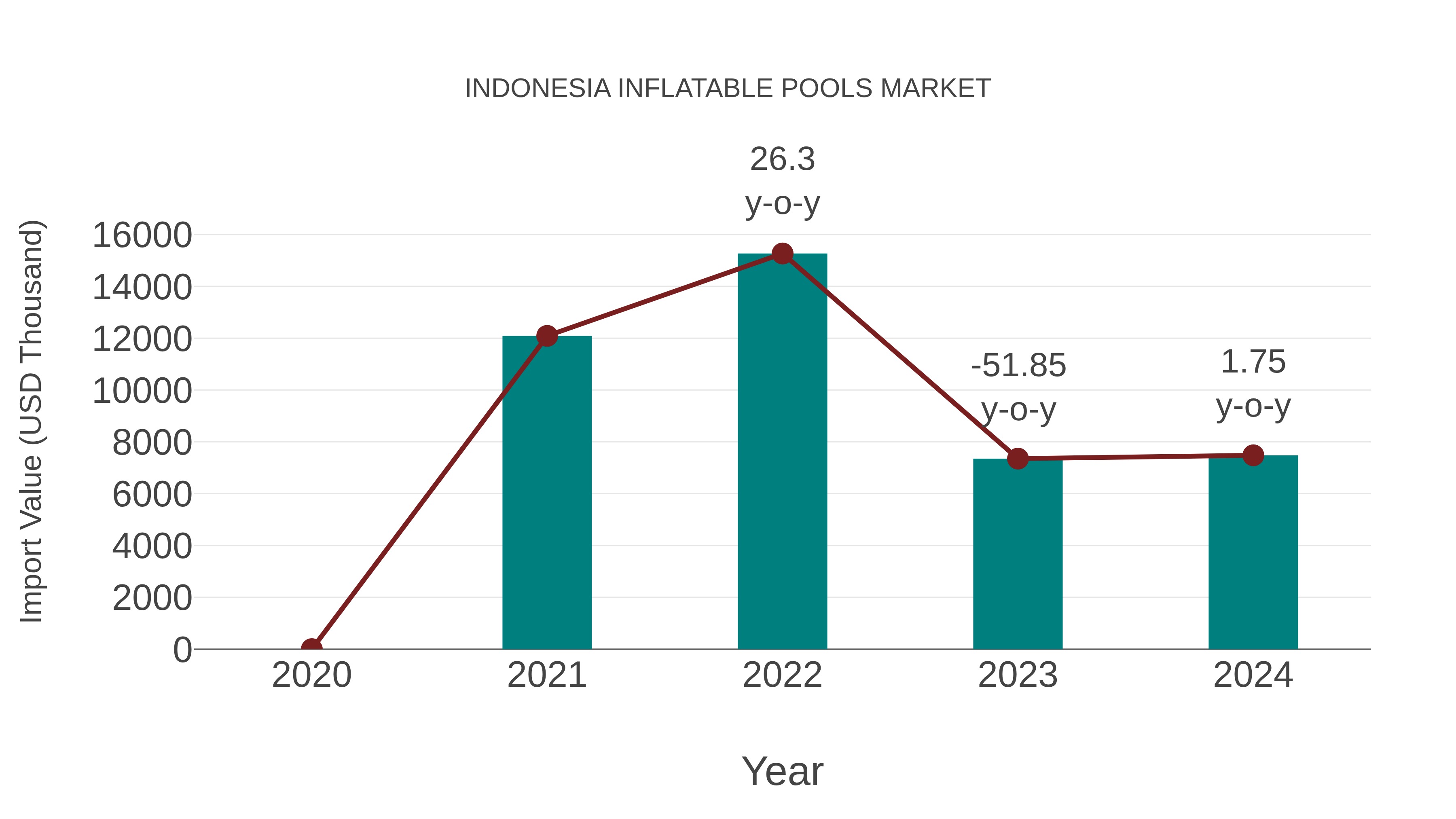
Indonesia Inflatable Pools Market: Import Trend Analysis
In 2024, Indonesia`s import trend for the inflatable pools market showed a growth rate of 1.75%, marking a slight recovery from the compound annual growth rate (CAGR) of -14.79% observed from 2020 to 2023. This shift could be attributed to a rebound in consumer demand or adjustments in trade policies impacting the market.
Indonesia Inflatable Pools Market Synopsis
The Indonesia inflatable pools market is poised for significant growth, driven by the rising popularity of outdoor and water-based recreational activities. Inflatable pools offer a convenient and affordable way for families and individuals to enjoy swimming and water play in their homes or outdoor spaces, especially in urban areas where access to larger swimming pools may be limited. The market is likely to be influenced by factors such as increasing disposable incomes, urbanization, and changing lifestyles, as more people seek leisure and relaxation options within their homes. Manufacturers are expected to focus on product innovation, durability, and safety features to meet the growing demand for inflatable pools in Indonesia.
Drivers of the Market
The Indonesia inflatable pools market is expected to witness substantial growth in the forecast period. One of the key drivers for this growth is the increasing popularity of outdoor recreational activities and water-based leisure among families and individuals. Inflatable pools provide a convenient and affordable way for people to enjoy water play and relaxation, particularly in residential spaces with limited access to conventional swimming pools. Additionally, the rising disposable income and changing lifestyles in Indonesia are likely to boost the demand for inflatable pools as a form of entertainment and leisure activity.
Challenges of the Market
However, the market may face challenges related to the seasonality of demand. Inflatable pools are predominantly used during hot and sunny months, which could lead to fluctuations in sales throughout the year. Manufacturers and retailers need to develop strategies to maintain consumer interest and sales during off-peak seasons.
COVID-19 Impact on the Market
The COVID-19 pandemic had a notable impact on the inflatable pools market in Indonesia. During lockdowns and restrictions, many people turned to outdoor activities as a safe way to entertain themselves and their families while adhering to social distancing guidelines. As a result, the demand for inflatable pools surged, providing a recreational outlet for those unable to visit public swimming pools or beaches. This trend is likely to have a lingering effect on the market as people continue to prioritize outdoor and home-based recreational options even after the pandemic.
Key Highlights of the Report:
- Indonesia Inflatable Pools Market Outlook
- Market Size of Indonesia Inflatable Pools Market, 2025
- Forecast of Indonesia Inflatable Pools Market, 2032
- Historical Data and Forecast of Indonesia Inflatable Pools Revenues & Volume for the Period 2022-2032F
- Indonesia Inflatable Pools Market Trend Evolution
- Indonesia Inflatable Pools Market Drivers and Challenges
- Indonesia Inflatable Pools Price Trends
- Indonesia Inflatable Pools Porter's Five Forces
- Indonesia Inflatable Pools Industry Life Cycle
- Historical Data and Forecast of Indonesia Inflatable Pools Market Revenues & Volume By Capacity for the Period 2022-2032F
- Historical Data and Forecast of Indonesia Inflatable Pools Market Revenues & Volume By Maximum 3 Individuals for the Period 2022-2032F
- Historical Data and Forecast of Indonesia Inflatable Pools Market Revenues & Volume By Maximum 6 Individuals for the Period 2022-2032F
- Historical Data and Forecast of Indonesia Inflatable Pools Market Revenues & Volume By Maximum 12 Individuals for the Period 2022-2032F
- Historical Data and Forecast of Indonesia Inflatable Pools Market Revenues & Volume By Age for the Period 2022-2032F
- Historical Data and Forecast of Indonesia Inflatable Pools Market Revenues & Volume By Up To 4 Years for the Period 2022-2032F
- Historical Data and Forecast of Indonesia Inflatable Pools Market Revenues & Volume By 5 To 10 Years for the Period 2022-2032F
- Historical Data and Forecast of Indonesia Inflatable Pools Market Revenues & Volume By 11 Years & Above for the Period 2022-2032F
- Historical Data and Forecast of Indonesia Inflatable Pools Market Revenues & Volume By Shape for the Period 2022-2032F
- Historical Data and Forecast of Indonesia Inflatable Pools Market Revenues & Volume By Round for the Period 2022-2032F
- Historical Data and Forecast of Indonesia Inflatable Pools Market Revenues & Volume By Rectangle for the Period 2022-2032F
- Historical Data and Forecast of Indonesia Inflatable Pools Market Revenues & Volume By Square for the Period 2022-2032F
- Historical Data and Forecast of Indonesia Inflatable Pools Market Revenues & Volume By Oval for the Period 2022-2032F
- Historical Data and Forecast of Indonesia Inflatable Pools Market Revenues & Volume By Others for the Period 2022-2032F
- Historical Data and Forecast of Indonesia Inflatable Pools Market Revenues & Volume By Distribution Channel for the Period 2022-2032F
- Historical Data and Forecast of Indonesia Inflatable Pools Market Revenues & Volume By Store Based for the Period 2022-2032F
- Historical Data and Forecast of Indonesia Inflatable Pools Market Revenues & Volume By Non Store Based for the Period 2022-2032F
- Indonesia Inflatable Pools Import Export Trade Statistics
- Market Opportunity Assessment By Capacity
- Market Opportunity Assessment By Age
- Market Opportunity Assessment By Shape
- Market Opportunity Assessment By Distribution Channel
- Indonesia Inflatable Pools Top Companies Market Share
- Indonesia Inflatable Pools Competitive Benchmarking By Technical and Operational Parameters
- Indonesia Inflatable Pools Company Profiles
- Indonesia Inflatable Pools Key Strategic Recommendations






































