Indonesia Kids Footwear Market: Import Trend Analysis
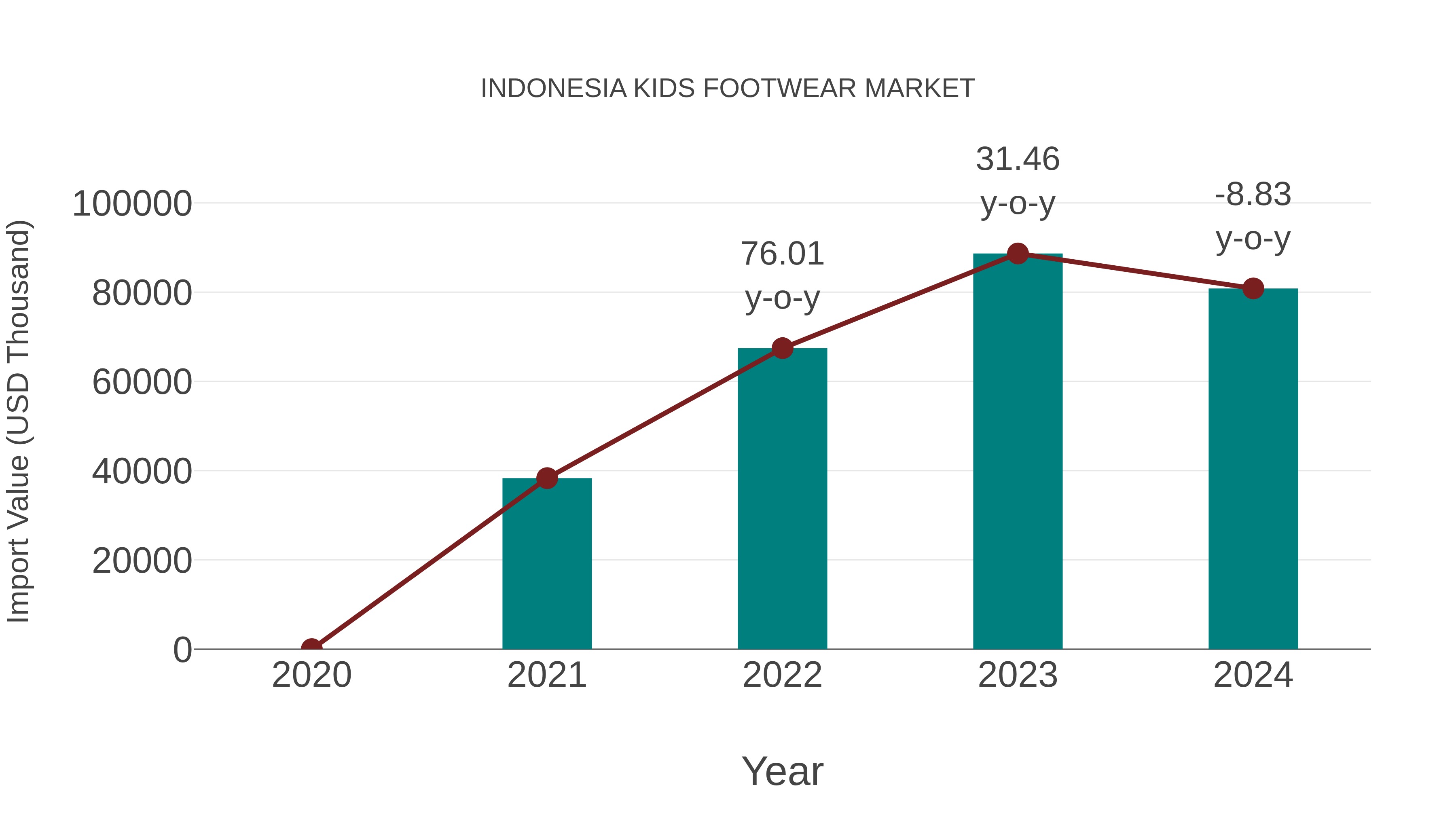
In the Indonesia kids` footwear market, the import trend showed a decline from 2023 to 2024, with a growth rate of -8.83%. However, the compound annual growth rate (CAGR) for the period 2020-2024 stood at a robust 28.25%. This decline in import momentum could be attributed to shifting consumer preferences or changes in trade policies impacting market stability.
Indonesia Kids Footwear Market Synopsis
The Indonesia Kids Footwear Market is expected to grow at a CAGR of 6.4% during the forecast period 2020-2026. The increasing demand for fashionable and durable kids footwear coupled with rising disposable income has been driving the growth of the market in Indonesia over the past few years.
The growing preference among consumers for branded products, increasing awareness about health & fitness, and growing children population are some of the major factors contributing to this markets growth during the forecast period. Furthermore, expanding distribution channels such as e-commerce sites have also contributed to this markets growth significantly over recent years.
Moreover, due to changing lifestyles and consumer preferences towards aesthetics, various international companies are entering into ventures with local manufacturers in order to meet customer demands effectively which further intensifies competition within this sector thereby driving up sales volumes substantially. Many players operating in this sector focus on product quality improvement so as to maintain their place in an increasingly competitive landscape. Additionally, increasing government initiatives encouraging child welfare are helping boost sales figures in this industry significantly over recent times.
Overall, with rising incomes and improving living standards across all income groups coupled with changing consumer trends towards fashion consciousness will continue propelling demand for kids footwear throughout forecasted time frame thereby making it one of most lucrative markets globally by 2026 end.
Key Highlights of the Report:
- Indonesia Kids Footwear Market Outlook
- Market Size of Indonesia Kids Footwear Market, 2019
- Forecast of Indonesia Kids Footwear Market, 2026
- Historical Data and Forecast of Indonesia Kids Footwear Revenues & Volume for the Period 2016 - 2026
- Indonesia Kids Footwear Market Trend Evolution
- Indonesia Kids Footwear Market Drivers and Challenges
- Indonesia Kids Footwear Price Trends
- Indonesia Kids Footwear Porter's Five Forces
- Indonesia Kids Footwear Industry Life Cycle
- Historical Data and Forecast of Indonesia Kids Footwear Market Revenues & Volume By Product Type for the Period 2016 - 2026
- Historical Data and Forecast of Indonesia Kids Footwear Market Revenues & Volume By Casual for the Period 2016 - 2026
- Historical Data and Forecast of Indonesia Kids Footwear Market Revenues & Volume By Sports for the Period 2016 - 2026
- Historical Data and Forecast of Indonesia Kids Footwear Market Revenues & Volume By Formal for the Period 2016 - 2026
- Historical Data and Forecast of Indonesia Kids Footwear Market Revenues & Volume By Others for the Period 2016 - 2026
- Historical Data and Forecast of Indonesia Kids Footwear Market Revenues & Volume By End-users for the Period 2016 - 2026
- Historical Data and Forecast of Indonesia Kids Footwear Market Revenues & Volume By Boys for the Period 2016 - 2026
- Historical Data and Forecast of Indonesia Kids Footwear Market Revenues & Volume By Girls for the Period 2016 - 2026
- Historical Data and Forecast of Indonesia Kids Footwear Market Revenues & Volume By Unisex for the Period 2016 - 2026
- Indonesia Kids Footwear Import Export Trade Statistics
- Market Opportunity Assessment By Product Type
- Market Opportunity Assessment By End-users
- Indonesia Kids Footwear Top Companies Market Share
- Indonesia Kids Footwear Competitive Benchmarking By Technical and Operational Parameters
- Indonesia Kids Footwear Company Profiles
- Indonesia Kids Footwear Key Strategic Recommendations






































