Indonesia Luggage Market: Import Trend Analysis
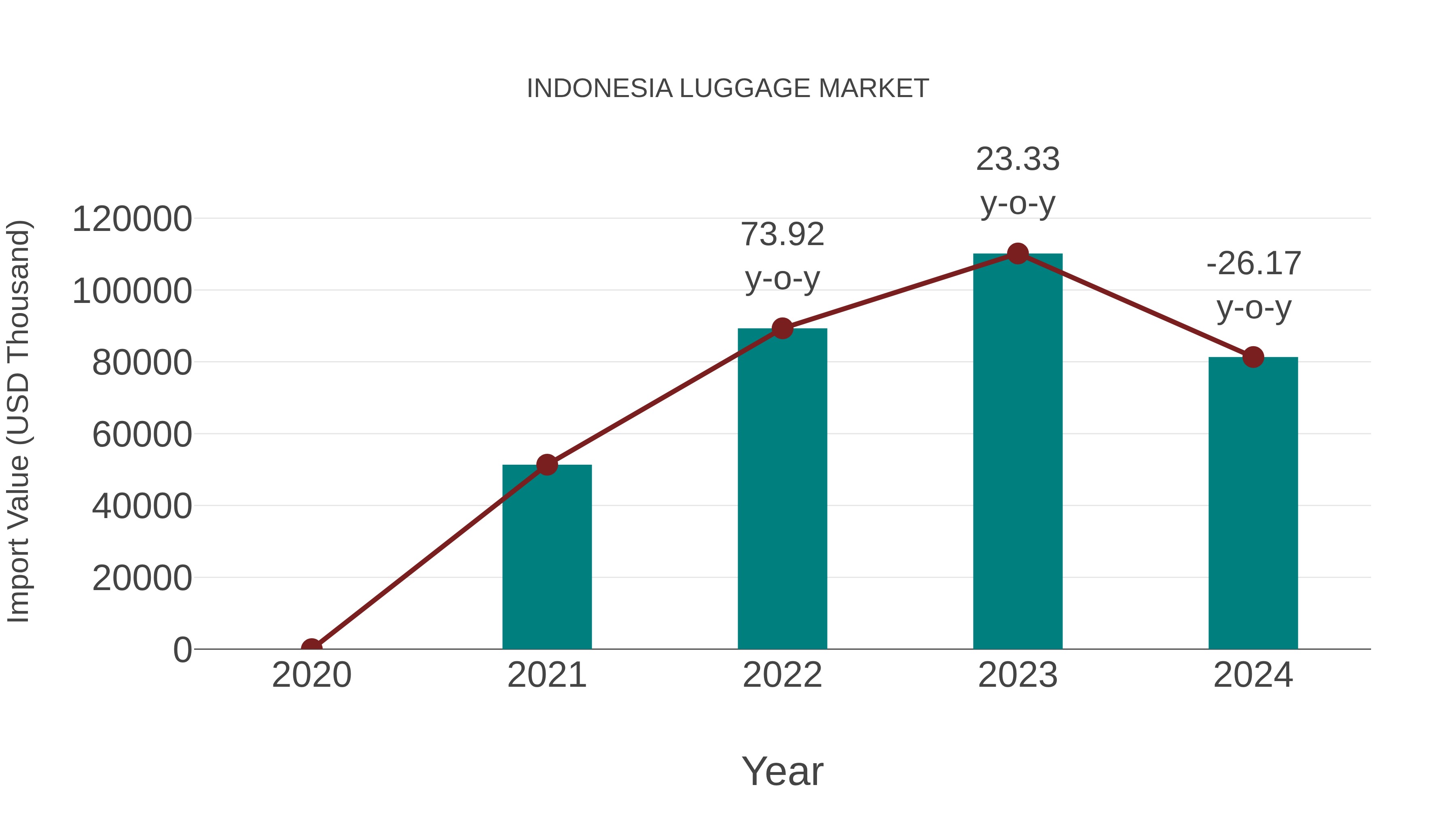
In the Indonesia luggage market, the import trend experienced a significant decline from 2023 to 2024, with a growth rate of -26.17%. However, the compound annual growth rate (CAGR) for the period 2020-2024 stood at a positive 16.56%. This negative import momentum from 2023 to 2024 could be attributed to shifting consumer preferences, changes in trade policies, or market instability during that period.
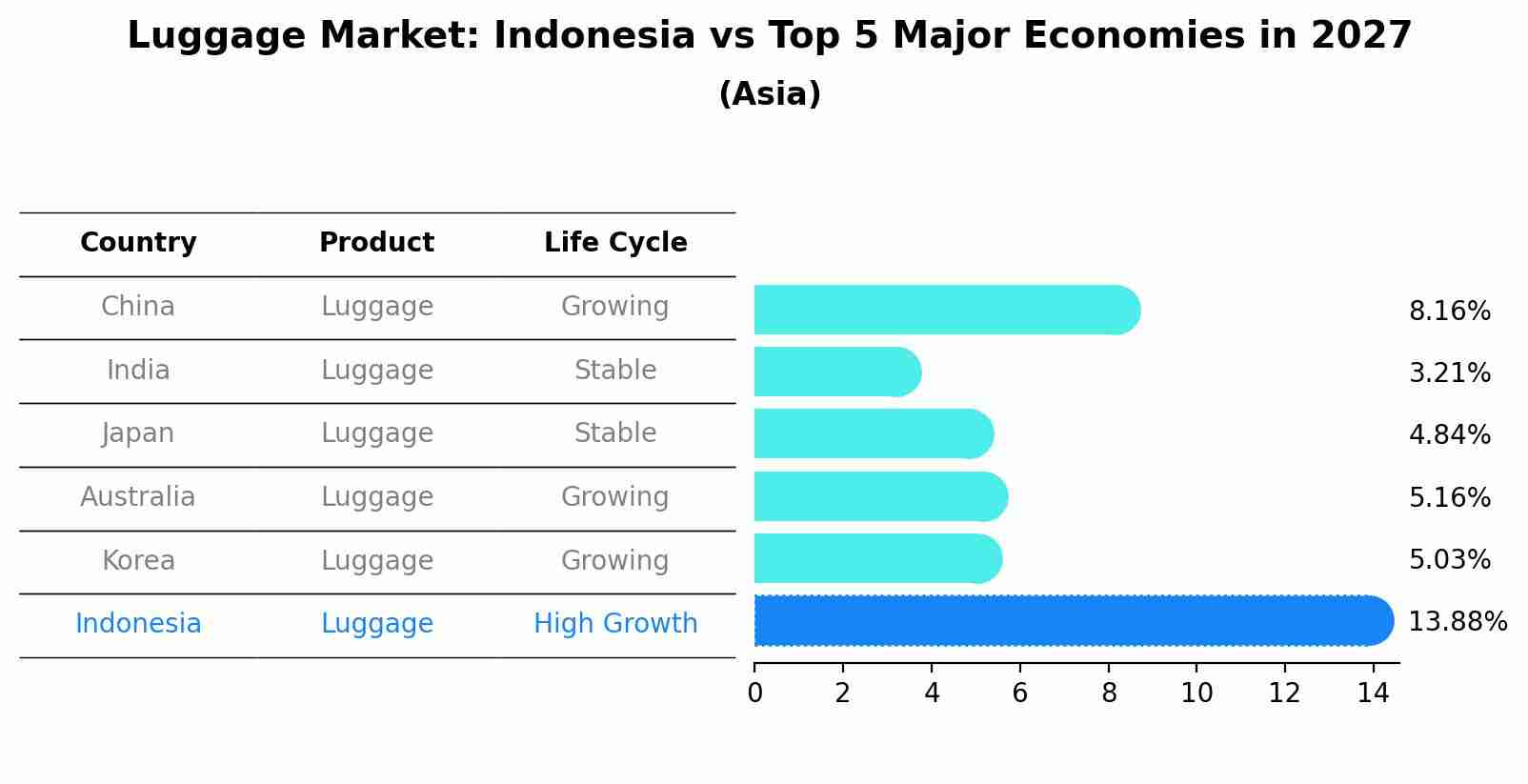
Luggage Market: Indonesia vs Top 5 Major Economies in 2027 (Asia)
The Luggage market in Indonesia is projected to grow at a high growth rate of 13.88% by 2027, within the Asia region led by China, along with other countries like India, Japan, Australia and South Korea, collectively shaping a dynamic and evolving market environment driven by innovation and increasing adoption of emerging technologies.
Indonesia Luggage Market Synopsis
The Indonesia luggage market is expected to witness a CAGR of 3.6% during the forecast period, 2020-2026. The factors driving the growth of the market are increasing consumer spending and preference for luxury brands. Furthermore, rising disposable income among consumers in Indonesia is further expected to fuel market growth over the next few years. The demand for lightweight and durable luggage products has been increasing, due to which numerous manufacturers have started focusing on providing innovative designs and features at reasonable prices which is further bolstering the growth of this industry. Additionally, growing tourism activities in Indonesia coupled with increased focus on foreign exchange earnings from tourists are offering ample opportunities for business expansion in this sector.
However, stringent government regulations regarding product safety standards may hamper the overall growth rate of this industry over the coming years. Moreover, counterfeiting and piracy issues could also be an issue faced by major players operating within this domain as they can lead to loss of revenues for these companies unless proper measures are taken against them beforehand.
Key Highlights of the Report:
- Indonesia Luggage Market Outlook
- Market Size of Indonesia Luggage Market, 2019
- Forecast of Indonesia Luggage Market, 2026
- Historical Data and Forecast of Indonesia Luggage Revenues & Volume for the Period 2016 - 2026
- Indonesia Luggage Market Trend Evolution
- Indonesia Luggage Market Drivers and Challenges
- Indonesia Luggage Price Trends
- Indonesia Luggage Porter's Five Forces
- Indonesia Luggage Industry Life Cycle
- Historical Data and Forecast of Indonesia Luggage Market Revenues & Volume By Product Type for the Period 2016 - 2026
- Historical Data and Forecast of Indonesia Luggage Market Revenues & Volume By Travel Luggage for the Period 2016 - 2026
- Historical Data and Forecast of Indonesia Luggage Market Revenues & Volume By Casual Luggage for the Period 2016 - 2026
- Historical Data and Forecast of Indonesia Luggage Market Revenues & Volume By Business Luggage for the Period 2016 - 2026
- Historical Data and Forecast of Indonesia Luggage Market Revenues & Volume By Sports Luggage for the Period 2016 - 2026
- Historical Data and Forecast of Indonesia Luggage Market Revenues & Volume By Other Product Types for the Period 2016 - 2026
- Historical Data and Forecast of Indonesia Luggage Market Revenues & Volume By Distribution Channel for the Period 2016 - 2026
- Historical Data and Forecast of Indonesia Luggage Market Revenues & Volume By Online for the Period 2016 - 2026
- Historical Data and Forecast of Indonesia Luggage Market Revenues & Volume By Offline for the Period 2016 - 2026
- Indonesia Luggage Import Export Trade Statistics
- Market Opportunity Assessment By Product Type
- Market Opportunity Assessment By Distribution Channel
- Indonesia Luggage Top Companies Market Share
- Indonesia Luggage Competitive Benchmarking By Technical and Operational Parameters
- Indonesia Luggage Company Profiles
- Indonesia Luggage Key Strategic Recommendations






































