Indonesia Luxury Leather Goods Market: Import Trend Analysis
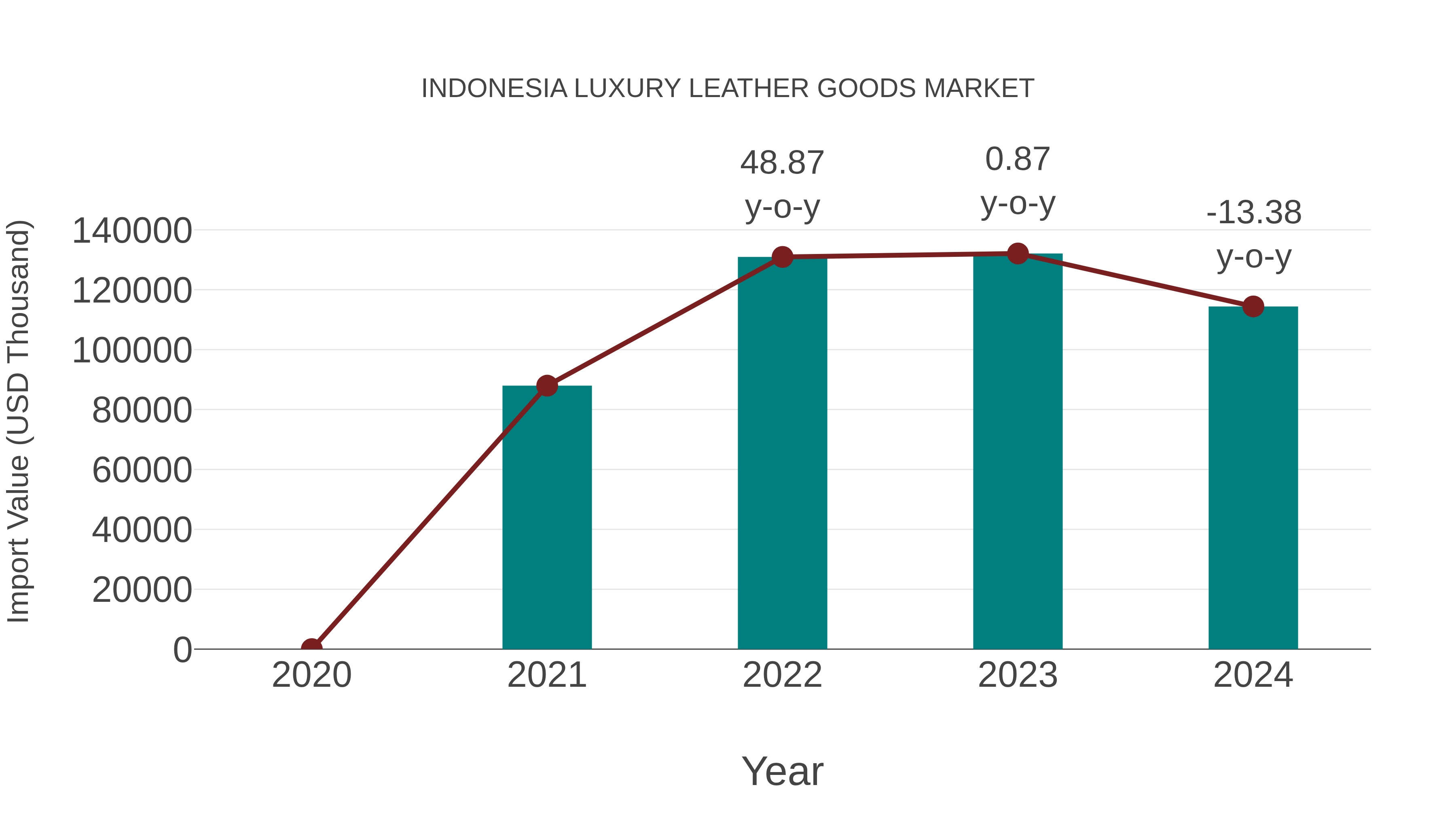
In the Indonesia luxury leather goods market, the import trend experienced a decline from 2023 to 2024, with a growth rate of -13.38%. However, the compound annual growth rate (CAGR) for the period 2020-2024 stood at 9.16%. This dip in import momentum could be attributed to shifts in consumer preferences, changes in trade policies, or market saturation impacting demand.
Indonesia Luxury Leather Goods Market Synopsis
The Indonesia luxury leather goods market is experiencing steady growth driven by increasing disposable income, evolving consumer preferences, and a growing fashion-conscious population. Key players in the market offer a wide range of high-quality leather products including handbags, wallets, shoes, and accessories, catering to a discerning clientele. Luxury brands are leveraging e-commerce platforms and social media to reach a wider audience, particularly among younger consumers. The market is also witnessing a trend towards sustainable and ethically sourced materials, with consumers showing a preference for environmentally friendly products. Overall, the Indonesia luxury leather goods market presents opportunities for both domestic and international luxury brands to expand their presence and tap into the country`s growing demand for premium leather products.
Indonesia Luxury Leather Goods Market Trends
The Indonesia Luxury Leather Goods Market is experiencing growth driven by increasing disposable income, changing consumer preferences towards luxury products, and a growing emphasis on quality and craftsmanship. Key trends in the market include a rising demand for personalized and customizable leather goods, such as handbags, wallets, and accessories. Furthermore, the shift towards sustainable and ethical fashion practices is creating opportunities for brands that focus on eco-friendly materials and production processes. E-commerce platforms are also playing a significant role in expanding the market reach of luxury leather goods, offering convenience and accessibility to a wider consumer base. Overall, the Indonesia Luxury Leather Goods Market presents opportunities for brands to innovate, differentiate themselves, and cater to the evolving preferences of Indonesian consumers.
Indonesia Luxury Leather Goods Market Challenges
In the Indonesia luxury leather goods market, several challenges are faced by businesses operating in this sector. One major challenge is the presence of counterfeit products, which not only erode the brand value of genuine luxury goods but also confuse consumers, leading to a loss of trust in the market. Additionally, high import duties and taxes on luxury goods make it difficult for international brands to compete effectively in Indonesia. Another challenge is the lack of adequate intellectual property protection, making it easier for counterfeiters to thrive in the market. Furthermore, the economic impact of the COVID-19 pandemic has also affected consumer spending on luxury items, leading to a slowdown in the overall market growth. Overall, navigating these challenges requires strategic planning and a strong brand protection strategy for luxury leather goods businesses in Indonesia.
Indonesia Luxury Leather Goods Market Investment Opportunities
The Indonesia Luxury Leather Goods Market is primarily driven by the increasing disposable income and purchasing power of the growing middle class population. As consumers seek higher quality and more prestigious products, the demand for luxury leather goods such as handbags, wallets, and shoes has seen a significant rise. Additionally, changing consumer preferences towards premium and fashionable accessories, coupled with the influence of social media and celebrity endorsements, have further fueled the growth of the market. The presence of international luxury brands expanding their presence in Indonesia, along with the rise of local designers and brands offering unique and high-quality leather goods, has also contributed to the overall growth and competitiveness of the luxury leather goods market in Indonesia.
Indonesia Luxury Leather Goods Market Government Polices
The Indonesia government has implemented policies aimed at promoting and protecting the luxury leather goods market in the country. These policies include providing incentives and support to local luxury leather goods manufacturers to boost production and increase competitiveness in the global market. Additionally, there are regulations in place to ensure the authenticity and quality of luxury leather products, aimed at safeguarding consumers and enhancing the reputation of Indonesian luxury leather goods internationally. The government also encourages sustainable practices within the industry to protect the environment and preserve natural resources. Overall, Indonesia`s government policies seek to foster growth and innovation within the luxury leather goods market while maintaining high standards of quality and sustainability.
Indonesia Luxury Leather Goods Market Future Outlook
The future outlook for the Indonesia Luxury Leather Goods Market appears promising, driven by factors such as the growing middle-class population, increasing disposable income, and a strong preference for high-quality and stylish products. With a rising demand for luxury items among Indonesian consumers, international luxury brands are expanding their presence in the market, while local designers are also gaining recognition for their craftsmanship. Additionally, the shift towards online shopping platforms and the rise of e-commerce in Indonesia are providing new opportunities for luxury leather goods brands to reach a wider audience. Overall, the market is expected to continue growing steadily, with a focus on innovation, sustainability, and personalized customer experiences playing key roles in shaping the industry`s future landscape.
Key Highlights of the Report:
- Indonesia Luxury Leather Goods Market Outlook
- Market Size of Indonesia Luxury Leather Goods Market, 2025
- Forecast of Indonesia Luxury Leather Goods Market, 2032
- Historical Data and Forecast of Indonesia Luxury Leather Goods Revenues & Volume for the Period 2022 - 2032F
- Indonesia Luxury Leather Goods Market Trend Evolution
- Indonesia Luxury Leather Goods Market Drivers and Challenges
- Indonesia Luxury Leather Goods Price Trends
- Indonesia Luxury Leather Goods Porter's Five Forces
- Indonesia Luxury Leather Goods Industry Life Cycle
- Historical Data and Forecast of Indonesia Luxury Leather Goods Market Revenues & Volume By Product for the Period 2022 - 2032F
- Historical Data and Forecast of Indonesia Luxury Leather Goods Market Revenues & Volume By High- Grade for the Period 2022 - 2032F
- Historical Data and Forecast of Indonesia Luxury Leather Goods Market Revenues & Volume By Low-Grade for the Period 2022 - 2032F
- Historical Data and Forecast of Indonesia Luxury Leather Goods Market Revenues & Volume By Mid-Grade for the Period 2022 - 2032F
- Historical Data and Forecast of Indonesia Luxury Leather Goods Market Revenues & Volume By Application for the Period 2022 - 2032F
- Historical Data and Forecast of Indonesia Luxury Leather Goods Market Revenues & Volume By Men for the Period 2022 - 2032F
- Historical Data and Forecast of Indonesia Luxury Leather Goods Market Revenues & Volume By Women for the Period 2022 - 2032F
- Historical Data and Forecast of Indonesia Luxury Leather Goods Market Revenues & Volume By Distribution Channel for the Period 2022 - 2032F
- Historical Data and Forecast of Indonesia Luxury Leather Goods Market Revenues & Volume By Offline Retail Stores for the Period 2022 - 2032F
- Historical Data and Forecast of Indonesia Luxury Leather Goods Market Revenues & Volume By Online Retail Stores for the Period 2022 - 2032F
- Indonesia Luxury Leather Goods Import Export Trade Statistics
- Market Opportunity Assessment By Product
- Market Opportunity Assessment By Application
- Market Opportunity Assessment By Distribution Channel
- Indonesia Luxury Leather Goods Top Companies Market Share
- Indonesia Luxury Leather Goods Competitive Benchmarking By Technical and Operational Parameters
- Indonesia Luxury Leather Goods Company Profiles
- Indonesia Luxury Leather Goods Key Strategic Recommendations






































