Indonesia Medicinal Herbs Market: Import Trend Analysis
Indonesia`s import trend for medicinal herbs experienced a notable decline from 2023 to 2024, with a growth rate of -29.95%. The compound annual growth rate (CAGR) for the period of 2020 to 2024 stood at -36.16%. This substantial decrease in import momentum may be attributed to shifting demand patterns or changes in market stability.
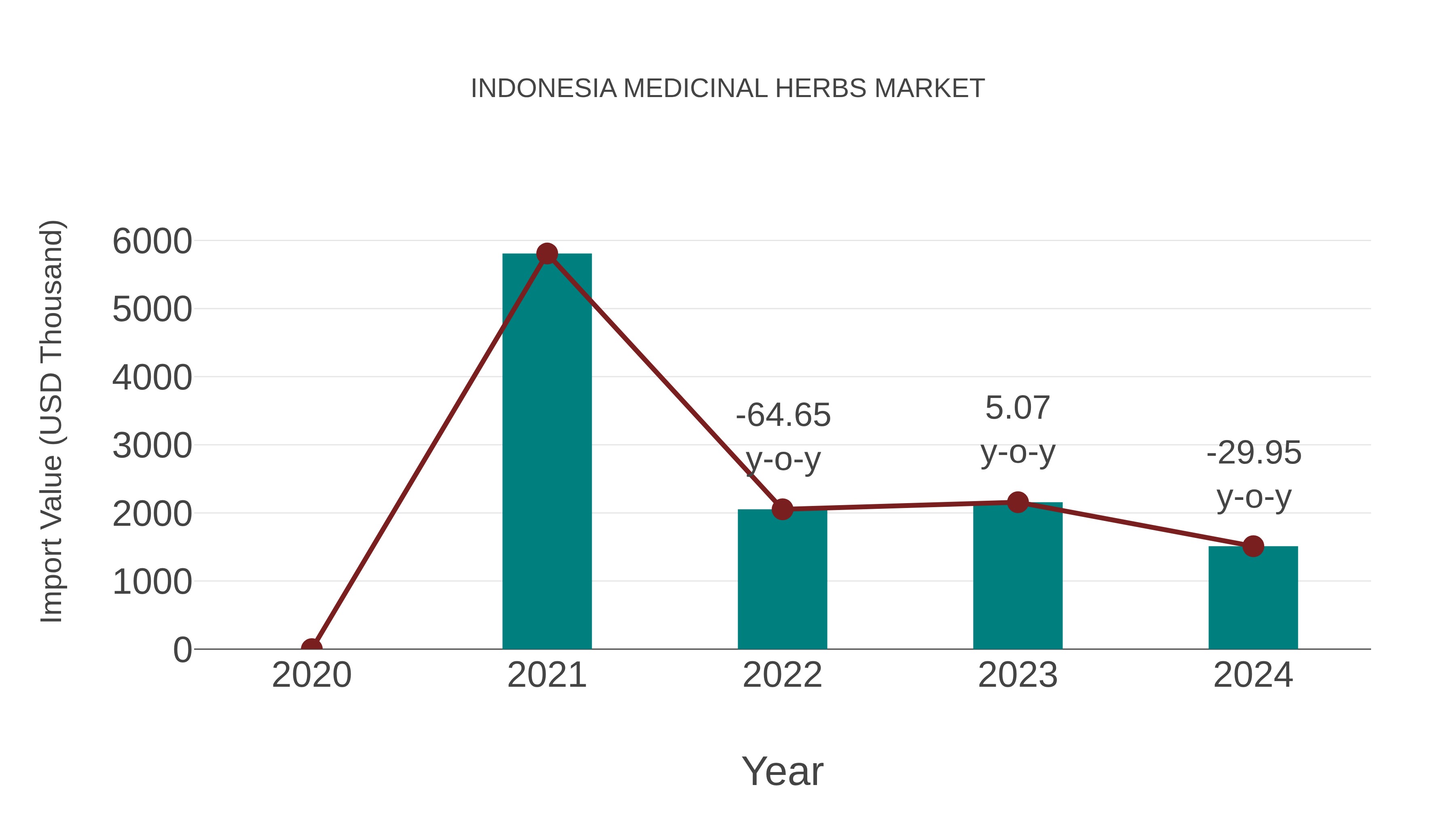
Indonesia Medicinal Herbs Market Growth Rate
According to 6Wresearch internal database and industry insights, the Indonesia Medicinal Herbs Market is projected to grow at a compound annual growth rate (CAGR) of 7.8% during the forecast period (2026-2032).
Topics Covered in the Indonesia Medicinal Herbs Market Report
The Indonesia Medicinal Herbs Market report thoroughly covers the market by product type, nature, form, and end-use. The market report provides an unbiased and detailed analysis of ongoing market trends, opportunities/high growth areas, and market drivers, which help stakeholders devise and align their market strategies according to the current and future market dynamics.
Indonesia Medicinal Herbs Market Highlights
| Report Name |
Indonesia Medicinal Herbs Market |
| Forecast period | 2026-2032 |
| CAGR | 7.8% |
| Growing Sector |
Herbal Medicines |
Indonesia Medicinal Herbs Market Synopsis
Indonesia Medicinal Herbs Market is expected to witness steady growth driven by the cultural dependency on traditional herbal treatments like “jamu” along with the rising consciousness among consumers about natural alternatives for their health care needs. Growing interest in organic products is leading to the development of herbal agriculture and production industry. Government involvement in research work related to herbal medicines and export business also adds value to the market potential. Enhanced logistics and availability of domestic producers have made medicinal herbs an integral part of the Indonesian health care system.
Evaluation of Growth Drivers in the Indonesia Medicinal Herbs Market
Below mentioned are some prominent drivers and their influence on the market dynamics:
| Drivers | Primary Segments Affected | Why it Matters (Evidence) |
| Rising Demand for Natural Remedies | All Types; Health Supplements | Consumers prefer herbal solutions due to fewer side effects and holistic health benefits. |
| Expansion of Organic Farming | Organic; Whole & Powder | Increased cultivation improves supply and quality of medicinal herbs. |
| Government Support for Traditional Medicine | Herbal Medicines; All Types | Policies promoting “jamu” strengthen domestic production and awareness. |
| Growth in Export Opportunities | Liquid & Powder; Cosmeceuticals | Rising global demand boosts production and revenue streams. |
| Increasing Health Awareness | Medicinal Tea; Supplements | Lifestyle diseases drive demand for preventive herbal consumption. |
Indonesia Medicinal Herbs Market is expected to grow at the CAGR of 7.8% during the forecast period of 2026-2032. The growth of the industry can be attributed to higher consumer awareness about plant-based health care solutions, greater demand for herbal health supplements, and increased use of Indonesian herbal treatment products like Jamu. The favorable policies that are being implemented by the Indonesian government, which encourage cultivation and export of herbal products, have also contributed significantly to the expansion of the market. The increasing popularity of organic farming and innovations in herbal products have also added to the strength of the market.
Evaluation of Restraints in the Indonesia Medicinal Herbs Market
Below mentioned are some major restraints and their influence on the market dynamics:
| Restraints | Primary Segments Affected | What This Means (Evidence) |
| Lack of Standardization | All Types; Herbal Medicines | Variability in quality affects consumer trust and export potential. |
| Lack of Scientific Evidence | Extracts; Cosmetics | Limited clinical evidence leads to lower adoption rates in contemporary medicine. |
| Ineffective Distribution Channels | Herbs & Oils; Organic | Malfunctioning supply chains affect distribution in rural regions. |
| High Fluctuation of Herb Prices | Organic; Powders | Production during certain seasons influences prices and profits. |
| Substitution by Chemical Products | All Types; Extracts | Chemical drugs continue to dominate in urban medical facilities. |
Indonesia Medicinal Herbs Industry Challenges
Despite steady growth, the Indonesia Medicinal Herbs Industry faces challenges that slow its full potential. The first challenge is that there are no standards for quality. Local manufacturers find it difficult to compete in an international environment since they lack uniform quality measures. Small farmers still rely on traditional farming methods, and this leads to fluctuations in terms of the output produced as well as its quality. In addition, there are no scientific studies carried out or clinical tests done, which means that these herbs cannot be recognized by modern-day health practitioners.
Indonesia Medicinal Herbs Market Trends
The evolving trends in the Indonesia Medicinal Herbs Market Growth are as follows:
- Increasing Demand for Herbal Supplements: The consumption of herbal supplements has increased in the recent past due to the increased importance of preventive care and natural immunity enhancers.
- Growing Importance of Organically Grown Herbs: There has been an increased interest in herbs that are organically grown. Companies are taking advantage of this demand by promoting sustainable production.
- Increasing Commercialization of Indonesian Herbal Medicine: “Jamu,” a traditional herbal medicine from Indonesia, is gaining more commercial acceptance due to modernizations being made in its formulation and marketing strategies.
- Increasing Use of Herbs in Cosmeceutical Products: Herbal medicines are becoming popular in the manufacturing of skin care and beauty products. This is influenced by the increasing desire for products without chemicals.
Investment Opportunities in the Indonesia Medicinal Herbs Market
Key areas attracting investments in the Indonesia Medicinal Herbs Market include:
- Projects in Organic Herb Cultivation – The purchase of organic farms would guarantee a reliable source of raw materials with an added advantage of exporting them.
- Herbal Processing Units – Building processing plants will help ensure quality and increase the shelf life of the products. This will promote value addition and competitive edge when marketing overseas.
- Ventures in Jamu Commercialization – Upgrading traditional herbal remedies to branded products is a business with high prospects. The ventures can be marketed locally and abroad.
- Research and Development in Cosmeceutical Products – Consumers are increasingly attracted to beauty products made from herbs. Research and development in this industry will yield innovative results.
Top 5 Leading Players in the Indonesia Medicinal Herbs Market
Some leading players operating in the Indonesia Medicinal Herbs Market include:
1. Sido Muncul
| Company Name | Sido Muncul |
|---|---|
| Established Year | 1951 |
| Headquarters | Semarang, Indonesia |
| Official Website | Click Here |
Sido Muncul is a leading Indonesian herbal company specializing in jamu and herbal supplements. The company focuses on modernizing traditional remedies with standardized production processes, ensuring quality and expanding its presence in both domestic and international markets.
2. Kalbe Farma Tbk
| Company Name | Kalbe Farma Tbk |
|---|---|
| Established Year | 1966 |
| Headquarters | Jakarta, Indonesia |
| Official Website | Click Here |
Kalbe Farma is a major pharmaceutical company with a strong herbal division. It produces a wide range of herbal supplements and health products, combining traditional knowledge with modern scientific research to enhance product efficacy and market reach.
3. Air Mancur
| Company Name | Air Mancur |
|---|---|
| Established Year | 1963 |
| Headquarters | Solo, Indonesia |
| Official Website | - |
Air Mancur focuses on producing traditional herbal medicines and wellness products. The company emphasizes natural ingredients and has a strong distribution network across Indonesia, catering to both rural and urban populations with affordable herbal solutions.
4. Mustika Ratu
| Company Name | Mustika Ratu |
|---|---|
| Established Year | 1975 |
| Headquarters | Jakarta, Indonesia |
| Official Website | Click Here |
Mustika Ratu specializes in herbal-based beauty and health products. The company integrates traditional Indonesian herbs into cosmeceuticals, offering a diverse portfolio that appeals to consumers seeking natural and holistic personal care solutions.
5. Deltomed Laboratories
| Company Name | Deltomed Laboratories |
|---|---|
| Established Year | 1976 |
| Headquarters | Wonogiri, Indonesia |
| Official Website | Click Here |
Deltomed Laboratories produces herbal medicines and supplements with a focus on innovation and quality. The company invests in research and development to create standardized herbal products that meet both domestic healthcare needs and export standards.
Government Regulations Introduced in the Indonesia Medicinal Herbs Market
According to Indonesia’s Government data, a number of programs have been set up that contribute to the development of the medicinal herbs industry. The government supports the promotion of traditional medicine via initiatives such as the “Jamu Brand Indonesia” campaign, aimed at promoting the consumption of and recognition for herbal medicine throughout the world. Besides, the Ministry of Health manages herbal medicine according to international standards regarding safety and quality. Organic agriculture and export-related policies facilitate the process of expanding production. In addition, collaboration between the industry and research organizations proves the efficacy of herbal medicines.
Future Insights of the Indonesia Medicinal Herbs Market
Indonesia Medicinal Herbs Market Share is expected to witness strong growth in the coming years, driven by increasing consumer awareness of natural healthcare and the expansion of herbal product applications. The combination of traditional medicines with science-based research is bound to improve the credibility and international appeal of the products. The increasing exports, along with government policies and effective logistics networks, will add to the growth potential of the market. Moreover, the development of new product forms like herbal drinks and herbal cosmetics will help reach out to a wider audience. The continuous funding for organic farming is expected to have a significant impact on the future of the market.
Market Segmentation Analysis
The report offers a comprehensive study of the subsequent market segments and their leading categories.
Echinacea to Dominate the Market – By Type
According to Mohit, Senior Research Analyst, 6Wresearch, Echinacea segment leads the Indonesia Medicinal Herbs Market due to its widespread usage in boosting immunity and preventing infections. Echinacea has become popular among consumers who seek alternative means to improve their immunity through herbs. The use of the herb in tea, medicinal products, and other supplements is growing tremendously in Indonesia. In addition, there is heightened knowledge on the importance of preventive medicine and the health benefits of using herbs to increase one's immunity. This growth in Indonesia Medicinal Herbs Market Growth is facilitated by increased consumer interest in natural products and availability of Echinacea in multiple forms.
Key Attractiveness of the Report
- 10 Years of Market Numbers.
- Historical Data Starting from 2022 to 2025.
- Base Year: 2025.
- Forecast Data until 2032.
- Key Performance Indicators Impacting the Market.
- Major Upcoming Developments and Projects.
Key Highlights of the Report:
- Indonesia Medicinal Herbs Market Outlook
- Market Size of Indonesia Medicinal Herbs Market, 2025
- Forecast of Indonesia Medicinal Herbs Market, 2032
- Historical Data and Forecast of Indonesia Medicinal Herbs Revenues & Volume for the Period 2022-2032F
- Indonesia Medicinal Herbs Market Trend Evolution
- Indonesia Medicinal Herbs Market Drivers and Challenges
- Indonesia Medicinal Herbs Price Trends
- Indonesia Medicinal Herbs Porter's Five Forces
- Indonesia Medicinal Herbs Industry Life Cycle
- Historical Data and Forecast of Indonesia Medicinal Herbs Market Revenues & Volume By Type for the Period 2022-2032F
- Historical Data and Forecast of Indonesia Medicinal Herbs Market Revenues & Volume By Horsetail for the Period 2022-2032F
- Historical Data and Forecast of Indonesia Medicinal Herbs Market Revenues & Volume By Dandelion for the Period 2022-2032F
- Historical Data and Forecast of Indonesia Medicinal Herbs Market Revenues & Volume By Echinacea for the Period 2022-2032F
- Historical Data and Forecast of Indonesia Medicinal Herbs Market Revenues & Volume By Valerian for the Period 2022-2032F
- Historical Data and Forecast of Indonesia Medicinal Herbs Market Revenues & Volume By St. John??s Wort for the Period 2022-2032F
- Historical Data and Forecast of Indonesia Medicinal Herbs Market Revenues & Volume By Lemon Balm for the Period 2022-2032F
- Historical Data and Forecast of Indonesia Medicinal Herbs Market Revenues & Volume By Yarrow for the Period 2022-2032F
- Historical Data and Forecast of Indonesia Horsetail Medicinal Herbs Market Revenues & Volume By Calendula for the Period 2022-2032F
- Historical Data and Forecast of Indonesia Medicinal Herbs Market Revenues & Volume By Nature for the Period 2022-2032F
- Historical Data and Forecast of Indonesia Medicinal Herbs Market Revenues & Volume By Organic for the Period 2022-2032F
- Historical Data and Forecast of Indonesia Medicinal Herbs Market Revenues & Volume By Conventional for the Period 2022-2032F
- Historical Data and Forecast of Indonesia Medicinal Herbs Market Revenues & Volume By Form for the Period 2022-2032F
- Historical Data and Forecast of Indonesia Medicinal Herbs Market Revenues & Volume By Whole for the Period 2022-2032F
- Historical Data and Forecast of Indonesia Medicinal Herbs Market Revenues & Volume By Powder for the Period 2022-2032F
- Historical Data and Forecast of Indonesia Medicinal Herbs Market Revenues & Volume By Liquid for the Period 2022-2032F
- Historical Data and Forecast of Indonesia Medicinal Herbs Market Revenues & Volume By End-Use for the Period 2022-2032F
- Historical Data and Forecast of Indonesia Medicinal Herbs Market Revenues & Volume By Medicinal Tea for the Period 2022-2032F
- Historical Data and Forecast of Indonesia Medicinal Herbs Market Revenues & Volume By Health Supplement for the Period 2022-2032F
- Historical Data and Forecast of Indonesia Medicinal Herbs Market Revenues & Volume By Nutritive Jams for the Period 2022-2032F
- Historical Data and Forecast of Indonesia Medicinal Herbs Market Revenues & Volume By Herbal Medicines for the Period 2022-2032F
- Historical Data and Forecast of Indonesia Medicinal Herbs Market Revenues & Volume By Cosmeceuticals for the Period 2022-2032F
- Historical Data and Forecast of Indonesia Medicinal Herbs Market Revenues & Volume By Other Uses for the Period 2022-2032F
- Indonesia Medicinal Herbs Import Export Trade Statistics
- Market Opportunity Assessment By Type
- Market Opportunity Assessment By Nature
- Market Opportunity Assessment By Form
- Market Opportunity Assessment By End-Use
- Indonesia Medicinal Herbs Top Companies Market Share
- Indonesia Medicinal Herbs Competitive Benchmarking By Technical and Operational Parameters
- Indonesia Medicinal Herbs Company Profiles
- Indonesia Medicinal Herbs Key Strategic Recommendations






































