Indonesia Milk Protein Market Size, Share & Growth Rate
The Indonesia Milk Protein Market was estimated at USD 209 Million in 2025 and is projected to reach USD 276 Million by 2032, growing at a CAGR of 4.1% from 2026 to 2032. This growth trajectory is primarily fueled by the rising health consciousness among Indonesian consumers, who increasingly seek protein-rich dietary options. Additionally, the expanding applications of milk protein in various segments such as sports nutrition, infant formula, and fortified food products further bolster demand.
Indonesia Milk Protein Market Year-wise Growth Rate and Key Drivers
This graph highlights how the Indonesia Milk Protein Market has steadily grown over the years, supported by major growth factors.
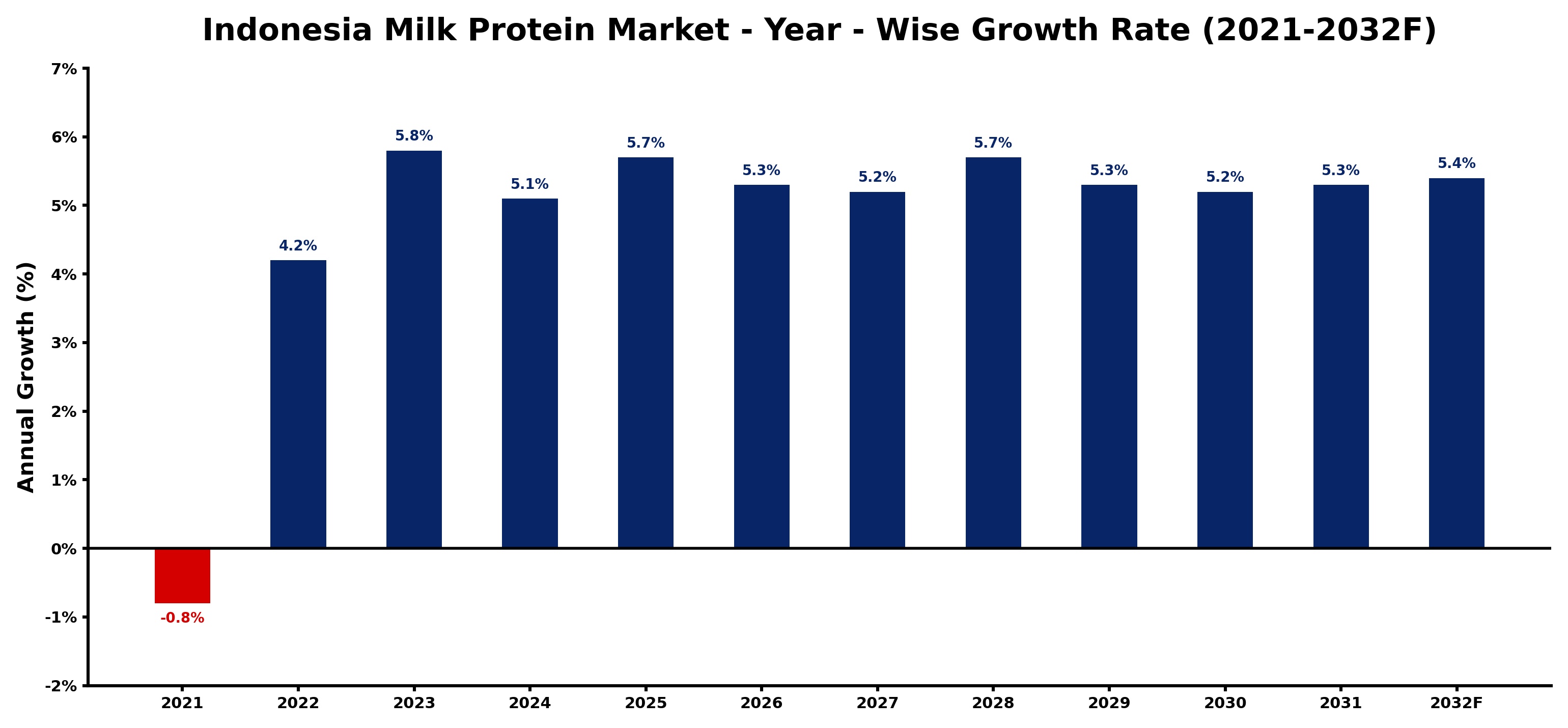
The table below presents the year‑wise growth rates along with the key drivers influencing the market
| Year | Growth Rate | Major Drivers |
| 2021 | -0.8% | Lower consumer demand caused significant milk protein production decline |
| 2022 | 4.2% | Manufacturing investments boost domestic dairy processing facility capacities |
| 2023 | 5.8% | Milk protein facility expansions drive regional supply chain efficiency |
| 2024 | 5.1% | New dairy processing plants enhance local milk protein production capacity |
| 2025 | 5.7% | Modernized dairy processing facilities boost milk protein production efficiency |
| 2026 | 5.3% | Advanced processing technologies boosted efficiency in milk protein production |
| 2027 | 5.2% | Higher milk processing technology investments boosted protein production efficiency |
| 2028 | 5.7% | Modernized dairy processing facilities boost protein extraction efficiency |
| 2029 | 5.3% | Milk processing facility upgrades boosted protein yield efficiencies |
| 2030 | 5.2% | Milk protein demand drives investment in local dairy processing facilities |
| 2031 | 5.3% | Milk processing plant upgrades boost protein concentrate production capacity |
| 2032 | 5.4% | Local dairy farms enhance protein output through upgraded processing facilities |
Note - Market size estimations and growth projections presented in this report are based on 6Wresearch’s advanced forecasting approach, validated with industry datasets as of June 2026.
Indonesia Milk Protein Market Synopsis
The Indonesia Milk Protein Market is evolving rapidly as local consumers shift toward healthier dietary choices, emphasizing the importance of nutritional intake. The market is influenced by a young, dynamic population that prioritizes fitness and wellness, resulting in an uptick in the consumption of protein-rich products.
Moreover, the increasing penetration of dairy products in Indonesian households has become a critical driver of growth. With a rising awareness of the benefits of milk protein, there is a discernible trend towards clean-label products, reflecting a demand for transparency and quality in food sourcing.
Indonesia Milk Protein Market Key Takeaways
- The market is witnessing a robust growth trajectory, with a strong emphasis on health and nutrition.
- Consumer preference is shifting towards natural and organic milk protein products free from additives.
- Sports nutrition is emerging as a significant application area for milk protein, supported by a fitness-oriented lifestyle.
- Post-COVID recovery is anticipated to rejuvenate demand for nutritious food options across various demographics.
- The competitive landscape is marked by investments in product innovation to cater to changing consumer tastes.
Evaluation of Restraints in Indonesia Milk Protein Market
Despite the encouraging growth prospects, the Indonesia Milk Protein Market is not without its challenges. A primary restraint stems from the high cost of production, which can inhibit market entry for smaller players and limit pricing flexibility. Additionally, stringent regulatory frameworks surrounding food safety and quality can create hurdles for manufacturers. The presence of substitute protein sources, such as soy and pea protein, poses further competition, potentially affecting market share and influencing consumer choices.
Indonesia Milk Protein Market Trends
A notable trend in the Indonesia Milk Protein Market is the rising consumer preference for products that are marketed as natural and organic. This is closely tied to the increased awareness of the health benefits associated with milk protein. The sports nutrition sector is also gaining traction, propelled by the growing popularity of fitness lifestyles and dietary supplements. Furthermore, innovation in product formulations is leading to the development of diverse offerings, including ready-to-drink protein beverages and fortified snacks that cater to on-the-go consumers.
Indonesia Milk Protein Market Opportunities
The market presents multiple avenues for growth and investment, particularly in developing innovative, health-oriented products that align with consumer preferences. There is significant potential in the expansion of dairy product lines, especially in urban areas where health-conscious consumers are increasing. Additionally, tapping into the e-commerce space for direct-to-consumer sales can enhance accessibility and expand market reach, particularly among younger demographics who are comfortable with online shopping.
Government Initiatives in the Indonesia Milk Protein Market
The Indonesian government has initiated various policies to support the local dairy industry, focusing on enhancing food security and improving nutritional standards. Public programs aimed at promoting dairy consumption, along with incentives for domestic producers to innovate and invest in infrastructure, are in place to stimulate growth. Furthermore, regulatory frameworks are evolving to ensure food safety and quality, which will ultimately benefit the milk protein market.
Future Insights of the Indonesia Milk Protein Market
Looking ahead to the period from 2026 to 2032, the Indonesia Milk Protein Market is poised for sustained growth driven by a combination of health trends and increasing disposable income among consumers. As awareness of nutrition continues to grow, we expect to see a surge in demand for milk protein, particularly within the wellness and fitness segments. The market will likely benefit from innovations in product offerings and strategic partnerships aimed at expanding distribution channels, allowing for greater penetration into untapped areas.
Indonesia Milk Protein Market Latest Developments (May 2025 - June 2026)
In the recent months, the Indonesia Milk Protein Market has seen a shift towards more diverse product offerings catering to the health-conscious consumer. There has been a notable rise in ready-to-drink protein products that appeal to the on-the-go lifestyle. Additionally, industry players are increasingly focusing on research and development to create innovative dairy alternatives that meet the demand for organic and non-GMO labels, reflecting the broader trend towards sustainable and responsible consumption.
Indonesia Milk Protein Market - Key Attractiveness of the Report
- 10 Years of Market Numbers
- Historical Data Starting from 2022 to 2025
- Base Year: 2025
- Forecast Data until 2032
- Key Performance Indicators Impacting the Market
- Major Upcoming Developments and Projects
Key Highlights of the Report:
- Indonesia Milk Protein Market Outlook
- Market Size of Indonesia Milk Protein Market, 2025
- Forecast of Indonesia Milk Protein Market, 2032
- Historical Data and Forecast of Indonesia Milk Protein Revenues & Volume for the Period 2022-2032F
- Indonesia Milk Protein Market Trend Evolution
- Indonesia Milk Protein Market Drivers and Challenges
- Indonesia Milk Protein Price Trends
- Indonesia Milk Protein Porter's Five Forces
- Indonesia Milk Protein Industry Life Cycle
- Historical Data and Forecast of Indonesia Milk Protein Market Revenues & Volume By Type for the Period 2022-2032F
- Historical Data and Forecast of Indonesia Milk Protein Market Revenues & Volume By Whey Protein Isolates for the Period 2022-2032F
- Historical Data and Forecast of Indonesia Milk Protein Market Revenues & Volume By Whey Protein Concentrates for the Period 2022-2032F
- Historical Data and Forecast of Indonesia Milk Protein Market Revenues & Volume By Milk Protein Hydrolysates for the Period 2022-2032F
- Historical Data and Forecast of Indonesia Milk Protein Market Revenues & Volume By Milk Protein Isolates for the Period 2022-2032F
- Historical Data and Forecast of Indonesia Milk Protein Market Revenues & Volume By Milk Protein Concentrates for the Period 2022-2032F
- Historical Data and Forecast of Indonesia Milk Protein Market Revenues & Volume By Others for the Period 2022-2032F
- Historical Data and Forecast of Indonesia Milk Protein Market Revenues & Volume By Form for the Period 2022-2032F
- Historical Data and Forecast of Indonesia Milk Protein Market Revenues & Volume By Liquid for the Period 2022-2032F
- Historical Data and Forecast of Indonesia Milk Protein Market Revenues & Volume By Dry for the Period 2022-2032F
- Historical Data and Forecast of Indonesia Milk Protein Market Revenues & Volume By Applications for the Period 2022-2032F
- Historical Data and Forecast of Indonesia Milk Protein Market Revenues & Volume By Dairy Products for the Period 2022-2032F
- Historical Data and Forecast of Indonesia Milk Protein Market Revenues & Volume By Sports Nutrition for the Period 2022-2032F
- Historical Data and Forecast of Indonesia Milk Protein Market Revenues & Volume By Infant Formula for the Period 2022-2032F
- Historical Data and Forecast of Indonesia Milk Protein Market Revenues & Volume By Others for the Period 2022-2032F
- Indonesia Milk Protein Import Export Trade Statistics
- Market Opportunity Assessment By Type
- Market Opportunity Assessment By Form
- Market Opportunity Assessment By Applications
- Indonesia Milk Protein Top Companies Market Share
- Indonesia Milk Protein Competitive Benchmarking By Technical and Operational Parameters
- Indonesia Milk Protein Company Profiles
- Indonesia Milk Protein Key Strategic Recommendations






































