Indonesia Mirrors Market Summary
The indonesia mirrors market was estimated at USD 253 Million in 2025 and is projected to reach USD 336 Million by 2032, growing at a CAGR of 5.5% from 2026 to 2032.
Indonesia Mirrors Market Year-wise Growth Rate and Key Drivers
This graph highlights how the Indonesia Mirrors Market has steadily grown over the years, supported by major growth factors.
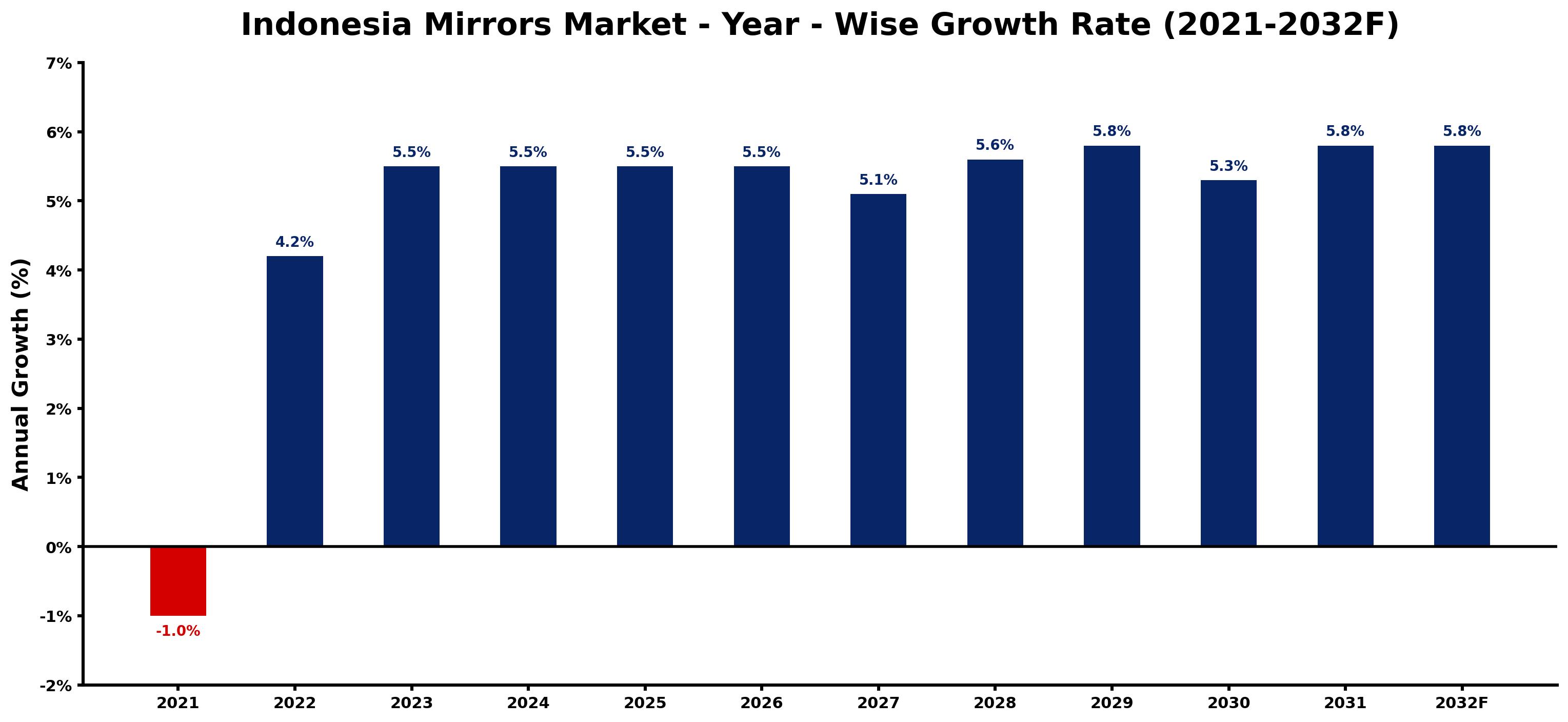
The table below presents the year wise growth rates along with the key drivers influencing the market
| Year | Growth Rate | Major Drivers |
| 2021 | -1.0% | Pandemicrelated restrictions limited foot traffic to retailers, diminishing showroom sales of mirrors significantly. |
| 2022 | 4.2% | Rising disposable income spurs consumer spending on luxury and decorative mirror items. |
| 2023 | 5.5% | Urbanization trends shift focus towards modern interior aesthetics, boosting mirror demand. |
| 2024 | 5.5% | Growing middle-class populations prioritize home design, enhancing mirror market opportunities. |
| 2025 | 5.5% | E-commerce platforms expand reach, facilitating online purchases of diverse mirror styles. |
| 2026 | 5.5% | Collaborations with local artisans elevate unique designs, attracting niche market segments. |
| 2027 | 5.1% | Sustainability trends push brands towards eco-friendly materials in mirror production processes. |
| 2028 | 5.6% | Technological innovations in manufacturing enhance precision and customization of mirrors. |
| 2029 | 5.8% | Increased focus on wellness encourages lifestyle changes, incorporating mirrors for personal reflection. |
| 2030 | 5.3% | Real estate developments feature integrated design elements, driving demand for decorative mirrors. |
| 2031 | 5.8% | Social media influencers shape consumer preferences, spotlighting mirror aesthetics in interiors. |
| 2032 | 5.8% | Luxury tourism boost prompts upscale hospitality sectors to invest in premium mirror installations. |
Note - Market size estimations and growth projections presented in this report are based on 6Wresearch's advanced forecasting approach, validated with industry datasets as of June 2026.
Indonesia Mirrors Market Synopsis
The Indonesia Mirrors Market is projected to reach 5.5% and witness significant growth during the forecast period (2026-2032). This growth is expected to be driven by the increasing demand for interior decoration products, particularly mirrors, in both residential and hospitality sectors. As Indonesia's economy continues to flourish, rising disposable income levels among urban households are fuelling a greater appetite for high-quality decorative items, including mirrors. Furthermore, a growing awareness of hygiene and sanitation, combined with a rising preference for designer bathroom fittings, is anticipated to create ample opportunities for market growth over the coming years.
Indonesia Mirrors Market Growth Drivers
The expanding economy of Indonesia has a significant impact on the mirrors market as increased disposable incomes enhance consumer purchasing power. This trend is particularly pronounced in urban areas where economic activities related to tourism and the hospitality sector are flourishing. As a result, consumer spending on luxury home décor items, including mirrors, is on the rise. Key growth drivers include:
- Economic Expansion: Strong economic activities and employment generation, especially in urban regions, are elevating consumer confidence and spending capacity.
- Luxury Home Decor Demand: Rising affluence is prompting consumers to invest in high-quality decorative items, with mirrors being a popular choice.
- Hygiene and Sanitation Awareness: Increased public focus on hygiene is leading to greater demand for bathroom accessories that enhance cleanliness and aesthetic appeal.
- Government Initiatives: Efforts to promote health benefits linked to proper sanitation practices are creating favorable market conditions.
- Presence of Premium Brands: An influx of international brands offering superior-quality designs at competitive prices is attracting a diverse range of customers.
Indonesia Mirrors Market Trends and Opportunities
The Indonesia Mirrors Market is characterized by several emerging trends that are shaping its future. The growing interest in personalized and designer products is creating opportunities for innovative mirror designs that cater to diverse consumer preferences.
- Customization: Consumers are increasingly seeking mirrors that reflect their personal style, opening avenues for bespoke design services.
- Smart Mirrors: The integration of technology in mirrors, such as smart functionalities, is gaining traction among tech-savvy consumers.
- Sustainable Materials: There is a rising trend towards the use of eco-friendly materials in mirror production, aligning with global sustainability efforts.
- Aesthetic Trends: A shift towards minimalism and modern aesthetics in home design is influencing mirror styles and finishes.
- Online Retail Growth: The online marketplace is expanding, providing consumers with increased accessibility to a variety of mirror options.
Indonesia Mirrors Market Challenges and Restraints
Despite the positive outlook, several challenges exist within the Indonesia Mirrors Market that may hinder growth. The complexity of mirror installation can pose significant barriers to consumer engagement.
- Installation Challenges: The technical expertise required for proper mirror installation can deter customers, particularly those opting for professional services.
- Cost of Services: High costs associated with hiring skilled professionals for installation and maintenance may limit market accessibility.
- Repair Costs: Periodic repairs and maintenance can lead to additional expenditures, affecting the overall profitability of mirror investments.
- Quality Issues: Low-grade products may not withstand harsh weather conditions, leading to durability concerns and increased long-term costs.
- Market Fragmentation: The fragmented nature of the market, with numerous unorganized players, creates challenges in quality assurance and standardization.
Indonesia Mirrors Market Government Investment and Initiatives
The Indonesian government is actively investing in initiatives aimed at promoting public health and enhancing local manufacturing capacities. These investments contribute positively to the mirrors market by encouraging standards that improve product quality and sustainability practices. Initiatives may include:
- Public Health Campaigns: Government-led campaigns emphasizing the importance of sanitation are indirectly boosting demand for bathroom mirrors.
- Support for Local Manufacturing: Policies aimed at bolstering local manufacturers can result in a more robust supply chain for mirrors.
- Incentives for Sustainable Practices: The government is promoting sustainability through incentives for manufacturers who adopt eco-friendly production methods.
- Urban Development Programs: Infrastructure investments in urban areas are likely to increase the demand for home improvement products, including mirrors.
- Trade and Investment Policies: Favorable trade regulations can facilitate the import of premium mirror designs and materials, enhancing market diversity.
Indonesia Mirrors Market Latest Developments (May 2025 - June 2026)
In recent months, the Indonesia Mirrors Market has witnessed various developments indicating a dynamic shift in consumer preferences and industry direction. Trends toward custom solutions and smart technologies are becoming more pronounced. Additionally, there has been a marked increase in the availability of upscale mirror designs targeting the affluent consumer segment. Offline and online channels are evolving, with many companies enhancing their digital presence to accommodate changing shopping habits. These trends suggest a fast-adapting market poised to leverage both technological advancements and shifts in decorative preferences.
Indonesia Mirrors Market - Key Attractiveness of the Report
- 10 Years of Market Numbers
- Historical Data Starting from 2022 to 2025
- Base Year: 2025
- Forecast Data until 2032
- Key Performance Indicators Impacting the Market
- Major Upcoming Developments and Projects
Key Highlights of the Report:
- Indonesia Mirrors Market Outlook
- Market Size of Indonesia Mirrors Market, 2025
- Forecast of Indonesia Mirrors Market, 2032F
- Historical Data and Forecast of Indonesia Mirrors Revenues & Volume for the Period 2022-2032F
- Indonesia Mirrors Market Trend Evolution
- Indonesia Mirrors Market Drivers and Challenges
- Indonesia Mirrors Price Trends
- Indonesia Mirrors Porter's Five Forces
- Indonesia Mirrors Industry Life Cycle
- Historical Data and Forecast of Indonesia Mirrors Market Revenues & Volume By Types for the Period 2022-2032F
- Historical Data and Forecast of Indonesia Mirrors Market Revenues & Volume By Silver Mirror for the Period 2022-2032F
- Historical Data and Forecast of Indonesia Mirrors Market Revenues & Volume By Plated Mirror for the Period 2022-2032F
- Historical Data and Forecast of Indonesia Mirrors Market Revenues & Volume By Others for the Period 2022-2032F
- Historical Data and Forecast of Indonesia Mirrors Market Revenues & Volume By End-users for the Period 2022-2032F
- Historical Data and Forecast of Indonesia Mirrors Market Revenues & Volume By Bathroom for the Period 2022-2032F
- Historical Data and Forecast of Indonesia Mirrors Market Revenues & Volume By Make-up for the Period 2022-2032F
- Historical Data and Forecast of Indonesia Mirrors Market Revenues & Volume By Dressing for the Period 2022-2032F
- Historical Data and Forecast of Indonesia Mirrors Market Revenues & Volume By Decorative for the Period 2022-2032F
- Historical Data and Forecast of Indonesia Mirrors Market Revenues & Volume By Advertising for the Period 2022-2032F
- Historical Data and Forecast of Indonesia Mirrors Market Revenues & Volume By Others for the Period 2022-2032F
- Indonesia Mirrors Import Export Trade Statistics
- Market Opportunity Assessment By Types
- Market Opportunity Assessment By End-users
- Indonesia Mirrors Top Companies Market Share
- Indonesia Mirrors Competitive Benchmarking By Technical and Operational Parameters
- Indonesia Mirrors Company Profiles
- Indonesia Mirrors Key Strategic Recommendations






































