indonesia non-alcoholic beer market
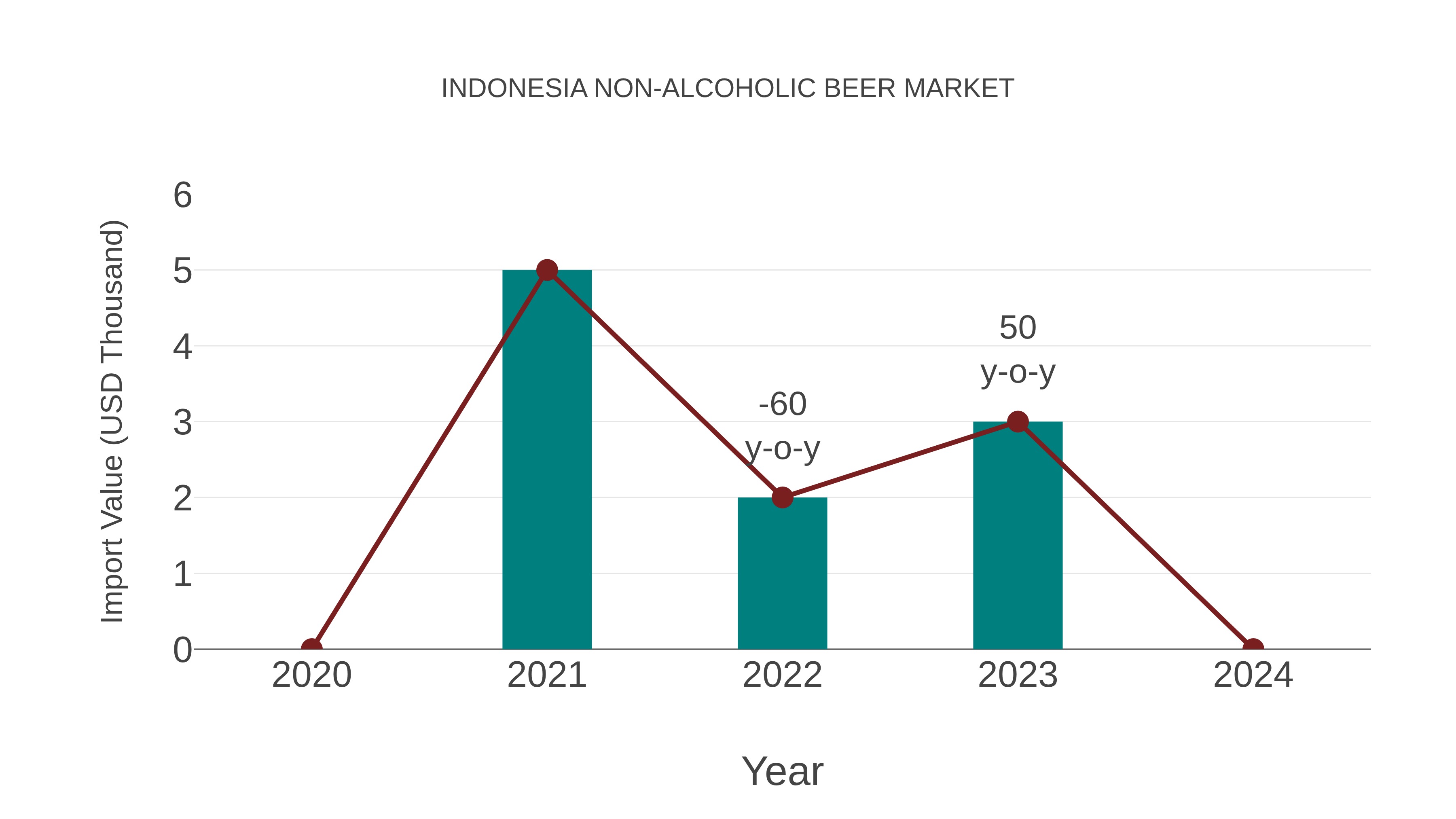
Indonesia Non-Alcoholic Beer Market Growth Rate
According to 6Wresearch internal database and industry insights, the Indonesia Non-Alcoholic Beer Market is projected to grow at a compound annual growth rate (CAGR) of 8.5% during the forecast period from 2026 to 2032.
Five-Year Growth Trajectory of the Indonesia Non-Alcoholic Beer Market with Core Drivers
Below mentioned are the evaluation of year-wise growth rate along with key drivers:
| Years | CAGR (%) | Growth Drivers |
| 2021 | 7.1 | Increased health consciousness and demand for alcohol-free alternatives. |
| 2022 | 7.3 | Growing trend of low-alcohol beverages among millennials and health-conscious consumers. |
| 2023 | 7.6 | Rise in demand for non-alcoholic beer due to its social acceptance in gatherings. |
| 2024 | 7.9 | Expansion of non-alcoholic beer availability in restaurants and bars. |
| 2025 | 8.2 | Growing adoption in local and international markets driven by global trends towards wellness and moderation. |
Topics Covered in the Indonesia Non-Alcoholic Beer Market Report
The Indonesia Non-Alcoholic Beer Market report thoroughly covers the market by type, category, packaging, and distribution channel, providing an unbiased and detailed analysis of ongoing market trends, opportunities, challenges, and market drivers, helping stakeholders align their strategies with current and future market dynamics.
Indonesia Non-Alcoholic Beer Market Highlights
| Report Name | Indonesia Non-Alcoholic Beer Market |
| Forecast period | 2026-2032 |
| CAGR | 8.5% |
| Growing Sector | Non-Alcoholic Beer |
Indonesia Non-Alcoholic Beer Market Synopsis
There has been rapid growth in the Indonesia Non-Alcohol Beer Market as consumers are becoming increasingly aware of health benefits associated with consuming non-alcohol flavored beverages, the growing acceptance of "wellness" type drinks, and demand for Alcohol Free beverages. The rise of Moderation and the growth of the Millennial Generation and the Gen Z Generation who choose lower alcohol and non-alcohol beverages are driving growth within this Market Sector. Advancements in technology for producing Non-Alcohol Beer continue to support this growing segment of the beer market as consumers are now highly educated regarding the benefits of consuming Non-Alcoholic Beer.
Evaluation of Growth Drivers in the Indonesia Non-Alcoholic Beer Market
Below mentioned are some prominent drivers and their impact on the market dynamics:
| Drivers | Primary Segments Affected | Why It Matters (Evidence) |
| Health-Conscious Consumers | Malted Beverages, Lager, Pilsner | Increased consumer awareness of the health benefits of non-alcoholic beer boosts demand. |
| Rise in Popularity of Non-Alcoholic Beverages | Ale-Based, Specialty Beverages | Social and lifestyle trends are shifting consumers towards healthier, alcohol-free alternatives. |
| Expanding Distribution Channels | Bottles, Cans, Supermarkets, Online Stores | The wider reach and availability of products in prominent retail stores are encouraging more consumer buying. |
| Technological Improvements in Brewing | Malted Beverages, Lager | Recent advances in brewing technology have led to the experiments with non-alcoholic beer being more broadly accepted. |
| Growing Social Acceptance | All Product Segments | Nonalcoholic beer is becoming increasingly acceptable in social circles and events with each passing day. |
The Indonesia Non-Alcoholic Beer Market is projected to grow at a CAGR of 8.5% from 2026 to 2032. Rising Consumer interest in finding healthier options instead of traditional alcoholic drinks contributes to the ongoing growth of this industry. As the demand for non-alcoholic beverages continues to increase, and innovations in brewing technology continue to drive the development of these products, there will continue to be a growth pattern seen across multiple markets. Subsequently, the shifting cultural perspective toward moderation in alcohol usage is helping to facilitate increased acceptance of these products socially. However, new product innovation as well as heightened consumer education regarding the advantages of these products, will continue to enhance the overall positive trajectory of this market.
Evaluation of Restraints in the Indonesia Non-Alcoholic Beer Market
Below mentioned are some major restraints and their influence on the market dynamics:
| Restraints | Primary Segments Affected | What This Means (Evidence) |
| Perception of Non-Alcoholic Beer | All Product Segments | Some consumers still associate non-alcoholic beer with lower quality or taste, limiting market penetration. |
| High Price of Premium Options | Bottles, Cans, Supermarkets | Premium non-alcoholic beer can be more expensive, deterring price-sensitive consumers. |
| Competition from Other Beverages | Pilsner, Specialty Beverages | The increasing range of soft drinks and fruit juices is making the competition in the non-alcoholic drinks sector tougher. |
| Limited Consumer Awareness | Lager, Ale-Based | The ignorance of health benefits and non-alcoholic beer being unavailable is a barrier to the large consumer base. |
| Regulatory Barriers | All Product Segments | strict regulations and compliance requirements may limit the products available and increase the production costs for the manufacturers. |
Indonesia Non-Alcoholic Beer Market Challenges
In the Indonesia Non-Alcoholic Beer Industry consumer perception of non-alcoholic beer is an obstacle for many consumers in terms of taste and quality, so the success and growth of the industry will depend on addressing this issue for broader acceptance within the consumer market. A premium non-alcoholic beer will come with a higher price point, limiting its appeal to budget-minded consumers and those who want an alternative to alcohol. The growth of the industry has also been hampered by competition among other beverage categories, including juice, soda, and energy drinks. To help consumers see the benefit and quality of non-alcoholic beer, the industry must focus on consumer education and provide pricing that is competitive with similar alcoholic products.
Indonesia Non-Alcoholic Beer Market Trends
Here are some major trends changing the Indonesia Non-Alcoholic Beer Market dynamics:
- Health Focused Consumption: As people's awareness of health has increased, the number of non-alcoholic beers available is growing, as more people turn to non-alcoholic options instead of alcoholic. Non-alcoholic beer is recognised as lower calorie and sugar than soft drinks and other sweet products.
- Premiumisation of Non Alcoholic Beer: The rise of premium Non-alcoholic beers has become apparent, as breweries create products using the best ingredients available, provide complex flavours, and provide superior taste compared to traditional beer. Consumers are willing to pay more for a high quality product that has the same flavour of the traditional beer they enjoy.
- Craft Style Non-Alcoholic Beers: With the craft beer trend gaining speed, there is also a large increase in the use of craft style beers in the production of non-alcoholic beers. Younger, thrill seeking consumers love these products, as each product contains its own unique flavours.
- Sustainability: As eco conscious consumers grow, the production processes are becoming eco friendly, the packaging is becoming sustainable, and the carbon footprints are decreasing globally for many non-alcoholic beer brands.
Investment Opportunities in the Indonesia Non-Alcoholic Beer Market
The Indonesia Non-Alcoholic Beer Market presents several investment opportunities, including:
- Technology Innovation in Beer Production: The need for continued investment in R & D to improve the technology and processes used for brewing beers to improve their taste and quality, in order to meet consumer expectations and increase market share.
- Diversifying Products: Companies can expand their product range to include products that are non-alcoholic (e.g., flavored beers, craft or low-sugar varieties) to help meet the different types of consumer's demands.
- E-Commerce Growth: Companies that are focused on enhancing their e-commerce presence will have access to the rapidly growing online marketplace, providing consumers with the convenience of purchasing non-alcoholic beer via e-commerce channels.
- Environmentally Respectful Approaches to Production: Consumers are increasingly aware of the environment, and companies can capitalize on environmentally conscious consumers by investing in environmentally sustainable products such as packaging and production techniques that are less damaging to the environment.
Top 5 Leading Players in the Indonesia Non-Alcoholic Beer Market
Below is the list of prominent companies leading the Indonesia Non-Alcoholic Beer Market Share:
1. Heineken N.V.
| Company Name | Heineken N.V. |
|---|---|
| Established Year | 1864 |
| Headquarters | Amsterdam, Netherlands |
| Website | Click Here |
Heineken is a major player in the non-alcoholic beer market with its Heineken 0.0, offering a refreshing and alcohol-free beer alternative.
2. Carlsberg Group
| Company Name | Carlsberg Group |
|---|---|
| Established Year | 1847 |
| Headquarters | Copenhagen, Denmark |
| Website | Click Here |
Carlsberg Group offers non-alcoholic beer options under its brand Carlsberg 0.0, focusing on maintaining the original taste of beer without alcohol.
3. Anheuser-Busch InBev
| Company Name | Anheuser-Busch InBev |
|---|---|
| Established Year | 2008 |
| Headquarters | Leuven, Belgium |
| Website | Click Here |
AB InBev is a leading producer of non-alcoholic beer, offering popular brands such as Budweiser Zero in multiple global markets.
4. Kirin Holdings Company, Limited
| Company Name | Kirin Holdings Company, Limited |
|---|---|
| Established Year | 1885 |
| Headquarters | Tokyo, Japan |
| Website | Click Here |
Kirin offers various non-alcoholic beverages, including its Kirin Zero, catering to health-conscious consumers in Indonesia and other Asian markets.
5. United Breweries Group (UB Group)
| Company Name | United Breweries Group (UB Group) |
|---|---|
| Established Year | 1972 |
| Headquarters | Bangalore, India |
| Website | Click Here |
United Breweries Group offers non-alcoholic beer under the Kingfisher brand, focusing on the growing demand for alcohol-free beer alternatives.
Government Regulations Introduced in the Indonesia Non-Alcoholic Beer Market
According to Indonesian Government data, in Indonesia, non-alcoholic beer is regulated by the National Food and Drug Agency (BPOM) and the Ministry of Industry to ensure food safety and quality control. Many laws require appropriate labeling, ingredient requirements and methods of production. Some and many local governments are also helping to promote policies which promote a healthier lifestyle, such as providing opportunities to have non-alcoholic beverages available at events (public events) as another way to help promote responsible drinking. All of these initiatives are designed to help increase awareness of the public to be healthier as well as increase the availability of healthier drink options within their market.
Future Insights of the Indonesia Non-Alcoholic Beer Market
The forecast for Indonesia Non-Alcoholic Beer Market is optimistic due to increased awareness about health, increased awareness of the beverage category, and a growing number of distribution opportunities. Evidence of continued growth can be seen through the increasing acceptance of non-alcoholic beers by millennials and through advancements in brewing techniques. Due to an increase in disposable income, as well as a growing number of people looking for healthy beverages, the non-alcoholic beer market will exhibit stable growth over the next several years. Therefore, with an increase in the availability of products in the marketplace, the Indonesia Non-Alcoholic Beer Market Growth will continue to grow and flourish.
Market Segmentation Analysis
The report offers a comprehensive study of the following market segments and their leading categories:
By Type- Malted Beverages to Dominate the Market
According to Ritika Kalra, Senior Research Analyst, 6Wresearch, Malted beverages are expected to dominate the Indonesia Non-Alcoholic Beer Market due to their widespread appeal and taste resembling traditional beers.
By Category- Lager to Dominate the Market
Lager is expected to lead the market due to its refreshing flavor and popularity among Indonesian consumers, especially in hot climates.
By Packaging- Cans to Dominate the Market
Cans are expected to dominate the packaging segment due to their convenience, portability, and cost-effectiveness for both consumers and producers.
By Distribution Channel- Supermarkets Dominate the Market
Supermarkets are projected to dominate the distribution channel segment, offering easy accessibility and a variety of non-alcoholic beer brands for consumers.
Key Attractiveness of the Report
- 10 Years of Market Numbers
- Historical Data Starting from 2022 to 2025
- Base Year: 2025
- Forecast Data until 2032
- Key Performance Indicators Impacting the Market
- Major Upcoming Developments and Projects
Key Highlights of the Report:
- Indonesia Non-Alcoholic Beer Market Outlook
- Market Size of Indonesia Non-Alcoholic Beer Market,2025
- Forecast of Indonesia Non-Alcoholic Beer Market, 2032
- Historical Data and Forecast of Indonesia Non-Alcoholic Beer Revenues & Volume for the Period 2022- 2032
- Indonesia Non-Alcoholic Beer Market Trend Evolution
- Indonesia Non-Alcoholic Beer Market Drivers and Challenges
- Indonesia Non-Alcoholic Beer Price Trends
- Indonesia Non-Alcoholic Beer Porter's Five Forces
- Indonesia Non-Alcoholic Beer Industry Life Cycle
- Historical Data and Forecast of Indonesia Non-Alcoholic Beer Market Revenues & Volume By Type for the Period 2022- 2032
- Historical Data and Forecast of Indonesia Non-Alcoholic Beer Market Revenues & Volume By Malted Beverages for the Period 2022- 2032
- Historical Data and Forecast of Indonesia Non-Alcoholic Beer Market Revenues & Volume By Ale-Based for the Period 2022- 2032
- Historical Data and Forecast of Indonesia Non-Alcoholic Beer Market Revenues & Volume By Hybrid Beverages for the Period 2022- 2032
- Historical Data and Forecast of Indonesia Non-Alcoholic Beer Market Revenues & Volume By Specialty for the Period 2022- 2032
- Historical Data and Forecast of Indonesia Non-Alcoholic Beer Market Revenues & Volume By Category for the Period 2022- 2032
- Historical Data and Forecast of Indonesia Non-Alcoholic Beer Market Revenues & Volume By Lager for the Period 2022- 2032
- Historical Data and Forecast of Indonesia Non-Alcoholic Beer Market Revenues & Volume By Stout for the Period 2022- 2032
- Historical Data and Forecast of Indonesia Non-Alcoholic Beer Market Revenues & Volume By Pilsner for the Period 2022- 2032
- Historical Data and Forecast of Indonesia Non-Alcoholic Beer Market Revenues & Volume By Others for the Period 2022- 2032
- Historical Data and Forecast of Indonesia Non-Alcoholic Beer Market Revenues & Volume By Packaging for the Period 2022- 2032
- Historical Data and Forecast of Indonesia Non-Alcoholic Beer Market Revenues & Volume By Bottles for the Period 2022- 2032
- Historical Data and Forecast of Indonesia Non-Alcoholic Beer Market Revenues & Volume By Cans for the Period 2022- 2032
- Historical Data and Forecast of Indonesia Non-Alcoholic Beer Market Revenues & Volume By Kegs for the Period 2022- 2032
- Historical Data and Forecast of Indonesia Non-Alcoholic Beer Market Revenues & Volume By Cartons for the Period 2022- 2032
- Historical Data and Forecast of Indonesia Non-Alcoholic Beer Market Revenues & Volume By Distribution Channel for the Period 2022- 2032
- Historical Data and Forecast of Indonesia Non-Alcoholic Beer Market Revenues & Volume By Supermarkets for the Period 2022- 2032
- Historical Data and Forecast of Indonesia Non-Alcoholic Beer Market Revenues & Volume By Online Stores for the Period 2022- 2032
- Historical Data and Forecast of Indonesia Non-Alcoholic Beer Market Revenues & Volume By Restaurants & Bars for the Period 2022- 2032
- Historical Data and Forecast of Indonesia Non-Alcoholic Beer Market Revenues & Volume By Specialty Stores for the Period 2022- 2032
- Indonesia Non-Alcoholic Beer Import Export Trade Statistics
- Market Opportunity Assessment By Type
- Market Opportunity Assessment By Category
- Market Opportunity Assessment By Packaging
- Market Opportunity Assessment By Distribution Channel
- Indonesia Non-Alcoholic Beer Top Companies Market Share
- Indonesia Non-Alcoholic Beer Competitive Benchmarking By Technical and Operational Parameters
- Indonesia Non-Alcoholic Beer Company Profiles
- Indonesia Non-Alcoholic Beer Key Strategic Recommendations
Market Covered
The report offers a comprehensive study of the subsequent market segments:
By Type
- Malted Beverages
- Ale-Based
- Hybrid Beverages
- Specialty
By Category
- Lager
- Stout
- Pilsner
- Others
By Packaging
- Bottles
- Cans
- Kegs
- Cartons
By Distribution Channel
- Supermarkets
- Online Stores
- Restaurants & Bars
- Specialty Stores






































