Indonesia Oil and Gas Pipeline Market: Import Trend Analysis
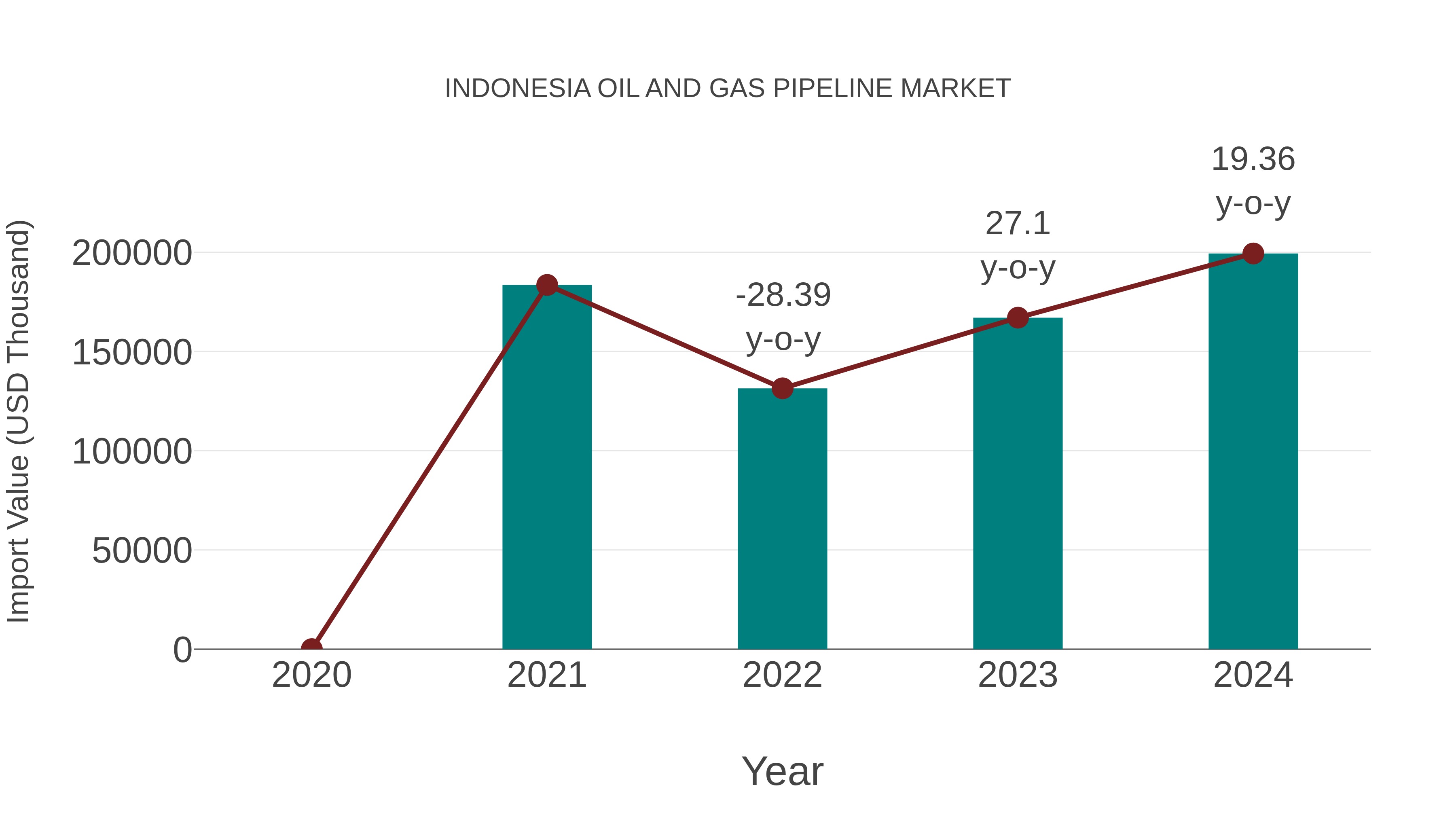
In the Indonesia oil and gas pipeline market, the import trend showed significant growth from 2023 to 2024, with a growth rate of 19.36%. The compound annual growth rate (CAGR) for imports between 2020 and 2024 stood at 2.8%. This surge in import momentum can be attributed to the increased demand for energy infrastructure development in the region, reflecting a positive market stability and robust trade environment during this period.
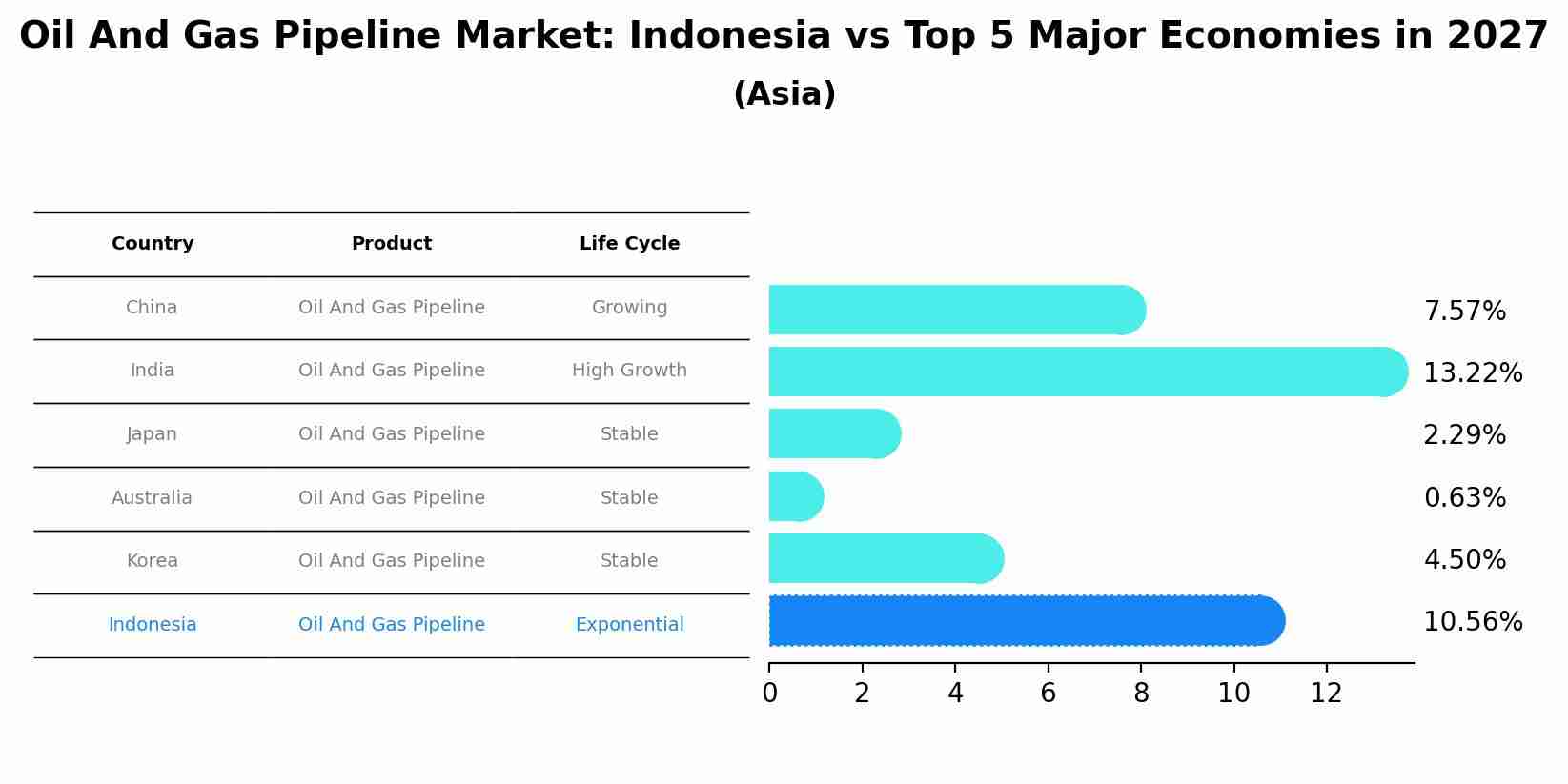
Oil And Gas Pipeline Market: Indonesia vs Top 5 Major Economies in 2027 (Asia)
In the Asia region, the Oil And Gas Pipeline market in Indonesia is projected to expand at a high growth rate of 10.56% by 2027. The largest economy is China, followed by India, Japan, Australia and South Korea.
Indonesia Oil And Gas Pipeline Market Synopsis
The oil and gas pipeline market in Indonesia is influenced by the country`s growing energy demand and its status as a major oil and gas producer in the region. Investments in pipeline infrastructure are crucial for transporting these resources efficiently. The market`s outlook is closely tied to oil and gas exploration and production activities, as well as government policies related to energy development.
Drivers of the Market
The Indonesia Oil and Gas Pipeline market are influenced by the country`s energy demand and its status as a net importer of oil and gas. The government`s focus on developing domestic energy resources and infrastructure to support oil and gas transportation drives the demand for pipelines. Furthermore, the exploration and production activities in Indonesia`s offshore and onshore fields require an extensive network of pipelines, boosting the market.
Challenges of the Market
The Indonesia Oil and Gas Pipeline Market faces several challenges, primarily related to environmental concerns and sustainability. The development and operation of pipelines often encounter opposition from environmental activists and local communities due to potential ecological damage. Moreover, ensuring pipeline safety and preventing leaks or accidents is a continuous challenge, requiring significant investments in monitoring and maintenance. Additionally, the volatility of global oil and gas prices can affect the profitability and viability of pipeline projects. Political instability and regulatory changes can also impact the investment climate for pipeline companies. Lastly, the need to adapt to alternative energy sources and reduce reliance on fossil fuels poses a long-term challenge for the industry.
COVID-19 Impact on the Market
The oil and gas pipeline market experienced a decline in demand as energy consumption dropped during the pandemic. Cancellation or delay of several projects in the oil and gas sector also impacted the market. However, as economic activities resumed and energy demand increased, the market gradually rebounded.
Key Players in the Market
The Indonesia oil and gas pipeline market are integral to the country`s energy sector, facilitating the transportation of hydrocarbons from production sites to processing facilities and end consumers. Key players in this market include both domestic and international companies involved in pipeline construction, maintenance, and related services. Domestic players often collaborate with global firms to leverage their expertise. Notable participants include PT. Pertamina, PT. Rekayasa Industri, and McDermott International.
Key Highlights of the Report:
- Indonesia Oil And Gas Pipeline Market Outlook
- Market Size of Indonesia Oil And Gas Pipeline Market, 2025
- Forecast of Indonesia Oil And Gas Pipeline Market, 2032
- Historical Data and Forecast of Indonesia Oil And Gas Pipeline Revenues & Volume for the Period 2022-2032F
- Indonesia Oil And Gas Pipeline Market Trend Evolution
- Indonesia Oil And Gas Pipeline Market Drivers and Challenges
- Indonesia Oil And Gas Pipeline Price Trends
- Indonesia Oil And Gas Pipeline Porter's Five Forces
- Indonesia Oil And Gas Pipeline Industry Life Cycle
- Historical Data and Forecast of Indonesia Oil And Gas Pipeline Market Revenues & Volume By Location of Deployment for the Period 2022-2032F
- Historical Data and Forecast of Indonesia Oil And Gas Pipeline Market Revenues & Volume By Onshore for the Period 2022-2032F
- Historical Data and Forecast of Indonesia Oil And Gas Pipeline Market Revenues & Volume By Offshore for the Period 2022-2032F
- Historical Data and Forecast of Indonesia Oil And Gas Pipeline Market Revenues & Volume By Type for the Period 2022-2032F
- Historical Data and Forecast of Indonesia Oil And Gas Pipeline Market Revenues & Volume By Crude Oil Pipeline for the Period 2022-2032F
- Historical Data and Forecast of Indonesia Oil And Gas Pipeline Market Revenues & Volume By Gas Pipeline for the Period 2022-2032F
- Indonesia Oil And Gas Pipeline Import Export Trade Statistics
- Market Opportunity Assessment By Location of Deployment
- Market Opportunity Assessment By Type
- Indonesia Oil And Gas Pipeline Top Companies Market Share
- Indonesia Oil And Gas Pipeline Competitive Benchmarking By Technical and Operational Parameters
- Indonesia Oil And Gas Pipeline Company Profiles
- Indonesia Oil And Gas Pipeline Key Strategic Recommendations






































