Indonesia Passenger Car Motor Oil Market: Import Trend Analysis
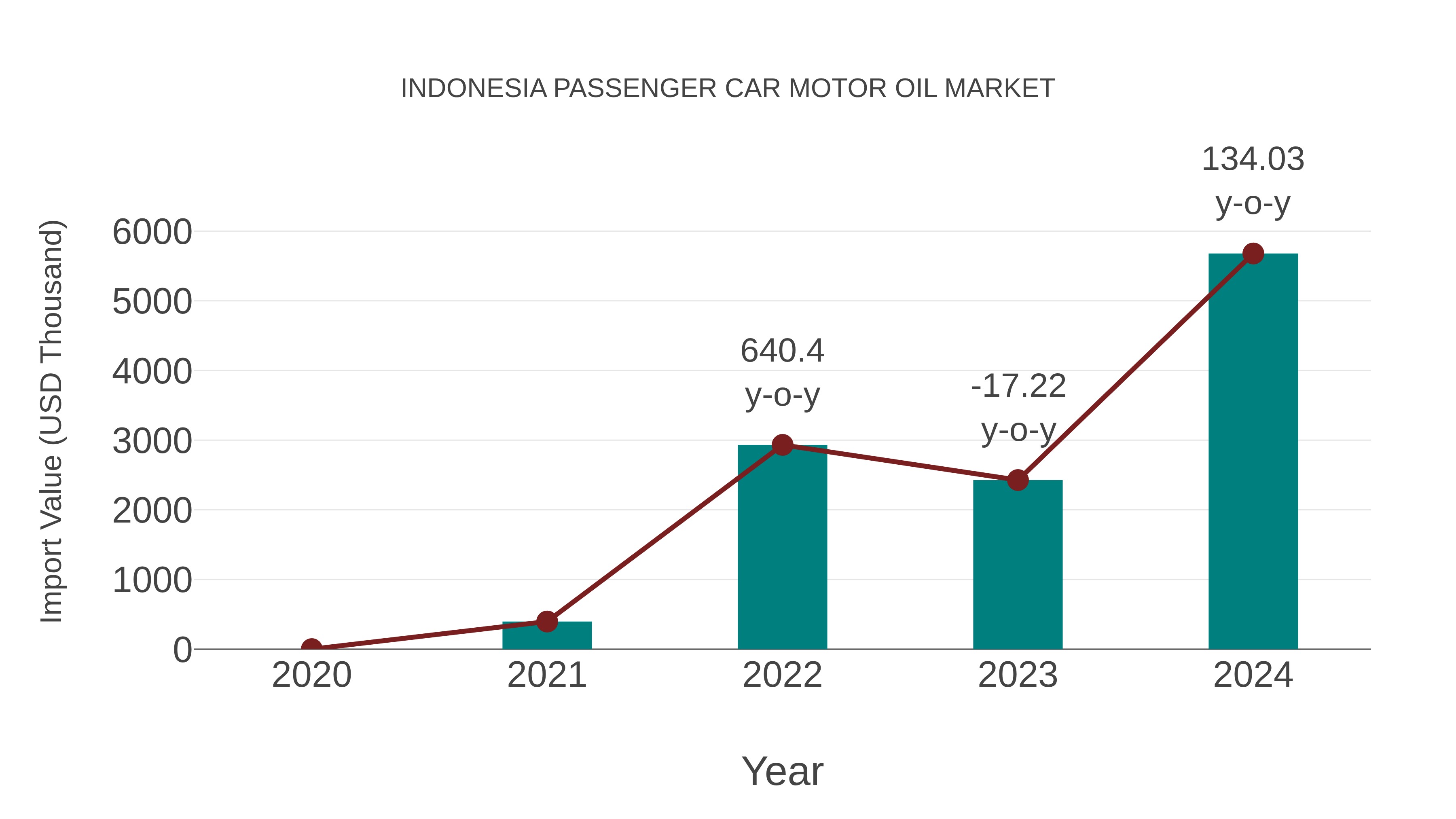
In the Indonesia passenger car motor oil market, the import trend showed significant growth from 2023 to 2024, with a growth rate of 134.03%. The compound annual growth rate (CAGR) for the period 2020-2024 stood at 142.97%. This surge in imports could be attributed to a notable demand shift towards higher-quality motor oils, reflecting changing consumer preferences and evolving automotive technologies.
Indonesia Passenger Car Motor Oil Market Overview
The Indonesia passenger car motor oil market is experiencing steady growth, driven by increasing vehicle ownership and a growing automotive industry. The market is characterized by a diverse range of products from both domestic and international manufacturers, offering consumers a wide variety of choices. Major players in the market are focusing on product innovation, such as the development of synthetic and semi-synthetic motor oils to meet the demands of modern engines. Additionally, the market is witnessing a shift towards environmentally-friendly and energy-efficient products, reflecting the growing awareness of sustainability among consumers. Overall, the Indonesia passenger car motor oil market is poised for further expansion, fueled by factors such as urbanization, rising disposable incomes, and a thriving automotive aftermarket sector.
Indonesia Passenger Car Motor Oil Market Trends
The Indonesia passenger car motor oil market is experiencing a shift towards higher quality synthetic oils due to the increasing demand for improved fuel efficiency and engine performance. Consumers are becoming more conscious of the benefits of using synthetic oils, such as better protection against wear and tear, extended oil change intervals, and improved engine cleanliness. Additionally, there is a growing emphasis on environmentally-friendly products, leading to a rise in the adoption of eco-friendly and bio-based motor oils. As the automotive industry in Indonesia continues to grow, manufacturers are focusing on developing innovative motor oil formulations to meet the evolving needs of consumers and comply with stricter environmental regulations. Overall, the market is witnessing a trend towards premium synthetic oils and sustainable products.
Indonesia Passenger Car Motor Oil Market Challenges
In the Indonesia passenger car motor oil market, some key challenges include intense competition among leading brands, price sensitivity among consumers, and the increasing demand for more environmentally friendly and fuel-efficient products. The market also faces challenges related to counterfeit products, which can undermine consumer trust and affect the overall industry reputation. Additionally, the lack of awareness about the importance of using high-quality motor oil and the presence of a large number of unorganized players in the market contribute to the challenges faced by both established and new entrants. Overall, navigating these challenges requires companies to focus on innovation, quality assurance, and effective marketing strategies to successfully differentiate themselves in a crowded and competitive market landscape.
Indonesia Passenger Car Motor Oil Market Investment Opportunities
The Indonesia passenger car motor oil market presents lucrative investment opportunities due to the country`s growing automotive industry and increasing vehicle ownership rates. With a large and expanding consumer base, demand for high-quality motor oils is on the rise, creating potential for market growth and profitability. Investing in the development and distribution of innovative and eco-friendly motor oil products tailored to the Indonesian market preferences could be a successful strategy. Additionally, investing in strategic partnerships with local automotive manufacturers or retailers can help secure a strong market presence. With the Indonesian government`s focus on promoting sustainable transportation solutions, there is also potential for investment in environmentally friendly motor oil products to cater to the growing trend towards eco-conscious consumer choices.
Indonesia Passenger Car Motor Oil Market Government Policy
Government policies in Indonesia related to the passenger car motor oil market primarily focus on regulating product quality and standards to ensure consumer protection and environmental sustainability. The Indonesian government has implemented regulations, such as the SNI (Indonesian National Standard) certification, to ensure that motor oils meet specified quality requirements. Additionally, there are regulations in place to monitor and control the disposal of used motor oil to mitigate environmental impact. The government also encourages the use of environmentally friendly motor oils through incentives and campaigns to promote sustainability in the automotive sector. Overall, government policies in Indonesia aim to uphold quality standards, protect consumers, and promote environmental responsibility within the passenger car motor oil market.
Indonesia Passenger Car Motor Oil Market Future Outlook
The Indonesia passenger car motor oil market is expected to show steady growth in the coming years driven by factors such as increasing vehicle ownership, rising disposable incomes, and a growing automotive aftermarket industry. The market is likely to see a shift towards higher quality synthetic oils as consumers become more aware of the benefits they offer in terms of engine protection and fuel efficiency. Additionally, the trend towards electric vehicles may impact the demand for traditional motor oils, but opportunities exist in the development of specialized lubricants for electric vehicle components. Overall, the Indonesia passenger car motor oil market is anticipated to expand, with key players focusing on product innovation, sustainability, and strategic partnerships to capitalize on emerging trends and maintain a competitive edge in the market.
Key Highlights of the Report:
- Indonesia Passenger Car Motor Oil Market Outlook
- Market Size of Indonesia Passenger Car Motor Oil Market,2025
- Forecast of Indonesia Passenger Car Motor Oil Market, 2032
- Historical Data and Forecast of Indonesia Passenger Car Motor Oil Revenues & Volume for the Period 2022-2032F
- Indonesia Passenger Car Motor Oil Market Trend Evolution
- Indonesia Passenger Car Motor Oil Market Drivers and Challenges
- Indonesia Passenger Car Motor Oil Price Trends
- Indonesia Passenger Car Motor Oil Porter's Five Forces
- Indonesia Passenger Car Motor Oil Industry Life Cycle
- Historical Data and Forecast of Indonesia Passenger Car Motor Oil Market Revenues & Volume By Type for the Period 2022-2032F
- Historical Data and Forecast of Indonesia Passenger Car Motor Oil Market Revenues & Volume By Synthetic for the Period 2022-2032F
- Historical Data and Forecast of Indonesia Passenger Car Motor Oil Market Revenues & Volume By Conventional for the Period 2022-2032F
- Historical Data and Forecast of Indonesia Passenger Car Motor Oil Market Revenues & Volume By Semi-Synthetic for the Period 2022-2032F
- Historical Data and Forecast of Indonesia Passenger Car Motor Oil Market Revenues & Volume By High-Mileage for the Period 2022-2032F
- Historical Data and Forecast of Indonesia Passenger Car Motor Oil Market Revenues & Volume By Viscosity Grade for the Period 2022-2032F
- Historical Data and Forecast of Indonesia Passenger Car Motor Oil Market Revenues & Volume By 5W-30 for the Period 2022-2032F
- Historical Data and Forecast of Indonesia Passenger Car Motor Oil Market Revenues & Volume By 10W-40 for the Period 2022-2032F
- Historical Data and Forecast of Indonesia Passenger Car Motor Oil Market Revenues & Volume By 15W-50 for the Period 2022-2032F
- Historical Data and Forecast of Indonesia Passenger Car Motor Oil Market Revenues & Volume By 0W-20 for the Period 2022-2032F
- Historical Data and Forecast of Indonesia Passenger Car Motor Oil Market Revenues & Volume By Application for the Period 2022-2032F
- Historical Data and Forecast of Indonesia Passenger Car Motor Oil Market Revenues & Volume By High Performance for the Period 2022-2032F
- Historical Data and Forecast of Indonesia Passenger Car Motor Oil Market Revenues & Volume By Standard Driving for the Period 2022-2032F
- Historical Data and Forecast of Indonesia Passenger Car Motor Oil Market Revenues & Volume By Long Mileage for the Period 2022-2032F
- Historical Data and Forecast of Indonesia Passenger Car Motor Oil Market Revenues & Volume By Fuel Efficiency for the Period 2022-2032F
- Historical Data and Forecast of Indonesia Passenger Car Motor Oil Market Revenues & Volume By End Use for the Period 2022-2032F
- Historical Data and Forecast of Indonesia Passenger Car Motor Oil Market Revenues & Volume By Car Owners for the Period 2022-2032F
- Historical Data and Forecast of Indonesia Passenger Car Motor Oil Market Revenues & Volume By Dealerships for the Period 2022-2032F
- Historical Data and Forecast of Indonesia Passenger Car Motor Oil Market Revenues & Volume By Service Centers for the Period 2022-2032F
- Historical Data and Forecast of Indonesia Passenger Car Motor Oil Market Revenues & Volume By Automotive for the Period 2022-2032F
- Indonesia Passenger Car Motor Oil Import Export Trade Statistics
- Market Opportunity Assessment By Type
- Market Opportunity Assessment By Viscosity Grade
- Market Opportunity Assessment By Application
- Market Opportunity Assessment By End Use
- Indonesia Passenger Car Motor Oil Top Companies Market Share
- Indonesia Passenger Car Motor Oil Competitive Benchmarking By Technical and Operational Parameters
- Indonesia Passenger Car Motor Oil Company Profiles
- Indonesia Passenger Car Motor Oil Key Strategic Recommendations






































