Indonesia Pasta and Noodles Market: Import Trend Analysis
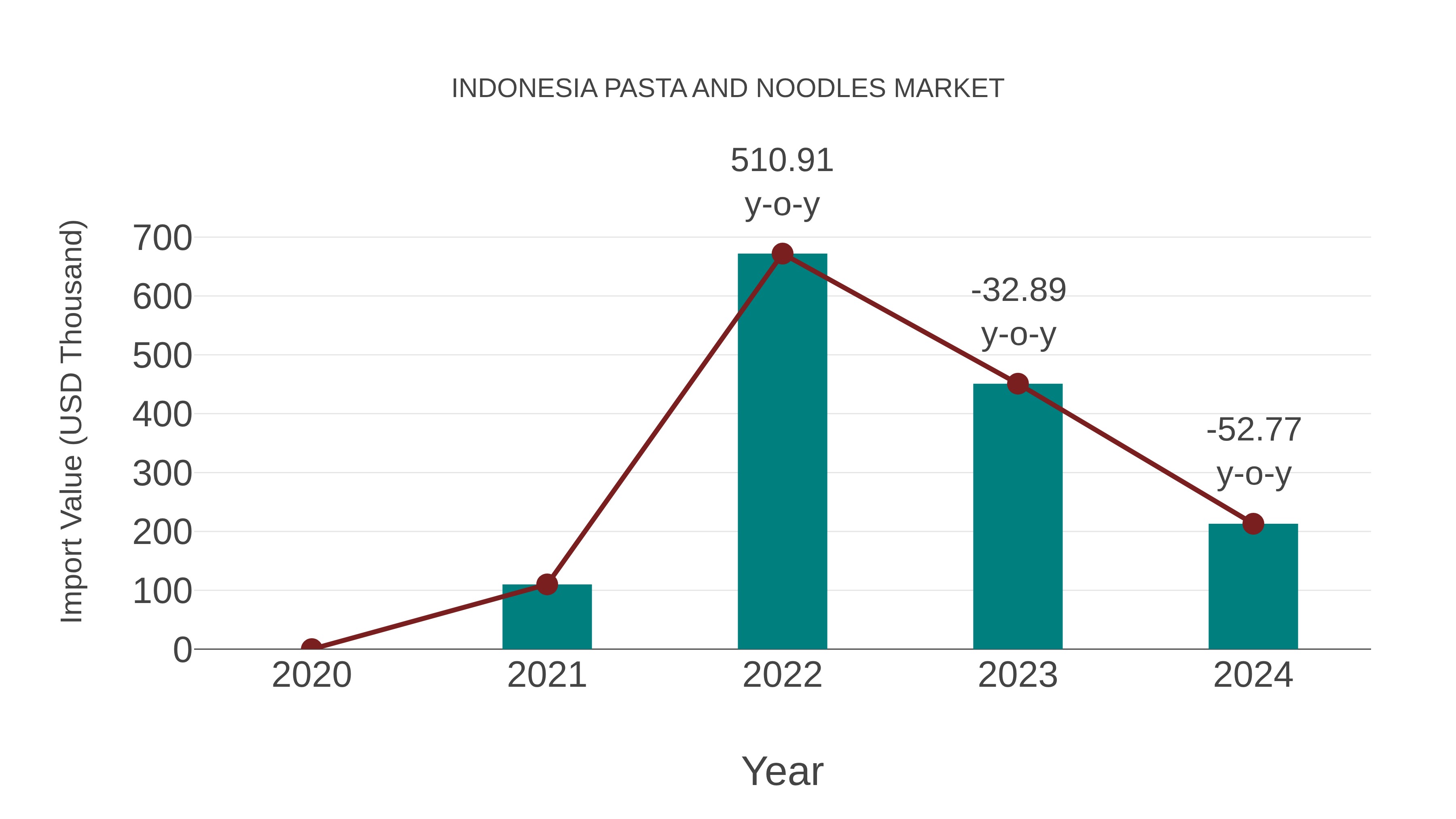
In the Indonesia pasta and noodles market, the import trend experienced a significant decline from 2023 to 2024, with a growth rate of -52.77%. However, the compound annual growth rate (CAGR) for the period 2020-2024 stood at 24.64%. This sharp decline in import momentum could be attributed to shifting consumer preferences, changes in trade policies, or market instability during that period.
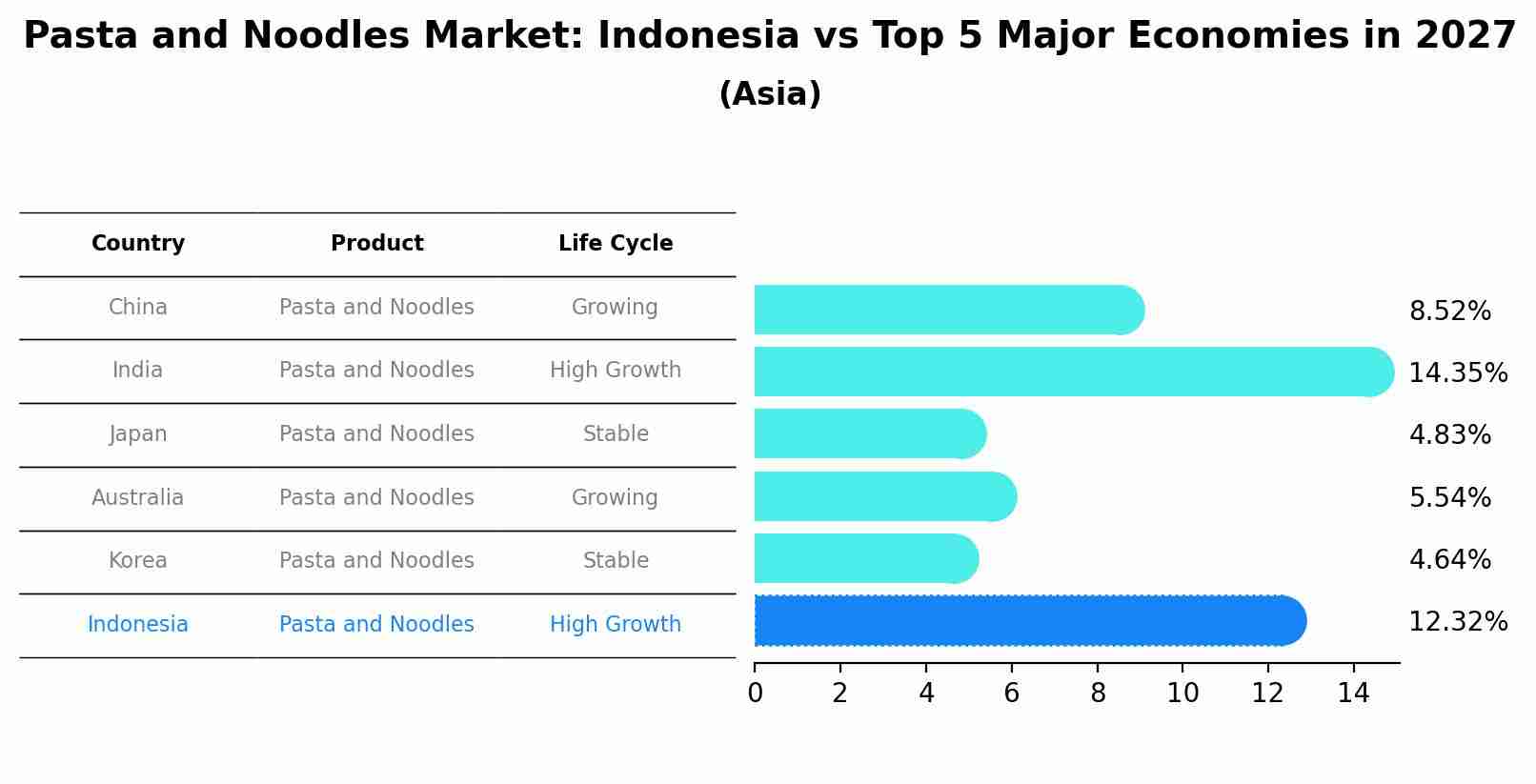
Pasta and Noodles Market: Indonesia vs Top 5 Major Economies in 2027 (Asia)
Indonesia's Pasta and Noodles market is anticipated to experience a high growth rate of 12.32% by 2027, reflecting trends observed in the largest economy China, followed by India, Japan, Australia and South Korea.
Indonesia Pasta and Noodles Market Synopsis
The combined pasta and noodles market in Indonesia has witnessed robust growth due to the versatility and ease of preparation they provide to consumers. Both traditional and international pasta varieties have gained popularity, and manufacturers are increasingly focusing on introducing innovative and localized products to meet diverse consumer demands.
Drivers of the Market
The pasta and noodles market in Indonesia is witnessing robust growth, driven by several factors. One of the significant drivers is the rising demand for convenient and quick-to-prepare food products. Pasta and noodles offer a diverse range of flavors and are easily customizable, appealing to the Indonesian consumer palate. Moreover, the increasing influence of Western and Asian cuisines in the country`s culinary landscape has contributed to the growing popularity of pasta and noodles. The market is also influenced by the expanding retail sector, which provides easy access to a wide array of pasta and noodles products.
Challenges of the Market
The pasta and noodles market in Indonesia faces the combined challenges from both sectors. One of the significant obstacles is the competition from other convenient food options, such as ready-to-eat meals and fast-food chains. The increasing popularity of these alternatives puts pressure on the pasta and noodles market to innovate and provide unique, value-added products to attract consumers. Another challenge is the impact of fluctuating raw material prices, such as wheat, rice, and tapioca. This affects the cost of production and may lead to price fluctuations for end consumers. Additionally, the market faces issues related to distribution and logistics, especially in reaching remote or less developed regions of the country. Efficient distribution networks and infrastructure development are vital for ensuring wider market reach and accessibility.
COVID-19 Impact on the Market
The combined pasta and noodles market in Indonesia faced varying trends. While the demand for instant noodles might have increased, the pasta segment could have encountered challenges due to its association with dine-in experiences. The widespread restaurant closures could have affected pasta consumption, but sales through retail channels might have remained relatively stable.
Key Highlights of the Report:
- Indonesia Pasta and Noodles Market Outlook
- Market Size of Indonesia Pasta and Noodles Market, 2025
- Forecast of Indonesia Pasta and Noodles Market, 2032
- Historical Data and Forecast of Indonesia Pasta and Noodles Revenues & Volume for the Period 2022-2032F
- Indonesia Pasta and Noodles Market Trend Evolution
- Indonesia Pasta and Noodles Market Drivers and Challenges
- Indonesia Pasta and Noodles Price Trends
- Indonesia Pasta and Noodles Porter's Five Forces
- Indonesia Pasta and Noodles Industry Life Cycle
- Historical Data and Forecast of Indonesia Pasta and Noodles Market Revenues & Volume By Product for the Period 2022-2032F
- Historical Data and Forecast of Indonesia Pasta and Noodles Market Revenues & Volume By Ambient for the Period 2022-2032F
- Historical Data and Forecast of Indonesia Pasta and Noodles Market Revenues & Volume By Dried for the Period 2022-2032F
- Historical Data and Forecast of Indonesia Pasta and Noodles Market Revenues & Volume By Chilled for the Period 2022-2032F
- Indonesia Pasta and Noodles Import Export Trade Statistics
- Market Opportunity Assessment By Product
- Indonesia Pasta and Noodles Top Companies Market Share
- Indonesia Pasta and Noodles Competitive Benchmarking By Technical and Operational Parameters
- Indonesia Pasta and Noodles Company Profiles
- Indonesia Pasta and Noodles Key Strategic Recommendations






































