Indonesia Polio Vaccine Market Size, Share & Growth Rate
The Indonesia Polio Vaccine Market was estimated at USD 468 Million in 2025 and is projected to reach USD 619 Million by 2032, growing at a CAGR of 4.1% from 2026 to 2032. This growth trajectory is significantly influenced by Indonesia's unwavering commitment to achieving polio eradication. The extensive vaccination campaigns and routine immunization efforts have not only fostered consistent demand for vaccines but have also garnered vital support from international organizations like WHO and UNICEF.
Indonesia Polio Vaccine Market Year-wise Growth Rate and Key Drivers
This graph highlights how the Indonesia Polio Vaccine Market has steadily grown over the years, supported by major growth factors.
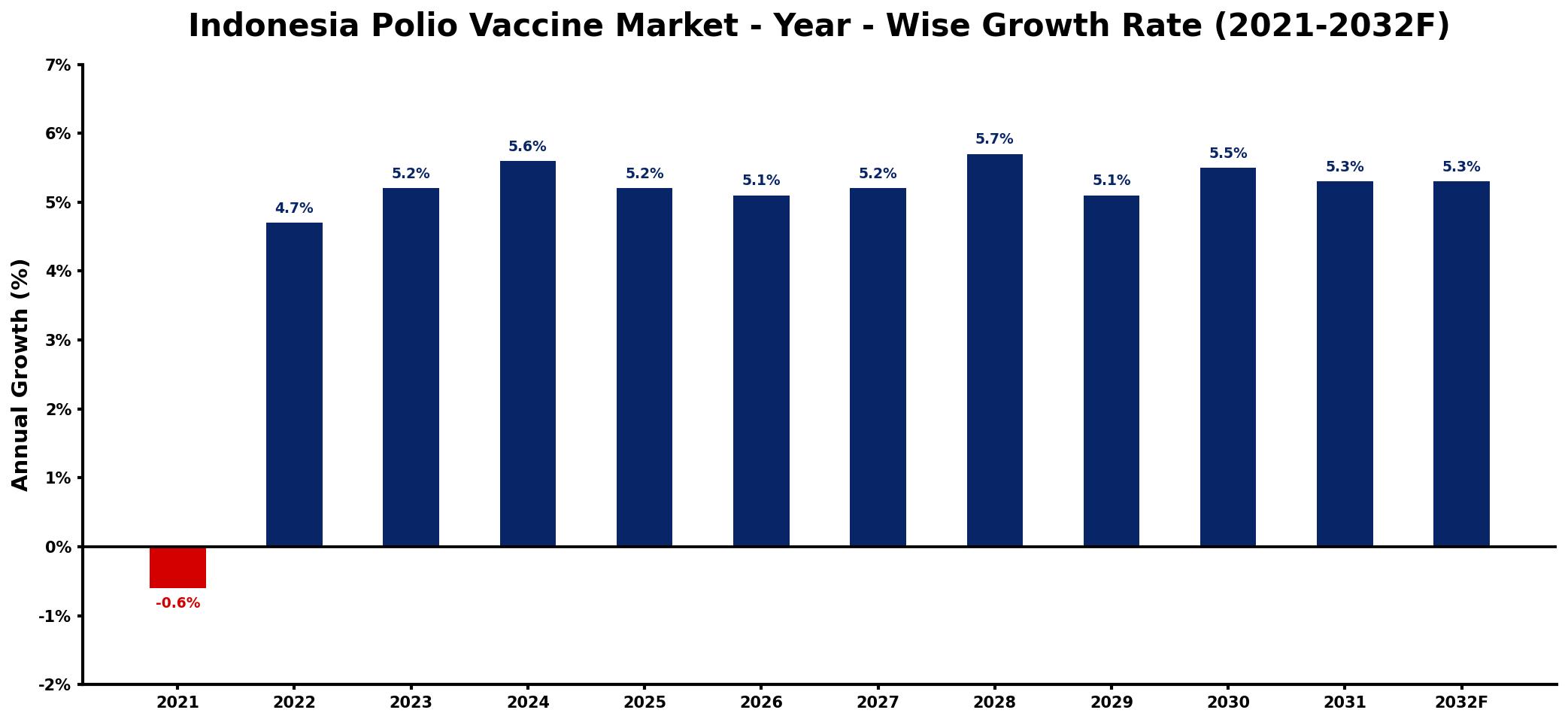
The table below presents the year‑wise growth rates along with the key drivers influencing the market
| Year | Growth Rate | Major Drivers |
| 2021 | -0.6% | decreased healthcare investment funding |
| 2022 | 4.7% | growing public health awareness |
| 2023 | 5.2% | increased government health initiatives |
| 2024 | 5.6% | rising healthcare infrastructure development |
| 2025 | 5.2% | expanding immunization outreach programs |
| 2026 | 5.1% | enhanced supply chain efficiency |
| 2027 | 5.2% | greater collaboration with NGOs |
| 2028 | 5.7% | improved healthcare access initiatives |
| 2029 | 5.1% | strengthened disease surveillance systems |
| 2030 | 5.5% | growing private sector involvement |
| 2031 | 5.3% | increased international funding support |
| 2032 | 5.3% | advancements in health technology |
Note: Market size estimations and growth projections presented in this report are based on 6Wresearch's proprietary forecasting methodology, utilizing the latest available industry data, government publications, and primary research inputs.
Indonesia Polio Vaccine Market Synopsis
The landscape of the Indonesia Polio Vaccine Market is characterized by a proactive approach to public health, driven by a governmental mandate for eradicating polio. Recent vaccination campaigns have intensified efforts to reach every corner of the archipelago, showcasing Indonesia's dedication to safeguarding its population against this debilitating disease.
Moreover, the increased awareness among healthcare professionals and parents regarding the importance of vaccination has further solidified market demand. As society evolves, so do the strategies deployed to ensure immunization, leading to innovative solutions that address the unique challenges of Indonesia's diverse geographic landscape.
Indonesia Polio Vaccine Market Key Takeaways
- The government's strong focus on polio eradication is a primary market driver.
- International support from organizations like WHO and UNICEF enhances vaccine availability.
- Healthcare awareness campaigns boost demand for polio vaccination among parents.
- Challenges remain in reaching remote and underserved areas for effective vaccination coverage.
- Logistical considerations are critical for maintaining the quality and safety of vaccines.
Evaluation of Restraints in Indonesia Polio Vaccine Market
The Indonesia Polio Vaccine Market faces significant constraints due to the country's geographical diversity and socioeconomic disparities. Maintaining high vaccination rates is a formidable task, particularly in remote regions where access to healthcare services is limited. The logistical challenges associated with transporting vaccines to such areas can hinder efforts. Additionally, ensuring the quality and safety of vaccines remains paramount, requiring continuous monitoring and oversight. Coordination with international partners is essential for securing adequate funding and technical support, particularly during vaccination drives that target hard-to-reach populations.
Indonesia Polio Vaccine Market Trends
The Indonesia Polio Vaccine Market is witnessing several trends that are shaping its future. A marked increase in digital health initiatives is enabling better tracking of vaccination rates and coverage. This data-driven approach allows for targeted outreach in areas with lower immunization rates. Additionally, the trend toward community-based health interventions is gaining traction, emphasizing the role of local health workers in educating families about vaccination benefits and dispelling myths surrounding polio vaccines.
Indonesia Polio Vaccine Market Opportunities
Opportunities for growth in the Indonesia Polio Vaccine Market are abundant, particularly in enhancing vaccine delivery systems to remote areas. Investments in mobile vaccination units and telehealth consultations could bridge gaps in accessibility. Furthermore, partnerships between government bodies and private sectors can foster innovative solutions, from improving supply chains to developing educational campaigns that engage communities more effectively. As awareness of vaccination importance continues to grow, there is significant potential for market expansion.
Government Initiatives in the Indonesia Polio Vaccine Market
The Indonesian government has launched various initiatives aimed at bolstering polio vaccination efforts, highlighting its commitment to public health. These initiatives encompass nationwide immunization programs supported by public education campaigns to raise awareness about the importance of polio vaccines. Furthermore, collaboration with international organizations enhances funding and expertise, facilitating comprehensive vaccination drives across urban and rural landscapes. Continued public investment in healthcare infrastructure is vital to achieving and sustaining high vaccination coverage.
Future Insights of the Indonesia Polio Vaccine Market
Looking ahead to 2026-2032, the Indonesia Polio Vaccine Market is set to evolve in response to ongoing public health challenges. The continued focus on eradicating polio will drive innovations in vaccine delivery and monitoring systems. Enhanced collaboration with international health bodies will likely play a crucial role in securing necessary resources, while increased public engagement will further promote vaccination. As Indonesia seeks to maintain its momentum toward complete polio eradication, the market will adapt to address both emerging threats and evolving healthcare landscapes.
Indonesia Polio Vaccine Market Latest Developments (2025 - 2026)
Recent developments in the Indonesia Polio Vaccine Market indicate a robust commitment to immunization campaigns, with increased collaboration between public health officials and local communities. Efforts to integrate digital tools for tracking vaccination rates have gained traction, allowing for timely interventions. Additionally, innovative outreach programs are being implemented in rural areas to facilitate better access to vaccines and increase public awareness about the importance of immunization in eradicating polio.
Indonesia Polio Vaccine Market - Key Attractiveness of the Report
- 10 Years of Market Numbers
- Historical Data Starting from 2022 to 2025
- Base Year: 2025
- Forecast Data until 2032
- Key Performance Indicators Impacting the Market
- Major Upcoming Developments and Projects
Key Highlights of the Report:
- Indonesia Polio Vaccine Market Outlook
- Market Size of Indonesia Polio Vaccine Market, 2025
- Forecast of Indonesia Polio Vaccine Market, 2032
- Historical Data and Forecast of Indonesia Polio Vaccine Revenues & Volume for the Period 2022-2032F
- Indonesia Polio Vaccine Market Trend Evolution
- Indonesia Polio Vaccine Market Drivers and Challenges
- Indonesia Polio Vaccine Price Trends
- Indonesia Polio Vaccine Porter's Five Forces
- Indonesia Polio Vaccine Industry Life Cycle
- Historical Data and Forecast of Indonesia Polio Vaccine Market Revenues & Volume By Type for the Period 2022-2032F
- Historical Data and Forecast of Indonesia Polio Vaccine Market Revenues & Volume By Oral Polio Vaccine (OPV) for the Period 2022-2032F
- Historical Data and Forecast of Indonesia Polio Vaccine Market Revenues & Volume By Inactivated Poliomyelitis Vaccine (IPV) for the Period 2022-2032F
- Historical Data and Forecast of Indonesia Polio Vaccine Market Revenues & Volume By Application for the Period 2022-2032F
- Historical Data and Forecast of Indonesia Polio Vaccine Market Revenues & Volume By Public for the Period 2022-2032F
- Historical Data and Forecast of Indonesia Polio Vaccine Market Revenues & Volume By Private for the Period 2022-2032F
- Indonesia Polio Vaccine Import Export Trade Statistics
- Market Opportunity Assessment By Type
- Market Opportunity Assessment By Application
- Indonesia Polio Vaccine Top Companies Market Share
- Indonesia Polio Vaccine Competitive Benchmarking By Technical and Operational Parameters
- Indonesia Polio Vaccine Company Profiles
- Indonesia Polio Vaccine Key Strategic Recommendations






































