Indonesia Polymer Clay Market Size, Share & Growth Rate
The Indonesia Polymer Clay Market was estimated at USD 398 Million in 2025 and is projected to reach USD 528 Million by 2032, growing at a CAGR of 4.1% from 2026 to 2032. This growth trajectory is primarily fueled by the increasing popularity of crafts and DIY projects within the Indonesian community. The allure of personalized handmade products and the accessibility of online tutorials further catalyze demand, resulting in greater market penetration and product diversity.
Indonesia Polymer Clay Market Year-wise Growth Rate and Key Drivers
This graph highlights how the Indonesia Polymer Clay Market has steadily grown over the years, supported by major growth factors.
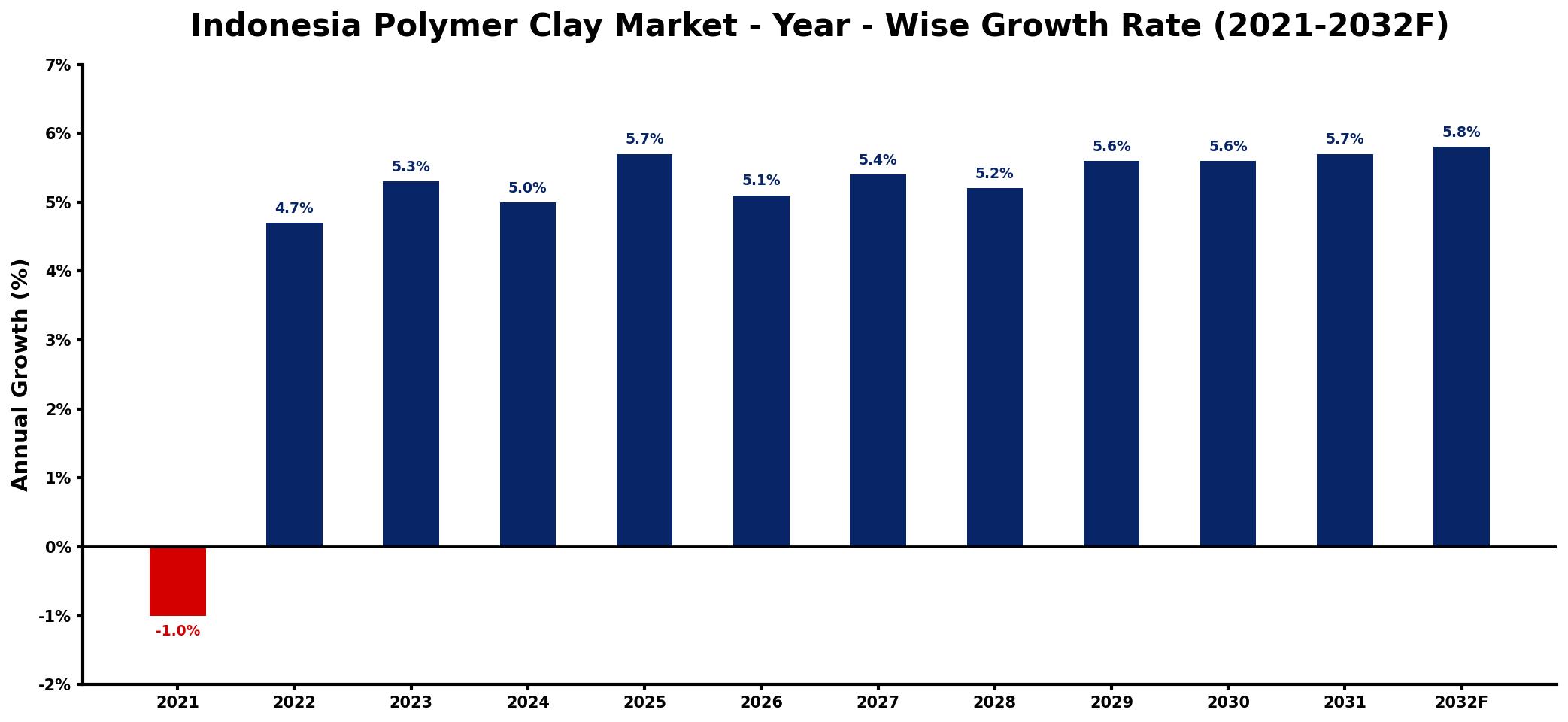
The table below presents the year‑wise growth rates along with the key drivers influencing the market
| Year | Growth Rate | Major Drivers |
| 2021 | -1.0% | decrease in consumer spending habits |
| 2022 | 4.7% | rise in DIY craft activities |
| 2023 | 5.3% | expansion of educational workshops |
| 2024 | 5.0% | growth in online retail platforms |
| 2025 | 5.7% | increased demand from artists |
| 2026 | 5.1% | development of innovative products |
| 2027 | 5.4% | surge in hobbyist communities |
| 2028 | 5.2% | enhanced marketing strategies adopted |
| 2029 | 5.6% | collaboration with influencer marketing |
| 2030 | 5.6% | improved processing technologies adoption |
| 2031 | 5.7% | enhanced product quality standards |
| 2032 | 5.8% | increased investment in creative industries |
Note: Market size estimations and growth projections presented in this report are based on 6Wresearch's proprietary forecasting methodology, utilizing the latest available industry data, government publications, and primary research inputs.
Indonesia Polymer Clay Market Synopsis
In Indonesia, the polymer clay market is uniquely positioned as a vibrant avenue for creativity, catering to both amateur crafters and professional artisans. The surge in demand for diverse color palettes and formulations highlights the dynamic nature of this market, which thrives on innovation and consumer preferences.
The landscape of polymer clay in Indonesia is also influenced by a burgeoning community of online platforms, enabling users to share their creations and connect with a wider audience. As more individuals engage in DIY projects, the trend towards sustainable and non-toxic art materials becomes increasingly significant, ensuring consumer safety is a top priority.
Indonesia Polymer Clay Market Key Takeaways
- Moderate market growth driven by rising interest in crafting and DIY activities.
- Emphasis on product safety and non-toxic formulations appeals to health-conscious consumers.
- Digital platforms are crucial for fostering community and facilitating market expansion.
- Growing demand for unique and personalized items enhances market diversity and innovation.
- Education and marketing are essential for overcoming market awareness challenges.
Evaluation of Restraints in Indonesia Polymer Clay Market
Despite its promising growth, the Indonesia Polymer Clay market faces notable challenges. One significant restraint is the level of market awareness among potential consumers. Many still remain uninformed about the capabilities and creative possibilities offered by polymer clay. Furthermore, competition from alternative crafting materials can impede market penetration. Players in the sector are urged to invest in comprehensive marketing strategies and education initiatives to address these barriers effectively.
Indonesia Polymer Clay Market Trends
Current trends indicate a shift towards the use of eco-friendly materials within the polymer clay segment. As environmental awareness rises, consumers are increasingly seeking sustainable options for their crafting needs. Additionally, the integration of technology into art and design processes, including the use of social media for marketing and tutorial sharing, is reshaping how products are introduced and sold. This trend not only fosters community but also enhances the overall customer experience.
Indonesia Polymer Clay Market Opportunities
Opportunities for growth in the Indonesia Polymer Clay market lie primarily in expanding product offerings and fostering community engagement through workshops and collaborative projects. Companies can capitalize on the burgeoning online marketplace by enhancing their digital presence and utilizing e-commerce platforms. Furthermore, creating partnerships with local artisans and influencers can drive brand visibility and attract new consumer segments, tapping into the rich cultural landscape of Indonesia.
Government Initiatives in the Indonesia Polymer Clay Market
The Indonesian government has recognized the importance of the arts and crafts sector as a driver of economic growth and cultural expression. Various initiatives are underway to promote local artisans and encourage entrepreneurship within the polymer clay community. Incentives for skill development, access to resources for small businesses, and support for creative industries are part of broader policies aimed at strengthening this market landscape.
Future Insights of the Indonesia Polymer Clay Market
Looking ahead to 2026-2032, the Indonesia Polymer Clay market is poised for substantial growth, propelled by a continued increase in consumer engagement with DIY culture. Innovations in product formulations and color variety will likely enhance market appeal, while the growing emphasis on sustainability will shape production practices. As consumers increasingly value personalization, the demand for unique and handcrafted items is set to elevate the markets trajectory, creating a fertile environment for investment and expansion.
Indonesia Polymer Clay Market Latest Developments (2025 - 2026)
Recent developments in the polymer clay market indicate a heightened focus on enhancing user experience through digital engagement. Companies are increasingly leveraging social media and e-commerce strategies to reach a broader audience. Community workshops and events are being organized to promote awareness and education around polymer clay, nurturing creativity and fostering connections among enthusiasts. These initiatives are critical for sustaining growth and innovation within the industry.
Indonesia Polymer Clay Market - Key Attractiveness of the Report
- 10 Years of Market Numbers
- Historical Data Starting from 2022 to 2025
- Base Year: 2025
- Forecast Data until 2032
- Key Performance Indicators Impacting the Market
- Major Upcoming Developments and Projects
Key Highlights of the Report:
- Indonesia Polymer Clay Market Outlook
- Market Size of Indonesia Polymer Clay Market, 2025
- Forecast of Indonesia Polymer Clay Market, 2032
- Historical Data and Forecast of Indonesia Polymer Clay Revenues & Volume for the Period 2022-2032F
- Indonesia Polymer Clay Market Trend Evolution
- Indonesia Polymer Clay Market Drivers and Challenges
- Indonesia Polymer Clay Price Trends
- Indonesia Polymer Clay Porter's Five Forces
- Indonesia Polymer Clay Industry Life Cycle
- Historical Data and Forecast of Indonesia Polymer Clay Market Revenues & Volume By Product Form for the Period 2022-2032F
- Historical Data and Forecast of Indonesia Polymer Clay Market Revenues & Volume By Solid for the Period 2022-2032F
- Historical Data and Forecast of Indonesia Polymer Clay Market Revenues & Volume By Liquid for the Period 2022-2032F
- Historical Data and Forecast of Indonesia Polymer Clay Market Revenues & Volume By Application for the Period 2022-2032F
- Historical Data and Forecast of Indonesia Polymer Clay Market Revenues & Volume By Jewelry Making for the Period 2022-2032F
- Historical Data and Forecast of Indonesia Polymer Clay Market Revenues & Volume By Manufacturing of Toys and Novelty Items for the Period 2022-2032F
- Historical Data and Forecast of Indonesia Polymer Clay Market Revenues & Volume By Arts and Sculpture Making for the Period 2022-2032F
- Historical Data and Forecast of Indonesia Polymer Clay Market Revenues & Volume By Crockery and Ceramic Products for the Period 2022-2032F
- Historical Data and Forecast of Indonesia Polymer Clay Market Revenues & Volume By Others for the Period 2022-2032F
- Historical Data and Forecast of Indonesia Polymer Clay Market Revenues & Volume By End Use for the Period 2022-2032F
- Historical Data and Forecast of Indonesia Polymer Clay Market Revenues & Volume By Residential for the Period 2022-2032F
- Historical Data and Forecast of Indonesia Polymer Clay Market Revenues & Volume By Commercial for the Period 2022-2032F
- Historical Data and Forecast of Indonesia Polymer Clay Market Revenues & Volume By Industrial for the Period 2022-2032F
- Indonesia Polymer Clay Import Export Trade Statistics
- Market Opportunity Assessment By Product Form
- Market Opportunity Assessment By Application
- Market Opportunity Assessment By End Use
- Indonesia Polymer Clay Top Companies Market Share
- Indonesia Polymer Clay Competitive Benchmarking By Technical and Operational Parameters
- Indonesia Polymer Clay Company Profiles
- Indonesia Polymer Clay Key Strategic Recommendations






































