Indonesia Polyvinyl Chloride (PVC) Market Growth Rate
According to 6Wresearch internal database and industry insights, the Indonesia Polyvinyl Chloride (PVC) Market is projected to grow at a Compound Annual Growth Rate of 4.4% from 2025 to 2031.The market is driven by rising demand in construction and packaging, alongside a shift toward sustainable and locally produced PVC products.
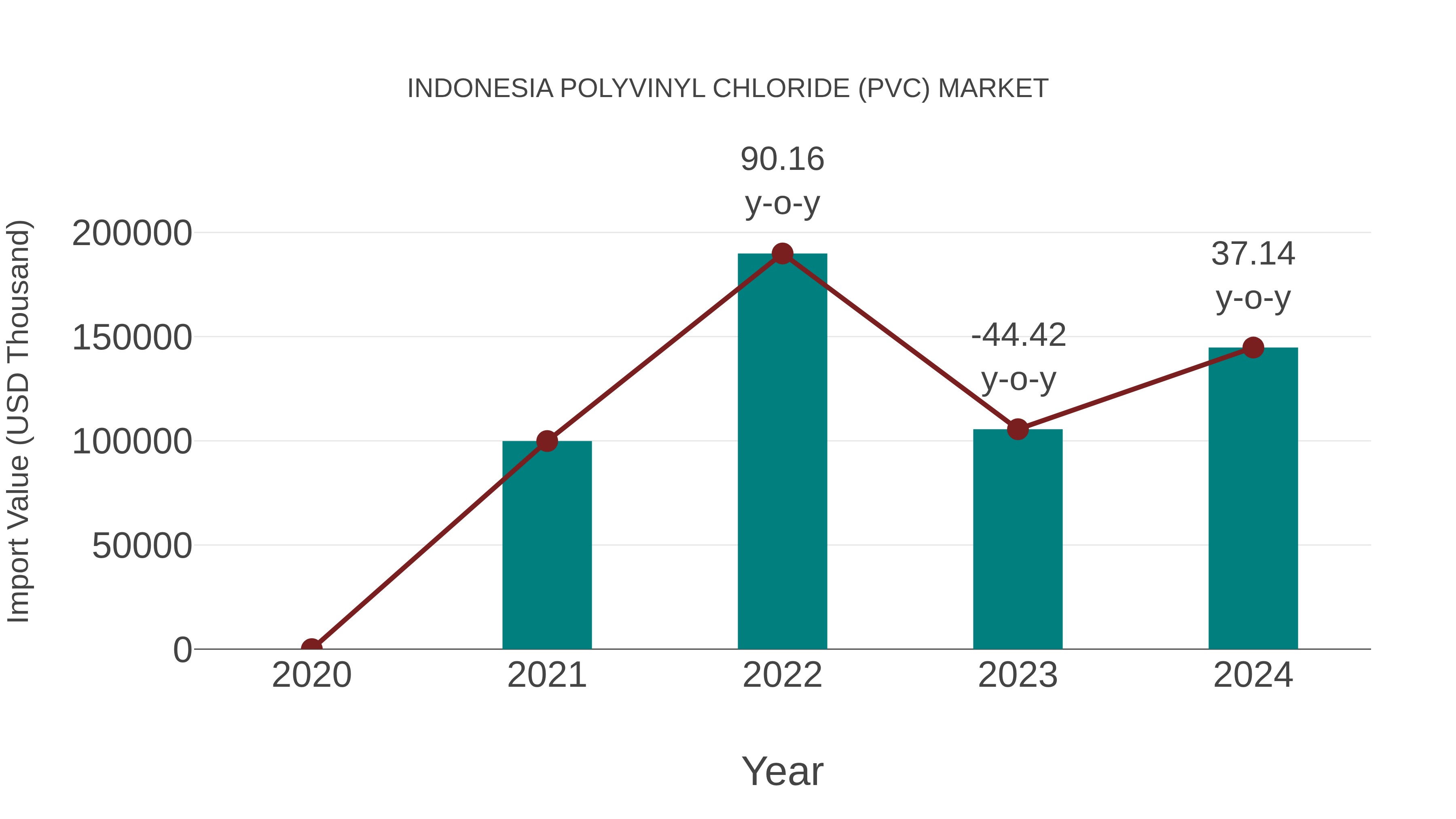
Indonesia Polyvinyl Chloride (Pvc) Market: Import Trend Analysis
In the Indonesia polyvinyl chloride (PVC) market, the import trend showed significant growth from 2023 to 2024, with a growth rate of 37.14%. The compound annual growth rate (CAGR) for imports between 2020 and 2024 stood at 13.17%. This surge in import momentum can be attributed to a notable demand shift towards PVC products, indicating a robust market recovery post-2020 disruptions.
Indonesia Polyvinyl Chloride (PVC) Market Highlights
| Report Name | Indonesia Polyvinyl Chloride (PVC) Market |
| Forecast period | 2025-2031 |
| CAGR | 4.4% |
| Growing Sector | Chemical and Construction Materials |
Topics Covered in the Indonesia Polyvinyl Chloride (PVC) Market Report
The Indonesia Polyvinyl Chloride (PVC) Market report thoroughly covers the market by product type, by stabilizer type, by application and by end-user industry. The report provides an unbiased and detailed analysis of the ongoing market trends, opportunities/high-growth areas, and market drivers to help stakeholders align their strategies with current and future market dynamics.
Indonesia Polyvinyl Chloride (PVC) Market Synopsis
Indonesia Polyvinyl Chloride (PVC) Market is driven by rising demand from construction, automotive, and healthcare sectors, the market is experiencing steady growth. Rapid infrastructure development and urban expansion in Indonesia have increased the need for PVC-based products like pipes, wiring, and window profiles. In addition, improvements in production technology and proactive government measures to boost local manufacturing are supporting this upward trend. These factors collectively make the PVC industry an essential component of Indonesia’s evolving industrial and urban landscape.
The Indonesia Polyvinyl Chloride (PVC) Market is anticipated to grow at a CAGR of 4.4% during the forecast period 2025-2031.In the Indonesia Polyvinyl Chloride (PVC) Market, PVC production has increased alongside its infrastructure and urban development initiatives. Construction for both physical infrastructure and commercial use accounts for most of this activity, with strong demand for durable, reliable, and long-lasting PVC products driving market momentum. Moreover, environmental considerations are influencing innovations in product development. Significantly, growth in the Indonesia Polyvinyl Chloride (PVC) Market Growth is being driven by modern manufacturing practices and evolving logistics systems, enabling expansion across both domestic and international supply chains.
Indonesia Polyvinyl Chloride (PVC) Market Challenges
In the Indonesian Polyvinyl Chloride (PVC) Market, while there is a positive outlook, producers in the market are struggling with increased input costs related to fluctuating oil prices. The reliability of supply is further complicated by dependence on imports. Additionally, increased environmental scrutiny is calling for more rapid innovation in sustainable product design. In Response, to these changes while remaining price competitive is a fundamental challenge. Various players in the market will need to implement new, smarter production methods and rethink supply strategies to reflect new consumer preferences and comply with new government regulations.
Indonesia Polyvinyl Chloride (PVC) Market Trends
In the Indonesia Polyvinyl Chloride (PVC) Industry the market is witnessing notable changes shaped by a growing emphasis on sustainability. Eco-friendly PVC variants are gaining traction, backed by innovation in bio-based additives and recyclable materials. Construction growth and a thriving automotive industry continue to increase demand for strong, affordable PVC solutions. Moreover, digitalization across manufacturing and logistics is streamlining operations, enhancing supply chain management, and boosting overall productivity in the sector, creating a more agile and resilient PVC market.
Investment Opportunities in the Indonesia Polyvinyl Chloride (PVC) Market
Indonesia Polyvinyl Chloride (PVC) Market presents strong investment prospects, especially in renewable and recycled PVC manufacturing. With construction activity booming in residential and commercial sectors, demand for PVC pipes and fittings continues to rise. With technological advancement and a increasing government focus on reducing import dependence, new opportunities are emerging. Forming joint ventures or strategic alliances for localized PVC manufacturing can unlock long-term value for stakeholders aiming to align with national development and sustainability goals.
Leading Players in the Indonesia Polyvinyl Chloride (PVC) Market
Competition in the Indonesia PVC market is continuously growing, with top companies like Shin-Etsu Chemical and PT Asahimas Chemical prioritizing sustainable innovation and operational expansion. Strategic moves, including partnerships and mergers, help firms diversify their portfolios and capture greater market share amid rising consumer expectations and regulatory shifts.
Government Regulations in the Indonesia Polyvinyl Chloride (PVC) Market
According to Indonesian Government data, In the Indonesia Polyvinyl Chloride (PVC) Market policies about the environment and sustainability in Indonesia will play a pivotal role in changing the approach to the PVC industry. The robust legislative support surrounding recycling and bio- alternatives is challenging manufacturers to innovate, in line with a green agenda. The government and the notion of self-sufficiency aimed at enhancing local production and reducing reliance on imports is providing support to improve any production reform. Policies about the environment and sustainability in Indonesia will play a pivotal role in changing the approach to the PVC industry.
Future Insights of the Indonesia Polyvinyl Chloride (PVC) Market
Future prospects for the Indonesian PVC industry remain strong, fuelled by rising demand across construction, automotive, and packaging sectors. Technological innovations and localized supply chain investments are strengthening production efficiency. Notably, Indonesia Polyvinyl Chloride (PVC) Market Share is expected to grow as manufacturers introduce green PVC and bio-composites to meet environmental expectations. By addressing supply chain disruptions and adopting sustainable practices, the market is set to achieve long-term, environmentally responsible growth with greater regional and international competitiveness.
Market Segmentation Analysis
The report offers a comprehensive study of the following market segments and their leading categories:
Rigid PVC to Dominate the Market- By Product Type
According to Ritika Kalra, Senior Research Analyst at 6Wresearch, among product types, Rigid PVC dominates the Indonesia PVC market. Its high strength, durability, and cost-effectiveness make it widely used in construction and infrastructure projects, especially for pipes, window frames, and profiles. The material’s excellent resistance to chemicals and weather conditions further contributes to its leading position in industrial and structural applications.
Calcium-based to Dominate the Market- By Stabilizer Type
Calcium-based stabilizers hold the largest share in the stabilizer segment due to increasing environmental regulations and a growing shift away from lead-based additives. These stabilizers offer effective heat resistance and long-term stability, making them suitable for a variety of PVC applications, including pipes, profiles, and cables, especially in environmentally conscious manufacturing practices.
Pipes and Fittings to Dominate the Market- By Application
The Pipes and Fittings segment dominates PVC applications in Indonesia. Rapid urbanization, infrastructure development, and government investments in water supply and sanitation projects have significantly driven the demand for PVC pipes. Their durability, corrosion resistance, and affordability make them the preferred choice for both residential and commercial plumbing systems.
Building and Construction to Dominate the Market- By End-user Industry
The Building and Construction industry is the leading end-user of PVC in Indonesia. PVC is extensively used for a wide range of construction materials, including pipes, window profiles, flooring, and roofing. As infrastructure spending rises and urban expansion continues across the country, the demand for reliable and cost-effective PVC solutions remains strong in this sector.
Key Attractiveness of the Report
- 10 Years of Market Numbers.
- Historical Data Starting from 2021 to 2024.
- Base Year: 2024
- Forecast Data until 2031.
- Key Performance Indicators Impacting the Market.
- Major Upcoming Developments and Projects.
Key Highlights of the Report:
- Indonesia Polyvinyl Chloride (PVC) Market Outlook
- Market Size of Indonesia Polyvinyl Chloride (PVC) Market, 2025
- Forecast of Indonesia Polyvinyl Chloride (PVC) Market, 2032
- Historical Data and Forecast of Indonesia Polyvinyl Chloride (PVC) Revenues & Volume for the Period 2022-2032F
- Indonesia Polyvinyl Chloride (PVC) Market Trend Evolution
- Indonesia Polyvinyl Chloride (PVC) Market Drivers and Challenges
- Indonesia Polyvinyl Chloride (PVC) Price Trends
- Indonesia Polyvinyl Chloride (PVC) Porter's Five Forces
- Indonesia Polyvinyl Chloride (PVC) Industry Life Cycle
- Historical Data and Forecast of Indonesia Polyvinyl Chloride (PVC) Market Revenues & Volume By Product Type for the Period 2022-2032F
- Historical Data and Forecast of Indonesia Polyvinyl Chloride (PVC) Market Revenues & Volume By Rigid PVC for the Period 2022-2032F
- Historical Data and Forecast of Indonesia Polyvinyl Chloride (PVC) Market Revenues & Volume By Flexible PVC for the Period 2022-2032F
- Historical Data and Forecast of Indonesia Polyvinyl Chloride (PVC) Market Revenues & Volume By Low-smoke PVC for the Period 2022-2032F
- Historical Data and Forecast of Indonesia Polyvinyl Chloride (PVC) Market Revenues & Volume By Chlorinated PVC for the Period 2022-2032F
- Historical Data and Forecast of Indonesia Polyvinyl Chloride (PVC) Market Revenues & Volume By Stabilizer Type for the Period 2022-2032F
- Historical Data and Forecast of Indonesia Polyvinyl Chloride (PVC) Market Revenues & Volume By Calcium-based Stabilizers for the Period 2022-2032F
- Historical Data and Forecast of Indonesia Polyvinyl Chloride (PVC) Market Revenues & Volume By Lead-based Stabilizers for the Period 2022-2032F
- Historical Data and Forecast of Indonesia Polyvinyl Chloride (PVC) Market Revenues & Volume By Tin and Organotin-based for the Period 2022-2032F
- Historical Data and Forecast of Indonesia Polyvinyl Chloride (PVC) Market Revenues & Volume By Barium-based for the Period 2022-2032F
- Historical Data and Forecast of Indonesia Polyvinyl Chloride (PVC) Market Revenues & Volume By Other Stabilizer Types for the Period 2022-2032F
- Historical Data and Forecast of Indonesia Polyvinyl Chloride (PVC) Market Revenues & Volume By Application for the Period 2022-2032F
- Historical Data and Forecast of Indonesia Polyvinyl Chloride (PVC) Market Revenues & Volume By Pipes and Fittings for the Period 2022-2032F
- Historical Data and Forecast of Indonesia Polyvinyl Chloride (PVC) Market Revenues & Volume By Film and Sheets for the Period 2022-2032F
- Historical Data and Forecast of Indonesia Polyvinyl Chloride (PVC) Market Revenues & Volume By Wire and Cables for the Period 2022-2032F
- Historical Data and Forecast of Indonesia Polyvinyl Chloride (PVC) Market Revenues & Volume By Bottles for the Period 2022-2032F
- Historical Data and Forecast of Indonesia Polyvinyl Chloride (PVC) Market Revenues & Volume By Profiles for the Period 2022-2032F
- Historical Data and Forecast of Indonesia Polyvinyl Chloride (PVC) Market Revenues & Volume By Hoses for the Period 2022-2032F
- Historical Data and Forecast of Indonesia Polyvinyl Chloride (PVC) Market Revenues & Volume By Tubings for the Period 2022-2032F
- Historical Data and Forecast of Indonesia Polyvinyl Chloride (PVC) Market Revenues & Volume By Other Applications for the Period 2022-2032F
- Historical Data and Forecast of Indonesia Polyvinyl Chloride (PVC) Market Revenues & Volume By End-user Industry for the Period 2022-2032F
- Historical Data and Forecast of Indonesia Polyvinyl Chloride (PVC) Market Revenues & Volume By Building and Construction for the Period 2022-2032F
- Historical Data and Forecast of Indonesia Polyvinyl Chloride (PVC) Market Revenues & Volume By Automotive for the Period 2022-2032F
- Historical Data and Forecast of Indonesia Polyvinyl Chloride (PVC) Market Revenues & Volume By Electrical and Electronics for the Period 2022-2032F
- Historical Data and Forecast of Indonesia Polyvinyl Chloride (PVC) Market Revenues & Volume By Packaging for the Period 2022-2032F
- Historical Data and Forecast of Indonesia Polyvinyl Chloride (PVC) Market Revenues & Volume By Footwear for the Period 2022-2032F
- Historical Data and Forecast of Indonesia Polyvinyl Chloride (PVC) Market Revenues & Volume By Healthcare for the Period 2022-2032F
- Historical Data and Forecast of Indonesia Polyvinyl Chloride (PVC) Market Revenues & Volume By Other End-user Industries for the Period 2022-2032F
- Indonesia Polyvinyl Chloride (PVC) Import Export Trade Statistics
- Market Opportunity Assessment By Product Type
- Market Opportunity Assessment By Stabilizer Type
- Market Opportunity Assessment By Application
- Market Opportunity Assessment By End-user Industry
- Indonesia Polyvinyl Chloride (PVC) Top Companies Market Share
- Indonesia Polyvinyl Chloride (PVC) Competitive Benchmarking By Technical and Operational Parameters
- Indonesia Polyvinyl Chloride (PVC) Company Profiles
- Indonesia Polyvinyl Chloride (PVC) Key Strategic Recommendations
Market Segmentation
The Market report covers a detailed analysis of the following market segments:
By Product Type
- Rigid PVC
- Flexible PVC
- Low-smoke PVC
- Chlorinated PVC
By Stabilizer Type
- Calcium-based Stabilizers
- Lead-based Stabilizers
- Tin and Organotin-based
- Barium-based
- Other Stabilizer Types
By Application
- Pipes and Fittings
- Film and Sheets
- Wire and Cables
- Bottles
- Profiles
- Hoses
- Tubings
- Other Applications
By End-user Industry
- Building and Construction
- Automotive
- Electrical and Electronics
- Packaging
- Footwear
- Healthcare
- Other End-user Industries






































