Indonesia Public Cloud Market Size & Growth Rate (2026-2032)
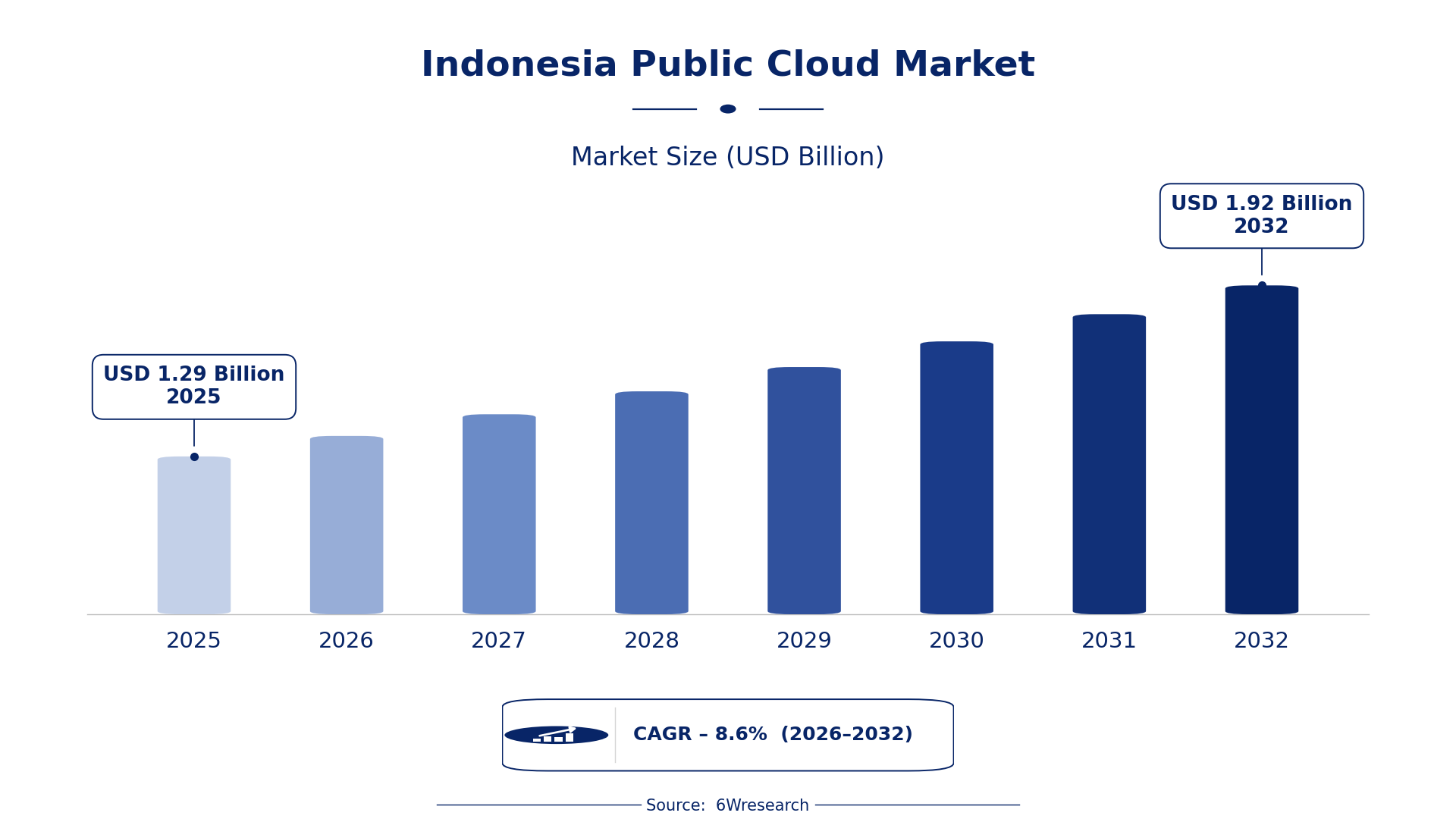
The Indonesia Public Cloud Market was estimated at USD 1288 Million in 2025 and is projected to reach USD 1916 Million by 2032, growing at a CAGR of 8.6% from 2026 to 2032.
Indonesia Public Cloud Market Synopsis
The primary catalyst driving the Indonesia Public Cloud Market is the country’s aggressive digital transformation agenda. Businesses are rapidly migrating to cloud solutions, seeking not only cost efficiencies but also the flexibility needed to adapt to market demands.
The pandemic acted as a major accelerant for cloud adoption, forcing many organizations to reconsider their operational frameworks. This shift has opened up a plethora of opportunities for both local and international cloud service providers to expand their offerings in Indonesia.
Indonesia Public Cloud Market Year-wise Growth Rate and Key Drivers
This graph illustrates the annual growth rates of the Indonesia Public Cloud Market from 2021 to 2032, highlighting a steady upward trajectory and projected expansion over the forecast period.
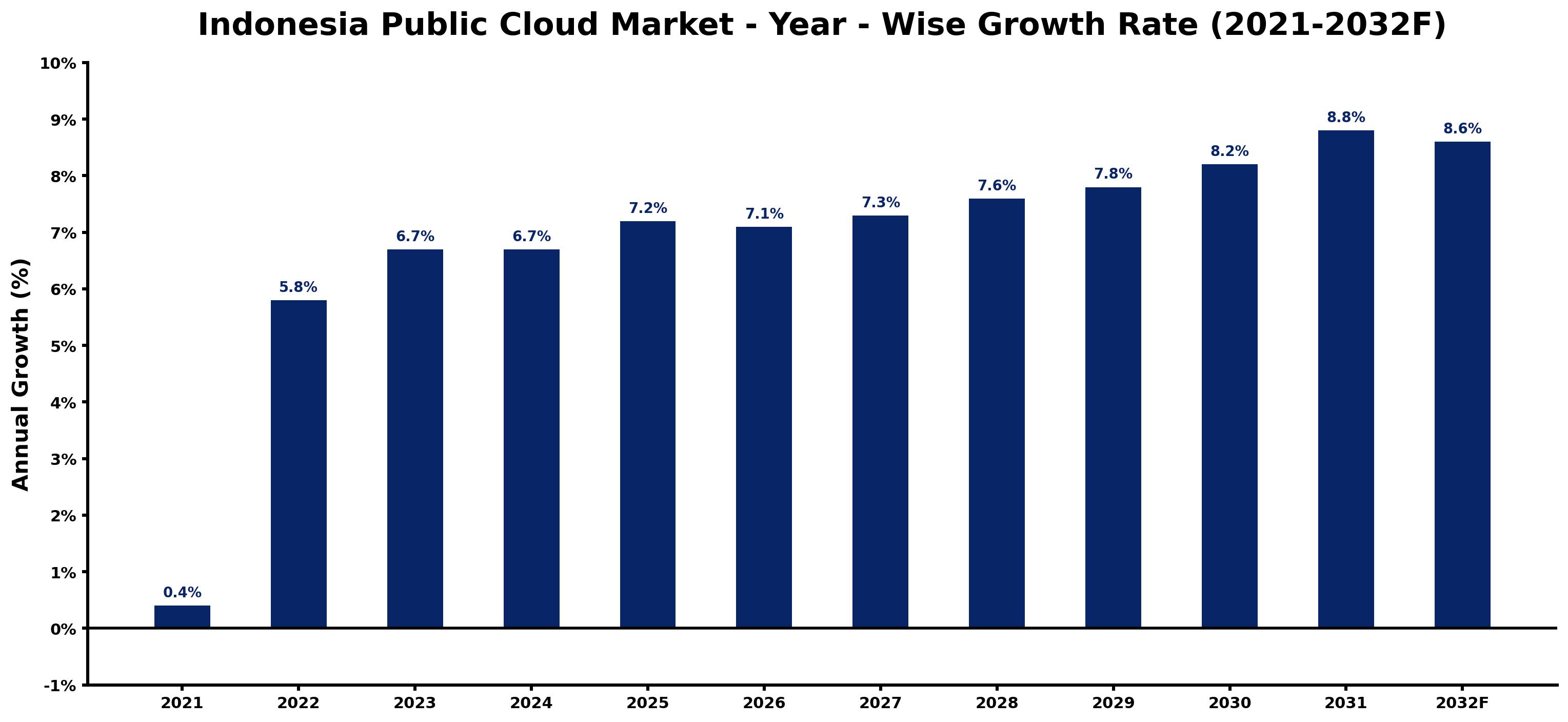
The table below presents the year‑wise growth rates along with the key drivers influencing the market
| Year | Growth Rate | Major Drivers |
| 2021 | 0.4% | Indonesia's 2020 Economic Recovery Stimulus Plan boosts cloud adoption. |
| 2022 | 5.8% | Increased internet penetration driven by government initiatives. |
| 2023 | 6.7% | Emerging digital economy attracting tech-focused investment influx. |
| 2024 | 6.7% | Launch of national cybersecurity strategy supports cloud services. |
| 2025 | 7.2% | Government's push for data sovereignty enhances local cloud needs. |
| 2026 | 7.1% | Adoption of hybrid cloud models by enterprises accelerates growth. |
| 2027 | 7.3% | Rise in e-commerce demands cloud infrastructure expansion. |
| 2028 | 7.6% | Digital transformation initiatives across sectors boost cloud uptake. |
| 2029 | 7.8% | Increased mobile user base drives cloud service demand. |
| 2030 | 8.2% | Government digitalization efforts incentivize public cloud usage. |
| 2031 | 8.8% | Local startups leveraging cloud technology for innovation growth. |
| 2032 | 8.6% | Growing remote work trend increases dependency on cloud services. |
Note: Market size estimations and growth projections presented in this report are based on 6Wresearch's proprietary forecasting methodology, utilizing the latest available industry data, government publications, and primary research inputs.
Indonesia Public Cloud Market Key Takeaways
Below are some of the specific key takeaways from the market, including:
- The transition to public cloud solutions is increasingly seen as a necessity for operational agility.
- Growing demand for remote work capabilities is pushing enterprises to adopt cloud-based tools.
- Data security and compliance remain key concerns for organizations shifting to the cloud.
- Major cloud service providers are enhancing their local infrastructure to cater to Indonesian businesses.
- The market is witnessing a surge in investments aimed at improving cloud accessibility and services.
Evaluation of Restraints in Indonesia Public Cloud Market
Despite the rapid growth, the Indonesia Public Cloud Market is not without its challenges. Data security concerns loom large, particularly for sectors handling sensitive information. Compliance with local regulations adds another layer of complexity, compelling businesses to ensure that their cloud operations adhere to national guidelines. on top of that, the issue of data sovereignty is critical, as companies must know where their data resides and how it is managed. Such challenges can slow down the pace of cloud adoption, as organizations weigh the risks against the benefits.
Indonesia Public Cloud Market Trends
A notable trend in the market is the increasing adoption of hybrid cloud solutions, allowing businesses to combine on-premises infrastructure with cloud capabilities. This approach offers flexibility and scalability while addressing data privacy concerns. Additionally, there is a growing emphasis on cloud-native applications, enabling companies to optimize their operations and enhance customer experiences. The integration of AI and machine learning into cloud services is also gaining traction, providing businesses with advanced analytics and automation capabilities.
Indonesia Public Cloud Market Opportunities
As the demand for cloud services expands, significant opportunities lie in sectors such as healthcare, education, and finance. These industries are increasingly recognizing the value of cloud computing for improving operational efficiency and service delivery. Investment in local data centers is another area ripe for growth, as it can help address data sovereignty concerns while enhancing service reliability. on top of that, partnerships between public and private sectors can foster innovation and accelerate the adoption of cloud technologies across various domains.
Government Initiatives in the Indonesia Public Cloud Market
Government policy is playing a crucial role in shaping the Indonesia Public Cloud Market, as authorities prioritize digital transformation and regulatory compliance. The Indonesian government is focused on establishing a favorable environment for cloud adoption, which includes enhancing digital infrastructure and addressing security concerns. These initiatives are vital for attracting both local and international investments in the public cloud sector.
- A national digital infrastructure upgrade programme was recently launched to improve internet connectivity and cloud service accessibility across the country.
- Currently, the government is working on a regulatory framework aimed at ensuring data privacy and security for businesses transitioning to cloud solutions.
- Plans for a public-private initiative to enhance cloud service integration in educational institutions are expected to commence in 2026.
- Ongoing assessments of existing cloud regulations are being conducted to streamline compliance processes for businesses.
- A proposed initiative to establish a national cloud service certification program is in the planning stages, aimed at enhancing consumer confidence in cloud offerings.
Future Insights of the Indonesia Public Cloud Market
Looking ahead to 2026-2032, the Indonesia Public Cloud Market is expected to continue its upward trajectory. As organizations increasingly recognize the strategic advantages of cloud computing, investment in cloud infrastructure will likely accelerate. The combination of government support and growing enterprise demand positions Indonesia as a burgeoning hub for cloud technology in Southeast Asia. Expect to see more innovative solutions tailored to local business needs, which will further catalyze market growth.
Indonesia Public Cloud Market Latest Developments
Over the past year, the Indonesia Public Cloud Market has witnessed a flurry of activity as companies strive to adapt to changing demands. This period has been characterized by strategic partnerships and significant infrastructure investments aimed at enhancing service delivery. The focus has been on ensuring that businesses can leverage the full potential of cloud technology while addressing their unique challenges.
- A leading regional operator announced a major upgrade to its cloud infrastructure in late 2025, enhancing service reliability and performance.
- In early 2026, a major technology vendor launched a suite of cloud-native solutions aimed at small to medium-sized enterprises.
- An initiative that began in mid-2025 focused on developing partnerships with local startups to foster innovation in cloud services remains underway.
- A new data center project aimed at expanding cloud service capacity is set to begin construction in Q3 2026.
- Plans for an upcoming technology summit focused on cloud innovations and security are scheduled for late 2026, aimed at bringing together industry leaders and policymakers.
Indonesia Public Cloud Market - Key Attractiveness of the Report
- 10 Years of Market Numbers
- Historical Data Starting from 2022 to 2025
- Base Year: 2025
- Forecast Data until 2032
- Key Performance Indicators Impacting the Market
- Major Upcoming Developments and Projects
Key Highlights of the Report:
- Indonesia Public Cloud Market Outlook
- Market Size of Indonesia Public Cloud Market, 2025
- Forecast of Indonesia Public Cloud Market, 2032
- Historical Data and Forecast of Indonesia Public Cloud Revenues & Volume for the Period 2022-2032F
- Indonesia Public Cloud Market Trend Evolution
- Indonesia Public Cloud Market Drivers and Challenges
- Indonesia Public Cloud Price Trends
- Indonesia Public Cloud Porter's Five Forces
- Indonesia Public Cloud Industry Life Cycle
- Historical Data and Forecast of Indonesia Public Cloud Market Revenues & Volume By Service Model for the Period 2022-2032F
- Historical Data and Forecast of Indonesia Public Cloud Market Revenues & Volume By Infrastructure as a Service for the Period 2022-2032F
- Historical Data and Forecast of Indonesia Public Cloud Market Revenues & Volume By Platform as a Service for the Period 2022-2032F
- Historical Data and Forecast of Indonesia Public Cloud Market Revenues & Volume By Software as a Service for the Period 2022-2032F
- Historical Data and Forecast of Indonesia Public Cloud Market Revenues & Volume By Organization Size Large enterprises for the Period 2022-2032F
- Historical Data and Forecast of Indonesia Public Cloud Market Revenues & Volume By Small for the Period 2022-2032F
- Historical Data and Forecast of Indonesia Public Cloud Market Revenues & Volume By Medium Enterprises SMEs for the Period 2022-2032F
- Historical Data and Forecast of Indonesia Public Cloud Market Revenues & Volume By Verticals for the Period 2022-2032F
- Historical Data and Forecast of Indonesia Public Cloud Market Revenues & Volume By BFSI for the Period 2022-2032F
- Historical Data and Forecast of Indonesia Public Cloud Market Revenues & Volume By Telecommunication for the Period 2022-2032F
- Historical Data and Forecast of Indonesia Public Cloud Market Revenues & Volume By IT & ITeS for the Period 2022-2032F
- Historical Data and Forecast of Indonesia Public Cloud Market Revenues & Volume By Government & Public Sector for the Period 2022-2032F
- Historical Data and Forecast of Indonesia Public Cloud Market Revenues & Volume By Retail & Consumer Goods for the Period 2022-2032F
- Historical Data and Forecast of Indonesia Public Cloud Market Revenues & Volume By Manufacturing for the Period 2022-2032F
- Historical Data and Forecast of Indonesia Public Cloud Market Revenues & Volume By Energy & Utility for the Period 2022-2032F
- Historical Data and Forecast of Indonesia Public Cloud Market Revenues & Volume By Media & Entertainment for the Period 2022-2032F
- Indonesia Public Cloud Import Export Trade Statistics
- Market Opportunity Assessment By Service Model
- Market Opportunity Assessment By Organization Size Large enterprises
- Market Opportunity Assessment By Verticals
- Indonesia Public Cloud Top Companies Market Share
- Indonesia Public Cloud Competitive Benchmarking By Technical and Operational Parameters
- Indonesia Public Cloud Company Profiles
- Indonesia Public Cloud Key Strategic Recommendations






































