Indonesia Radio Receivers Market Summary
The indonesia radio receivers market was estimated at USD 270 Million in 2025 and is projected to reach USD 359 Million by 2032, growing at a CAGR of 5.3% from 2026 to 2032.
Indonesia Radio Receivers Market Year-wise Growth Rate and Key Drivers
This graph highlights how the Indonesia Radio Receivers Market has steadily grown over the years, supported by major growth factors.
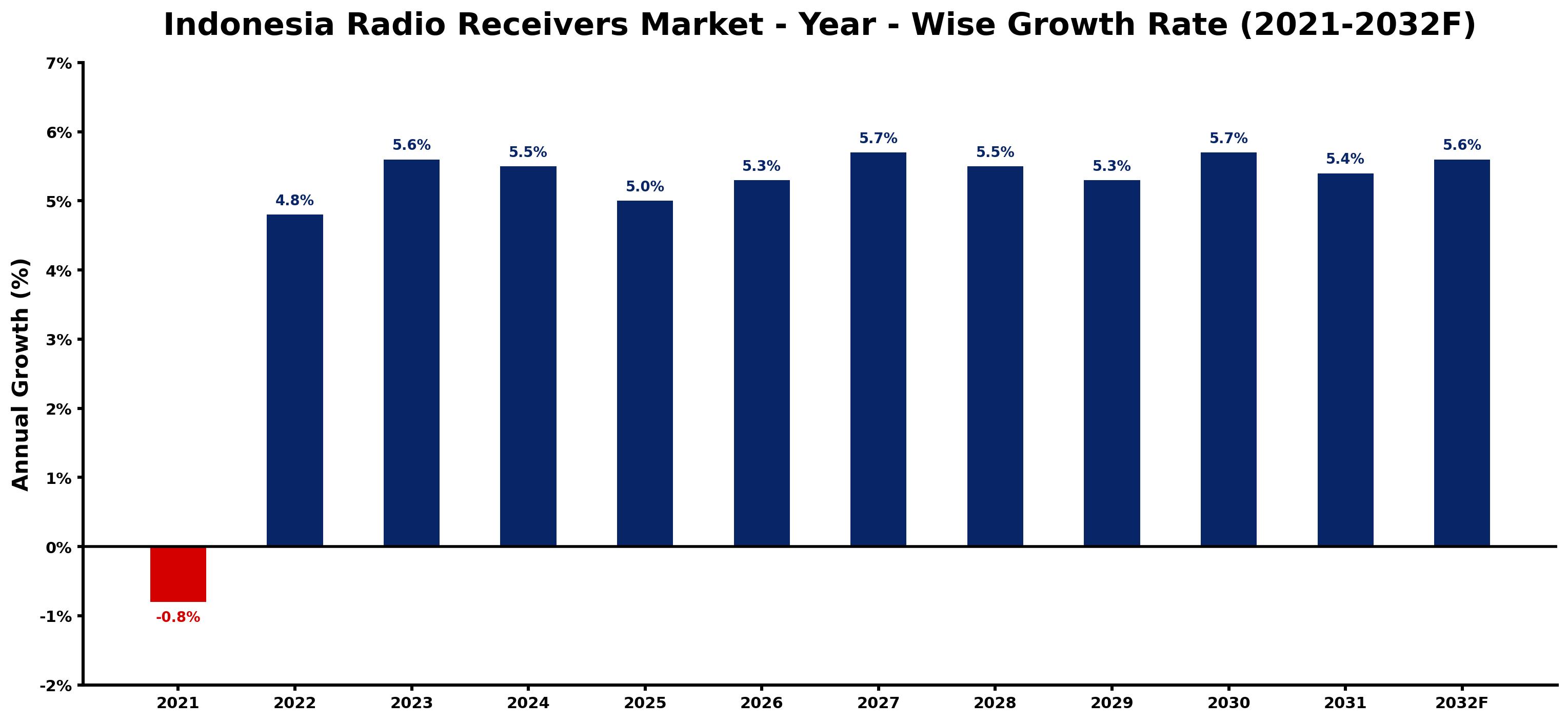
The table below presents the year wise growth rates along with the key drivers influencing the market
| Year | Growth Rate | Major Drivers |
| 2021 | -0.8% | Increased smartphone penetration diminished the perceived value of traditional radio receivers among consumers. |
| 2022 | 4.8% | Local content creation gained traction, enhancing listener engagement across diverse demographics. |
| 2023 | 5.6% | Urbanization in Indonesia increased, fostering higher demand for portable radio receivers. |
| 2024 | 5.5% | Technological innovations improved audio quality, attracting audiophiles to radio broadcasts. |
| 2025 | 5.0% | Cultural events promoted through radio led to a resurgence in community listening habits. |
| 2026 | 5.3% | Mobile network expansions improved accessibility for remote areas, boosting radio usage. |
| 2027 | 5.7% | Partnerships with local celebrities increased brand visibility, stimulating market interest. |
| 2028 | 5.5% | Sustainability trends encouraged manufacturers to innovate eco-friendly radio receiver options. |
| 2029 | 5.3% | Growing interest in nostalgic media formats sparked renewed investment in radio technologies. |
| 2030 | 5.7% | Youth engagement initiatives emphasized radio as a platform for music discovery. |
| 2031 | 5.4% | Economic recovery post-pandemic revitalized disposable income, enhancing consumer electronics spending. |
| 2032 | 5.6% | Emerging smart technologies integrated into radio receivers reflected evolving consumer preferences. |
Note - Market size estimations and growth projections presented in this report are based on 6Wresearch's advanced forecasting approach, validated with industry datasets as of June 2026.
Indonesia Radio Receivers Market Synopsis
The Indonesia Radio Receivers Market is projected to reach 5.3% and witness significant growth during the forecast period (2026-2032). The radio receivers sector in Indonesia has become increasingly relevant as consumers seek accessible audio broadcasting solutions. This market encompasses various devices such as car radios, portable pocket radios, and home audio systems. Critical drivers of growth include the rising demand for digital broadcasting services and an increase in consumer spending on entertainment, driven by improved economic conditions throughout Indonesia. Furthermore, technological advancements have enabled manufacturers to integrate features like Bluetooth connectivity and Wi-Fi streaming, enhancing consumer engagement and appeal.
Indonesia Radio Receivers Market Growth Drivers
The growth trajectory of the Indonesia Radio Receivers Market is being propelled by several key factors:
- The demand for digital broadcasting services is on the rise, facilitating a shift from traditional analog systems. As more listeners embrace digital platforms, compatible radio receivers are becoming essential to access various audio content.
- Access to the internet is expanding throughout Indonesia, contributing to greater listener engagement with digital platforms like YouTube and Spotify. This increased connectivity allows consumers to enjoy audio content seamlessly from home or office environments.
- The transition from analog to digital broadcasting is enabling a more flexible listening experience, allowing consumers to choose content that aligns with personal preferences and interests.
- With improving economic conditions, a notable increase in discretionary income among the population has led to higher spending on entertainment products, including audio equipment.
- The affordability of radio receivers compared to other audio-visual equipment, coupled with convenience in usage, makes these devices attractive to households investing in entertainment technology.
Indonesia Radio Receivers Market Trends and Opportunities
As the Indonesia Radio Receivers Market evolves, several trends and opportunities are emerging:
- Integration of smart technologies in radio receivers is becoming increasingly popular. Modern devices often come equipped with features like voice recognition, which enhances user interaction and control.
- There's a rising consumer interest in multi-functional devices that combine traditional radio functionality with streaming services, addressing diverse audio needs in a single product.
- Efforts to promote local content through radio broadcasting are gaining traction, creating opportunities for tailored programming aimed at specific demographics and improving listener engagement.
- Environmental concerns are influencing consumer choices, leading to a demand for energy-efficient radio receivers that align with sustainability goals.
- The growth of the automotive sector in Indonesia is driving the demand for high-quality car radios. Enhanced audio experiences while driving are becoming a priority for consumers, presenting opportunities for innovation in car audio technology.
Indonesia Radio Receivers Market Challenges and Restraints
Despite growth prospects, the Indonesia Radio Receivers Market faces certain challenges:
- The rapid evolution of technology can create a significant challenge for manufacturers, as they need to keep pace with changes in consumer preferences and technological advancements.
- Competition from alternative audio sources, such as streaming platforms and podcasts, may hinder the growth of traditional radio receivers, as consumers increasingly shift towards digital listening options.
- Market penetration in rural areas remains limited, posing challenges for companies looking to expand their consumer base in less accessible regions.
- The fluctuating economic conditions in Indonesia could impact consumer spending behavior, making it essential for market players to adapt their strategies accordingly.
- Regulatory changes and government policies affecting broadcasting standards may also impact the radio receiver market, requiring manufacturers to remain compliant with evolving legislation.
Indonesia Radio Receivers Market Government Investment and Initiatives
The Indonesian government has initiated various policies aimed at supporting the development of the radio broadcasting sector:
- Investments in infrastructure to improve connectivity across the archipelago are crucial. Enhanced internet access is essential for digital broadcasting, enabling radio receivers to function optimally in diverse locations.
- Government initiatives to promote local content in broadcasting not only support cultural preservation but also stimulate demand for radio receivers, as listeners seek to engage with content that resonates with local identities.
- Public funding for training and development in broadcasting technologies is fostering innovation, enabling manufacturers to adopt cutting-edge technologies in their radio receivers.
- Regulatory frameworks aimed at ensuring quality standards in broadcasting are vital. These regulations help to maintain consumer trust and encourage investments in digital broadcasting infrastructure.
- The government's focus on environmental sustainability is prompting manufacturers to develop eco-friendly radio receivers, aligning with national and global sustainability goals.
Indonesia Radio Receivers Market Latest Developments (May 2025 - June 2026)
In the recent period from May 2025 to June 2026, several significant developments have impacted the Indonesia Radio Receivers Market:
- Innovations in smart technology have led to the launch of advanced radio receivers that offer enhanced user experiences through voice-controlled features and smart home integration.
- The emphasis on digital content has prompted partnerships between broadcasting services and technology companies to ensure seamless integration of audio streaming capabilities in modern receivers.
- Consumer preferences have shown a significant shift towards multifunctional audio devices, prompting manufacturers to diversify their product offerings and incorporate features appealing to tech-savvy users.
- Government policies promoting digital broadcasting have been refined, laying the groundwork for a more structured approach to enhancing broadcasting capabilities across the nation.
- Consumer feedback mechanisms have become increasingly important, with companies focusing on real-time data collection to innovate and meet evolving user demands in the radio receivers segment.
Indonesia Radio Receivers Market - Key Attractiveness of the Report
- 10 Years of Market Numbers
- Historical Data Starting from 2022 to 2025
- Base Year: 2025
- Forecast Data until 2032
- Key Performance Indicators Impacting the Market
- Major Upcoming Developments and Projects
Key Highlights of the Report:
- Indonesia Radio Receivers Market Outlook
- Market Size of Indonesia Radio Receivers Market, 2025
- Forecast of Indonesia Radio Receivers Market, 2032F
- Historical Data and Forecast of Indonesia Radio Receivers Revenues & Volume for the Period 2022-2032F
- Indonesia Radio Receivers Market Trend Evolution
- Indonesia Radio Receivers Market Drivers and Challenges
- Indonesia Radio Receivers Price Trends
- Indonesia Radio Receivers Porter's Five Forces
- Indonesia Radio Receivers Industry Life Cycle
- Historical Data and Forecast of Indonesia Radio Receivers Market Revenues & Volume By Product for the Period 2022-2032F
- Historical Data and Forecast of Indonesia Radio Receivers Market Revenues & Volume By Power Amplifier for the Period 2022-2032F
- Historical Data and Forecast of Indonesia Radio Receivers Market Revenues & Volume By Filters for the Period 2022-2032F
- Historical Data and Forecast of Indonesia Radio Receivers Market Revenues & Volume By Antenna Switches for the Period 2022-2032F
- Historical Data and Forecast of Indonesia Radio Receivers Market Revenues & Volume By Modulators and Demodulators for the Period 2022-2032F
- Historical Data and Forecast of Indonesia Radio Receivers Market Revenues & Volume By Duplexer for the Period 2022-2032F
- Historical Data and Forecast of Indonesia Radio Receivers Market Revenues & Volume By Others for the Period 2022-2032F
- Historical Data and Forecast of Indonesia Radio Receivers Market Revenues & Volume By Application for the Period 2022-2032F
- Historical Data and Forecast of Indonesia Radio Receivers Market Revenues & Volume By Consumer Electronics for the Period 2022-2032F
- Historical Data and Forecast of Indonesia Radio Receivers Market Revenues & Volume By Automotive for the Period 2022-2032F
- Historical Data and Forecast of Indonesia Radio Receivers Market Revenues & Volume By Military for the Period 2022-2032F
- Historical Data and Forecast of Indonesia Radio Receivers Market Revenues & Volume By Others for the Period 2022-2032F
- Indonesia Radio Receivers Import Export Trade Statistics
- Market Opportunity Assessment By Product
- Market Opportunity Assessment By Application
- Indonesia Radio Receivers Top Companies Market Share
- Indonesia Radio Receivers Competitive Benchmarking By Technical and Operational Parameters
- Indonesia Radio Receivers Company Profiles
- Indonesia Radio Receivers Key Strategic Recommendations






































