Indonesia Rattan Products Market: Import Trend Analysis
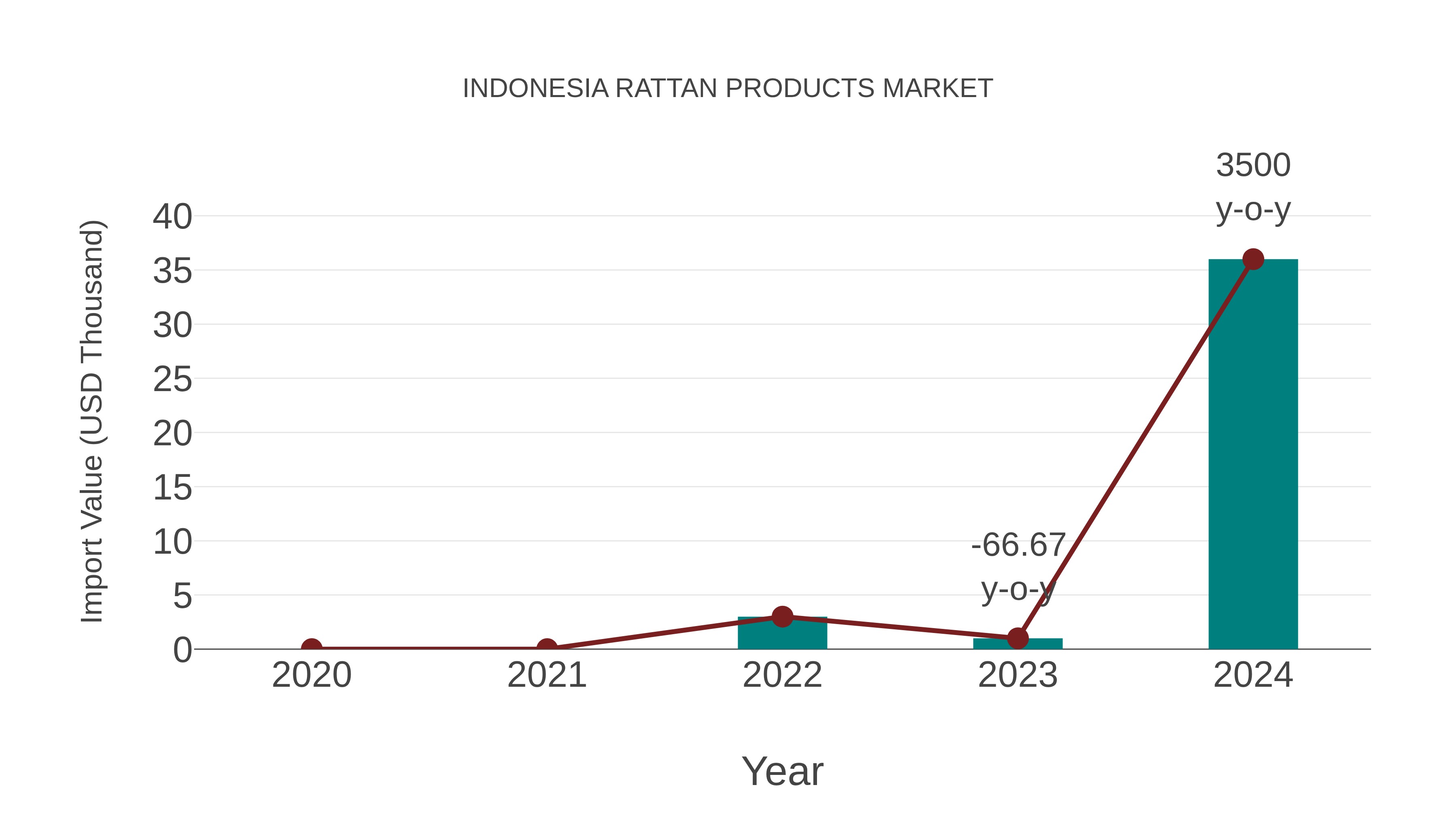
In the Indonesia rattan products market, the import trend experienced significant growth from 2023 to 2024, with a remarkable increase of 3500.0%. The compound annual growth rate (CAGR) for the period 2020-2024 stood at 246.41%. This surge can be attributed to a notable shift in consumer preferences towards sustainable and eco-friendly products, driving up demand for rattan imports in the market.
Indonesia Rattan Products Market Synopsis
Rattan products have been popular in Indonesia for centuries and the market is expected to grow further. According to a report from the Indonesian Ministry of Trade, exports of rattan-based furniture and accessories were valued at US$513 million in 2025, up 37. 5% year on year growth. In addition, imports of rattan raw materials into Indonesia grew by 6. 4% during this same period to reach US$124 million annually. The majority of these exports went primarily to the United States (25%), followed by China (17%), Japan (14%) and France (7%).
Drivers of the Market
The Indonesia rattan products market is experiencing significant growth driven by several key drivers. Rattan furniture has gained popularity both domestically and internationally due to its eco-friendly and sustainable nature, aligning with the growing global awareness of environmental issues. The rise in disposable income and changing consumer preferences for unique and natural-themed home d?cor also fuels the demand for rattan products. Moreover, the increasing use of rattan in the hospitality and tourism sectors for resorts and eco-friendly accommodations further drives market expansion.
Challenges of the Market
The Indonesia Rattan Products Market has been thriving due to the popularity of eco-friendly and stylish furniture and home decor. Despite the growth, the industry faces challenges related to the illegal harvesting and trade of rattan, leading to deforestation and ecosystem degradation. Implementing sustainable rattan sourcing practices and promoting awareness about responsible purchasing are necessary steps to address these challenges.
COVID-19 Impact on the Market
The rattan products market suffered a blow as exports and domestic sales were impacted by the global economic slowdown and logistic challenges. However, there has been a growing interest in sustainable and eco-friendly products, which may provide opportunities for the market to recover.
Key Highlights of the Report:
- Indonesia Rattan Products Market Outlook
- Market Size of Indonesia Rattan Products Market, 2025
- Forecast of Indonesia Rattan Products Market, 2032
- Historical Data and Forecast of Indonesia Rattan Products Revenues & Volume for the Period 2022-2032F
- Indonesia Rattan Products Market Trend Evolution
- Indonesia Rattan Products Market Drivers and Challenges
- Indonesia Rattan Products Price Trends
- Indonesia Rattan Products Porter's Five Forces
- Indonesia Rattan Products Industry Life Cycle
- Historical Data and Forecast of Indonesia Rattan Products Market Revenues & Volume By Type for the Period 2022-2032F
- Historical Data and Forecast of Indonesia Rattan Products Market Revenues & Volume By Chair for the Period 2022-2032F
- Historical Data and Forecast of Indonesia Rattan Products Market Revenues & Volume By Table for the Period 2022-2032F
- Historical Data and Forecast of Indonesia Rattan Products Market Revenues & Volume By Storage for the Period 2022-2032F
- Historical Data and Forecast of Indonesia Rattan Products Market Revenues & Volume By Bed for the Period 2022-2032F
- Historical Data and Forecast of Indonesia Rattan Products Market Revenues & Volume By Others for the Period 2022-2032F
- Historical Data and Forecast of Indonesia Rattan Products Market Revenues & Volume By Application for the Period 2022-2032F
- Historical Data and Forecast of Indonesia Rattan Products Market Revenues & Volume By Household for the Period 2022-2032F
- Historical Data and Forecast of Indonesia Rattan Products Market Revenues & Volume By Commerical for the Period 2022-2032F
- Indonesia Rattan Products Import Export Trade Statistics
- Market Opportunity Assessment By Type
- Market Opportunity Assessment By Application
- Indonesia Rattan Products Top Companies Market Share
- Indonesia Rattan Products Competitive Benchmarking By Technical and Operational Parameters
- Indonesia Rattan Products Company Profiles
- Indonesia Rattan Products Key Strategic Recommendations






































