Indonesia Scaffolding Market: Import Trend Analysis
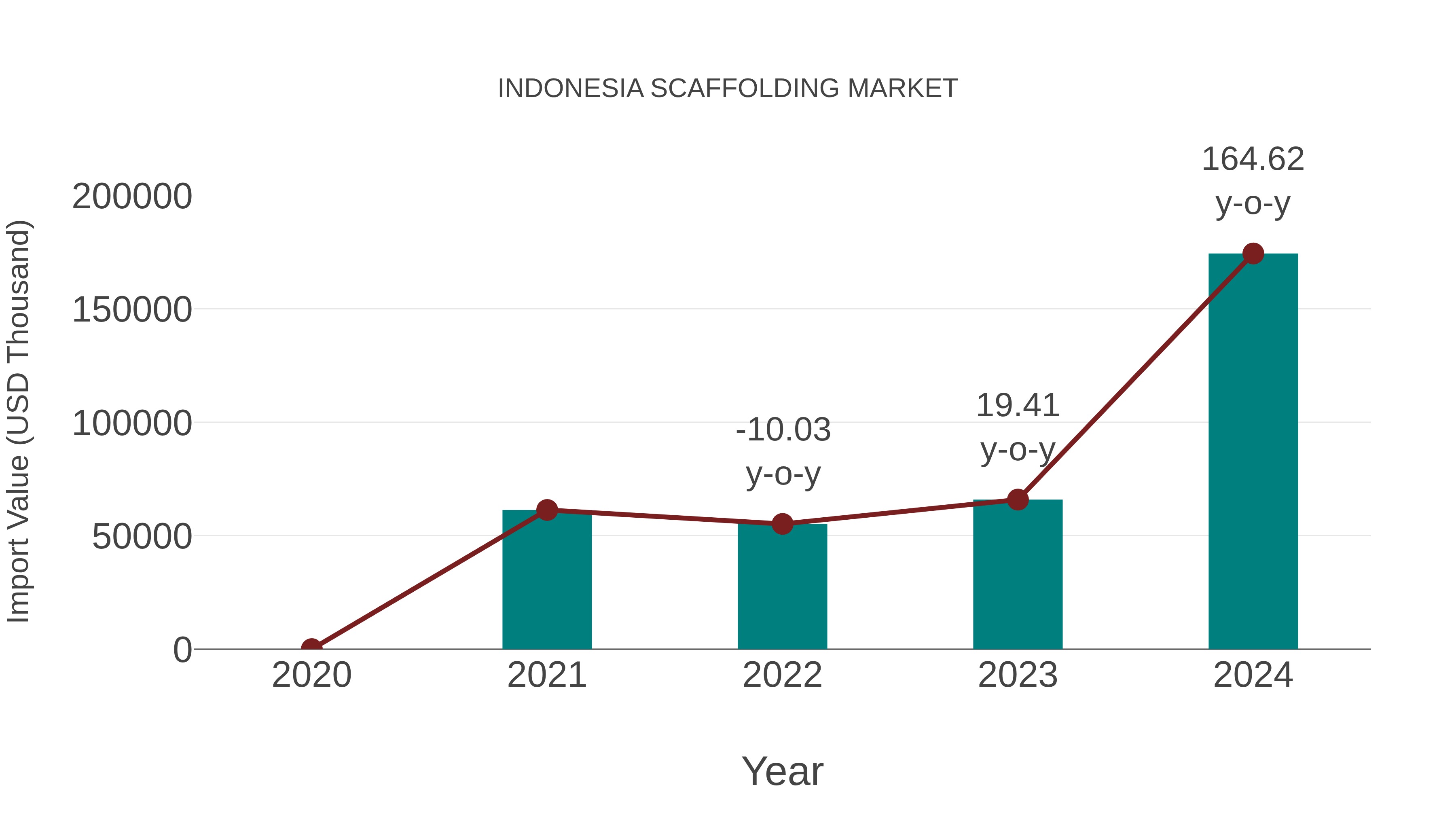
In the Indonesia scaffolding market, the import trend showed significant growth from 2023 to 2024, with a growth rate of 164.62%. The compound annual growth rate (CAGR) for imports between 2020 and 2024 stood at 41.66%. This surge in imports can be attributed to the increased construction activities and infrastructure projects in Indonesia during the period, driving the demand for scaffolding materials.
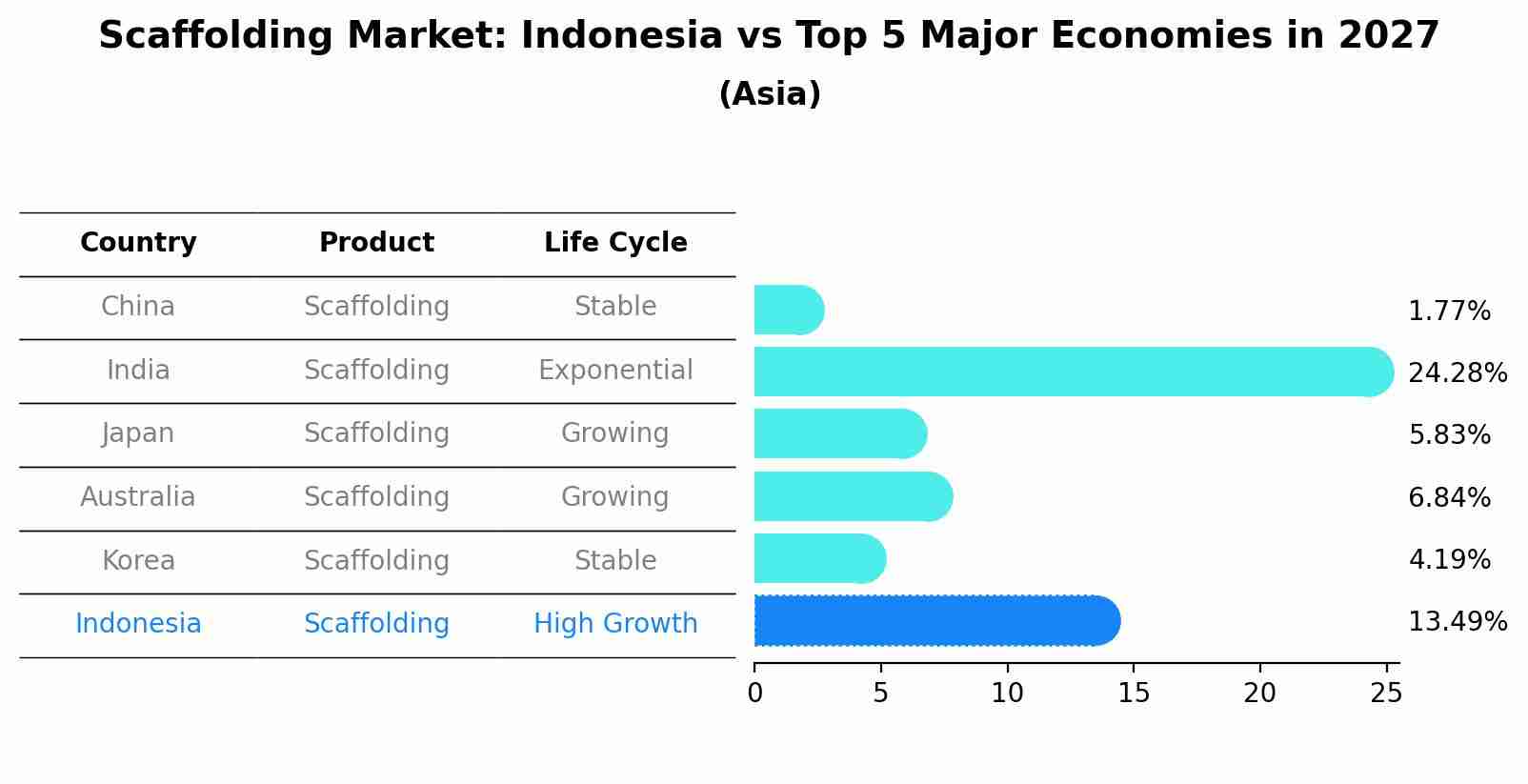
Scaffolding Market: Indonesia vs Top 5 Major Economies in 2027 (Asia)
The Scaffolding market in Indonesia is projected to grow at a high growth rate of 13.49% by 2027, highlighting the country's increasing focus on advanced technologies within the Asia region, where China holds the dominant position, followed closely by India, Japan, Australia and South Korea, shaping overall regional demand.
Indonesia Scaffolding Market Synopsis
Indonesia Scaffolding Market has witnessed growth during the past few years on the back of rising construction and infrastructure projects, which achieved a notable 4.6% growth in 2021. This growth can be attributed to various factors, including the 2020-2024 National Medium-Term Development Plan with a budget of $440 billion, as well as the implementation of smart city projects and the construction of the new capital city, Nusantara, which is expected to accommodate a population surpassing 500,000 residents. Additionally, the macroeconomic landscape, policy changes, reforms, and the challenges that affect the construction equipment, thus it subsequently increase the scaffolding market performance and catalysed the growth of the market.

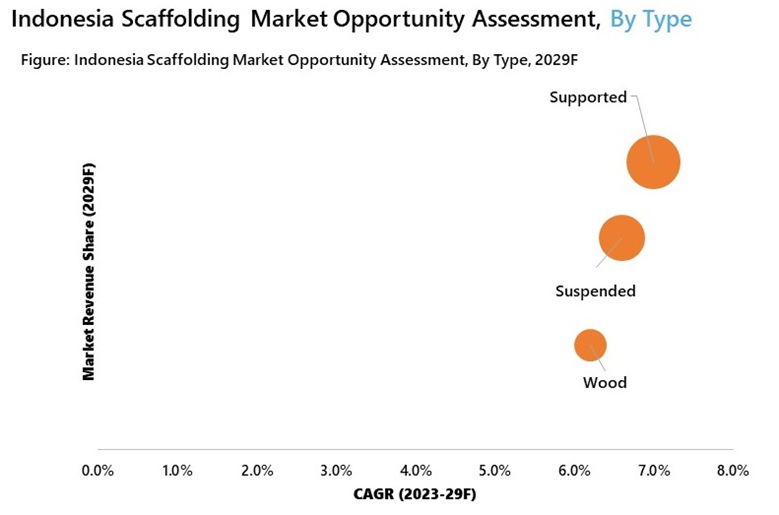
According to 6Wresearch, Indonesia Scaffolding Market revenue is projected to grow at a CAGR of 6.7% during 2023-2029. Indonesia infrastructure sector is poised for substantial growth achieving Indonesia 2045 vision goal which relies heavily on robust infrastructure development to attain this objective, the Indonesian government has allocated a $26 billion budget for infrastructure, marking a 7.8% increase compared to 2022. Indonesia is currently engaged in major infrastructure projects, including the expansion of the Jakarta 6 Subway Network and the implementation of MRT Phase 3 and 4, with a total investment of $52 billion. These projects are expected to be completed by 2030, which would contribute to the growth in demand for scaffolding in the coming years.
Fluctuating steel and aluminium prices, influenced by global market factors, such as supply and demand, trade policies, geopolitical events, and market speculation, directly impact scaffolding equipment manufacturing costs. This poses a challenge to scaffolding companies, as higher raw material expenses can strain profitability and pricing strategies, hindering the growth of the scaffolding market. These factors can limit the Indonesia Scaffolding Market Growth.
Market Segmentation by Type
Ongoing high-rise construction projects such as Okura Residences and Hotel , and Antasari Place Apartment Complex which are scheduled to be completed by 2025 would augment the demand for supported scaffolding in Indonesia's Scaffolding Industry as it offers a stable platform for workers, safeguarding protection at great heights.
Market Segmentation by Material
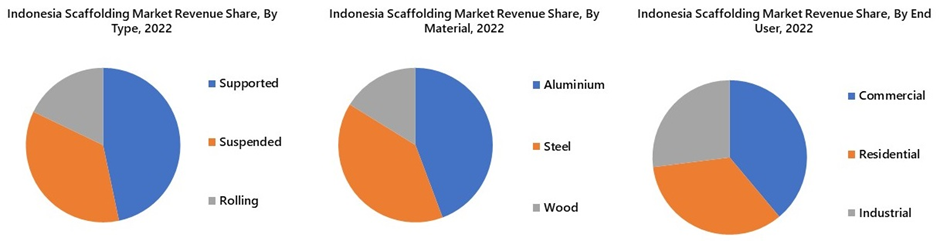
Aluminium emerged as the dominant segment in Scaffolding Market in Indonesia in 2022, capturing the highest revenue share. This can be attributed to its lightweight nature, which proves advantageous in construction projects where mobility and swift setup are crucial. Moreover, the construction industry in Indonesia experienced a growth of 4.72% in the third quarter of 2022, and the robust and sturdy characteristics of aluminium materials are poised to fuel further demand for this versatile metal.
Market Segmentation by End User
The commercial sector accounted for the highest revenue share in the Indonesia scaffolding market, owing to the booming construction industry under the 2020-2024 National Medium-Term Development Plan (RPJMN) which consists of 41 major strategic projects with a combined estimated total cost of $440 billion. Moreover, the second phase of the $32 billion future capital city, Nusantara construction would emphasize the expansion of mixed-use zones for commercial and tourism establishments, which would further boost commercial construction in the country, driving the demand for scaffolding in coming years.
Key Attractiveness of the Report
- COVID-19 Impact on the Market.
- 11 Years of Market Numbers.
- Historical Data Starting from 2019 to 2022.
- Base Year: 2022
- Forecast Data until 2029.
- Key Performance Indicators Impacting the Market.
- Major Upcoming Developments and Projects.
Key Highlights of the Report:
- Indonesia Scaffolding Market Overview
- Indonesia Scaffolding Market Outlook
- Indonesia Scaffolding Market Forecast
- Industry Life Cycle
- Porter’s Five Force Analysis
- Historical Data and Forecast of Indonesia Scaffolding Market Revenues for the Period 2019-2029F
- Historical Data and Forecast of Market Revenues, By Type, for the Period 2019-2029F
- Historical Data and Forecast of Market Revenues, By Material, for the Period 2019-2029F
- Historical Data and Forecast of Market Revenues, By End User, for the Period 2019-2029F
- Market Drivers and Restraints
- Indonesia Scaffolding Market Evolution & Trends
- Market Opportunity Assessment
- Indonesia Scaffolding Company Ranking, By Companies
- Competitive Benchmarking
- Company Profiles
- Key Strategic Recommendations
Market Scope and Segmentation
Thereportprovides a detailed analysis of the following market segments:
By Type
- Supported
- Suspended
- Rolling
By Material
- Aluminium
- Wood
- Steel
By End User
- Residential
- Commercial
- Industrial






































