Indonesia Small Wind Turbine Market: Import Trend Analysis
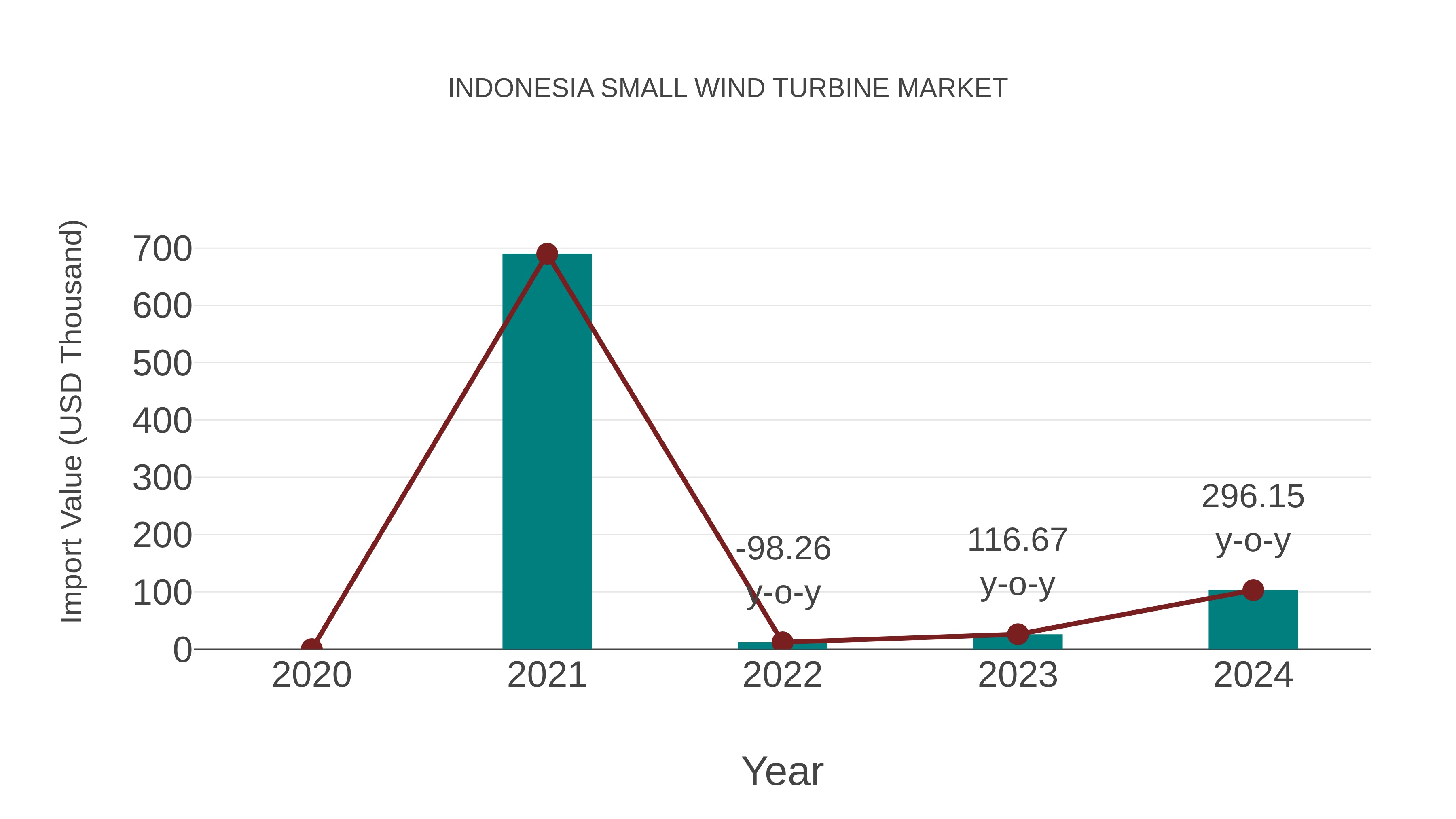
Indonesia`s small wind turbine market witnessed a significant import trend from 2023 to 2024, with a growth rate of 296.15%. However, the compound annual growth rate (CAGR) for the period 2020-2024 was -46.95%. This sharp increase in imports in 2024 could be attributed to a surge in demand for renewable energy solutions or changes in government policies promoting clean energy sources.
Indonesia Small Wind Turbine Market Synopsis
The small wind turbine market in Indonesia is estimated to reach US$ 8 million by 2025, growing at a CAGR of 7. 1% during the estimated timeframe driven mainly by increasing awareness about renewable energy sources coupled with favorable policies supporting investments in green energy solutions. Additionally, decreasing prices of wind turbines along with government incentives have further encouraged adoption among commercial and residential consumers leading to healthy growth rates for this sector over the coming years.
Drivers of the Market
The Indonesia small wind turbine market is driven by the country`s efforts to diversify its energy sources and promote renewable energy. Small wind turbines provide decentralized power generation, especially in rural and remote areas, contributing to energy access and sustainability.
Challenges of the Market
The Indonesia Small Wind Turbine market encounters challenges concerning the integration and adoption of renewable energy solutions. While small wind turbines offer a promising decentralized energy source, the intermittent and variable nature of wind energy poses challenges in grid integration and energy storage. Additionally, educating and incentivizing consumers, businesses, and local communities about the benefits of small wind turbines remain essential to drive wider adoption and overcome initial investment barriers.
COVID-19 Impact on the Market
Supply chain disruptions and reduced economic activities might have affected the small wind turbine market. However, increased emphasis on renewable energy and sustainability could have provided some opportunities.
Key Highlights of the Report:
- Indonesia Small Wind Turbine Market Outlook
- Market Size of Indonesia Small Wind Turbine Market, 2025
- Forecast of Indonesia Small Wind Turbine Market, 2032
- Historical Data and Forecast of Indonesia Small Wind Turbine Revenues & Volume for the Period 2022-2032F
- Indonesia Small Wind Turbine Market Trend Evolution
- Indonesia Small Wind Turbine Market Drivers and Challenges
- Indonesia Small Wind Turbine Price Trends
- Indonesia Small Wind Turbine Porter's Five Forces
- Indonesia Small Wind Turbine Industry Life Cycle
- Historical Data and Forecast of Indonesia Small Wind Turbine Market Revenues & Volume By Axis Type for the Period 2022-2032F
- Historical Data and Forecast of Indonesia Small Wind Turbine Market Revenues & Volume By Horizontal Axis Wind Turbine for the Period 2022-2032F
- Historical Data and Forecast of Indonesia Small Wind Turbine Market Revenues & Volume By Vertical Axis Wind Turbine for the Period 2022-2032F
- Historical Data and Forecast of Indonesia Small Wind Turbine Market Revenues & Volume By Application for the Period 2022-2032F
- Historical Data and Forecast of Indonesia Small Wind Turbine Market Revenues & Volume By On-grid for the Period 2022-2032F
- Historical Data and Forecast of Indonesia Small Wind Turbine Market Revenues & Volume By Off-grid for the Period 2022-2032F
- Indonesia Small Wind Turbine Import Export Trade Statistics
- Market Opportunity Assessment By Axis Type
- Market Opportunity Assessment By Application
- Indonesia Small Wind Turbine Top Companies Market Share
- Indonesia Small Wind Turbine Competitive Benchmarking By Technical and Operational Parameters
- Indonesia Small Wind Turbine Company Profiles
- Indonesia Small Wind Turbine Key Strategic Recommendations






































