Indonesia Synthetic Rope Market: Import Trend Analysis
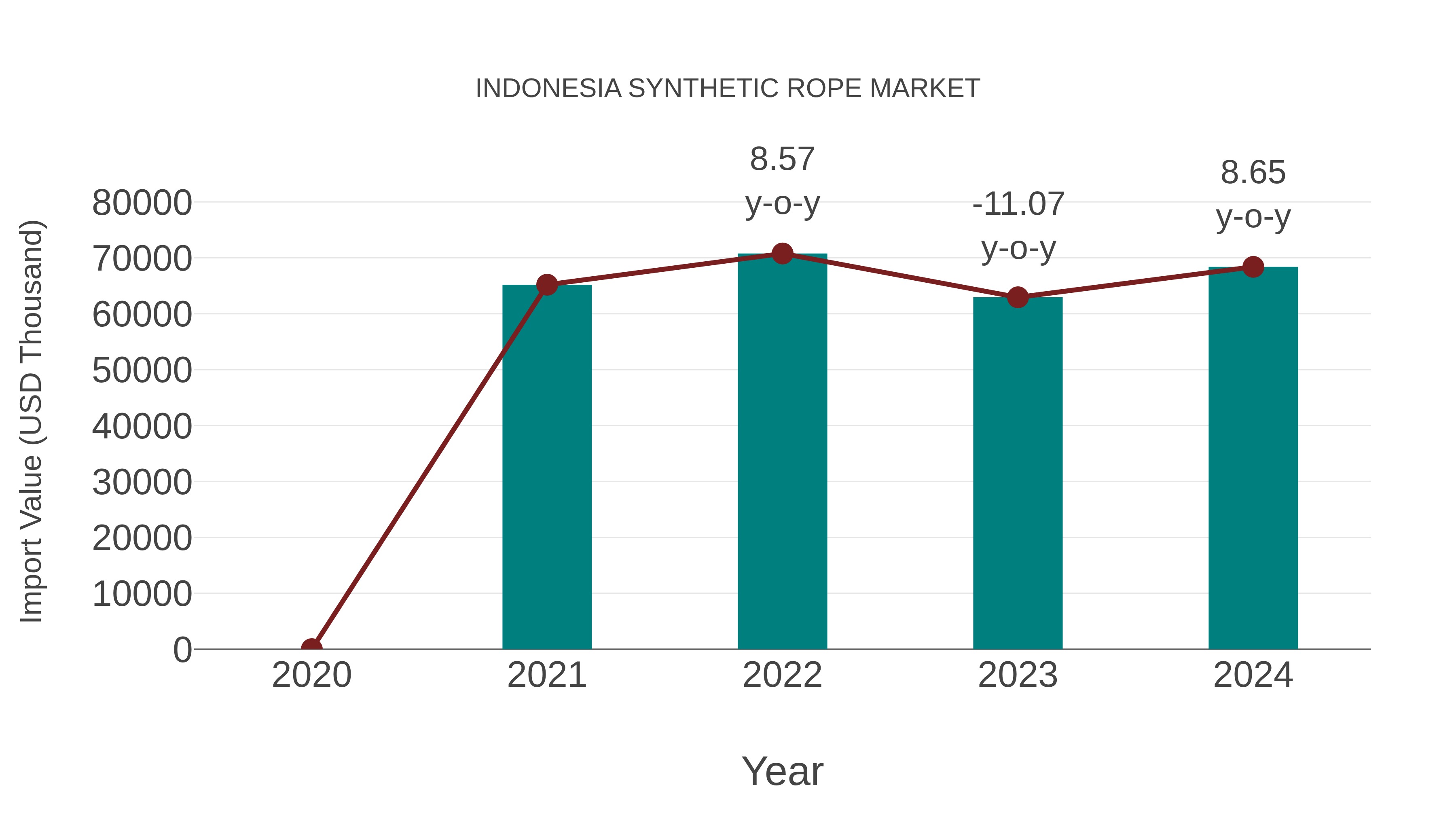
In 2024, Indonesia`s synthetic rope market saw an import growth rate of 8.65%, with a compound annual growth rate (CAGR) of 1.61% from 2020 to 2024. The increased import momentum in this period could be attributed to a shift in demand towards higher-quality synthetic ropes, reflecting market stability and evolving industry standards.
Synthetic Rope Market: Indonesia vs Top 5 Major Economies in 2027 (Asia)
The Synthetic Rope market in Indonesia is projected to grow at a growing growth rate of 9.75% by 2027, highlighting the country's increasing focus on advanced technologies within the Asia region, where China holds the dominant position, followed closely by India, Japan, Australia and South Korea, shaping overall regional demand.

Indonesia Synthetic Rope Market Synopsis
The Indonesia Synthetic Rope market is experiencing steady growth due to its diverse range of applications across various industries. Synthetic ropes made from materials like nylon, polyester, and polypropylene offer high strength, durability, and resistance to environmental factors. Industries such as maritime, construction, and sports and leisure heavily rely on synthetic ropes for their operations. As these industries continue to expand in Indonesia, the demand for synthetic ropes is likely to rise. Moreover, the increasing preference for synthetic ropes over traditional natural fiber ropes due to their superior performance and longevity will contribute to the market`s growth.
Drivers of the Market
The synthetic rope market benefits from Indonesia`s maritime industry, construction projects, and the need for advanced materials in various sectors. The strength, durability, and resistance to environmental factors of synthetic ropes make them essential for offshore and onshore activities. The market also receives a boost from safety regulations that encourage the use of high-quality ropes in industries like shipping and construction.
Challenges of the Market
The Indonesia synthetic rope market confronts challenges, such as competition from traditional natural fiber ropes and the need for consistent product quality. Convincing customers of the superior strength and durability of synthetic ropes may be challenging in a market where traditional materials are deeply entrenched. Ensuring that manufacturing processes meet international quality and safety standards is also essential for market growth.
COVID-19 Impact on the Market
The Synthetic Rope market in Indonesia faced a variety of challenges during the pandemic. Demand from sectors like maritime and construction declined as many projects were postponed or canceled. Furthermore, supply chain disruptions affected the availability of raw materials. However, the market experienced a rebound as demand for synthetic ropes in the shipping and logistics sectors surged due to increased e-commerce and transportation needs during lockdowns.
Key Players in the Market
The synthetic rope market in Indonesia caters to various industries, including maritime, construction, and recreational activities. Key players in this market include rope manufacturers and suppliers such as PT. Asia Pasific Fibers Tbk and PT. Langgeng Makmur Industri. These companies offer a wide range of synthetic ropes designed for different applications, emphasizing durability and safety.
Key Highlights of the Report:
- Indonesia Synthetic Rope Market Outlook
- Market Size of Indonesia Synthetic Rope Market, 2025
- Forecast of Indonesia Synthetic Rope Market, 2032
- Historical Data and Forecast of Indonesia Synthetic Rope Revenues & Volume for the Period 2022-2032F
- Indonesia Synthetic Rope Market Trend Evolution
- Indonesia Synthetic Rope Market Drivers and Challenges
- Indonesia Synthetic Rope Price Trends
- Indonesia Synthetic Rope Porter's Five Forces
- Indonesia Synthetic Rope Industry Life Cycle
- Historical Data and Forecast of Indonesia Synthetic Rope Market Revenues & Volume By Material for the Period 2022-2032F
- Historical Data and Forecast of Indonesia Synthetic Rope Market Revenues & Volume By Polypropylene for the Period 2022-2032F
- Historical Data and Forecast of Indonesia Synthetic Rope Market Revenues & Volume By Polyester for the Period 2022-2032F
- Historical Data and Forecast of Indonesia Synthetic Rope Market Revenues & Volume By Nylon for the Period 2022-2032F
- Historical Data and Forecast of Indonesia Synthetic Rope Market Revenues & Volume By Polyethylene for the Period 2022-2032F
- Historical Data and Forecast of Indonesia Synthetic Rope Market Revenues & Volume By Specialty Fibers for the Period 2022-2032F
- Historical Data and Forecast of Indonesia Synthetic Rope Market Revenues & Volume By End Use Industry for the Period 2022-2032F
- Historical Data and Forecast of Indonesia Synthetic Rope Market Revenues & Volume By Marine & Fishing for the Period 2022-2032F
- Historical Data and Forecast of Indonesia Synthetic Rope Market Revenues & Volume By Oil & Gas for the Period 2022-2032F
- Historical Data and Forecast of Indonesia Synthetic Rope Market Revenues & Volume By Sports & Leisure for the Period 2022-2032F
- Historical Data and Forecast of Indonesia Synthetic Rope Market Revenues & Volume By Construction for the Period 2022-2032F
- Historical Data and Forecast of Indonesia Synthetic Rope Market Revenues & Volume By Others for the Period 2022-2032F
- Indonesia Synthetic Rope Import Export Trade Statistics
- Market Opportunity Assessment By Material
- Market Opportunity Assessment By End Use Industry
- Indonesia Synthetic Rope Top Companies Market Share
- Indonesia Synthetic Rope Competitive Benchmarking By Technical and Operational Parameters
- Indonesia Synthetic Rope Company Profiles
- Indonesia Synthetic Rope Key Strategic Recommendations






































