Indonesia Threat Intelligence Market Size & Growth Rate (2026-2032)
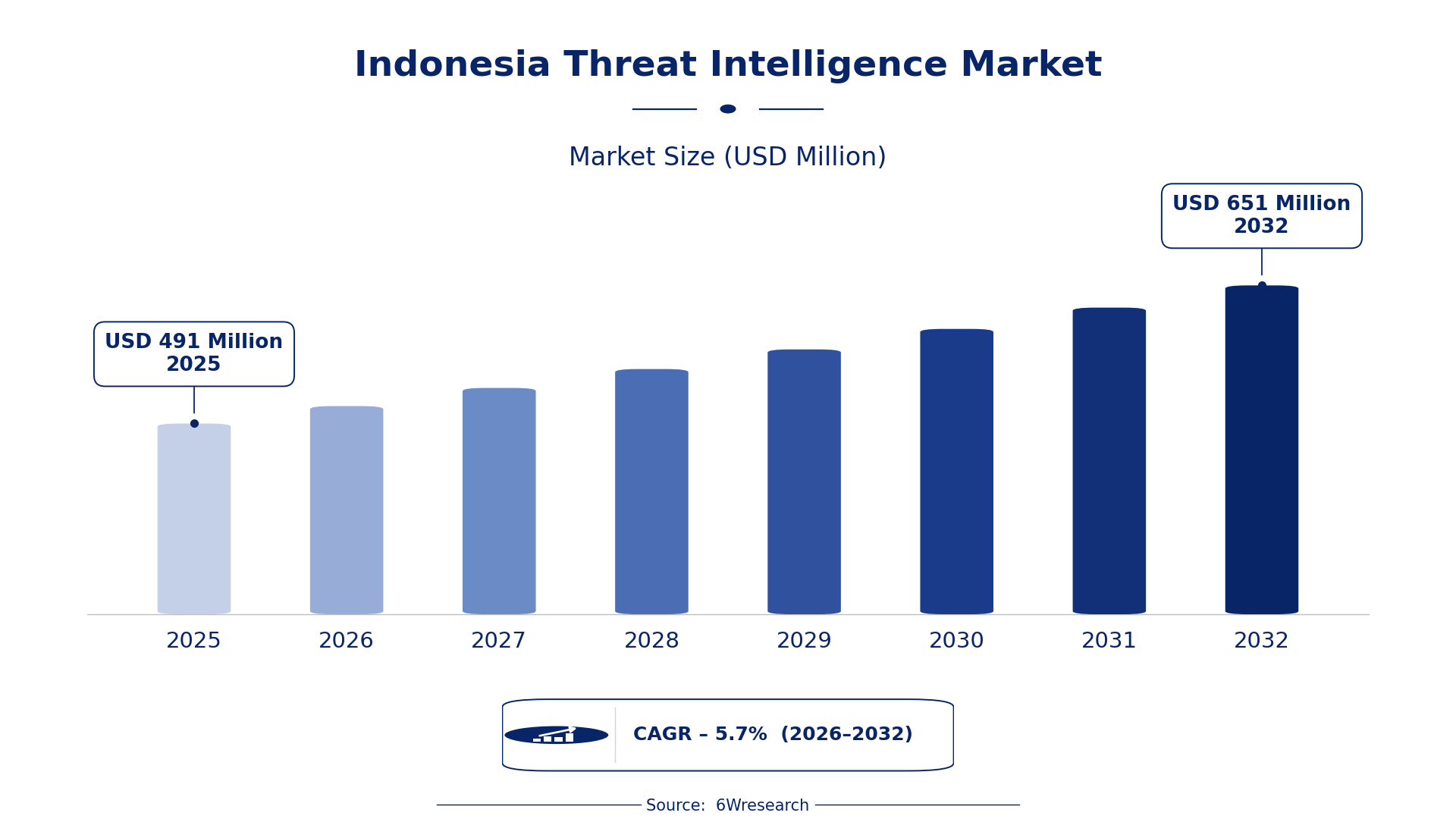
The Indonesia Threat Intelligence Market was estimated at USD 491 Million in 2025 and is projected to reach USD 651 Million by 2032, growing at a CAGR of 5.7% from 2026 to 2032.
Indonesia Threat Intelligence Market Synopsis
In Indonesia, there is a growing recognition among businesses and governmental agencies that traditional cybersecurity measures alone are no longer sufficient. The need for advanced threat intelligence has become essential, especially as organizations seek to understand and neutralize emerging cyber threats before they escalate.
The rise of sophisticated cybercriminals, coupled with a surge in attacks targeting critical infrastructure, is propelling demand for reliable threat intelligence solutions. Companies are increasingly investing in these technologies to enhance their security frameworks and protect sensitive data from relentless cyber threats.
Indonesia Threat Intelligence Market Year-wise Growth Rate and Key Drivers
This graph illustrates the annual growth rates of the Indonesia Threat Intelligence Market from 2021 to 2032, highlighting a steady upward trajectory and projected expansion over the forecast period.
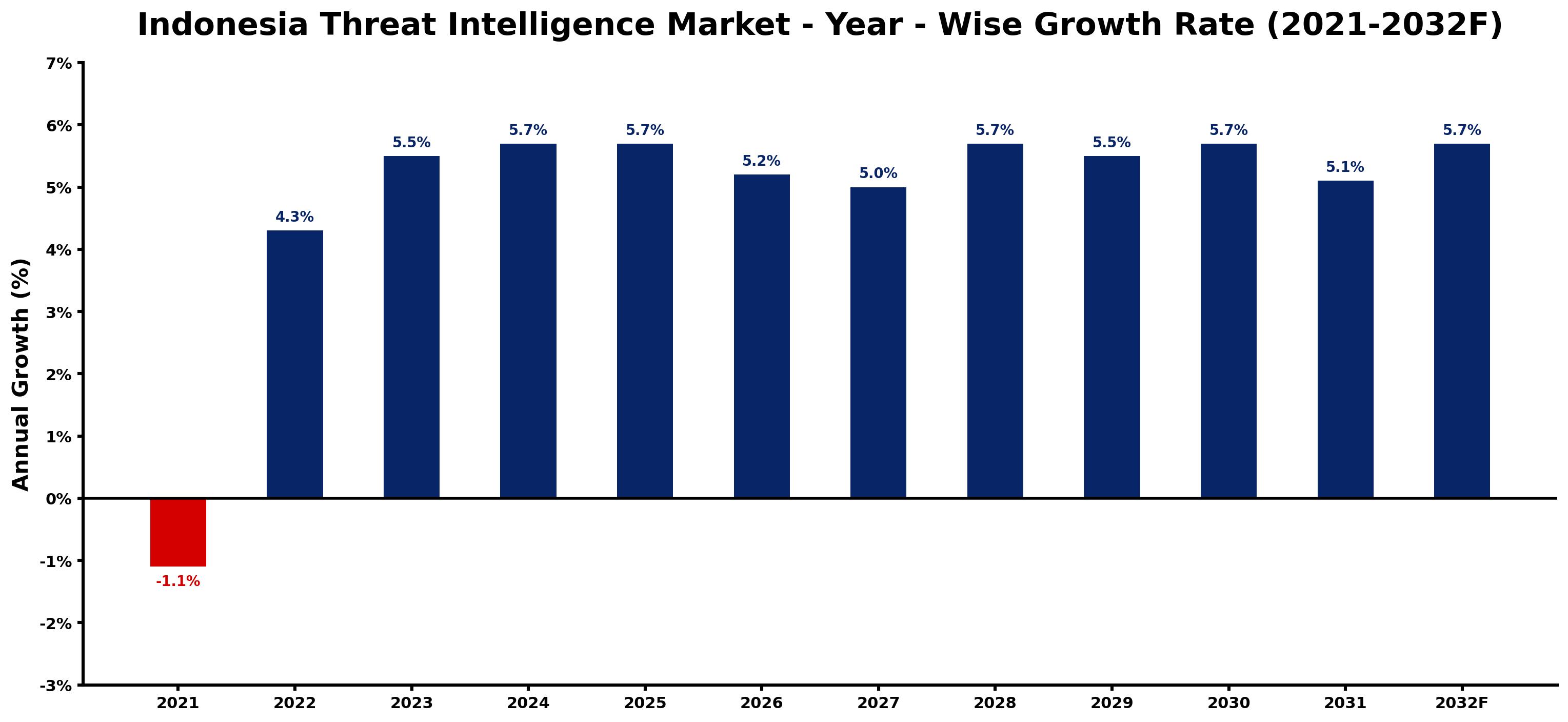
The table below presents the year‑wise growth rates along with the key drivers influencing the market
| Year | Growth Rate | Major Drivers |
| 2021 | -1.1% | Government cybersecurity spending diverted to pandemic response initiatives |
| 2022 | 4.3% | Government prioritizing cybersecurity in national digital roadmap. |
| 2023 | 5.5% | Increased mobile device usage fueling threat detection needs. |
| 2024 | 5.7% | Regulatory compliance requirements strengthening security protocols. |
| 2025 | 5.7% | Growing e-commerce sector heightens data protection awareness. |
| 2026 | 5.2% | Emergence of fintech firms driving advanced cybersecurity solutions. |
| 2027 | 5.0% | Rising investment in IoT prompts enhanced threat intelligence efforts. |
| 2028 | 5.7% | Local businesses adopting zero-trust frameworks for security. |
| 2029 | 5.5% | Cybersecurity awareness programs increasing consumer protection demands. |
| 2030 | 5.7% | Investment in digital transformation boosts threat management adoption. |
| 2031 | 5.1% | Rising state-sponsored cyberattacks elevating defense strategies. |
| 2032 | 5.7% | Local partnerships forming for improved threat data sharing. |
Note: Market size estimations and growth projections presented in this report are based on 6Wresearch's proprietary forecasting methodology, utilizing the latest available industry data, government publications, and primary research inputs.
Indonesia Threat Intelligence Market Key Takeaways
Below are some of the specific key takeaways from the market, including:
- The market's growth is driven by the increasing frequency and complexity of cyber threats.
- Organizations are prioritizing real-time threat intelligence to better defend against advanced persistent threats.
- Investment in threat intelligence is expected to increase as awareness of cybersecurity risks expands.
- Critical infrastructure protection is a major focus area for both private and public sectors.
- COVID-19 highlighted vulnerabilities and accelerated the adoption of threat intelligence solutions.
Evaluation of Restraints in Indonesia Threat Intelligence Market
Despite the optimistic growth projections, the Indonesia Threat Intelligence Market faces several limitations. A primary concern is the lack of skilled cybersecurity professionals, which hampers organizations' abilities to implement and manage threat intelligence solutions effectively. Additionally, the high costs associated with advanced threat intelligence systems can deter smaller companies from investing. The rapid pace of cyber threats also poses a challenge, as many solutions struggle to keep up with the evolving tactics of cybercriminals. Compounding these issues is the need for better collaboration and information sharing among organizations, which is often hindered by competitive and regulatory concerns.
Indonesia Threat Intelligence Market Trends
Several trends are shaping the future of the Indonesia Threat Intelligence Market. One prominent trend is the integration of artificial intelligence and machine learning into threat intelligence solutions, enhancing predictive capabilities. Additionally, there is a noticeable shift towards collaborative threat intelligence platforms, where organizations share insights and data to combat cyber threats more effectively. The focus on regulatory compliance is growing, as businesses seek to align with both local and international cybersecurity standards.
Indonesia Threat Intelligence Market Opportunities
There are substantial growth opportunities within the Indonesia Threat Intelligence Market, particularly in sectors such as finance and healthcare, where sensitive data protection is paramount. Emerging technologies like blockchain can provide innovative avenues for safeguarding information. Furthermore, as regulatory frameworks become stricter, organizations will need to invest in compliance-focused threat intelligence solutions. The ongoing digital transformation across industries presents another avenue for expanding threat intelligence services.
Government Initiatives in the Indonesia Threat Intelligence Market
The Indonesian government is actively shaping the threat intelligence market through various initiatives focused on enhancing national cybersecurity. These measures aim to bolster the country's defenses against growing cyber threats and foster a collaborative environment among public and private sectors.
- A national cybersecurity strategy was launched in 2023, emphasizing the importance of threat intelligence and information sharing.
- Currently ongoing is a public-private partnership program aimed at building a centralized threat intelligence sharing platform among key industries.
- A regulatory framework mandating enhanced cybersecurity measures for critical infrastructure is expected to be introduced by mid-2026.
- As part of capacity building, the government initiated training programs in 2024 to develop skilled professionals in cybersecurity and threat intelligence.
- Planned for 2025 is a major initiative to increase investment in cybersecurity infrastructure across both public and private sectors.
Future Insights of the Indonesia Threat Intelligence Market
From 2026 to 2032, the Indonesia Threat Intelligence Market is expected to evolve significantly. The increasing digitization of services will necessitate more sophisticated threat intelligence solutions to combat emerging risks. Additionally, as organizations realize the importance of proactive cybersecurity measures, the demand for comprehensive threat intelligence services will likely soar. Companies that adopt a strategic approach to integrating these solutions will not only enhance their defenses but will also gain a competitive edge in their respective industries.
Indonesia Threat Intelligence Market Latest Developments
Recent activities in the Indonesia Threat Intelligence Market have highlighted a focused effort to enhance cybersecurity measures across various sectors. Over the last year, businesses have been increasingly prioritizing threat intelligence as part of their security strategies, recognizing its critical role in mitigating cyber risks.
- A collaborative threat intelligence platform was launched in early 2025, aiming to facilitate information sharing among major companies in the finance sector.
- In Q3 2025, a technology vendor announced an upgrade to its threat intelligence software, featuring enhanced AI-driven analytics.
- Ongoing efforts to establish a national threat intelligence center are in progress, with expected completion by late 2026.
- A major technology partnership was formed in mid-2025, focusing on developing innovative solutions tailored for the healthcare sector.
- Upcoming regulations designed to enforce stricter cybersecurity standards across industries are slated for introduction in early 2026.
Indonesia Threat Intelligence Market - Key Attractiveness of the Report
- 10 Years of Market Numbers
- Historical Data Starting from 2022 to 2025
- Base Year: 2025
- Forecast Data until 2032
- Key Performance Indicators Impacting the Market
- Major Upcoming Developments and Projects
Key Highlights of the Report:
- Indonesia Threat Intelligence Market Outlook
- Market Size of Indonesia Threat Intelligence Market, 2025
- Forecast of Indonesia Threat Intelligence Market, 2032
- Historical Data and Forecast of Indonesia Threat Intelligence Revenues & Volume for the Period 2022-2032F
- Indonesia Threat Intelligence Market Trend Evolution
- Indonesia Threat Intelligence Market Drivers and Challenges
- Indonesia Threat Intelligence Price Trends
- Indonesia Threat Intelligence Porter's Five Forces
- Indonesia Threat Intelligence Industry Life Cycle
- Historical Data and Forecast of Indonesia Threat Intelligence Market Revenues & Volume By Component for the Period 2022-2032F
- Historical Data and Forecast of Indonesia Threat Intelligence Market Revenues & Volume By Solutions for the Period 2022-2032F
- Historical Data and Forecast of Indonesia Threat Intelligence Market Revenues & Volume By Services for the Period 2022-2032F
- Historical Data and Forecast of Indonesia Threat Intelligence Market Revenues & Volume By Vertical for the Period 2022-2032F
- Historical Data and Forecast of Indonesia Threat Intelligence Market Revenues & Volume By BFSI for the Period 2022-2032F
- Historical Data and Forecast of Indonesia Threat Intelligence Market Revenues & Volume By IT for the Period 2022-2032F
- Historical Data and Forecast of Indonesia Threat Intelligence Market Revenues & Volume By ITeS for the Period 2022-2032F
- Historical Data and Forecast of Indonesia Threat Intelligence Market Revenues & Volume By Retail for the Period 2022-2032F
- Historical Data and Forecast of Indonesia Threat Intelligence Market Revenues & Volume By Healthcare for the Period 2022-2032F
- Historical Data and Forecast of Indonesia Threat Intelligence Market Revenues & Volume By Life Sciences for the Period 2022-2032F
- Historical Data and Forecast of Indonesia Threat Intelligence Market Revenues & Volume By Organization Size for the Period 2022-2032F
- Historical Data and Forecast of Indonesia Threat Intelligence Market Revenues & Volume By Large Enterprises for the Period 2022-2032F
- Historical Data and Forecast of Indonesia Threat Intelligence Market Revenues & Volume By SMEs for the Period 2022-2032F
- Historical Data and Forecast of Indonesia Threat Intelligence Market Revenues & Volume By Application for the Period 2022-2032F
- Historical Data and Forecast of Indonesia Threat Intelligence Market Revenues & Volume By Security Information and Event Management for the Period 2022-2032F
- Historical Data and Forecast of Indonesia Threat Intelligence Market Revenues & Volume By Government, Risk, and Compliance for the Period 2022-2032F
- Historical Data and Forecast of Indonesia Threat Intelligence Market Revenues & Volume By Business Continuity Planning and Management for the Period 2022-2032F
- Historical Data and Forecast of Indonesia Threat Intelligence Market Revenues & Volume By Deployment Mode for the Period 2022-2032F
- Historical Data and Forecast of Indonesia Threat Intelligence Market Revenues & Volume By Cloud for the Period 2022-2032F
- Historical Data and Forecast of Indonesia Threat Intelligence Market Revenues & Volume By On-premises for the Period 2022-2032F
- Indonesia Threat Intelligence Import Export Trade Statistics
- Market Opportunity Assessment By Component
- Market Opportunity Assessment By Vertical
- Market Opportunity Assessment By Organization Size
- Market Opportunity Assessment By Application
- Market Opportunity Assessment By Deployment Mode
- Indonesia Threat Intelligence Top Companies Market Share
- Indonesia Threat Intelligence Competitive Benchmarking By Technical and Operational Parameters
- Indonesia Threat Intelligence Company Profiles
- Indonesia Threat Intelligence Key Strategic Recommendations






































