Indonesia Vegetable Oil Market Growth Rate Analysis (2025 - 2031)
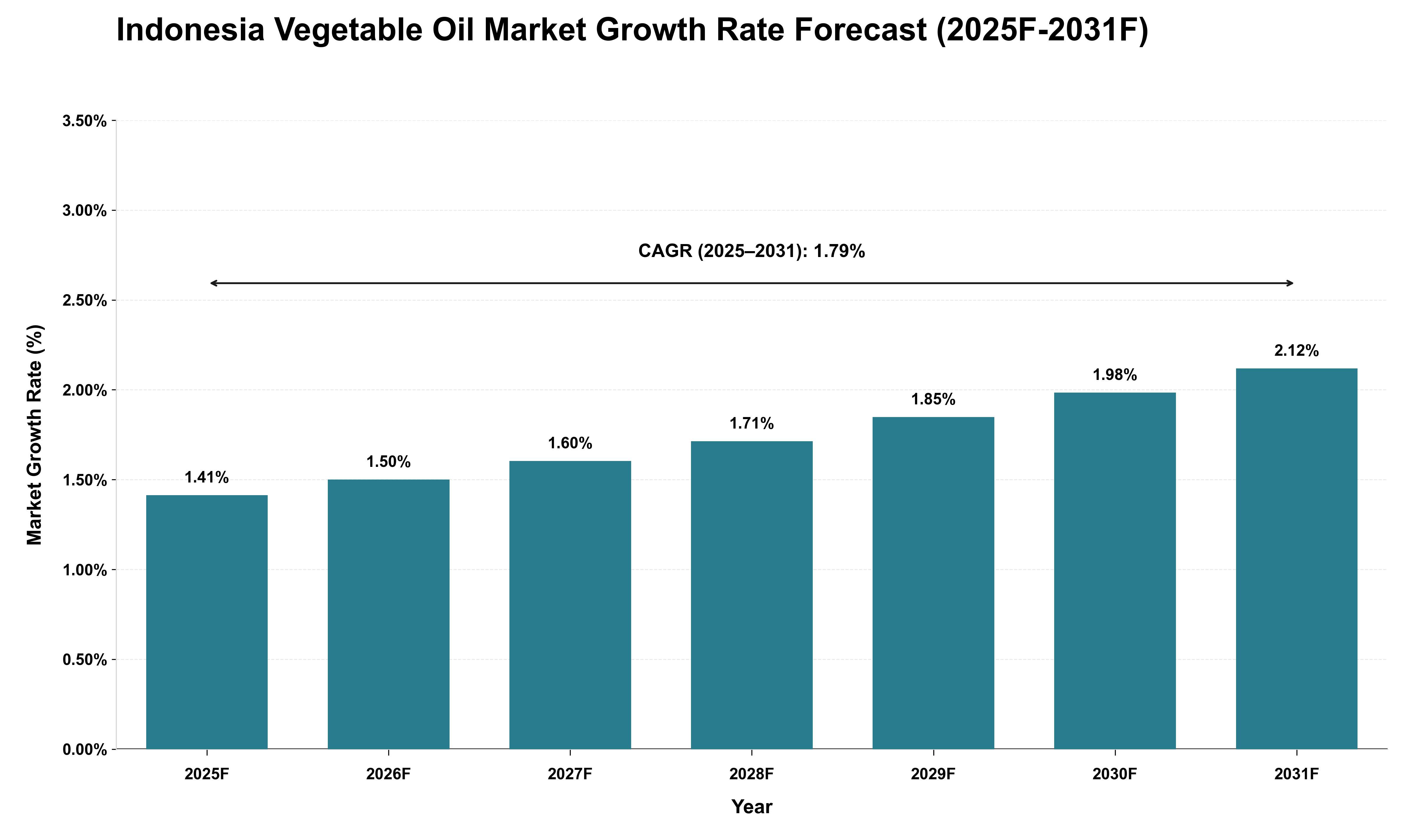
The outlook for Indonesia's vegetable oil market will be shaped by several macroeconomic factors, particularly supply chain dynamics and input costs. As global demand for vegetable oil continues to rise, driven by dietary shifts and biofuel applications, Indonesia's production will likely face pressures from fluctuating raw material prices and logistical challenges. The forecasted CAGR of 1.79% reflects a gradual increase in growth rates, peaking at 2.12% in 2031, indicating a response to improved efficiencies in processing and distribution networks. Import dependencies may also influence market stability; as domestic production scales up, reliance on imports could diminish, potentially lowering costs over time. However, external shocks—such as climate variability or geopolitical tensions—could disrupt supply chains, impacting pricing structures and availability. Overall, the interplay of these factors will dictate the trajectory of the vegetable oil market through this period.
Key Highlights of the Report:
- Indonesia Vegetable Oil Market Outlook
- Market Size of Indonesia Vegetable Oil Market, 2025
- Forecast of Indonesia Vegetable Oil Market, 2032
- Historical Data and Forecast of Indonesia Vegetable Oil Revenues & Volume for the Period 2022-2032F
- Indonesia Vegetable Oil Market Trend Evolution
- Indonesia Vegetable Oil Market Drivers and Challenges
- Indonesia Vegetable Oil Price Trends
- Indonesia Vegetable Oil Porter's Five Forces
- Indonesia Vegetable Oil Industry Life Cycle
- Historical Data and Forecast of Indonesia Vegetable Oil Market Revenues & Volume By Type for the Period 2022-2032F
- Historical Data and Forecast of Indonesia Vegetable Oil Market Revenues & Volume By Sunflower Oil for the Period 2022-2032F
- Historical Data and Forecast of Indonesia Vegetable Oil Market Revenues & Volume By Rapeseed (Canola) Oil for the Period 2022-2032F
- Historical Data and Forecast of Indonesia Vegetable Oil Market Revenues & Volume By Soybean Oil for the Period 2022-2032F
- Historical Data and Forecast of Indonesia Vegetable Oil Market Revenues & Volume By Application for the Period 2022-2032F
- Historical Data and Forecast of Indonesia Vegetable Oil Market Revenues & Volume By Food for the Period 2022-2032F
- Historical Data and Forecast of Indonesia Vegetable Oil Market Revenues & Volume By Feed for the Period 2022-2032F
- Historical Data and Forecast of Indonesia Vegetable Oil Market Revenues & Volume By Industrial for the Period 2022-2032F
- Indonesia Vegetable Oil Import Export Trade Statistics
- Market Opportunity Assessment By Type
- Market Opportunity Assessment By Application
- Indonesia Vegetable Oil Top Companies Market Share
- Indonesia Vegetable Oil Competitive Benchmarking By Technical and Operational Parameters
- Indonesia Vegetable Oil Company Profiles
- Indonesia Vegetable Oil Key Strategic Recommendations






































