Indonesia Viscose Filament Yarns Market: Import Trend Analysis
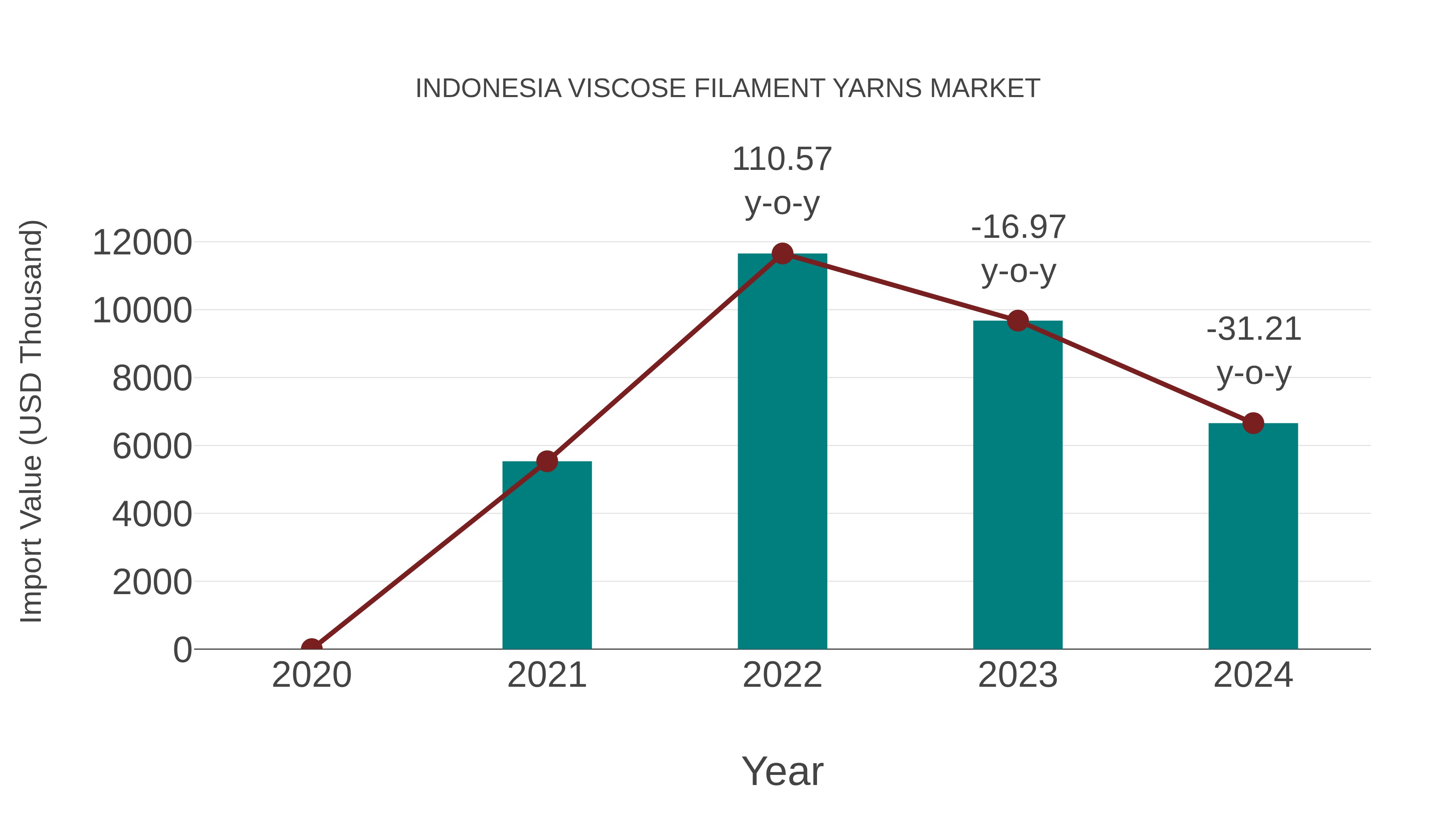
In the Indonesia viscose filament yarns market, the import trend experienced a notable decline from 2023 to 2024, with a growth rate of -31.21%. However, the compound annual growth rate (CAGR) for the period 2020-2024 stood at 6.35%. This significant decrease in import momentum from 2023 to 2024 could be attributed to shifting demand patterns or alterations in trade policies impacting market stability.
Indonesia Viscose Filament Yarns Market Synopsis
Indonesia is a significant producer of viscose filament yarns, with the country accounting for 6.2% of the global production in 2025. The demand for viscose filament yarns has grown significantly during this period, propelled by increased demand from downstream industries such as textiles and apparel. Moreover, Indonesia relatively low labor costs and easy access to raw materials make it an attractive destination for manufacturers looking to set up operations in Southeast Asia.
Market Trends
The increasing trend towards sustainable products such as bamboo fiber based yarn has resulted in higher demand for this type of product among end-users including textile mills and clothing retailers. In addition, there is growing awareness about environment friendly products due to rising consumer consciousness level regarding environmental protection which has further driven the growth of eco-friendly viscose filament yarns market in Indonesia. Furthermore, technological advancements have enabled manufacturers to offer superior quality products at competitive prices making it more appealing to customers across different industries.
Market Drivers
One key factor driving the growth of the Indonesia viscose filament yarn market is its availability at a lower cost than other similar fibers such as polyester or nylon which makes it an ideal choice among buyers who are looking for affordable yet reliable solutions that provide excellent performance characteristics. Additionally, government initiatives aimed at promoting local manufacturing industry through subsidies, tax incentives, relaxed regulations etc have also given fillip to domestic producers leading them expand their capabilities thereby boosting sales volumes.
COVID-19 Impact on the Market
The Indonesia Viscose Filament Yarns market is expected to be adversely impacted by the global COVID-19 pandemic. The economic uncertainty due to lockdowns, disruption in trade and a decrease in demand have all had an impact on the industry. Lower sales of apparel products and weaker consumer spending are anticipated to lead to lower demand for viscose filament yarns in Indonesia. Additionally, disruption in supply chains has also hindered production activities resulting further losses in revenue for viscose filament yarn producers.
Challenges of the Market
The major challenge faced by players operating within the Indonesia Viscose Filament Yarns market is increasing raw material prices which have been driven up due to volatile crude oil prices as well as shortage of this key input materials such as cotton and wood pulp among others. Moreover, strong competition from synthetic fibers like polyester, acrylic and other man-made fibers may also impede growth prospects for Indonesia players. Additionally, stringent government regulations related environmental pollution caused by manufacturing processes can also hamper growth prospects of companies operating within the industry over the forecast period (2025-2031).
Industry Key Players
Major players active within Indonesia Viscose Filament Yarns Market include PT Bina Raya Textile Industries Tbk., Lotus PTA Fibers Ltd., Sugini Corp., China Chemical Fiber Corporation (CCFC), PT Aditya Birla Cellulosic Fibre Pvt Ltd,, JX Nippon Oil & Energy Corporation Inc., Sateri Holdings Limited among others.
Key Highlights of the Report:
- Indonesia Viscose Filament Yarns Market Outlook
- Market Size of Indonesia Viscose Filament Yarns Market, 2025
- Forecast of Indonesia Viscose Filament Yarns Market, 2032
- Historical Data and Forecast of Indonesia Viscose Filament Yarns Revenues & Volume for the Period 2022-2032F
- Indonesia Viscose Filament Yarns Market Trend Evolution
- Indonesia Viscose Filament Yarns Market Drivers and Challenges
- Indonesia Viscose Filament Yarns Price Trends
- Indonesia Viscose Filament Yarns Porter's Five Forces
- Indonesia Viscose Filament Yarns Industry Life Cycle
- Historical Data and Forecast of Indonesia Viscose Filament Yarns Market Revenues & Volume By Type for the Period 2022-2032F
- Historical Data and Forecast of Indonesia Viscose Filament Yarns Market Revenues & Volume By Continuous for the Period 2022-2032F
- Historical Data and Forecast of Indonesia Viscose Filament Yarns Market Revenues & Volume By Semi-contunuous for the Period 2022-2032F
- Historical Data and Forecast of Indonesia Viscose Filament Yarns Market Revenues & Volume By Application for the Period 2022-2032F
- Historical Data and Forecast of Indonesia Viscose Filament Yarns Market Revenues & Volume By Garment industry for the Period 2022-2032F
- Historical Data and Forecast of Indonesia Viscose Filament Yarns Market Revenues & Volume By Auto industry for the Period 2022-2032F
- Historical Data and Forecast of Indonesia Viscose Filament Yarns Market Revenues & Volume By other for the Period 2022-2032F
- Indonesia Viscose Filament Yarns Import Export Trade Statistics
- Market Opportunity Assessment By Type
- Market Opportunity Assessment By Application
- Indonesia Viscose Filament Yarns Top Companies Market Share
- Indonesia Viscose Filament Yarns Competitive Benchmarking By Technical and Operational Parameters
- Indonesia Viscose Filament Yarns Company Profiles
- Indonesia Viscose Filament Yarns Key Strategic Recommendations






































