Indonesia Zinc Stearates Market: Import Trend Analysis
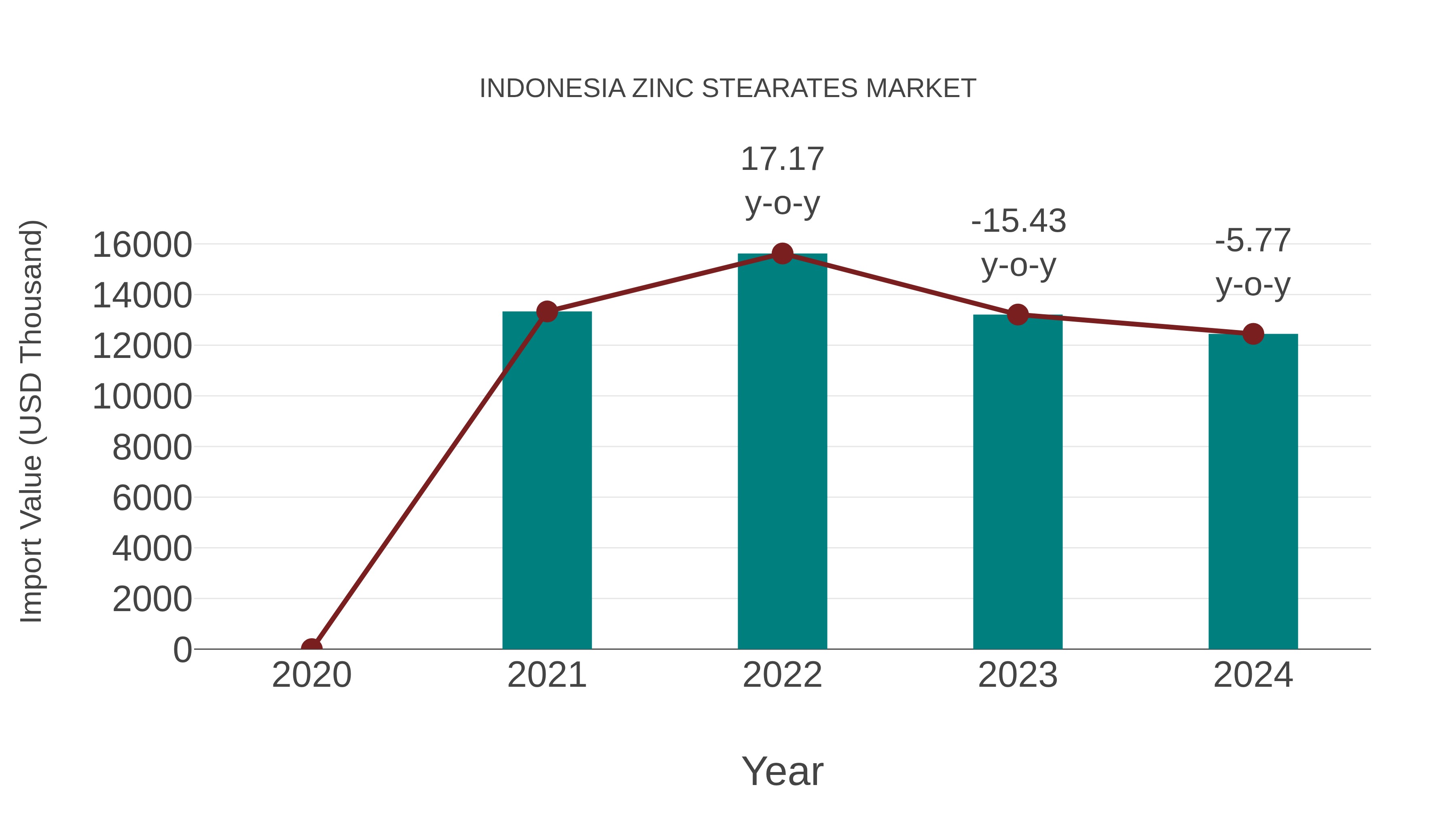
In the Indonesia zinc stearates market, the import trend experienced a decline with a growth rate of -5.77% from 2023 to 2024, while the compound annual growth rate (CAGR) for 2020-2024 stood at -2.26%. This negative import momentum can be attributed to shifts in demand dynamics or changes in market conditions impacting trade flows.
Indonesia Zinc Stearates Market Synopsis
The Indonesia Zinc Stearates Market is also expected to show positive growth in the forecast period. Zinc stearates are widely used as lubricants and release agents in the plastics and rubber industries. With the increasing demand for plastics and rubber products in Indonesia, the market for zinc stearates is expected to grow. Additionally, the growing automotive and construction industries are likely to further drive the demand for zinc stearates.
Drivers of the Market
The zinc stearates market in Indonesia is driven by the plastics, rubber, and cosmetics industries. Zinc stearates are used as lubricants, release agents, and anti-blocking agents in these sectors. The growth in plastics and rubber manufacturing, along with the cosmetics industry`s expansion, contributes to the increasing demand for zinc stearates.
Challenges of the Market
The Indonesia Zinc Stearates Market must address challenges related to environmental concerns and regulatory compliance. The industry faces scrutiny regarding waste disposal and emissions. Volatility in zinc prices and competition from other additives in various industries, such as plastics and rubber, add to the challenges.
COVID-19 Impact on the Market
The Zinc Stearates market faced challenges during the pandemic as industries such as cosmetics, plastics, and paints were affected. Reduced manufacturing and lower demand for these products led to a temporary decrease in demand for zinc stearates. As these industries recover, the market is likely to rebound.
Key Players in the Market
In the Indonesia zinc stearates market, key players such as PT Usaha Kimia Industri are significant producers of zinc stearate products used as stabilizers and lubricants in various industries, including plastics, rubber, and cosmetics.
Key Highlights of the Report:
- Indonesia Zinc Stearates Market Outlook
- Market Size of Indonesia Zinc Stearates Market, 2025
- Forecast of Indonesia Zinc Stearates Market, 2032
- Historical Data and Forecast of Indonesia Zinc Stearates Revenues & Volume for the Period 2022-2032F
- Indonesia Zinc Stearates Market Trend Evolution
- Indonesia Zinc Stearates Market Drivers and Challenges
- Indonesia Zinc Stearates Price Trends
- Indonesia Zinc Stearates Porter's Five Forces
- Indonesia Zinc Stearates Industry Life Cycle
- Historical Data and Forecast of Indonesia Zinc Stearates Market Revenues & Volume By Type for the Period 2022-2032F
- Historical Data and Forecast of Indonesia Zinc Stearates Market Revenues & Volume By Solid Zinc Stearate for the Period 2022-2032F
- Historical Data and Forecast of Indonesia Zinc Stearates Market Revenues & Volume By Aqueous Zinc Stearate for the Period 2022-2032F
- Historical Data and Forecast of Indonesia Zinc Stearates Market Revenues & Volume By Application for the Period 2022-2032F
- Historical Data and Forecast of Indonesia Zinc Stearates Market Revenues & Volume By Food, Pharma and Nutraceuticals for the Period 2022-2032F
- Historical Data and Forecast of Indonesia Zinc Stearates Market Revenues & Volume By Cosmetics for the Period 2022-2032F
- Historical Data and Forecast of Indonesia Zinc Stearates Market Revenues & Volume By Lubricants for the Period 2022-2032F
- Historical Data and Forecast of Indonesia Zinc Stearates Market Revenues & Volume By Plastics for the Period 2022-2032F
- Indonesia Zinc Stearates Import Export Trade Statistics
- Market Opportunity Assessment By Type
- Market Opportunity Assessment By Application
- Indonesia Zinc Stearates Top Companies Market Share
- Indonesia Zinc Stearates Competitive Benchmarking By Technical and Operational Parameters
- Indonesia Zinc Stearates Company Profiles
- Indonesia Zinc Stearates Key Strategic Recommendations






































