Iran Cellulose Fiber Market Size Growth Rate
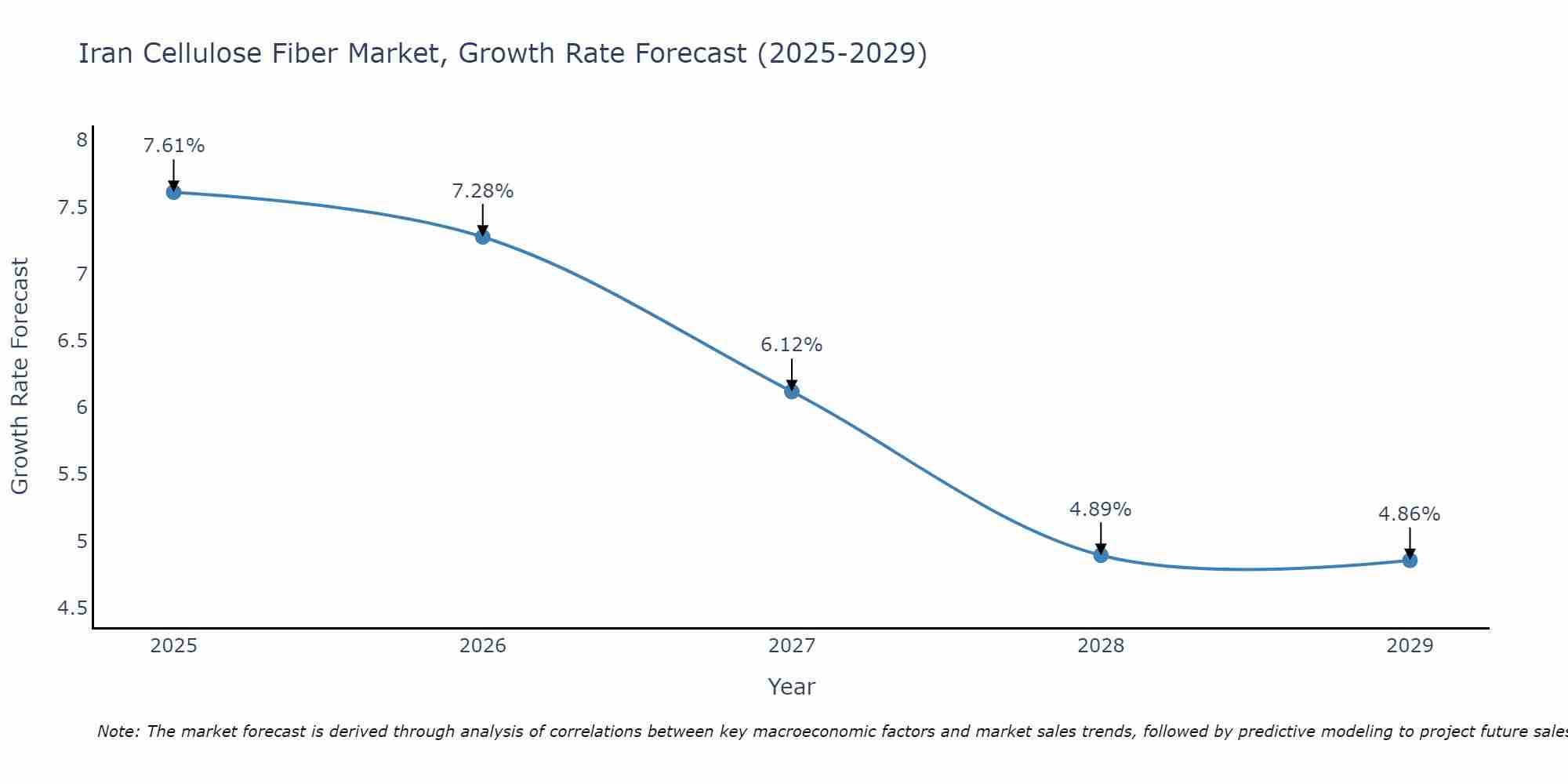
The Iran Cellulose Fiber Market may undergo a gradual slowdown in growth rates between 2025 and 2029. Although the growth rate starts strong at 7.61% in 2025, it steadily loses momentum, ending at 4.86% by 2029.
Iran Cellulose Fiber Market Overview
Iran cellulose fiber market, there is a growing demand for sustainable and biodegradable fibers across various end-use industries. Cellulose fibers, derived from renewable sources such as wood pulp and cotton linters, offer advantages such as high strength, moisture absorption, and thermal insulation, making them ideal for applications such as textiles, paper products, and composites. The market is witnessing increased adoption of cellulose fibers in textile manufacturing, driven by consumer preferences for eco-friendly and comfortable clothing. Moreover, advancements in fiber processing technologies and the development of novel cellulose fiber blends are expanding the application scope and driving market growth.
Drivers of the market
The Iran cellulose fiber market is driven by factors such as the growing textile and apparel industry, increasing demand for eco-friendly and sustainable fibers, and advancements in manufacturing technologies. Cellulose fibers, derived from natural sources such as wood pulp and cotton, are gaining popularity as alternatives to synthetic fibers due to their biodegradability, breathability, and comfort properties. Moreover, the rising awareness about environmental sustainability and the preference for natural fibers in textiles are fueling market growth in Iran.
Challenges of the market
The Iran cellulose fiber market confronts several challenges that affect its growth trajectory. Economic sanctions and trade restrictions limit access to advanced cellulose fiber production technologies and raw materials, impacting product quality and innovation. Additionally, fluctuations in cotton prices, which affect the cost of cellulose fiber production, pose challenges to market stability and profitability. Moreover, the lack of infrastructure and technical expertise in sustainable fiber production methods hinders market growth by limiting the adoption of eco-friendly cellulose fibers. Furthermore, competition from synthetic fibers and alternative materials slows down market penetration and adoption.
Government Policy of the market
The cellulose fiber market in Iran has seen significant growth propelled by the expanding textile, paper, and packaging industries. Government policies aimed at promoting domestic manufacturing, enhancing product quality standards, and fostering innovation have supported market development by incentivizing investment in production facilities and technology upgrades. Additionally, initiatives to promote sustainable practices and environmental conservation have led to the adoption of cellulose fibers as eco-friendly alternatives to synthetic materials, further driving market growth and competitiveness.
Key Highlights of the Report:
- Iran Cellulose Fiber Market Outlook
- Market Size of Iran Cellulose Fiber Market, 2024
- Forecast of Iran Cellulose Fiber Market, 2031
- Historical Data and Forecast of Iran Cellulose Fiber Revenues & Volume for the Period 2021-2031
- Iran Cellulose Fiber Market Trend Evolution
- Iran Cellulose Fiber Market Drivers and Challenges
- Iran Cellulose Fiber Price Trends
- Iran Cellulose Fiber Porter`s Five Forces
- Iran Cellulose Fiber Industry Life Cycle
- Historical Data and Forecast of Iran Cellulose Fiber Market Revenues & Volume By Fiber Type for the Period 2021-2031
- Historical Data and Forecast of Iran Cellulose Fiber Market Revenues & Volume By Introduction for the Period 2021-2031
- Historical Data and Forecast of Iran Cellulose Fiber Market Revenues & Volume By Natural Cellulose Fibers for the Period 2021-2031
- Historical Data and Forecast of Iran Cellulose Fiber Market Revenues & Volume By Man-made Cellulose Fibers for the Period 2021-2031
- Historical Data and Forecast of Iran Cellulose Fiber Market Revenues & Volume By Others for the Period 2021-2031
- Historical Data and Forecast of Iran Cellulose Fiber Market Revenues & Volume By Applications for the Period 2021-2031
- Historical Data and Forecast of Iran Cellulose Fiber Market Revenues & Volume By Introduction for the Period 2021-2031
- Historical Data and Forecast of Iran Cellulose Fiber Market Revenues & Volume By Apparel for the Period 2021-2031
- Historical Data and Forecast of Iran Cellulose Fiber Market Revenues & Volume By Home Textile for the Period 2021-2031
- Historical Data and Forecast of Iran Cellulose Fiber Market Revenues & Volume By Industrial for the Period 2021-2031
- Historical Data and Forecast of Iran Cellulose Fiber Market Revenues & Volume By Others for the Period 2021-2031
- Iran Cellulose Fiber Import Export Trade Statistics
- Market Opportunity Assessment By Fiber Type
- Market Opportunity Assessment By Applications
- Iran Cellulose Fiber Top Companies Market Share
- Iran Cellulose Fiber Competitive Benchmarking By Technical and Operational Parameters
- Iran Cellulose Fiber Company Profiles
- Iran Cellulose Fiber Key Strategic Recommendations






































