Iran Glass Market Growth Rate Analysis (2025 - 2031)
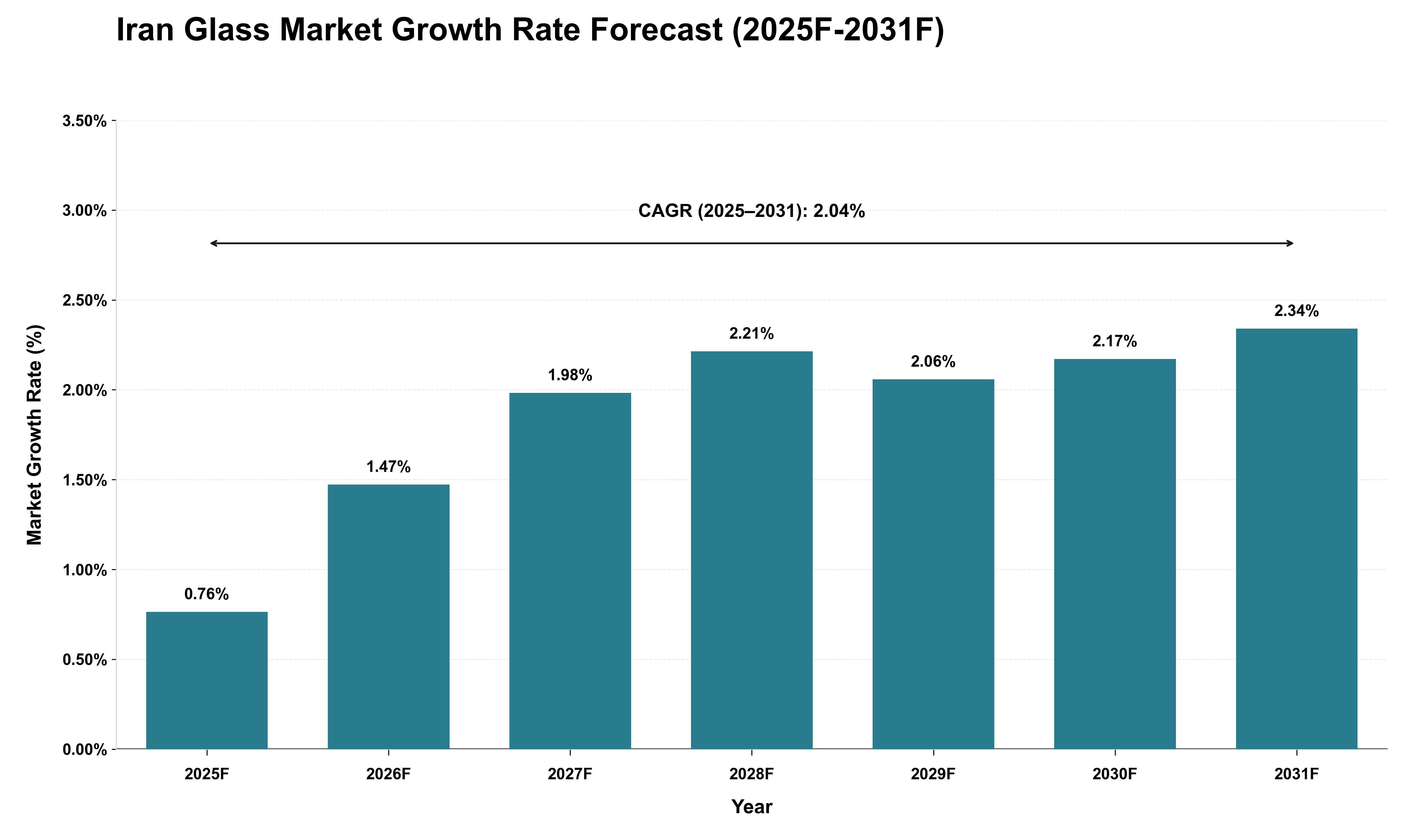
The Iran glass market will experience a gradual increase in trade flows, driven by anticipated improvements in domestic production capabilities and a growing demand for construction and automotive applications. As the forecasted CAGR of 2.04% suggests, annual growth rates will rise from 0.76% in 2025 to 2.34% by 2031, reflecting an upward trajectory influenced by both local consumption patterns and export opportunities. Import dependencies are expected to remain significant, particularly for specialized glass products that are not produced locally at scale; this reliance will shape trade dynamics as global supply chains adapt to shifting demand. Additionally, cyclical trends in construction activity and infrastructure development will further bolster the market, with incremental increases in growth rates indicating a responsive adjustment to both domestic economic conditions and international trade relations throughout the forecast period.
Key Highlights of the Report:
- Iran Glass Market Outlook
- Market Size of Iran Glass Market, 2024
- Forecast of Iran Glass Market, 2031
- Historical Data and Forecast of Iran Glass Revenues & Volume for the Period 2021-2031
- Iran Glass Market Trend Evolution
- Iran Glass Market Drivers and Challenges
- Iran Glass Price Trends
- Iran Glass Porter`s Five Forces
- Iran Glass Industry Life Cycle
- Historical Data and Forecast of Iran Glass Market Revenues & Volume By Product Types for the Period 2021-2031
- Historical Data and Forecast of Iran Glass Market Revenues & Volume By Basic for the Period 2021-2031
- Historical Data and Forecast of Iran Glass Market Revenues & Volume By Tempered for the Period 2021-2031
- Historical Data and Forecast of Iran Glass Market Revenues & Volume By Laminated for the Period 2021-2031
- Historical Data and Forecast of Iran Glass Market Revenues & Volume By Insulated for the Period 2021-2031
- Historical Data and Forecast of Iran Glass Market Revenues & Volume By Others for the Period 2021-2031
- Historical Data and Forecast of Iran Glass Market Revenues & Volume By Applications for the Period 2021-2031
- Historical Data and Forecast of Iran Glass Market Revenues & Volume By Architectural for the Period 2021-2031
- Historical Data and Forecast of Iran Glass Market Revenues & Volume By Automotive & transportation for the Period 2021-2031
- Historical Data and Forecast of Iran Glass Market Revenues & Volume By Others for the Period 2021-2031
- Historical Data and Forecast of Iran Glass Market Revenues & Volume By Technology Types for the Period 2021-2031
- Historical Data and Forecast of Iran Glass Market Revenues & Volume By Float for the Period 2021-2031
- Historical Data and Forecast of Iran Glass Market Revenues & Volume By Rolled for the Period 2021-2031
- Historical Data and Forecast of Iran Glass Market Revenues & Volume By Sheet for the Period 2021-2031
- Iran Glass Import Export Trade Statistics
- Market Opportunity Assessment By Product Types
- Market Opportunity Assessment By Applications
- Market Opportunity Assessment By Technology Types
- Iran Glass Top Companies Market Share
- Iran Glass Competitive Benchmarking By Technical and Operational Parameters
- Iran Glass Company Profiles
- Iran Glass Key Strategic Recommendations






































