Iran Particle Board Market Growth Rate Analysis (2025 - 2031)
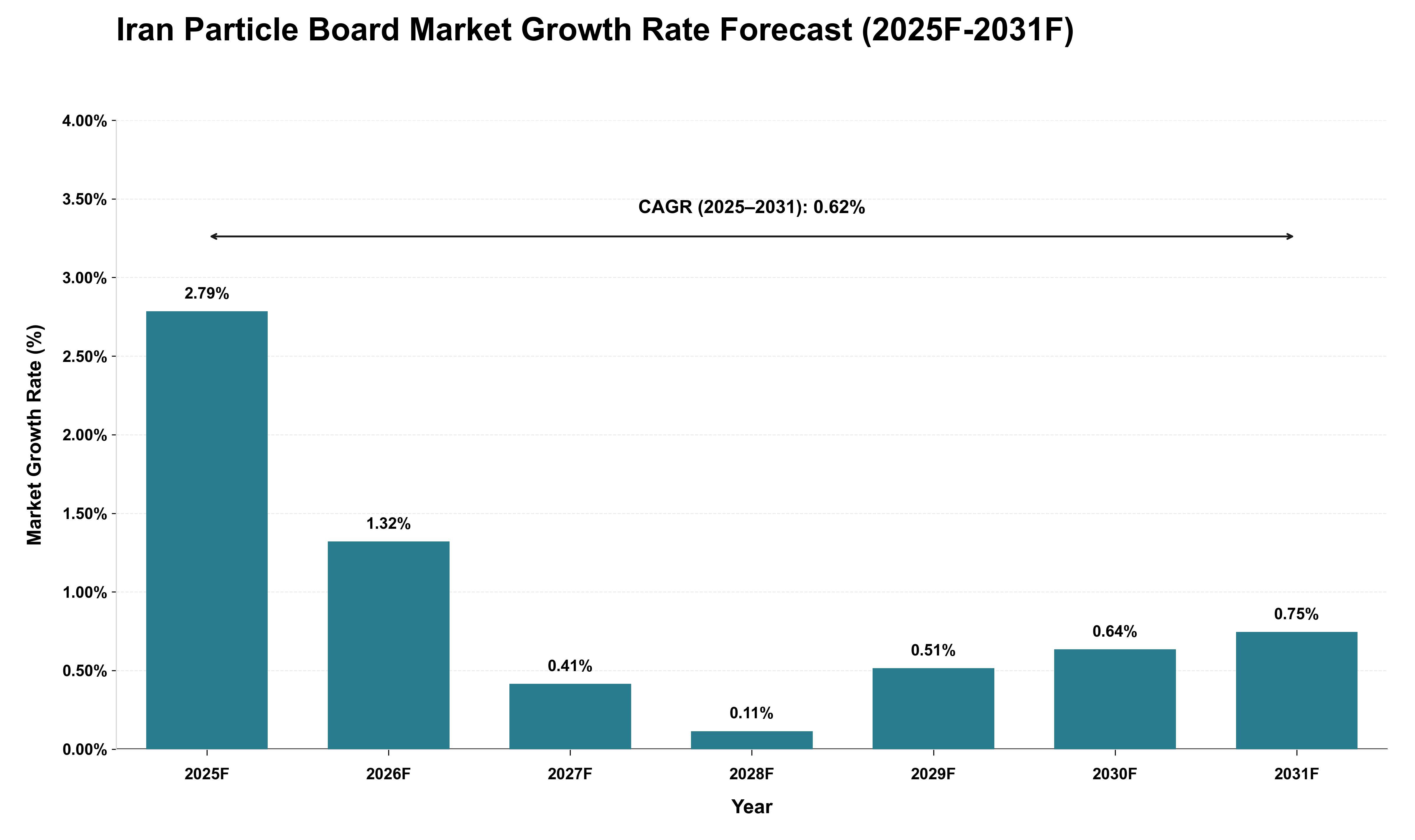
The Iran particle board market is projected to experience a compound annual growth rate of 0.62% from 2025 to 2031, reflecting a nuanced interplay of technological advancements and product substitution dynamics. The initial growth rate of 2.79% in 2025 suggests a potential uptick driven by innovations in manufacturing processes and increased efficiency, which may enhance product appeal against alternative materials like MDF or plywood. However, as the forecast progresses, the anticipated decline in growth rates—culminating in a modest increase of 0.75% by 2031—indicates that import dependencies and cyclical economic factors will likely constrain expansion. The gradual shift towards sustainable materials could further influence consumer preferences, prompting manufacturers to adapt their offerings. Consequently, while the market will see incremental growth, it will be characterized by an evolving landscape where technological integration and competitive pressures shape the trajectory of particle board consumption in Iran.
Key Highlights of the Report:
- Iran Particle Board Market Outlook
- Market Size of Iran Particle Board Market, 2024
- Forecast of Iran Particle Board Market, 2031
- Historical Data and Forecast of Iran Particle Board Revenues & Volume for the Period 2021-2031
- Iran Particle Board Market Trend Evolution
- Iran Particle Board Market Drivers and Challenges
- Iran Particle Board Price Trends
- Iran Particle Board Porter`s Five Forces
- Iran Particle Board Industry Life Cycle
- Historical Data and Forecast of Iran Particle Board Market Revenues & Volume By Type for the Period 2021-2031
- Historical Data and Forecast of Iran Particle Board Market Revenues & Volume By Standard Chipboard for the Period 2021-2031
- Historical Data and Forecast of Iran Particle Board Market Revenues & Volume By Melamine Veneered Chipboard for the Period 2021-2031
- Historical Data and Forecast of Iran Particle Board Market Revenues & Volume By Flooring Grade Chipboard for the Period 2021-2031
- Historical Data and Forecast of Iran Particle Board Market Revenues & Volume By Wood Veneered Chipboard for the Period 2021-2031
- Historical Data and Forecast of Iran Particle Board Market Revenues & Volume By Plastic Veneered Chipboard for the Period 2021-2031
- Historical Data and Forecast of Iran Particle Board Market Revenues & Volume By Other for the Period 2021-2031
- Historical Data and Forecast of Iran Particle Board Market Revenues & Volume By Application for the Period 2021-2031
- Historical Data and Forecast of Iran Particle Board Market Revenues & Volume By Construction for the Period 2021-2031
- Historical Data and Forecast of Iran Particle Board Market Revenues & Volume By Furniture for the Period 2021-2031
- Historical Data and Forecast of Iran Particle Board Market Revenues & Volume By Infrastructure for the Period 2021-2031
- Historical Data and Forecast of Iran Particle Board Market Revenues & Volume By Other for the Period 2021-2031
- Iran Particle Board Import Export Trade Statistics
- Market Opportunity Assessment By Type
- Market Opportunity Assessment By Application
- Iran Particle Board Top Companies Market Share
- Iran Particle Board Competitive Benchmarking By Technical and Operational Parameters
- Iran Particle Board Company Profiles
- Iran Particle Board Key Strategic Recommendations






































