Iran Textile Market Growth Rate Analysis (2021 - 2031)
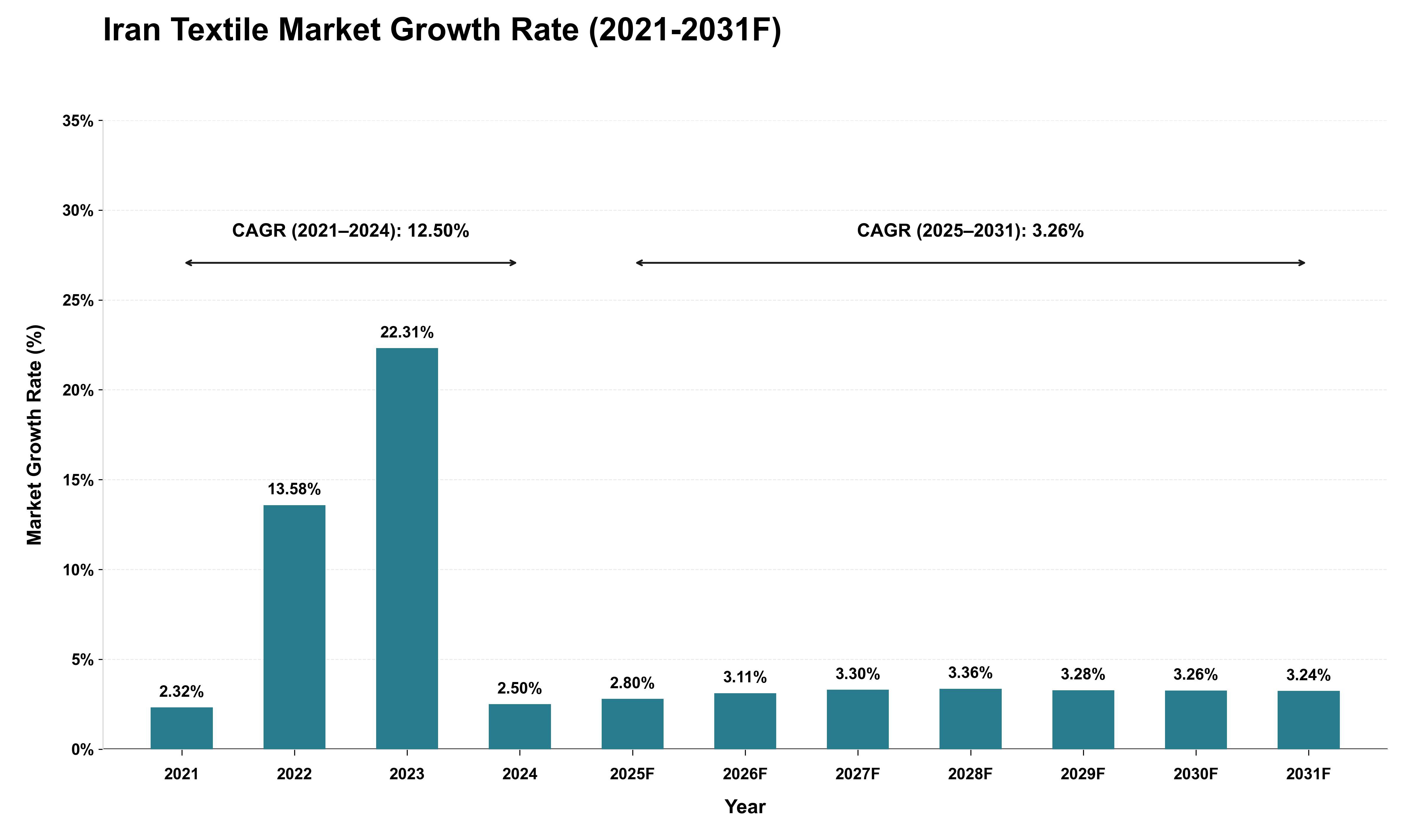
The Iran textile market experienced a robust historical CAGR of 12.50% from 2021 to 2024, driven primarily by a post-pandemic recovery that saw a surge in domestic demand and global supply chain adjustments. The significant growth in 2022 (13.58%) and 2023 (22.31%) can be attributed to the easing of pandemic-related restrictions, which revitalized consumer spending and increased import reliance on textiles as global shipping challenges began to stabilize. However, the growth rate decelerated sharply in 2024 to 2.50%, reflecting the impact of tightening regulatory frameworks and geopolitical tensions that constrained trade flows. Looking ahead, the forecasted CAGR of 3.26% from 2025 to 2031 suggests a more tempered growth trajectory as Iran navigates ongoing trade policy adjustments and seeks to enhance its textile production capabilities amidst fluctuating global commodity prices and evolving import dependencies.
Key Highlights of the Report:
- Iran Textile Market Outlook
- Market Size of Iran Textile Market, 2024
- Forecast of Iran Textile Market, 2031
- Historical Data and Forecast of Iran Textile Revenues & Volume for the Period 2021-2031
- Iran Textile Market Trend Evolution
- Iran Textile Market Drivers and Challenges
- Iran Textile Price Trends
- Iran Textile Porter`s Five Forces
- Iran Textile Industry Life Cycle
- Historical Data and Forecast of Iran Textile Market Revenues & Volume By Raw Material Types for the Period 2021-2031
- Historical Data and Forecast of Iran Textile Market Revenues & Volume By Cotton for the Period 2021-2031
- Historical Data and Forecast of Iran Textile Market Revenues & Volume By Chemical for the Period 2021-2031
- Historical Data and Forecast of Iran Textile Market Revenues & Volume By Wool for the Period 2021-2031
- Historical Data and Forecast of Iran Textile Market Revenues & Volume By Silk for the Period 2021-2031
- Historical Data and Forecast of Iran Textile Market Revenues & Volume By Others for the Period 2021-2031
- Historical Data and Forecast of Iran Textile Market Revenues & Volume By Product Types for the Period 2021-2031
- Historical Data and Forecast of Iran Textile Market Revenues & Volume By Natural Fibers for the Period 2021-2031
- Historical Data and Forecast of Iran Textile Market Revenues & Volume By Polyesters for the Period 2021-2031
- Historical Data and Forecast of Iran Textile Market Revenues & Volume By Nylon for the Period 2021-2031
- Historical Data and Forecast of Iran Textile Market Revenues & Volume By Others for the Period 2021-2031
- Historical Data and Forecast of Iran Textile Market Revenues & Volume By Applications for the Period 2021-2031
- Historical Data and Forecast of Iran Textile Market Revenues & Volume By Household for the Period 2021-2031
- Historical Data and Forecast of Iran Textile Market Revenues & Volume By Technical for the Period 2021-2031
- Historical Data and Forecast of Iran Textile Market Revenues & Volume By Fashion & Clothing for the Period 2021-2031
- Historical Data and Forecast of Iran Textile Market Revenues & Volume By Others for the Period 2021-2031
- Iran Textile Import Export Trade Statistics
- Market Opportunity Assessment By Raw Material Types
- Market Opportunity Assessment By Product Types
- Market Opportunity Assessment By Applications
- Iran Textile Top Companies Market Share
- Iran Textile Competitive Benchmarking By Technical and Operational Parameters
- Iran Textile Company Profiles
- Iran Textile Key Strategic Recommendations






































