Iran Transformers Market Growth Rate Analysis (2025 - 2031)
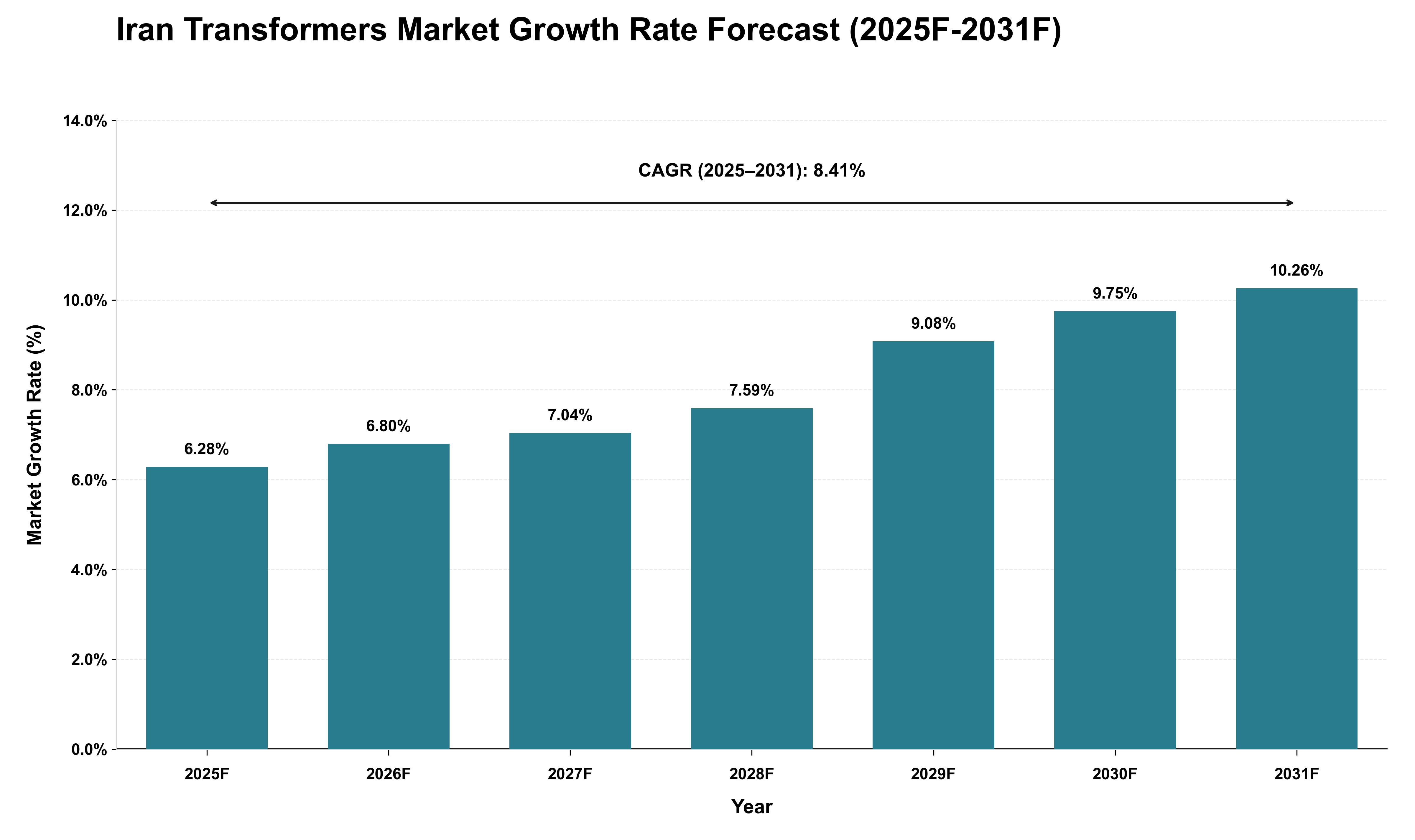
The Iran transformers market is projected to experience a compound annual growth rate of 8.41% from 2025 to 2031, reflecting a robust trajectory driven by technological advancements and product substitution dynamics. As the demand for energy-efficient solutions escalates, manufacturers will likely pivot towards innovative transformer technologies that enhance performance while reducing operational costs. The annual growth rates indicate an upward trend, with notable increases in 2029 (9.08%), 2030 (9.75%), and culminating in 2031 at 10.26%, suggesting a potential acceleration in adoption as new technologies become commercially viable. Additionally, Iran's reliance on imported components may influence market dynamics, as fluctuations in global supply chains could prompt local producers to innovate or substitute products to mitigate risks associated with import dependencies. This interplay of technology and economic factors will shape the competitive landscape of the transformers market throughout this forecast period.
Key Highlights of the Report:
- Iran Transformers Market Outlook
- Market Size of Iran Transformers Market, 2024
- Forecast of Iran Transformers Market, 2031
- Historical Data and Forecast of Iran Transformers Revenues & Volume for the Period 2021-2031
- Iran Transformers Market Trend Evolution
- Iran Transformers Market Drivers and Challenges
- Iran Transformers Price Trends
- Iran Transformers Porter`s Five Forces
- Iran Transformers Industry Life Cycle
- Historical Data and Forecast of Iran Transformers Market Revenues & Volume By Cooling for the Period 2021-2031
- Historical Data and Forecast of Iran Transformers Market Revenues & Volume By Oil-Cooled for the Period 2021-2031
- Historical Data and Forecast of Iran Transformers Market Revenues & Volume By Air-Cooled for the Period 2021-2031
- Historical Data and Forecast of Iran Transformers Market Revenues & Volume By Power Ratings for the Period 2021-2031
- Historical Data and Forecast of Iran Transformers Market Revenues & Volume By Small Power Transformer for the Period 2021-2031
- Historical Data and Forecast of Iran Transformers Market Revenues & Volume By Medium Power Transformer for the Period 2021-2031
- Historical Data and Forecast of Iran Transformers Market Revenues & Volume By Large Power Transformer for the Period 2021-2031
- Historical Data and Forecast of Iran Transformers Market Revenues & Volume By Applications for the Period 2021-2031
- Historical Data and Forecast of Iran Transformers Market Revenues & Volume By Smart Grid for the Period 2021-2031
- Historical Data and Forecast of Iran Transformers Market Revenues & Volume By Smart Transformer for the Period 2021-2031
- Historical Data and Forecast of Iran Transformers Market Revenues & Volume By Green Energy for the Period 2021-2031
- Historical Data and Forecast of Iran Transformers Market Revenues & Volume By Power infrastructure for the Period 2021-2031
- Iran Transformers Import Export Trade Statistics
- Market Opportunity Assessment By Cooling
- Market Opportunity Assessment By Power Ratings
- Market Opportunity Assessment By Applications
- Iran Transformers Top Companies Market Share
- Iran Transformers Competitive Benchmarking By Technical and Operational Parameters
- Iran Transformers Company Profiles
- Iran Transformers Key Strategic Recommendations






































