Iraq Bitumen Market Summary
The iraq bitumen market was estimated at USD 1268 Million in 2025 and is projected to reach USD 1853 Million by 2032, growing at a CAGR of 6.8% from 2026 to 2032.
Iraq Bitumen Market Year-wise Growth Rate and Key Drivers
This graph highlights how the Iraq Bitumen Market has steadily grown over the past five years, supported by major growth factors.
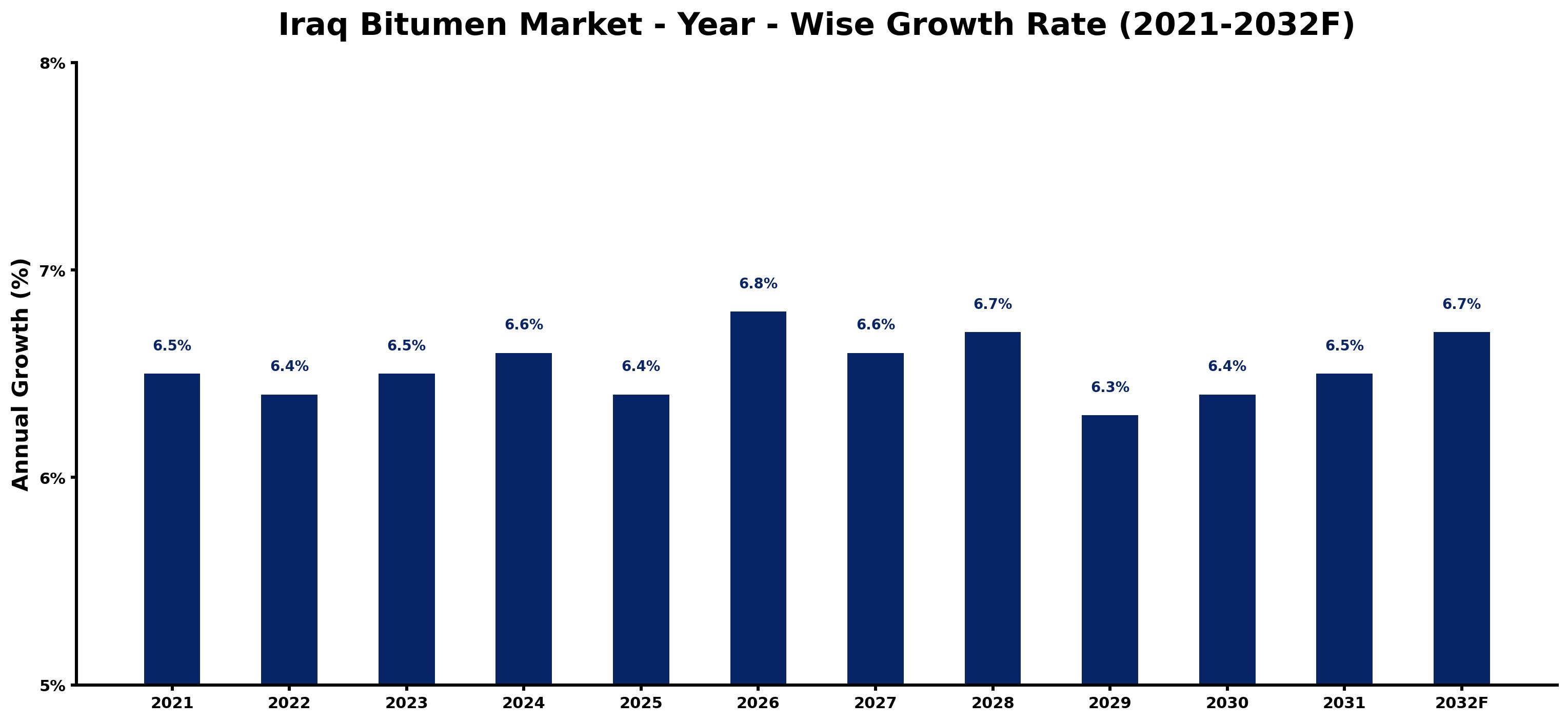
The table below presents the year wise growth rates along with the key drivers influencing the market
| Year | Growth Rate | Major Drivers |
| 2021 | 6.5% | Infrastructure projects initiated post-conflict are vital for bitumen demand enhancement. |
| 2022 | 6.4% | Strong oil prices create additional funding for road construction and maintenance. |
| 2023 | 6.5% | Foreign investments in infrastructure stimulate local bitumen production and supply chains. |
| 2024 | 6.6% | Urban expansion in major cities leads to increased demand for paving materials. |
| 2025 | 6.4% | Technological improvements in bitumen production enhance quality and lower costs significantly. |
| 2026 | 6.8% | New regulations address infrastructure safety, boosting bitumen usage in road construction. |
| 2027 | 6.6% | Market diversification strategies encourage more players to enter the bitumen sector. |
| 2028 | 6.7% | Rising temperatures increase roads' wear, driving up the need for high-performance bitumen. |
| 2029 | 6.3% | International partnerships focus on sustainable construction practices, influencing bitumen standards. |
| 2030 | 6.4% | Local manufacturing capabilities reduce reliance on imports, stabilizing supply chains effectively. |
| 2031 | 6.5% | Increased governmental focus on regional connectivity elevates construction project timelines. |
| 2032 | 6.7% | National infrastructure growth targets ensure sustained demand for bitumen across projects. |
Note - Market size estimations and growth projections presented in this report are based on 6Wresearch's advanced forecasting approach, validated with industry datasets as of June 2026.
Iraq Bitumen Market Synopsis
The Iraq Bitumen Market is projected to reach 6.8% and witness significant growth during the forecast period (2026-2032). This growth is primarily fueled by extensive infrastructure projects, increased road construction, and rising demand for waterproofing materials within the construction industry. The essential nature of bitumen in road surfacing and waterproofing applications underscores its critical role in Iraq's developmental agenda. Local production alongside imports from neighboring regions helps meet the burgeoning demand, ensuring a steady supply of this vital material.
Iraq Bitumen Market Growth Drivers
Several factors contribute to the growth of the Iraq Bitumen Market, notably:
- Ongoing infrastructure development initiatives, particularly in the transportation sector, are rapidly increasing the demand for bitumen in road construction projects.
- Urbanization and subsequent industrialization are spurring demand for bitumen in various construction applications, which enhances its market presence.
- The cost-effectiveness and durability of bitumen make it a preferred choice among construction materials, further driving its consumption.
- The government's commitment to improving infrastructure and transportation networks continues to stimulate investment in road development initiatives, benefiting the bitumen market.
- A noticeable shift toward sustainable construction practices is promoting the development of environmentally friendly bitumen products, aligning with global trends.
Iraq Bitumen Market Trends and Opportunities
The Iraq Bitumen Market is witnessing notable trends that underline its potential for development:
- The emphasis on sustainable construction materials is influencing manufacturers to innovate and adopt eco-friendly bitumen products.
- Technological advancements are being integrated into production processes, enhancing product quality and road durability.
- The inclination towards strategic partnerships among local firms is notable, as companies seek to expand their market presence and enhance competitive advantages in the bitumen sector.
- Investment in R&D is expected to increase, focusing on developing innovative solutions to meet the diverse needs of the construction industry.
- The growing interest from foreign investors to tap into the local supply chain may lead to enhanced competition and improved service offerings within the market.
Iraq Bitumen Market Challenges and Restraints
The Iraq Bitumen Market faces several challenges that may hinder its growth prospects:
- Political instability and security issues continue to create a challenging environment for business operations, affecting investment confidence.
- Logistical constraints due to poor infrastructure hamper the efficient distribution of bitumen products throughout the country.
- Fluctuating crude oil prices can lead to price volatility in the bitumen market, affecting profitability for producers and contractors.
- Limited technological advancements in production processes may restrict efficiency and quality improvements in bitumen products.
- Environmental regulations are becoming increasingly stringent, necessitating compliance from producers, which may raise production costs.
Iraq Bitumen Market Government Investment and Initiatives
Government policies significantly impact the Iraq Bitumen Market, focusing on bolstering local production capabilities and ensuring market stability:
- Regulatory measures have been introduced to promote domestic production, which helps in meeting the growing demand and reducing dependency on imports.
- The government has committed to fixed pricing strategies to ensure affordability and stability within the market, which supports local consumers and contractors.
- Public spending in infrastructure development encompasses significant investments in road construction, directly impacting the demand for bitumen.
- Quality control measures and environmental regulations are being reinforced to maintain standards in production and safeguard public interest.
- The government's focus on urban development further opens avenues for bitumen usage in various construction and infrastructure projects.
Iraq Bitumen Market Latest Developments (May 2025 - June 2026)
Recent developments in the Iraq Bitumen Market are indicative of its evolving dynamics:
- Increasing government contracts in infrastructure projects have led to heightened demand for bitumen, with significant road construction initiatives underway.
- Various stakeholders are exploring sustainability practices in bitumen production, aligning with global environmental trends while addressing local needs.
- Collaborations between local manufacturers and international investors have emerged, aimed at tapping into the expanding infrastructure demand.
- Continued investment in research and development by various entities is expected to lead to improved product offerings and operational efficiencies.
- With geopolitical tensions still prevalent, businesses are increasingly adopting risk management strategies to mitigate potential disruptions in their operations.
Iraq Bitumen Market - Key Attractiveness of the Report
- 10 Years of Market Numbers
- Historical Data Starting from 2022 to 2025
- Base Year: 2025
- Forecast Data until 2032
- Key Performance Indicators Impacting the Market
- Major Upcoming Developments and Projects
Key Highlights of the Report:
- Iraq Bitumen Market Outlook
- Market Size of Iraq Bitumen Market, 2025
- Forecast of Iraq Bitumen Market, 2032F
- Historical Data and Forecast of Iraq Bitumen Revenues & Volume for the Period 2022-2032F
- Iraq Bitumen Market Trend Evolution
- Iraq Bitumen Market Drivers and Challenges
- Iraq Bitumen Price Trends
- Iraq Bitumen Porter's Five Forces
- Iraq Bitumen Industry Life Cycle
- Historical Data and Forecast of Iraq Bitumen Market Revenues & Volume By Product Type for the Period 2022-2032F
- Historical Data and Forecast of Iraq Bitumen Market Revenues & Volume By Paving Grade for the Period 2022-2032F
- Historical Data and Forecast of Iraq Bitumen Market Revenues & Volume By Hard Grade for the Period 2022-2032F
- Historical Data and Forecast of Iraq Bitumen Market Revenues & Volume By Oxidized Grade for the Period 2022-2032F
- Historical Data and Forecast of Iraq Bitumen Market Revenues & Volume By Bitumen Emulsions for the Period 2022-2032F
- Historical Data and Forecast of Iraq Bitumen Market Revenues & Volume By Polymer Modified Bitumen for the Period 2022-2032F
- Historical Data and Forecast of Iraq Bitumen Market Revenues & Volume By Other for the Period 2022-2032F
- Historical Data and Forecast of Iraq Bitumen Market Revenues & Volume By Application for the Period 2022-2032F
- Historical Data and Forecast of Iraq Bitumen Market Revenues & Volume By Road Construction for the Period 2022-2032F
- Historical Data and Forecast of Iraq Bitumen Market Revenues & Volume By Waterproofing for the Period 2022-2032F
- Historical Data and Forecast of Iraq Bitumen Market Revenues & Volume By Adhesives for the Period 2022-2032F
- Historical Data and Forecast of Iraq Bitumen Market Revenues & Volume By Other for the Period 2022-2032F
- Iraq Bitumen Import Export Trade Statistics
- Market Opportunity Assessment By Product Type
- Market Opportunity Assessment By Application
- Iraq Bitumen Top Companies Market Share
- Iraq Bitumen Competitive Benchmarking By Technical and Operational Parameters
- Iraq Bitumen Company Profiles
- Iraq Bitumen Key Strategic Recommendations






































