Iraq Caffeine Market Size, Share & Growth Rate
The Iraq Caffeine Market was estimated at USD 384 Million in 2025 and is projected to reach USD 514 Million by 2032, growing at a CAGR of 4.3% from 2026 to 2032. This growth trajectory is primarily driven by the increasing demand from the food and beverage sector, where caffeine plays a critical role as a stimulant and flavor enhancer. The rising popularity of coffee culture, along with heightened consumer interest in functional beverages, is further propelling the market forward.
Iraq Caffeine Market Year-wise Growth Rate and Key Drivers
This graph highlights how the Iraq Caffeine Market has steadily grown over the years, supported by major growth factors.
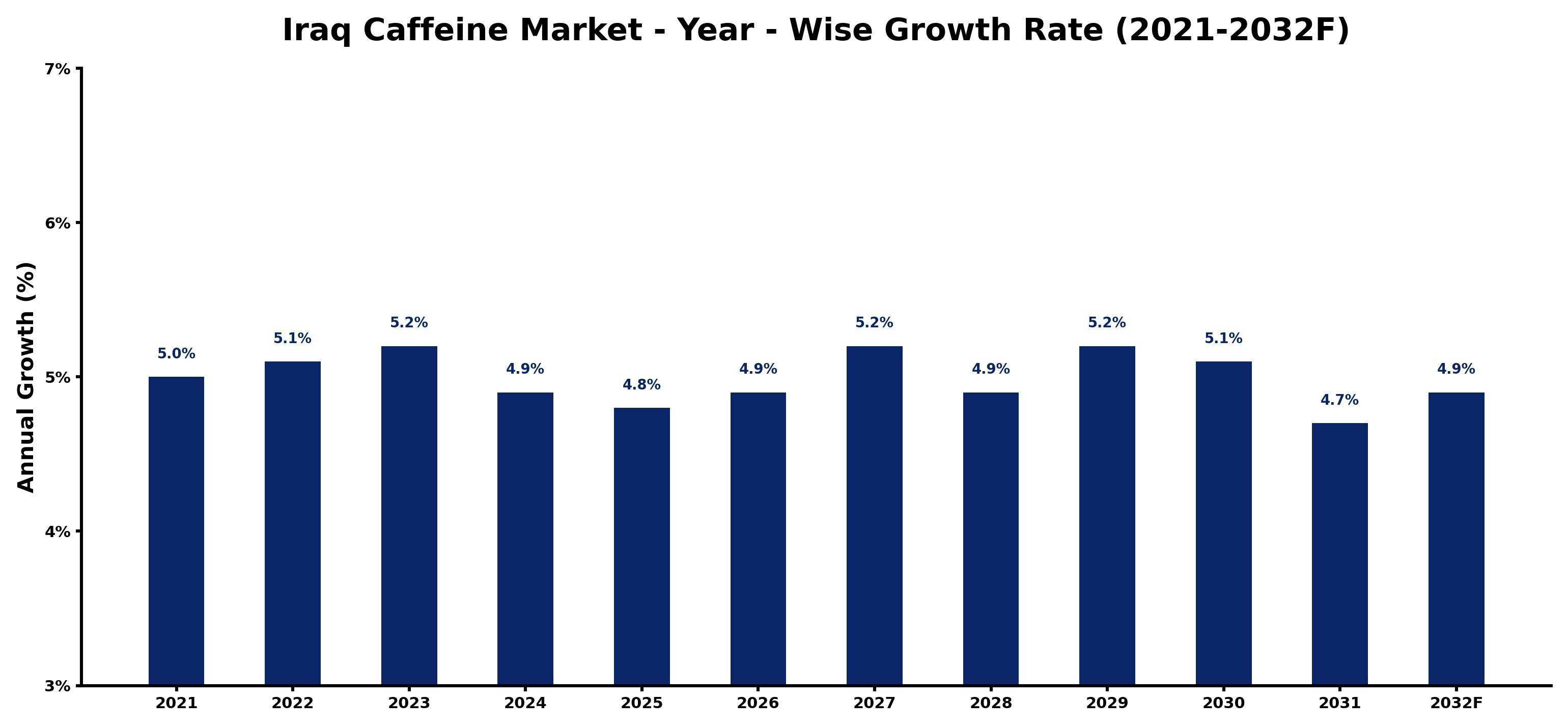
The table below presents the year‑wise growth rates along with the key drivers influencing the market
| Year | Growth Rate | Major Drivers |
| 2021 | 5.0% | Rising electricity demand across industries |
| 2022 | 5.1% | Growing urbanization and commercial development |
| 2023 | 5.2% | Rising electricity demand across industries |
| 2024 | 4.9% | Increasing industrial infrastructure investments |
| 2025 | 4.8% | Expansion of transportation and logistics networks |
| 2026 | 4.9% | Expansion of manufacturing activities |
| 2027 | 5.2% | Rising electricity demand across industries |
| 2028 | 4.9% | Expansion of commercial construction activities |
| 2029 | 5.2% | Expansion of manufacturing activities |
| 2030 | 5.1% | Rising electricity demand across industries |
| 2031 | 4.7% | Rapid growth in telecom and data center sectors |
| 2032 | 4.9% | Expansion of commercial construction activities |
Note - Market size estimations and growth projections presented in this report are based on 6Wresearch's advanced forecasting approach, validated with industry datasets as of June 2026.
Iraq Caffeine Market Synopsis
A pivotal force shaping the Iraq Caffeine Market is the burgeoning coffee culture, which has led to an upsurge in demand for caffeinated beverages. This cultural shift is not just influencing consumer choices but is also stimulating innovation within the beverage industry, paving the way for a diverse range of products.
Moreover, consumer awareness regarding the health benefits of caffeine is catalyzing its acceptance and consumption across various demographics. As more people turn to caffeine for its mental and physical benefits, the market is positioned for sustainable growth in the coming years.
Iraq Caffeine Market Key Takeaways
- The market is expanding due to increasing consumer demand for caffeinated drinks.
- Coffee culture and functional beverages are central to market growth.
- Investment in sustainable coffee cultivation is critical for future supply.
- Regulatory frameworks are evolving to ensure product quality and safety.
- Market dynamics are influenced by the rising competition from synthetic caffeine alternatives.
Evaluation of Restraints in Iraq Caffeine Market
Despite the positive growth outlook, the Iraq Caffeine Market faces several restraints. One major concern is the volatility of coffee prices, which can disrupt supply chains and influence the cost of caffeine extraction. Additionally, ongoing competition from synthetic caffeine products threatens market shares of natural caffeine sources. Regulatory challenges also pose hurdles, particularly regarding safety concerns about caffeine consumption. Addressing these issues is vital for companies aiming to stabilize their operations and maintain market position.
Iraq Caffeine Market Trends
Several trends are currently reshaping the Iraq Caffeine Market. One noticeable trend is the increasing inclination towards premium coffee products, with consumers seeking high-quality, ethically sourced options. This shift is prompting brands to focus on transparency and sustainability in sourcing practices. Furthermore, the rise in health-conscious consumers is catalyzing demand for functional beverages that offer additional health benefits beyond caffeine, such as herbal infusions and vitamin-enhanced drinks.
Iraq Caffeine Market Opportunities
Significant growth opportunities exist in the Iraq Caffeine Market, particularly in the premium coffee and organic product segments. As consumer preferences continue to evolve, companies that can innovate and offer quality products that align with health trends will thrive. Additionally, investments in sustainable farming practices and efficient extraction technologies will enable businesses to capitalize on growing demand while addressing environmental concerns. The expanding café culture also opens avenues for retail innovations and new product offerings.
Government Initiatives in the Iraq Caffeine Market
The Iraqi government has recognized the importance of regulating and supporting the caffeine market through various initiatives. Policies focused on ensuring safety and purity standards in caffeine production are being implemented, along with support programs for coffee and tea farmers aimed at enhancing local production capacities. Public health campaigns are also underway to promote responsible caffeine consumption, further solidifying the government's commitment to fostering a sustainable market environment.
Future Insights of the Iraq Caffeine Market
Looking ahead to the period from 2026 to 2032, the Iraq Caffeine Market is expected to continue its upward trajectory. The anticipated growth will be fueled by advancements in processing technologies, enabling more efficient caffeine extraction and production. Additionally, as consumer preferences lean towards sustainability and ethical sourcing, companies that adopt these practices will likely enhance their market competitiveness. This trend, combined with a robust food and beverage industry, positions the market for resilient growth.
Iraq Caffeine Market Latest Developments (May 2025 - June 2026)
In recent months, the Iraq Caffeine Market has seen a notable shift towards diversification in product offerings, with new brands introducing innovative caffeinated beverages that cater to health-conscious consumers. Additionally, collaborations between local farmers and international partners are emerging to improve coffee cultivation practices, aimed at increasing quality and yield. Industry players are also focusing on expanding their retail presence, particularly in urban areas where demand for premium caffeine products is on the rise.
Iraq Caffeine Market - Key Attractiveness of the Report
- 10 Years of Market Numbers
- Historical Data Starting from 2022 to 2025
- Base Year: 2025
- Forecast Data until 2032
- Key Performance Indicators Impacting the Market
- Major Upcoming Developments and Projects
Key Highlights of the Report:
- Iraq Caffeine Market Outlook
- Market Size of Iraq Caffeine Market, 2025
- Forecast of Iraq Caffeine Market, 2032
- Historical Data and Forecast of Iraq Caffeine Revenues & Volume for the Period 2022-2032F
- Iraq Caffeine Market Trend Evolution
- Iraq Caffeine Market Drivers and Challenges
- Iraq Caffeine Price Trends
- Iraq Caffeine Porter's Five Forces
- Iraq Caffeine Industry Life Cycle
- Historical Data and Forecast of Iraq Caffeine Market Revenues & Volume By Type for the Period 2022-2032F
- Historical Data and Forecast of Iraq Caffeine Market Revenues & Volume By Natural Caffeine for the Period 2022-2032F
- Historical Data and Forecast of Iraq Caffeine Market Revenues & Volume By Synthetic Caffeine for the Period 2022-2032F
- Historical Data and Forecast of Iraq Caffeine Market Revenues & Volume By Applications for the Period 2022-2032F
- Historical Data and Forecast of Iraq Caffeine Market Revenues & Volume By Pharmaceuticals for the Period 2022-2032F
- Historical Data and Forecast of Iraq Caffeine Market Revenues & Volume By Food for the Period 2022-2032F
- Historical Data and Forecast of Iraq Caffeine Market Revenues & Volume By Beverages for the Period 2022-2032F
- Historical Data and Forecast of Iraq Caffeine Market Revenues & Volume By Flavours and Fragrances for the Period 2022-2032F
- Iraq Caffeine Import Export Trade Statistics
- Market Opportunity Assessment By Type
- Market Opportunity Assessment By Applications
- Iraq Caffeine Top Companies Market Share
- Iraq Caffeine Competitive Benchmarking By Technical and Operational Parameters
- Iraq Caffeine Company Profiles
- Iraq Caffeine Key Strategic Recommendations






































