Iraq Cigarette Lighter Market Summary
The iraq cigarette lighter market was estimated at USD 260 Million in 2025 and is projected to reach USD 333 Million by 2032, growing at a CAGR of 4.4% from 2026 to 2032.
Iraq Cigarette Lighter Market Year-wise Growth Rate and Key Drivers
This graph highlights how the Iraq Cigarette Lighter Market has steadily grown over the past five years, supported by major growth factors.
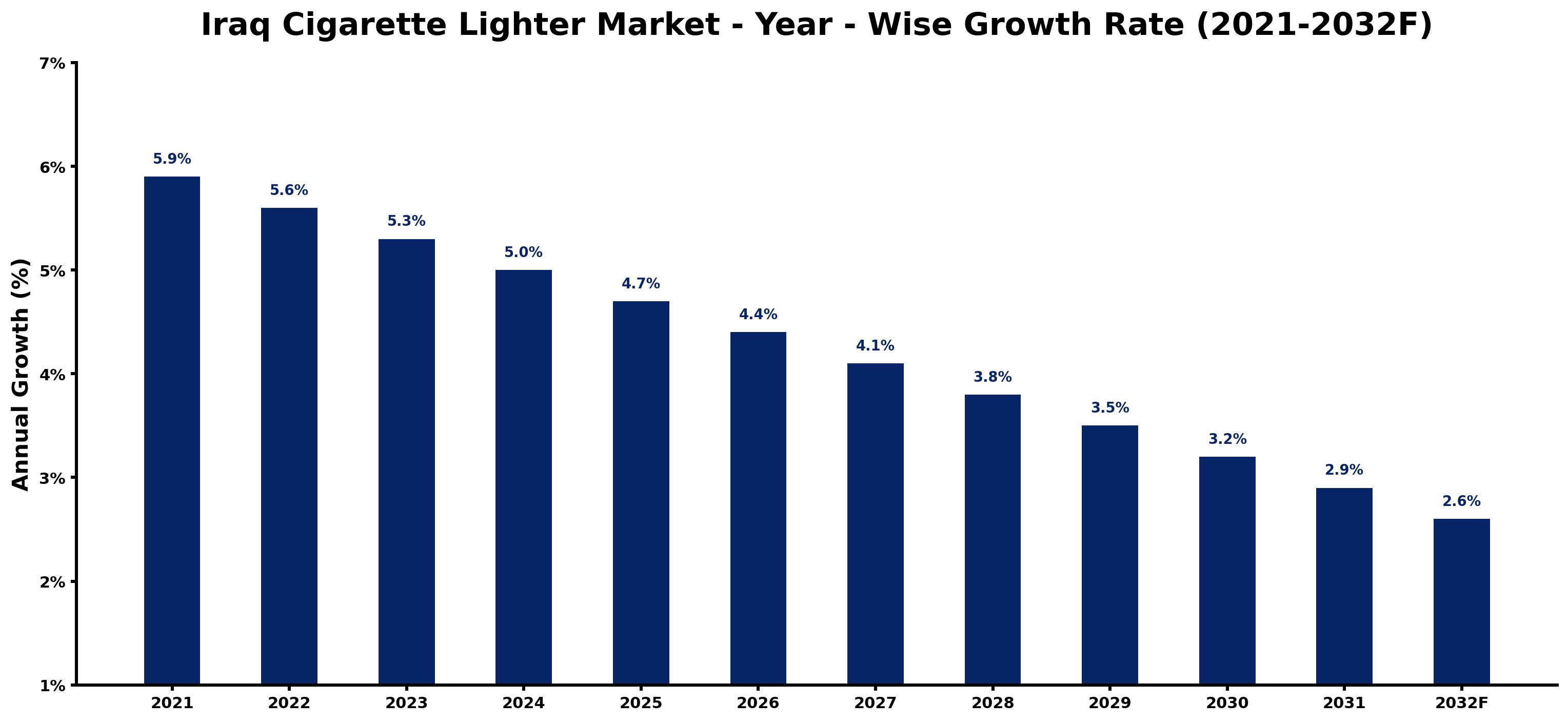
The table below presents the year wise growth rates along with the key drivers influencing the market
| Year | Growth Rate | Major Drivers |
| 2021 | 5.9% | The market faced challenges due to high import tariffs on foreign lighters. |
| 2022 | 5.6% | Local manufacturers began producing lighters to reduce dependence on imports. |
| 2023 | 5.3% | E-commerce platforms expanded, providing easier access to various lighter brands. |
| 2024 | 5.0% | Youth culture's influence fueled demand for trendy and customizable lighters. |
| 2025 | 4.7% | Increased disposable incomes allowed consumers to explore premium lighter options. |
| 2026 | 4.4% | Cigarette consumption saw slight growth, positively impacting lighter sales. |
| 2027 | 4.1% | Urbanization trends led to greater demand in cities and surrounding areas. |
| 2028 | 3.8% | Digital marketing campaigns helped brands connect with younger demographics effectively. |
| 2029 | 3.5% | Outdoor activities surged, driving sales for portable and durable lighter designs. |
| 2030 | 3.2% | Sustainability trends shifted focus towards eco-friendly lighter production materials. |
| 2031 | 2.9% | Retail expansions into rural areas increased the visibility of lighter brands. |
| 2032 | 2.6% | Technological innovations introduced smart lighters with advanced safety features. |
Note - Market size estimations and growth projections presented in this report are based on 6Wresearch's advanced forecasting approach, validated with industry datasets as of June 2026.
Iraq Cigarette Lighter Market Synopsis
The Iraq Cigarette Lighter Market is projected to reach 4.4% and witness significant growth during the forecast period (2026-2032). The market is expected to grow from USD 3.48 Million in 2020 to an estimated USD 4.32 Million by 2026, reflecting a compound annual growth rate (CAGR) of 5.4%. Key driving factors for this growth include rising disposable incomes, the increasing popularity of electronic cigarettes, and a growing smoking population. Moreover, heightened demand for premium cigarettes and supportive government policies are anticipated to further stimulate market expansion. However, challenges arising from shifting consumer preferences toward electric lighters due to environmental concerns, along with stringent regulations targeting traditional lighter products, may restrain market advancement.
Iraq Cigarette Lighter Market Growth Drivers
Several factors are propelling the growth of the Iraq Cigarette Lighter Market. The primary driver is the increase in disposable income levels among the population, leading to heightened demand for consumer goods, including cigarette-related accessories. Additionally, the rising acceptance and adoption of electronic cigarettes have contributed significantly to the demand for lighters, as many consumers are interested in convenient and efficient lighting solutions. The growing smoking population in Iraq further underlines this trend, while a shift towards premium cigarette products encourages consumers to purchase higher-quality lighters.
- Increasing disposable income levels facilitate higher consumer spending on tobacco and related products, which positively impacts the cigarette lighter market.
- A growing acceptance of electronic cigarettes has prompted a complementary need for lighters designed specifically for this market segment.
- The rising population of smokers indicates a stable market presence for traditional lighter products, supporting ongoing sales.
- The trend towards premium cigarette products drives consumers towards higher-quality lighter options, increasing market value.
- Government support for the tobacco industry bolsters market stability, encouraging investment and production within the sector.
Iraq Cigarette Lighter Market Challenges and Restraints
Despite the anticipated growth, several challenges may hinder progress in the Iraq Cigarette Lighter Market. A notable issue is the evolving consumer preference for electric lighters, which are perceived as more environmentally friendly. These shifts could lead to decreased demand for traditional lighters. Furthermore, stringent regulations targeting conventional lighters are increasing, posing compliance challenges for manufacturers. The prevalence of counterfeit products in online stores presents another constraint, undermining the sales of legitimate brands and negatively impacting revenue generation.
- Changing consumer preferences towards electric lighters due to environmental consciousness can reduce demand for traditional products.
- Stricter regulations imposed by the government on traditional lighters may complicate compliance for manufacturers and retailers.
- The rise of counterfeit products, particularly in online marketplaces, threatens the credibility of legitimate brands.
- Economic fluctuations in Iraq can impact disposable income and, subsequently, consumer purchasing power for non-essential items such as cigarette lighters.
- Limited awareness among consumers regarding the risks associated with counterfeit products may undermine market growth.
Iraq Cigarette Lighter Market Government Investment and Initiatives
The Iraqi government has shown ongoing support for the tobacco industry, which indirectly benefits the cigarette lighter market. Initiatives aimed at regulating the tobacco industry help increase consumer confidence and stabilize the market. Investment in public health campaigns raises awareness of smoking-related issues, which can paradoxically increase demand for cigarette accessories as consumers look for quality products. Additionally, government spending in infrastructure projects that enhance retail environments may further facilitate the distribution of cigarette lighters within the industry, promoting responsible use and compliance with regulations. This supportive framework plays a critical role in shaping the market landscape for cigarette lighters in Iraq.
Iraq Cigarette Lighter Market Latest Developments (May 2025 - June 2026)
Recent developments in the Iraq Cigarette Lighter Market indicate a growing alignment with global trends towards sustainable products. Manufacturers are responding to environmental concerns by introducing more electric lighter models, which are gaining traction among consumers. Legislative measures have been introduced to regulate the quality and safety of lighters sold within the market, reflecting a proactive approach from authorities. The presence of counterfeit products has led to increased enforcement actions to minimize their impact on legitimate sales. In addition, consumer education initiatives are being implemented to promote awareness regarding the risks associated with counterfeit products, thereby protecting the market integrity.
Iraq Cigarette Lighter Market - Key Attractiveness of the Report
- 10 Years of Market Numbers
- Historical Data Starting from 2022 to 2025
- Base Year: 2025
- Forecast Data until 2032
- Key Performance Indicators Impacting the Market
- Major Upcoming Developments and Projects
Key Highlights of the Report:
- Iraq Cigarette Lighter Market Outlook
- Market Size of Iraq Cigarette Lighter Market, 2025
- Forecast of Iraq Cigarette Lighter Market, 2032F
- Historical Data and Forecast of Iraq Cigarette Lighter Revenues & Volume for the Period 2022-2032F
- Iraq Cigarette Lighter Market Trend Evolution
- Iraq Cigarette Lighter Market Drivers and Challenges
- Iraq Cigarette Lighter Price Trends
- Iraq Cigarette Lighter Porter's Five Forces
- Iraq Cigarette Lighter Industry Life Cycle
- Historical Data and Forecast of Iraq Cigarette Lighter Market Revenues & Volume By Type for the Period 2022-2032F
- Historical Data and Forecast of Iraq Cigarette Lighter Market Revenues & Volume By Flint Cigarette Lighter for the Period 2022-2032F
- Historical Data and Forecast of Iraq Cigarette Lighter Market Revenues & Volume By Electronic Cigarette Lighter for the Period 2022-2032F
- Historical Data and Forecast of Iraq Cigarette Lighter Market Revenues & Volume By Others for the Period 2022-2032F
- Historical Data and Forecast of Iraq Cigarette Lighter Market Revenues & Volume By Material for the Period 2022-2032F
- Historical Data and Forecast of Iraq Cigarette Lighter Market Revenues & Volume By Plastic for the Period 2022-2032F
- Historical Data and Forecast of Iraq Cigarette Lighter Market Revenues & Volume By Metal for the Period 2022-2032F
- Historical Data and Forecast of Iraq Cigarette Lighter Market Revenues & Volume By Distribution Channels for the Period 2022-2032F
- Historical Data and Forecast of Iraq Cigarette Lighter Market Revenues & Volume By Tobacco shops for the Period 2022-2032F
- Historical Data and Forecast of Iraq Cigarette Lighter Market Revenues & Volume By Supermarkets and Hypermarkets for the Period 2022-2032F
- Historical Data and Forecast of Iraq Cigarette Lighter Market Revenues & Volume By Convenience Stores for the Period 2022-2032F
- Historical Data and Forecast of Iraq Cigarette Lighter Market Revenues & Volume By Online Stores for the Period 2022-2032F
- Historical Data and Forecast of Iraq Cigarette Lighter Market Revenues & Volume By Others for the Period 2022-2032F
- Iraq Cigarette Lighter Import Export Trade Statistics
- Market Opportunity Assessment By Type
- Market Opportunity Assessment By Material
- Market Opportunity Assessment By Distribution Channels
- Iraq Cigarette Lighter Top Companies Market Share
- Iraq Cigarette Lighter Competitive Benchmarking By Technical and Operational Parameters
- Iraq Cigarette Lighter Company Profiles
- Iraq Cigarette Lighter Key Strategic Recommendations






































