Iraq Essential Oils Market Size, Share & Growth Rate
The Iraq Essential Oils Market was estimated at USD 267 Million in 2025 and is projected to reach USD 362 Million by 2032, growing at a CAGR of 4.4% from 2026 to 2032. This growth is largely fueled by an increasing consumer shift towards natural and organic products, as more individuals seek out essential oils for their therapeutic benefits in personal care and wellness. Additionally, the rising awareness of the health benefits associated with aromatherapy is further propelling demand across various sectors.
Iraq Essential Oils Market Year-wise Growth Rate and Key Drivers
This graph highlights how the Iraq Essential Oils Market has steadily grown over the years, supported by major growth factors.
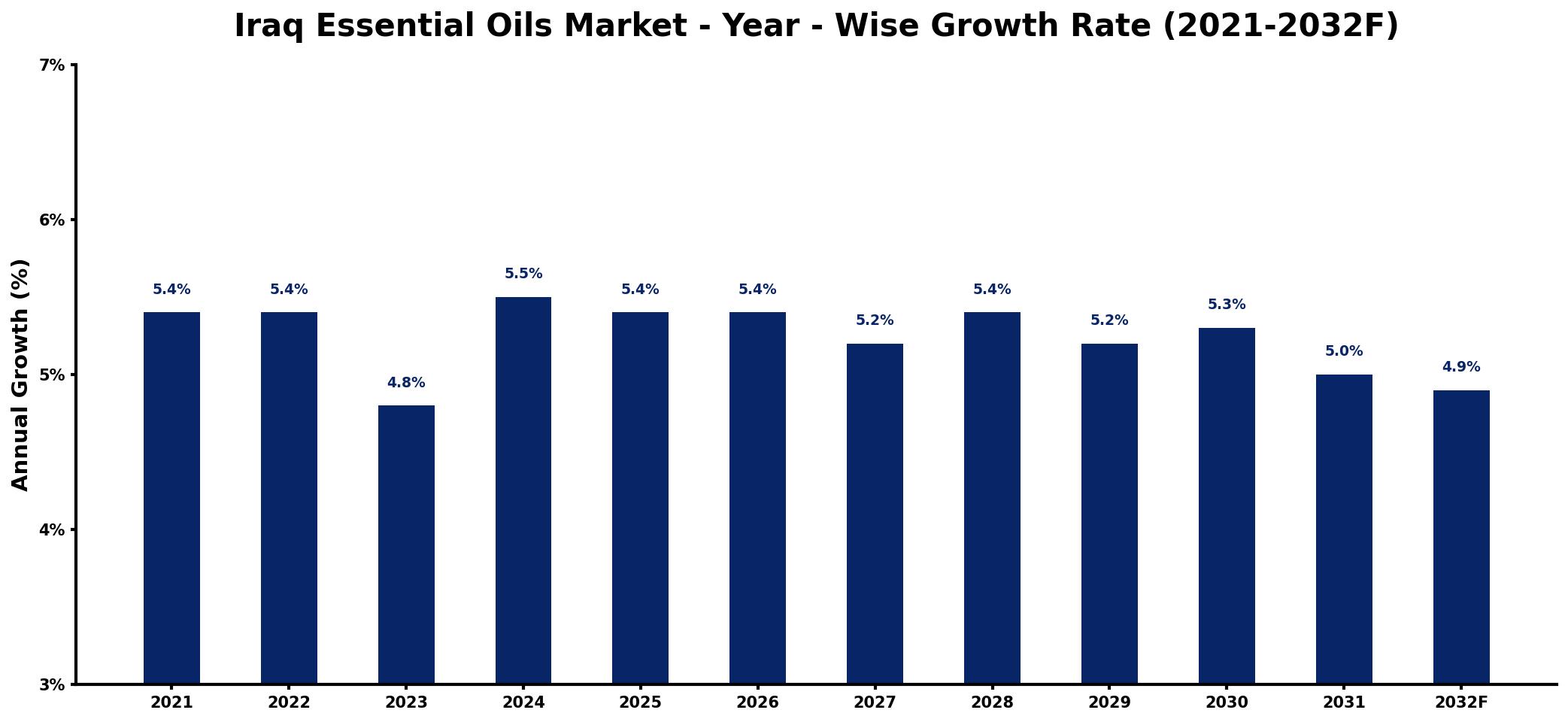
The table below presents the year‑wise growth rates along with the key drivers influencing the market
| Year | Growth Rate | Major Drivers |
| 2021 | 5.4% | Growing wellness and aromatherapy trends |
| 2022 | 5.4% | Increased consumer interest in natural |
| 2023 | 4.8% | Emerging markets expanding distribution channels |
| 2024 | 5.5% | Rising demand for organic products |
| 2025 | 5.4% | Technological advancements in extraction methods |
| 2026 | 5.4% | Expanding applications in personal care |
| 2027 | 5.2% | Increased investment in local production |
| 2028 | 5.4% | Rising popularity in home fragrances |
| 2029 | 5.2% | improved processing technologies adoption |
| 2030 | 5.3% | Emerging research on health benefits |
| 2031 | 5.0% | Increased focus on sustainable sourcing |
| 2032 | 4.9% | Growing demand for holistic wellness |
Note: Market size estimations and growth projections presented in this report are based on 6Wresearch's proprietary forecasting methodology, utilizing the latest available industry data, government publications, and primary research inputs.
Iraq Essential Oils Market Synopsis
The Iraq Essential Oils Market is witnessing a transformative phase characterized by a surge in consumer interest in natural remedies and self-care practices. With an array of locally sourced oils such as rosemary, lavender, and eucalyptus becoming increasingly popular, the market's dynamism reflects a broader trend toward sustainable living.
The demand for essential oils is intensifying, driven by their perceived health benefits and versatile applications in aromatherapy, cosmetics, and healthcare. As consumers lean more towards eco-friendly alternatives, the market is evolving to meet these expectations while navigating the complexities of production and distribution.
Iraq Essential Oils Market Key Takeaways
- Strong growth trajectory driven by increasing consumer demand for natural and organic products.
- A shift towards sustainable sourcing is influencing purchasing decisions and market dynamics.
- Key market segments include personal care, aromatherapy, and healthcare applications.
- Challenges related to infrastructure and production are present but also create innovation opportunities.
- Government initiatives aim to foster growth and enhance quality standards in the essential oils sector.
Evaluation of Restraints in Iraq Essential Oils Market
Despite its potential, the Iraq Essential Oils Market is stifled by several significant constraints. Political instability and security issues remain persistent challenges, often disrupting supply chains and impacting producers' ability to meet demand. Furthermore, the country faces infrastructural shortcomings, which complicate the logistics of harvesting, processing, and distributing essential oils effectively. The lack of standardized quality control measures also undermines product integrity, deterring both consumers and new entrants to the market.
Iraq Essential Oils Market Trends
Emerging trends within the Iraq Essential Oils Market reveal a growing inclination towards holistic health and wellness practices. More consumers are turning to aromatherapy not just for relaxation, but as a part of their daily health regimen. Additionally, the demand for ethically sourced and sustainable products is reshaping supplier relationships, promoting local production and authenticity. Product innovations, such as unique blends tailored to specific therapeutic needs, are also gaining traction in this evolving market landscape.
Iraq Essential Oils Market Opportunities
The Iraq Essential Oils Market offers substantial investment opportunities, particularly for those interested in sustainable agriculture and innovative product development. With access to a wealth of aromatic plants, investors can explore avenues in establishing essential oil extraction facilities or collaborating with local farmers to ensure quality sourcing. Furthermore, the demand for specialized blends tailored for niche markets presents a significant opportunity for growth and differentiation.
Government Initiatives in the Iraq Essential Oils Market
Government policies in Iraq are increasingly focused on promoting the essential oils sector through quality assurance and competitive practices. Regulatory frameworks have been introduced to ensure the safety and efficacy of essential oils, while initiatives aimed at supporting local producers include subsidies, training, and infrastructure development. By encouraging investment through tax incentives and streamlined regulatory processes, the government is working to enhance the viability and attractiveness of the essential oils industry.
Future Insights of the Iraq Essential Oils Market
Looking ahead to 2026-2032, the Iraq Essential Oils Market is poised for consistent growth fueled by a continued rise in consumer interest in natural and organic products. As awareness of the health benefits of essential oils expands, the market is likely to witness an increased integration of these products across various sectors, including personal care and wellness. This forward momentum, paired with an emphasis on sustainable practices and quality production, positions Iraq to emerge as a noteworthy player in the global essential oils landscape.
Iraq Essential Oils Market Latest Developments (2025 - 2026)
Recent developments in the Iraq Essential Oils Market indicate a growing focus on local sourcing and sustainable practices. There has been an increase in partnerships between local producers and international distributors aimed at enhancing market access. Additionally, product innovation has gained momentum, with new essential oil blends being introduced to cater to specific consumer needs, reflecting the evolving preferences in the market.
Iraq Essential Oils Market - Key Attractiveness of the Report
- 10 Years of Market Numbers
- Historical Data Starting from 2022 to 2025
- Base Year: 2025
- Forecast Data until 2032
- Key Performance Indicators Impacting the Market
- Major Upcoming Developments and Projects
Key Highlights of the Report:
- Iraq Essential Oils Market Outlook
- Market Size of Iraq Essential Oils Market, 2025
- Forecast of Iraq Essential Oils Market, 2032
- Historical Data and Forecast of Iraq Essential Oils Revenues & Volume for the Period 2022-2032F
- Iraq Essential Oils Market Trend Evolution
- Iraq Essential Oils Market Drivers and Challenges
- Iraq Essential Oils Price Trends
- Iraq Essential Oils Porter's Five Forces
- Iraq Essential Oils Industry Life Cycle
- Historical Data and Forecast of Iraq Essential Oils Market Revenues & Volume By Type for the Period 2022-2032F
- Historical Data and Forecast of Iraq Essential Oils Market Revenues & Volume By Orange for the Period 2022-2032F
- Historical Data and Forecast of Iraq Essential Oils Market Revenues & Volume By Eucalyptus for the Period 2022-2032F
- Historical Data and Forecast of Iraq Essential Oils Market Revenues & Volume By Cornmint for the Period 2022-2032F
- Historical Data and Forecast of Iraq Essential Oils Market Revenues & Volume By Peppermint for the Period 2022-2032F
- Historical Data and Forecast of Iraq Essential Oils Market Revenues & Volume By Citronella for the Period 2022-2032F
- Historical Data and Forecast of Iraq Essential Oils Market Revenues & Volume By Lemon for the Period 2022-2032F
- Historical Data and Forecast of Iraq Essential Oils Market Revenues & Volume By Lime for the Period 2022-2032F
- Historical Data and Forecast of Iraq Orange Essential Oils Market Revenues & Volume By Others for the Period 2022-2032F
- Historical Data and Forecast of Iraq Essential Oils Market Revenues & Volume By Application for the Period 2022-2032F
- Historical Data and Forecast of Iraq Essential Oils Market Revenues & Volume By Medical for the Period 2022-2032F
- Historical Data and Forecast of Iraq Essential Oils Market Revenues & Volume By Cleaning and Home for the Period 2022-2032F
- Historical Data and Forecast of Iraq Essential Oils Market Revenues & Volume By Spa and Relaxation for the Period 2022-2032F
- Historical Data and Forecast of Iraq Essential Oils Market Revenues & Volume By Food and Beverages for the Period 2022-2032F
- Historical Data and Forecast of Iraq Essential Oils Market Revenues & Volume By Distribution Channel for the Period 2022-2032F
- Historical Data and Forecast of Iraq Essential Oils Market Revenues & Volume By Direct Distribution for the Period 2022-2032F
- Historical Data and Forecast of Iraq Essential Oils Market Revenues & Volume By Mlm Distribution for the Period 2022-2032F
- Historical Data and Forecast of Iraq Essential Oils Market Revenues & Volume By Retail Distribution for the Period 2022-2032F
- Iraq Essential Oils Import Export Trade Statistics
- Market Opportunity Assessment By Type
- Market Opportunity Assessment By Application
- Market Opportunity Assessment By Distribution Channel
- Iraq Essential Oils Top Companies Market Share
- Iraq Essential Oils Competitive Benchmarking By Technical and Operational Parameters
- Iraq Essential Oils Company Profiles
- Iraq Essential Oils Key Strategic Recommendations






































