Iraq Glass Tableware Market Size, Share & Growth Rate
The Iraq Glass Tableware Market was estimated at USD 361 Million in 2025 and is projected to reach USD 472 Million by 2032, growing at a CAGR of 3.9% from 2026 to 2032. This growth trajectory is largely driven by increasing consumer preference for stylish and durable glassware that enhances the dining experience. Additionally, a rising middle class and evolving dining habits in Iraq are propelling the demand for quality glass tableware across households and the hospitality sector.
Iraq Glass Tableware Market Year-wise Growth Rate and Key Drivers
This graph highlights how the Iraq Glass Tableware Market has steadily grown over the years, supported by major growth factors.
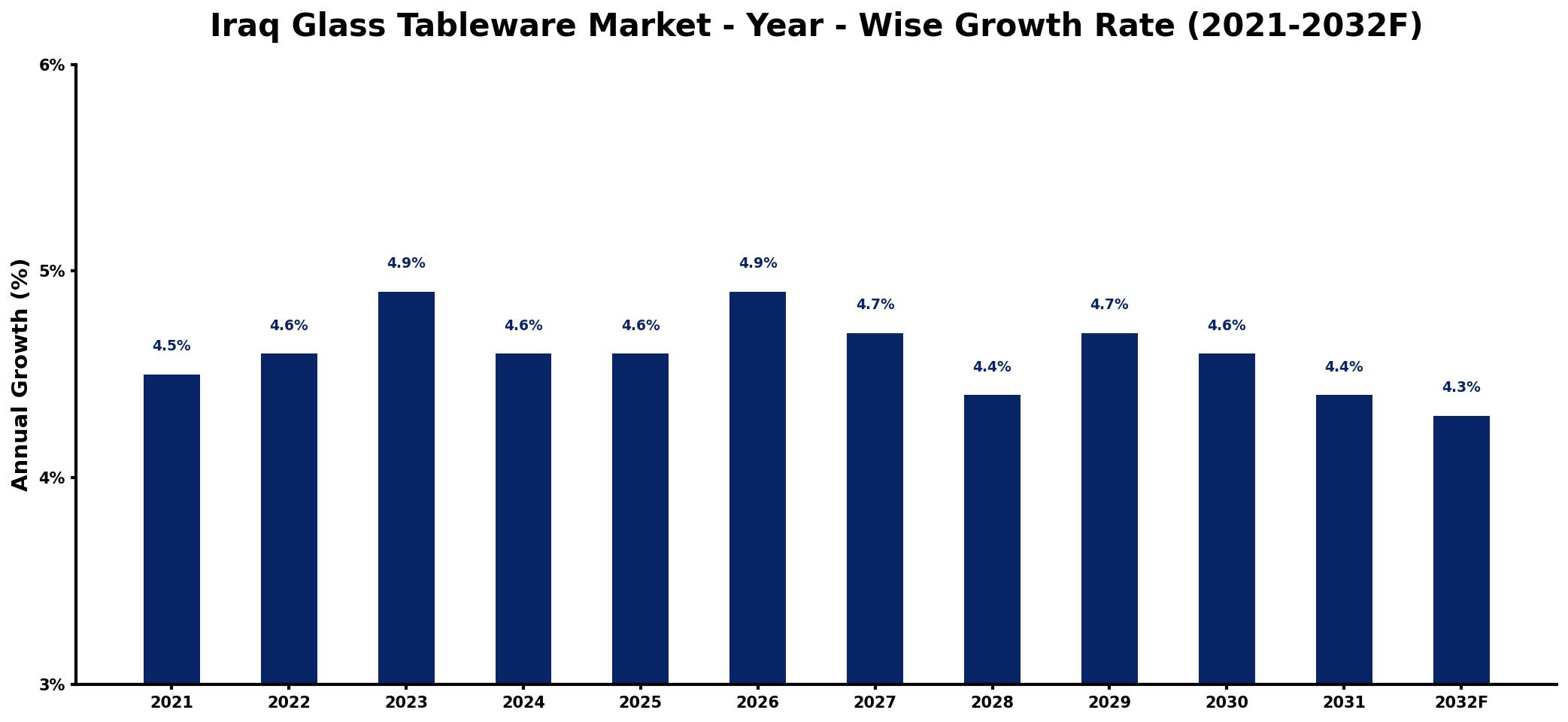
The table below presents the year‑wise growth rates along with the key drivers influencing the market
| Year | Growth Rate | Major Drivers |
| 2021 | 4.5% | Rising consumer spending on home |
| 2022 | 4.6% | Increased investment in manufacturing facilities |
| 2023 | 4.9% | Growing popularity of dining experiences |
| 2024 | 4.6% | Expansion of retail distribution channels |
| 2025 | 4.6% | Surge in hospitality sector growth |
| 2026 | 4.9% | Emerging trends in sustainable products |
| 2027 | 4.7% | Strengthening local craftsmanship initiatives |
| 2028 | 4.4% | Boost in online shopping platforms |
| 2029 | 4.7% | Enhanced marketing strategies for consumers |
| 2030 | 4.6% | Growing interest in home decor |
| 2031 | 4.4% | Development of innovative design collaborations |
| 2032 | 4.3% | Increased focus on export opportunities |
Note: Market size estimations and growth projections presented in this report are based on 6Wresearch's proprietary forecasting methodology, utilizing the latest available industry data, government publications, and primary research inputs.
Iraq Glass Tableware Market Synopsis
The current landscape of the Iraq Glass Tableware Market reflects a robust demand for products that combine elegance and functionality. As more consumers seek high-quality tableware for both everyday use and special occasions, the appeal of glass tableware continues to gain momentum.
Notably, the market is witnessing a shift toward premium products that not only serve practical purposes but also contribute to the aesthetics of dining environments. This trend is further accentuated by local artisans showcasing their craftsmanship, as well as increasing investments in modern manufacturing techniques.
Iraq Glass Tableware Market Key Takeaways
- The market is on an upward trajectory, supported by a shift in consumer dining habits.
- Glass tableware is valued for its aesthetic appeal, hygiene benefits, and versatility.
- Investment in local manufacturing is enhancing product quality and variety.
- Government policies are fostering growth in the dining culture and culinary tourism sector.
- Increasing competition from alternative materials presents ongoing challenges.
Evaluation of Restraints in Iraq Glass Tableware Market
Despite positive growth indicators, the Iraq Glass Tableware Market faces several significant constraints. Competition from alternative materials such as plastics and ceramics poses a challenge to glassware producers, particularly in price-sensitive segments. Additionally, fluctuating consumer preferences may limit market share for glass products if not addressed effectively. Moreover, issues such as inconsistent distribution channels and rising production costs can impede the ability of manufacturers to meet the growing demand for quality glass tableware.
Iraq Glass Tableware Market Trends
Emerging trends in the Iraq Glass Tableware Market include a notable shift towards customization and personalization of glass products. Consumers are increasingly interested in unique designs that reflect their personal style and enhance their dining experience. Furthermore, a growing emphasis on sustainability is influencing manufacturers to adopt eco-friendly practices, from sourcing materials to production processes.
There is also a trend towards integrating technology in manufacturing to improve efficiency and product quality. Smart glassware, which incorporates functionalities like temperature control, is beginning to capture interest among tech-savvy consumers looking for innovative dining solutions.
Iraq Glass Tableware Market Opportunities
The Iraq Glass Tableware Market presents numerous growth and investment opportunities. The increasing focus on culinary tourism offers manufacturers a chance to collaborate with hospitality businesses to provide high-quality tableware that enhances the dining experience. Moreover, as local artisans gain recognition, partnerships can be formed to promote unique, handcrafted glass products both domestically and internationally.
Expanding online sales platforms can also create new avenues for reaching consumers, especially among the younger population who prefer shopping online. As awareness grows around the benefits of glassware, targeting educational campaigns can further elevate consumer interest and acceptance.
Government Initiatives in the Iraq Glass Tableware Market
The Iraqi government has implemented several initiatives aimed at bolstering the glass tableware market as part of its efforts to promote dining culture and culinary tourism. Investments in glass manufacturing infrastructure are underway, focusing on upgrading technology to enhance production capabilities. Regulations and safety guidelines ensure that products meet consumer safety and durability standards, while public-private partnerships aim to promote local artisans and glassware manufacturers through marketing campaigns and support for export incentives.
Future Insights of the Iraq Glass Tableware Market
Looking ahead to 2026-2032, the Iraq Glass Tableware Market is poised for significant growth, driven by the continued evolution of dining trends and the increasing importance placed on quality. As disposable income rises and more families seek to enhance their dining experiences, the demand for durable and aesthetically pleasing glassware will likely intensify. Continued government support and investments in local manufacturing will further propel the market, allowing it to adapt to changing consumer demands effectively.
Iraq Glass Tableware Market Latest Developments (2025 - 2026)
Recent developments in the Iraq Glass Tableware Market highlight a growing emphasis on collaboration among local artisans and manufacturers. Initiatives to showcase unique glass designs at national exhibitions are gaining traction. Additionally, the integration of advanced technologies in production processes is being explored to meet the rising consumer demand for high-quality and innovative products. Overall, the landscape is dynamic, with stakeholders actively seeking opportunities for growth and improvement.
Iraq Glass Tableware Market - Key Attractiveness of the Report
- 10 Years of Market Numbers
- Historical Data Starting from 2022 to 2025
- Base Year: 2025
- Forecast Data until 2032
- Key Performance Indicators Impacting the Market
- Major Upcoming Developments and Projects
Key Highlights of the Report:
- Iraq Glass Tableware Market Outlook
- Market Size of Iraq Glass Tableware Market, 2025
- Forecast of Iraq Glass Tableware Market, 2032
- Historical Data and Forecast of Iraq Glass Tableware Revenues & Volume for the Period 2022-2032F
- Iraq Glass Tableware Market Trend Evolution
- Iraq Glass Tableware Market Drivers and Challenges
- Iraq Glass Tableware Price Trends
- Iraq Glass Tableware Porter's Five Forces
- Iraq Glass Tableware Industry Life Cycle
- Historical Data and Forecast of Iraq Glass Tableware Market Revenues & Volume By Product for the Period 2022-2032F
- Historical Data and Forecast of Iraq Glass Tableware Market Revenues & Volume By Dinner Glass Tableware for the Period 2022-2032F
- Historical Data and Forecast of Iraq Glass Tableware Market Revenues & Volume By Beverage Glass Tableware for the Period 2022-2032F
- Historical Data and Forecast of Iraq Glass Tableware Market Revenues & Volume By Application for the Period 2022-2032F
- Historical Data and Forecast of Iraq Glass Tableware Market Revenues & Volume By Household Glass Tableware for the Period 2022-2032F
- Historical Data and Forecast of Iraq Glass Tableware Market Revenues & Volume By Commercial Glass Tableware for the Period 2022-2032F
- Historical Data and Forecast of Iraq Glass Tableware Market Revenues & Volume By Distribution Channel for the Period 2022-2032F
- Historical Data and Forecast of Iraq Glass Tableware Market Revenues & Volume By Offline Glass Tableware Sales for the Period 2022-2032F
- Historical Data and Forecast of Iraq Glass Tableware Market Revenues & Volume By Online Glass Tableware Sales for the Period 2022-2032F
- Iraq Glass Tableware Import Export Trade Statistics
- Market Opportunity Assessment By Product
- Market Opportunity Assessment By Application
- Market Opportunity Assessment By Distribution Channel
- Iraq Glass Tableware Top Companies Market Share
- Iraq Glass Tableware Competitive Benchmarking By Technical and Operational Parameters
- Iraq Glass Tableware Company Profiles
- Iraq Glass Tableware Key Strategic Recommendations






































