Iraq Used Car Market Summary
The iraq used car market was estimated at USD 246 Million in 2025 and is projected to reach USD 270 Million by 2032, growing at a CAGR of 1.3% from 2026 to 2032.
Iraq Used Car Market Year-wise Growth Rate and Key Drivers
This graph highlights how the Iraq Used Car Market has steadily grown over the past five years, supported by major growth factors.
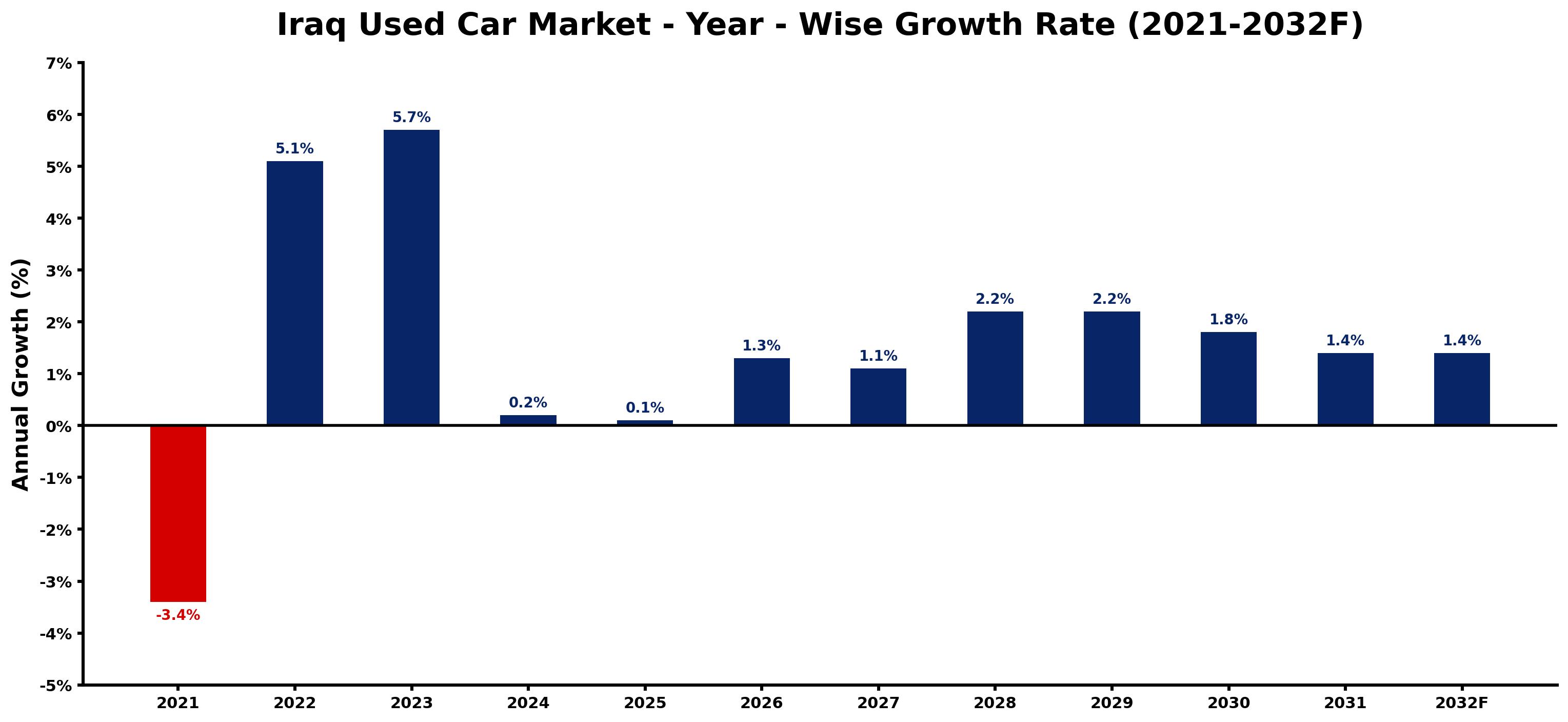
The table below presents the year wise growth rates along with the key drivers influencing the market
| Year | Growth Rate | Major Drivers |
| 2021 | -3.4% | Political instability and security concerns diminished purchasing power and deterred foreign investment in the used car sector. |
| 2022 | 5.1% | Rising internet penetration encourages online platforms for used car trading. |
| 2023 | 5.7% | Increased availability of affordable financing options boosts consumer purchasing power. |
| 2024 | 0.2% | Expansion of urban centers creates higher demand for personal transportation solutions. |
| 2025 | 0.1% | Infrastructure projects improve road conditions, enhancing the appeal of used cars. |
| 2026 | 1.3% | Introduced vehicle inspection regulations enhance buyer trust in used car quality. |
| 2027 | 1.1% | Cultural shifts toward greater mobility increase overall interest in car ownership. |
| 2028 | 2.2% | Youthful demographic trends indicate a sustained appetite for affordable vehicles. |
| 2029 | 2.2% | Regional trade agreements facilitate vehicle imports, diversifying the used car market. |
| 2030 | 1.8% | Technology integration simplifies the buying process, leading to more informed consumers. |
| 2031 | 1.4% | Market recovery post-pandemic solidifies the long-term viability of used car sales. |
| 2032 | 1.4% | Emerging electric vehicle options begin influencing preferences in the used car segment. |
Note - Market size estimations and growth projections presented in this report are based on 6Wresearch's advanced forecasting approach, validated with industry datasets as of June 2026.
Iraq Used Car Market Synopsis
The Iraq Used Car Market is projected to reach 1.3% and witness significant growth during the forecast period (2026-2032). This sector is being driven by a confluence of economic development, urbanization, and the rising purchasing power of an expanding middle class. The increasing demand for affordable transportation solutions positions used cars as a viable alternative to new vehicles, allowing consumers to navigate the bustling urban environments more efficiently.
Iraq Used Car Market Growth Drivers
Several factors are catalyzing the growth within the Iraq Used Car Market. Firstly, economic development contributes significantly, as rising GDP signals higher disposable incomes for consumers. Secondly, urbanization is transforming cities and creating a heightened necessity for reliable transportation. Thirdly, the burgeoning middle class is increasingly seeking cost-effective mobility solutions that used cars provide. Additionally, the preference for Japanese brands, known for their reliability, fuels the demand further. Finally, the shift towards digital platforms for buying and selling vehicles enhances market accessibility and convenience for consumers.
Iraq Used Car Market Trends and Opportunities
Current trends in the Iraq Used Car Market indicate a shift towards preferences that align with economic pragmatism. Increasingly, consumers prioritize affordability and fuel efficiency due to economic conditions and rising fuel prices. There is a notable preference for well-maintained vehicles, with comprehensive service histories that assure buyers of quality and reliability. Furthermore, the surge in online platforms for transactions enhances the buying experience, offering greater convenience and access to a diverse inventory. Another emerging trend is the growing awareness of eco-friendly vehicles, with buyers considering emissions and sustainability in their purchasing decisions. These trends present numerous opportunities for businesses to cater to a more informed and value-conscious consumer base.
Iraq Used Car Market Challenges and Restraints
While the Iraq Used Car Market offers promising prospects, it is not without its challenges. A major issue is the prevalence of counterfeit or illegally imported vehicles, which undermines consumer trust and creates market opacity. This complicates the verification of vehicle authenticity and quality for potential buyers. Additionally, inconsistent regulations and limited financing options impede market efficiency. A lack of standardized inspection processes further exacerbates these challenges, making it difficult for consumers to make informed purchases. Political and economic instability in the region also introduces fluctuations in demand, presenting further hurdles for market participants. Addressing these issues through enhanced regulation and consumer education is essential for fostering a sustainable growth trajectory.
Iraq Used Car Market Investment Opportunities
Investment opportunities in the Iraq Used Car Market are poised to expand, driven by the escalating demand for affordable transportation alternatives. Investors may find significant potential in establishing used car dealerships, which cater to the diverse needs of consumers. Additionally, creating online platforms for buying and selling vehicles can tap into the growing digital trend. Financial services such as car financing and leasing also present lucrative avenues for investment. Furthermore, collaboration with local automotive suppliers and service providers can enhance the customer experience, ensuring sustained engagement in the market. Success, however, hinges on thorough market research and the ability to navigate the regulatory landscape effectively.
Iraq Used Car Market Government Investment and Initiatives
The Iraq Used Car Market is influenced significantly by government policies aimed at ensuring safety, environmental standards, and consumer protection. The government has established rigorous regulations concerning the importation of used vehicles to guarantee that they meet specific emission standards and safety requirements. Policies are also in place to combat the importation of stolen vehicles while curbing smuggling activities. Furthermore, the licensing requirements for used car sellers ensure adherence to market standards and consumer rights. The government's focus on fostering fair trade practices and enhancing market transparency is crucial for sustaining growth and instilling buyer confidence.
Iraq Used Car Market Latest Developments (May 2025 - June 2026)
During the period from May 2025 to June 2026, the Iraq Used Car Market has experienced notable shifts in industry dynamics. The adoption of online platforms has increased, allowing for a more streamlined buying and selling process. Additionally, government initiatives aimed at improving regulatory frameworks have begun to take effect, enhancing consumer protection and market transparency. The trend towards eco-friendly vehicles has also gained traction, with more consumers considering environmental factors in their purchasing decisions. Moreover, the market has seen a slow yet steady recovery as political stability improves, leading to an uptick in consumer confidence and engagement. Overall, these developments suggest a positive trajectory for growth in the used car sector moving forward.
Iraq Used Car Market - Key Attractiveness of the Report
- 10 Years of Market Numbers
- Historical Data Starting from 2022 to 2025
- Base Year: 2025
- Forecast Data until 2032
- Key Performance Indicators Impacting the Market
- Major Upcoming Developments and Projects
Key Highlights of the Report:
- Iraq Used Car Market Outlook
- Market Size of Iraq Used Car Market, 2025
- Forecast of Iraq Used Car Market, 2032F
- Historical Data and Forecast of Iraq Used Car Revenues & Volume for the Period 2022-2032F
- Iraq Used Car Market Trend Evolution
- Iraq Used Car Market Drivers and Challenges
- Iraq Used Car Price Trends
- Iraq Used Car Porter's Five Forces
- Iraq Used Car Industry Life Cycle
- Historical Data and Forecast of Iraq Used Car Market Revenues & Volume By Vehicle Type for the Period 2022-2032F
- Historical Data and Forecast of Iraq Used Car Market Revenues & Volume By Hatchbacks for the Period 2022-2032F
- Historical Data and Forecast of Iraq Used Car Market Revenues & Volume By Sedan for the Period 2022-2032F
- Historical Data and Forecast of Iraq Used Car Market Revenues & Volume By Sports Utility Vehicle for the Period 2022-2032F
- Historical Data and Forecast of Iraq Used Car Market Revenues & Volume By Others for the Period 2022-2032F
- Historical Data and Forecast of Iraq Used Car Market Revenues & Volume By Vendor for the Period 2022-2032F
- Historical Data and Forecast of Iraq Used Car Market Revenues & Volume By Organized for the Period 2022-2032F
- Historical Data and Forecast of Iraq Used Car Market Revenues & Volume By Unorganized for the Period 2022-2032F
- Historical Data and Forecast of Iraq Used Car Market Revenues & Volume By Fuel Type for the Period 2022-2032F
- Historical Data and Forecast of Iraq Used Car Market Revenues & Volume By Gasoline for the Period 2022-2032F
- Historical Data and Forecast of Iraq Used Car Market Revenues & Volume By Diesel for the Period 2022-2032F
- Historical Data and Forecast of Iraq Used Car Market Revenues & Volume By Alternative Fuel Vehicles for the Period 2022-2032F
- Iraq Used Car Import Export Trade Statistics
- Market Opportunity Assessment By Vehicle Type
- Market Opportunity Assessment By Vendor
- Market Opportunity Assessment By Fuel Type
- Iraq Used Car Top Companies Market Share
- Iraq Used Car Competitive Benchmarking By Technical and Operational Parameters
- Iraq Used Car Company Profiles
- Iraq Used Car Key Strategic Recommendations






































