Ireland Electric Locomotives Market Size (2020-2030)
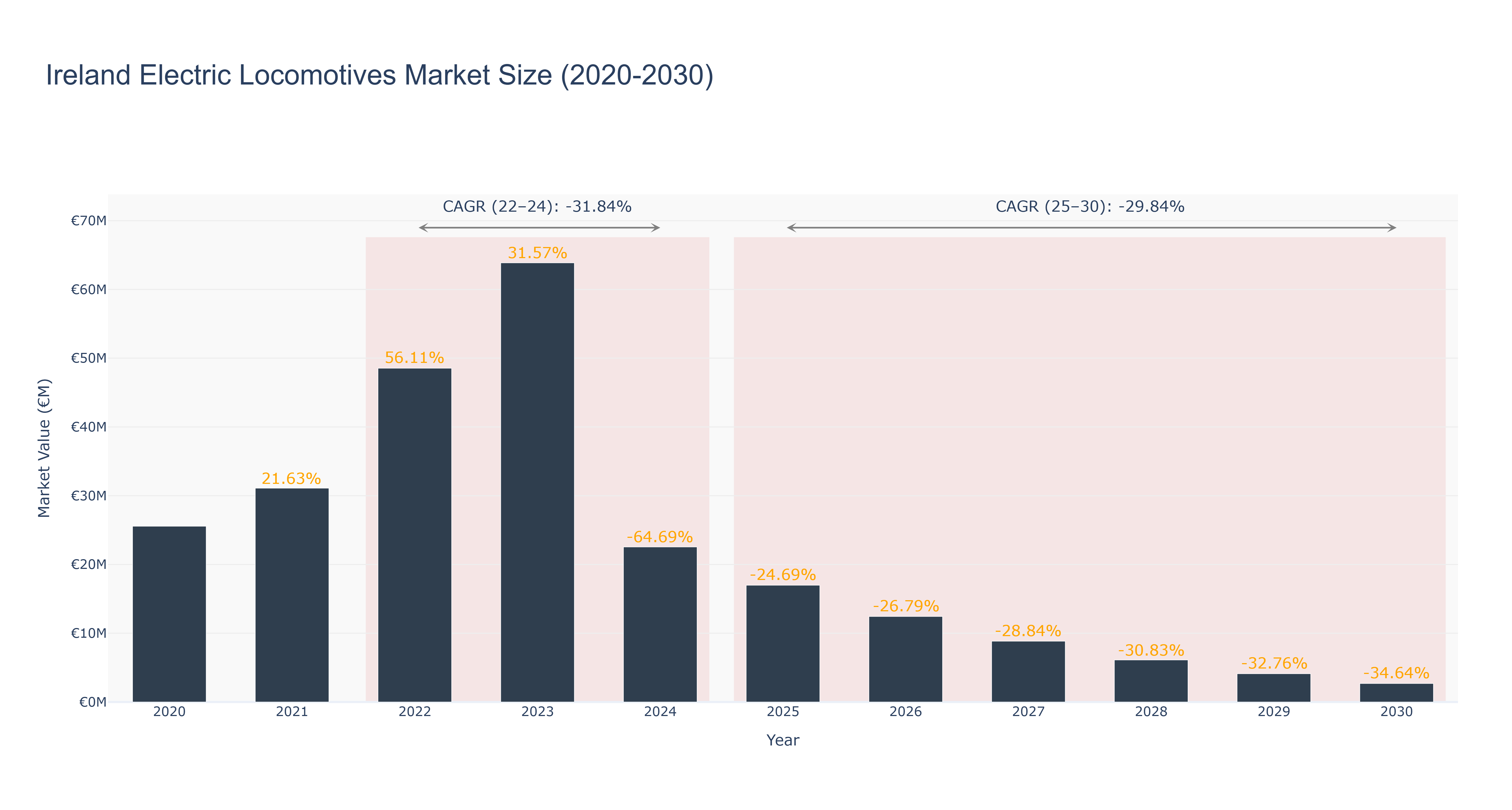
Ireland Electric Locomotives Market has experienced fluctuations in market size over the years. The peak market size was €63.87 million in 2023, followed by a significant decline to €22.55 million in 2024. The market is forecasted to continue shrinking, with a projected size of €2.69 million in 2030. The CAGR values reflect this downward trend, with a decline of -31.84% from 2022 to 2024 and -29.84% from 2025 to 2030. The market's downturn can be attributed to factors such as changing consumer preferences towards alternative transportation modes and economic uncertainties impacting investment in locomotive infrastructure. Looking ahead, Ireland is set to introduce a new sustainable transportation initiative focusing on electric buses to reduce carbon emissions and enhance public transit efficiency, aligning with the global push towards green mobility solutions. Industry drivers for the Ireland Electric Locomotives Market include government regulations promoting sustainable transport solutions, increasing environmental awareness among consumers, and advancements in electric vehicle technology.
Ireland Electric Locomotives Market: Production & Trade Performance (2019-2025)
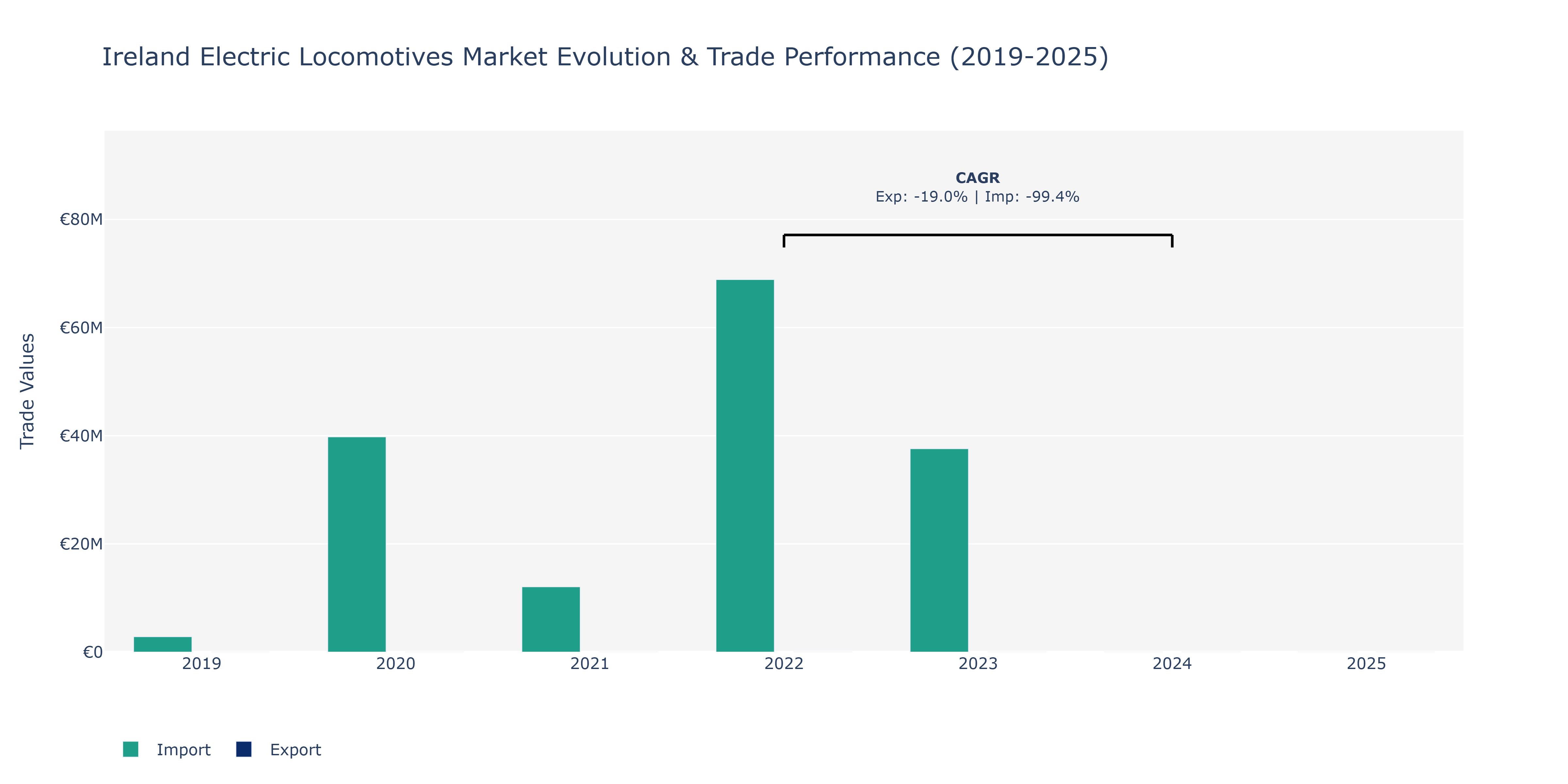
In the Ireland Electric Locomotives Market, exports exhibited notable fluctuations during the period under review. Starting at €790 million in 2019, exports surged to €9.6 billion in 2022, representing a substantial increase. This upward trend reversed in subsequent years, with exports declining to €3.7 billion in 2023 before rebounding to €6.3 billion in 2024. The year 2025 witnessed a slight decrease to €5.4 million. Conversely, imports experienced a drastic spike from €2.8 billion in 2019 to €68.9 billion in 2022, signifying a meteoric rise. However, this growth was followed by a sharp decline to €3.8 billion in 2023 and a further drop to €2.3 billion in 2024. Import value continued to decrease in 2025, reaching €1.7 billion. These fluctuations in exports and imports can be attributed to evolving market demands, changes in trade policies, and the impact of global economic conditions on the transportation industry. The surge in exports in 2022 could be linked to increased international demand for electric locomotives, while the subsequent declines might reflect market saturation or shifts in consumer preferences. Similarly, the fluctuating import figures could be influenced by fluctuating domestic production capabilities, changes in supplier relationships, and regulatory changes affecting international trade practices. To support this analysis, examining government infrastructure investments, advancements in electric locomotive technologies, and global sustainability initiatives could provide additional insights into the market trends observed.
Key Highlights of the Report:
- Ireland Electric Locomotives Market Outlook
- Market Size of Ireland Electric Locomotives Market, 2024
- Forecast of Ireland Electric Locomotives Market, 2031
- Historical Data and Forecast of Ireland Electric Locomotives Revenues & Volume for the Period 2021-2031
- Ireland Electric Locomotives Market Trend Evolution
- Ireland Electric Locomotives Market Drivers and Challenges
- Ireland Electric Locomotives Price Trends
- Ireland Electric Locomotives Porter`s Five Forces
- Ireland Electric Locomotives Industry Life Cycle
- Historical Data and Forecast of Ireland Electric Locomotives Market Revenues & Volume By Energy Transfer for the Period 2021-2031
- Historical Data and Forecast of Ireland Electric Locomotives Market Revenues & Volume By Overhead Lines for the Period 2021-2031
- Historical Data and Forecast of Ireland Electric Locomotives Market Revenues & Volume By Third Rail for the Period 2021-2031
- Historical Data and Forecast of Ireland Electric Locomotives Market Revenues & Volume By On-board Energy Storage for the Period 2021-2031
- Historical Data and Forecast of Ireland Electric Locomotives Market Revenues & Volume By Technology for the Period 2021-2031
- Historical Data and Forecast of Ireland Electric Locomotives Market Revenues & Volume By IGBT Module for the Period 2021-2031
- Historical Data and Forecast of Ireland Electric Locomotives Market Revenues & Volume By GTO Thyristor for the Period 2021-2031
- Historical Data and Forecast of Ireland Electric Locomotives Market Revenues & Volume By SiC Module for the Period 2021-2031
- Historical Data and Forecast of Ireland Electric Locomotives Market Revenues & Volume By Traction Units for the Period 2021-2031
- Historical Data and Forecast of Ireland Electric Locomotives Market Revenues & Volume By AC Traction Units for the Period 2021-2031
- Historical Data and Forecast of Ireland Electric Locomotives Market Revenues & Volume By DC Traction Units for the Period 2021-2031
- Historical Data and Forecast of Ireland Electric Locomotives Market Revenues & Volume By Multi System Units for the Period 2021-2031
- Historical Data and Forecast of Ireland Electric Locomotives Market Revenues & Volume By Application for the Period 2021-2031
- Historical Data and Forecast of Ireland Electric Locomotives Market Revenues & Volume By Passenger Transport for the Period 2021-2031
- Historical Data and Forecast of Ireland Electric Locomotives Market Revenues & Volume By Freight Transport for the Period 2021-2031
- Ireland Electric Locomotives Import Export Trade Statistics
- Market Opportunity Assessment By Energy Transfer
- Market Opportunity Assessment By Technology
- Market Opportunity Assessment By Traction Units
- Market Opportunity Assessment By Application
- Ireland Electric Locomotives Top Companies Market Share
- Ireland Electric Locomotives Competitive Benchmarking By Technical and Operational Parameters
- Ireland Electric Locomotives Company Profiles
- Ireland Electric Locomotives Key Strategic Recommendations






































