Ireland Personal Hygiene Market Top 5 Importing Countries and Market Competition (HHI) Analysis
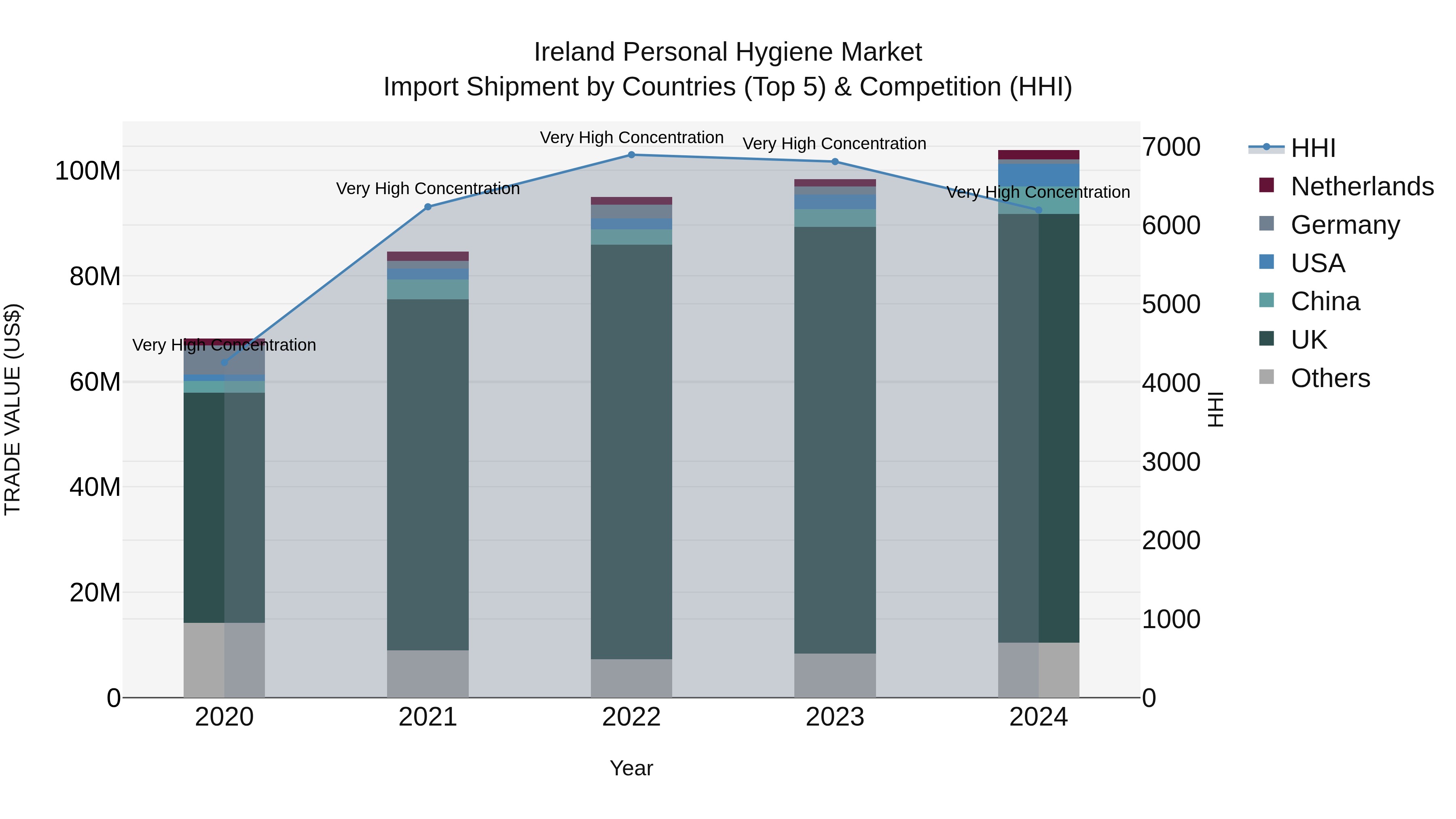
In 2024, Ireland continued to see a significant influx of personal hygiene imports, with the top exporting countries being the UK, China, USA, Areas (unspecified), and the Netherlands. The market concentration remained very high, indicating a competitive landscape. The industry experienced a robust compound annual growth rate (CAGR) of 11.13% from 2020 to 2024, with a notable growth rate of 5.56% from 2023 to 2024. This suggests a continued demand for personal hygiene products in Ireland, driven by consumer preferences and market dynamics.
Ireland Personal Hygiene Market Synopsis
The Ireland Personal Hygiene Market is a growing sector driven by increasing awareness of personal health and grooming among consumers. Key product categories include bath and shower products, deodorants, oral care, and skincare. The market is witnessing a shift towards natural and organic products, as consumers become more conscious of the ingredients used in personal care items. Major players in the market include multinational companies as well as local brands offering a wide range of products to cater to diverse consumer needs. E-commerce platforms have also played a significant role in the market`s growth, providing consumers with convenient access to a variety of personal hygiene products. The market is expected to continue expanding, driven by innovation, product diversification, and evolving consumer preferences.
Ireland Personal Hygiene Market Trends
The Ireland Personal Hygiene Market is experiencing a shift towards more sustainable and eco-friendly products, driven by increasing consumer awareness of environmental issues. There is a growing demand for natural and organic personal hygiene products, such as biodegradable wipes, eco-friendly menstrual products, and plant-based alternatives to traditional skincare items. With a focus on reducing plastic waste, brands are innovating with refillable packaging options and recyclable materials. Additionally, there is a rising interest in personalized hygiene solutions, including custom skincare formulations and DNA-based product recommendations. E-commerce is playing a significant role in the market, offering consumers convenient access to a wide range of products and promoting direct-to-consumer brands that emphasize transparency and authenticity. Overall, the Ireland Personal Hygiene Market is evolving towards sustainability, personalization, and convenience.
Ireland Personal Hygiene Market Challenges
In the Ireland Personal Hygiene Market, challenges include increasing consumer demand for natural and sustainable products, competition from international brands, and the impact of economic fluctuations on consumer spending. With growing awareness of environmental issues, consumers are seeking eco-friendly options, putting pressure on companies to innovate in terms of packaging and ingredients. International brands often have larger marketing budgets and established reputations, making it challenging for local companies to compete. Additionally, economic uncertainties can lead to fluctuations in consumer spending habits, affecting the demand for personal hygiene products. To address these challenges, companies in the Ireland Personal Hygiene Market need to focus on sustainability, differentiation through innovation, and strategic marketing efforts to attract and retain customers in a competitive landscape.
Ireland Personal Hygiene Market Investment Opportunities
In the Ireland Personal Hygiene Market, there are several investment opportunities worth considering. The growing consumer awareness about personal health and hygiene has led to an increased demand for premium and eco-friendly personal care products. Investing in sustainable and natural personal hygiene brands could be a lucrative option as consumers are increasingly seeking products that are both effective and environmentally friendly. Additionally, the rising trend of self-care and wellness among Irish consumers presents opportunities for investments in innovative products such as personalized skincare solutions, organic hygiene products, and subscription-based services. E-commerce platforms and digital marketing strategies also offer avenues for investment as online shopping for personal hygiene products continues to gain popularity. Overall, the Ireland Personal Hygiene Market presents diverse opportunities for investors looking to tap into the growing demand for quality and sustainable personal care products.
Jordan Agar Market Government Policies
The Ireland Personal Hygiene Market is subject to various government policies and regulations aimed at ensuring the safety and efficacy of products in the market. The Irish Health Products Regulatory Authority (HPRA) oversees the regulation of personal hygiene products, enforcing standards for ingredients, labeling, and advertising to protect consumer health and prevent misleading claims. Additionally, the Irish government has implemented measures to promote sustainability and reduce the environmental impact of personal hygiene products, such as encouraging the use of eco-friendly packaging and promoting recycling initiatives. Overall, government policies in Ireland for the Personal Hygiene Market prioritize consumer health and safety while also aiming to minimize the industry`s environmental footprint.
Ireland Personal Hygiene Market Future Outlook
The Ireland Personal Hygiene Market is expected to experience steady growth in the coming years, driven by increasing awareness about personal hygiene and wellness among consumers. Factors such as rising disposable income, changing lifestyles, and a growing emphasis on self-care are likely to contribute to the market`s expansion. Additionally, the demand for natural and organic personal hygiene products is projected to rise, driven by a growing preference for sustainable and environmentally friendly options. Market players are expected to focus on product innovation, packaging sustainability, and digital marketing strategies to cater to evolving consumer preferences. Overall, the Ireland Personal Hygiene Market is anticipated to witness positive growth opportunities in the foreseeable future.
Key Highlights of the Report:
- Ireland Personal Hygiene Market Outlook
- Market Size of Ireland Personal Hygiene Market, 2024
- Forecast of Ireland Personal Hygiene Market, 2031
- Historical Data and Forecast of Ireland Personal Hygiene Revenues & Volume for the Period 2021- 2031
- Ireland Personal Hygiene Market Trend Evolution
- Ireland Personal Hygiene Market Drivers and Challenges
- Ireland Personal Hygiene Price Trends
- Ireland Personal Hygiene Porter's Five Forces
- Ireland Personal Hygiene Industry Life Cycle
- Historical Data and Forecast of Ireland Personal Hygiene Market Revenues & Volume By Product for the Period 2021- 2031
- Historical Data and Forecast of Ireland Personal Hygiene Market Revenues & Volume By Soaps for the Period 2021- 2031
- Historical Data and Forecast of Ireland Personal Hygiene Market Revenues & Volume By Hand Sanitizers for the Period 2021- 2031
- Historical Data and Forecast of Ireland Personal Hygiene Market Revenues & Volume By Bath and Shower Products for the Period 2021- 2031
- Historical Data and Forecast of Ireland Personal Hygiene Market Revenues & Volume By Face Care Products for the Period 2021- 2031
- Historical Data and Forecast of Ireland Personal Hygiene Market Revenues & Volume By Other Products for the Period 2021- 2031
- Historical Data and Forecast of Ireland Personal Hygiene Market Revenues & Volume By Gender for the Period 2021- 2031
- Historical Data and Forecast of Ireland Personal Hygiene Market Revenues & Volume By Unisex for the Period 2021- 2031
- Historical Data and Forecast of Ireland Personal Hygiene Market Revenues & Volume By Male for the Period 2021- 2031
- Historical Data and Forecast of Ireland Personal Hygiene Market Revenues & Volume By Female for the Period 2021- 2031
- Historical Data and Forecast of Ireland Personal Hygiene Market Revenues & Volume By Distribution Channel for the Period 2021- 2031
- Historical Data and Forecast of Ireland Personal Hygiene Market Revenues & Volume By Retail Pharmacies for the Period 2021- 2031
- Historical Data and Forecast of Ireland Personal Hygiene Market Revenues & Volume By Hospital based Pharmacies for the Period 2021- 2031
- Historical Data and Forecast of Ireland Personal Hygiene Market Revenues & Volume By Supermarkets for the Period 2021- 2031
- Historical Data and Forecast of Ireland Personal Hygiene Market Revenues & Volume By E-commerce for the Period 2021- 2031
- Ireland Personal Hygiene Import Export Trade Statistics
- Market Opportunity Assessment By Product
- Market Opportunity Assessment By Gender
- Market Opportunity Assessment By Distribution Channel
- Ireland Personal Hygiene Top Companies Market Share
- Ireland Personal Hygiene Competitive Benchmarking By Technical and Operational Parameters
- Ireland Personal Hygiene Company Profiles
- Ireland Personal Hygiene Key Strategic Recommendations






































