Israel Canned Tuna Market Top 5 Importing Countries and Market Competition (HHI) Analysis
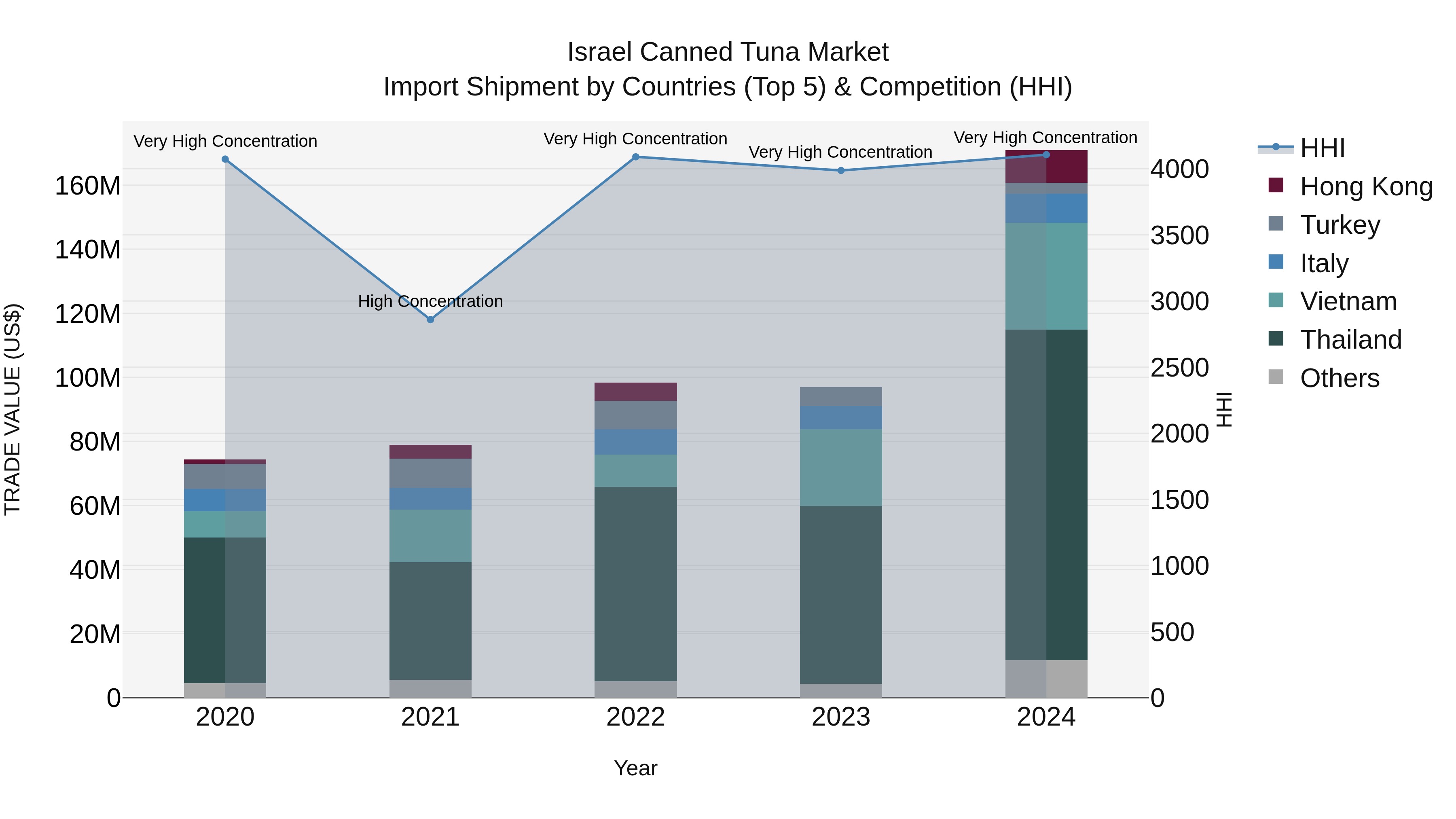
Israel`s canned tuna import market continued to thrive in 2024, with top exporting countries including Thailand, Vietnam, Hong Kong, Italy, and China. The Herfindahl-Hirschman Index (HHI) indicated a high level of market concentration, underscoring the dominance of key players. The impressive Compound Annual Growth Rate (CAGR) of 23.13% from 2020 to 2024 demonstrates sustained market expansion. Notably, the remarkable growth rate of 76.32% from 2023 to 2024 signals a significant uptick in demand for canned tuna in Israel, presenting ample opportunities for stakeholders in the industry.
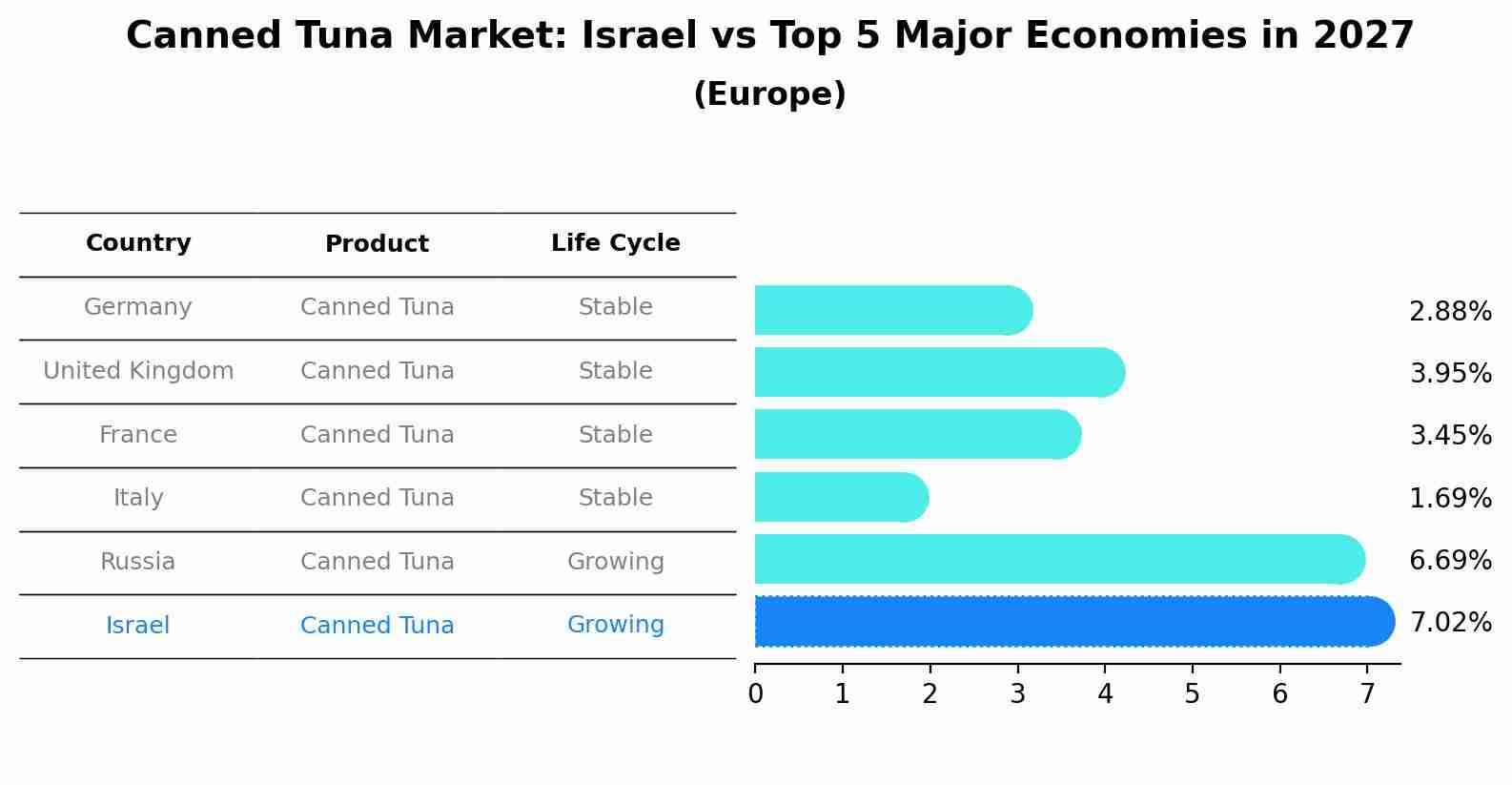
Canned Tuna Market: Israel vs Top 5 Major Economies in 2027 (Europe)
By 2027, Israel's Canned Tuna market is forecasted to achieve a growing growth rate of 7.02%, with Germany leading the Europe region, followed by United Kingdom, France, Italy and Russia.
Israel Canned Tuna Market Synopsis
Tuna holds a prominent position in Israel canned food market, owing to its popularity as a convenient and protein-rich food option. Whether packed in oil, water, or sauce, canned tuna products are widely consumed across the country. Israel market offers various brands and varieties, catering to different tastes and preferences among consumers.
Drivers of the market
The Israel canned tuna market is buoyed by several factors, including the high nutritional value of tuna, convenience offered by canned tuna products, and growing consumer awareness of sustainable fishing practices. Tuna is rich in protein, omega-3 fatty acids, and various essential nutrients, making it a popular choice among health-conscious consumers. Canned tuna products provide convenience and versatility in meal preparation, catering to busy lifestyles and on-the-go consumption patterns. Moreover, increased efforts by manufacturers to promote sustainable fishing methods and environmentally friendly packaging contribute to the growth of the Israel canned tuna market.
Challenges of the market
The canned tuna market in Israel encounters challenges related to sustainability, health consciousness, and competition. Tuna is a popular canned seafood choice, but concerns about overfishing and mercury contamination have led to consumer demand for sustainably sourced and low-mercury options. This presents a challenge for canned tuna manufacturers, who must ensure the traceability and quality of their products to meet regulatory standards and consumer expectations. Moreover, competition from imported canned tuna brands and alternative protein sources adds to the challenges faced by local producers. Investing in sustainable fishing practices, product innovation, and marketing efforts can help Israel canned tuna companies address these challenges and maintain their competitiveness in the market.
Government Policy of the market
Government policies in the Israel Canned Tuna Market focus on ensuring the sustainability of tuna stocks and maintaining food safety standards. Regulations govern fishing practices, processing methods, and labeling requirements to protect marine ecosystems and inform consumers about product origins and quality. Additionally, import tariffs and quotas may be imposed to support domestic tuna fishing industries.
Key Highlights of the Report:
- Israel Canned Tuna Market Outlook
- Market Size of Israel Canned Tuna Market, 2024
- Forecast of Israel Canned Tuna Market, 2031
- Historical Data and Forecast of Israel Canned Tuna Revenues & Volume for the Period 2021-2031
- Israel Canned Tuna Market Trend Evolution
- Israel Canned Tuna Market Drivers and Challenges
- Israel Canned Tuna Price Trends
- Israel Canned Tuna Porter`s Five Forces
- Israel Canned Tuna Industry Life Cycle
- Historical Data and Forecast of Israel Canned Tuna Market Revenues & Volume By Product for the Period 2021-2031
- Historical Data and Forecast of Israel Canned Tuna Market Revenues & Volume By Skipjack for the Period 2021-2031
- Historical Data and Forecast of Israel Canned Tuna Market Revenues & Volume By Yellowfin for the Period 2021-2031
- Historical Data and Forecast of Israel Canned Tuna Market Revenues & Volume By Others for the Period 2021-2031
- Historical Data and Forecast of Israel Canned Tuna Market Revenues & Volume By Distribution Channel for the Period 2021-2031
- Historical Data and Forecast of Israel Canned Tuna Market Revenues & Volume By Hypermarket & Supermarket for the Period 2021-2031
- Historical Data and Forecast of Israel Canned Tuna Market Revenues & Volume By Specialty Stores for the Period 2021-2031
- Historical Data and Forecast of Israel Canned Tuna Market Revenues & Volume By Online for the Period 2021-2031
- Israel Canned Tuna Import Export Trade Statistics
- Market Opportunity Assessment By Product
- Market Opportunity Assessment By Distribution Channel
- Israel Canned Tuna Top Companies Market Share
- Israel Canned Tuna Competitive Benchmarking By Technical and Operational Parameters
- Israel Canned Tuna Company Profiles
- Israel Canned Tuna Key Strategic Recommendations






































