Israel Dog and Cat Food Market Year-wise Growth Rate (2021-2031F)
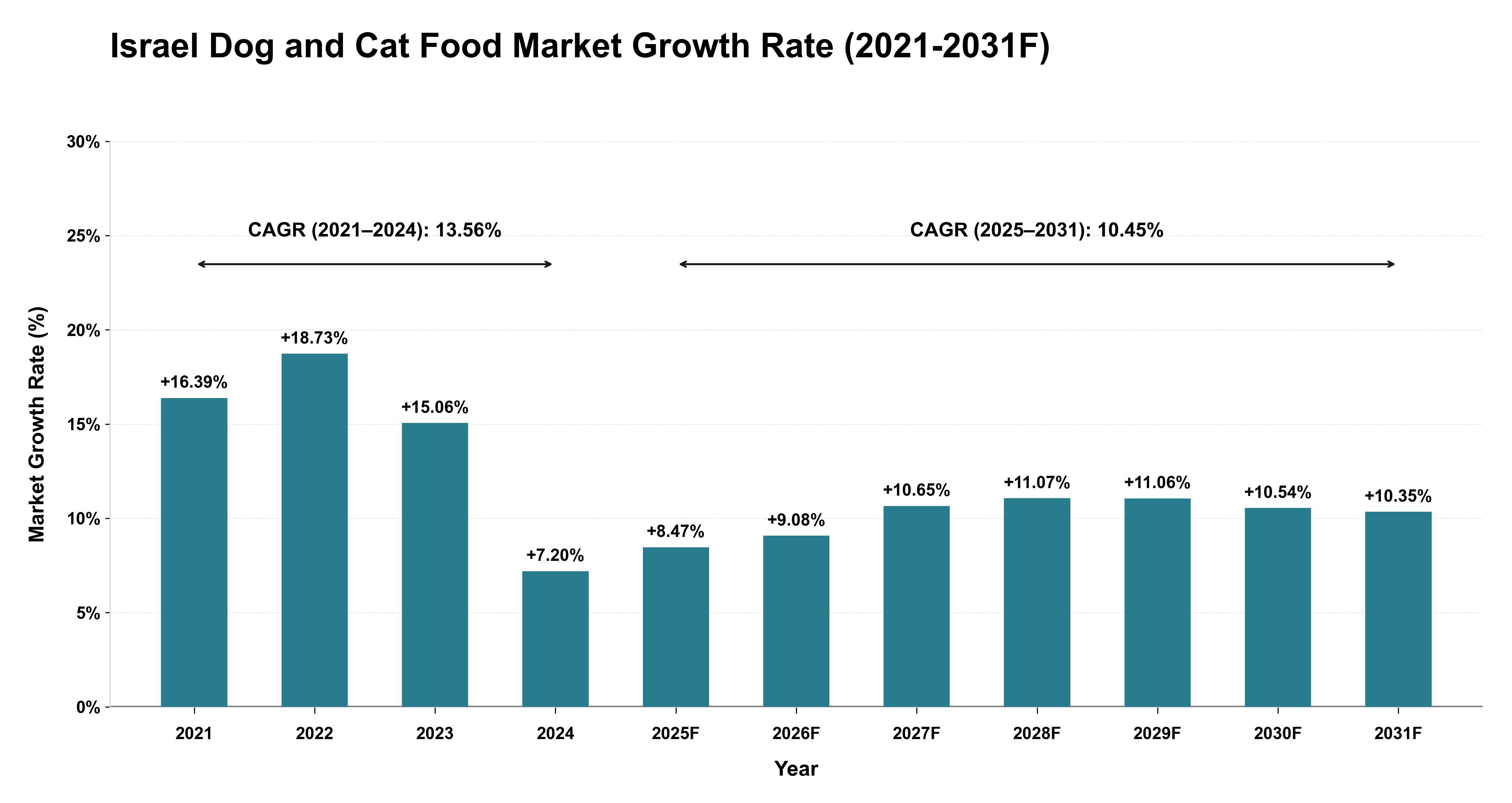
In the Israel Dog and Cat Food Market, from 2021 to 2024, the segment experienced robust growth, with annual trajectories ranging from 7.20% to 18.73%, culminating in a high CAGR of 13.56%. This period saw increasing pet ownership, higher disposable incomes, and a growing trend towards premium pet food products. However, in 2024, there was a notable deceleration in growth to 7.20%, signaling potential market saturation concerns. Looking ahead to 2025-2031, the forecasted CAGR of 10.45% indicates a more stable but slightly slower growth pace. This moderation could be attributed to market maturity, price competition among brands, and evolving consumer preferences towards natural and organic pet food options. Despite this adjustment, the market remains promising due to continued pet humanization trends and a strong bond between owners and their pets driving sustained demand for quality pet food products in Israel.
Israel Dog and Cat Food Market Synopsis
The dog and cat food market in Israel offers a wide range of pet nutrition products, including dry kibble, wet food, and treats. This market is driven by pet ownership trends and the demand for high-quality, nutritious food for pets.
Drivers of the market
In Israel, the Dog and Cat Food Market are experiencing growth driven by rising pet ownership rates and changing consumer attitudes towards pet nutrition. Pet owners are increasingly prioritizing the health and well-being of their furry companions, fueling demand for premium pet food products made from high-quality ingredients and tailored to specific dietary needs. Israel pet food manufacturers are responding to this trend by introducing innovative formulations, including grain-free options, natural ingredients, and functional additives, driving market expansion in both retail and online channels.
Challenges of the market
Challenges in the dog and cat food market include ensuring nutritional quality and safety of pet food products, addressing changing consumer preferences, and competition from alternative pet food options. Innovating with premium ingredients and targeting specific dietary needs can drive market growth.
Government Policy of the market
Israel authorities regulate the quality and safety of dog and cat food products to protect animal health and welfare. Policies set nutritional standards, labeling requirements, and inspection protocols to ensure compliance with food safety regulations and consumer expectations.
Key Highlights of the Report:
- Israel Dog and Cat Food Market Outlook
- Market Size of Israel Dog and Cat Food Market, 2024
- Forecast of Israel Dog and Cat Food Market, 2031
- Historical Data and Forecast of Israel Dog and Cat Food Revenues & Volume for the Period 2021-2031
- Israel Dog and Cat Food Market Trend Evolution
- Israel Dog and Cat Food Market Drivers and Challenges
- Israel Dog and Cat Food Price Trends
- Israel Dog and Cat Food Porter`s Five Forces
- Israel Dog and Cat Food Industry Life Cycle
- Historical Data and Forecast of Israel Dog and Cat Food Market Revenues & Volume By Animal Type for the Period 2021-2031
- Historical Data and Forecast of Israel Dog and Cat Food Market Revenues & Volume By Dog for the Period 2021-2031
- Historical Data and Forecast of Israel Dog and Cat Food Market Revenues & Volume By Cat for the Period 2021-2031
- Historical Data and Forecast of Israel Dog and Cat Food Market Revenues & Volume By Product Type for the Period 2021-2031
- Historical Data and Forecast of Israel Dog and Cat Food Market Revenues & Volume By Dry Food for the Period 2021-2031
- Historical Data and Forecast of Israel Dog and Cat Food Market Revenues & Volume By Wet/Canned Food for the Period 2021-2031
- Historical Data and Forecast of Israel Dog and Cat Food Market Revenues & Volume By Nutritious Food for the Period 2021-2031
- Historical Data and Forecast of Israel Dog and Cat Food Market Revenues & Volume By Snacks/Treats for the Period 2021-2031
- Historical Data and Forecast of Israel Dog and Cat Food Market Revenues & Volume By Others for the Period 2021-2031
- Historical Data and Forecast of Israel Dog and Cat Food Market Revenues & Volume By Distribution Channel for the Period 2021-2031
- Historical Data and Forecast of Israel Dog and Cat Food Market Revenues & Volume By Specialized Pet Shops for the Period 2021-2031
- Historical Data and Forecast of Israel Dog and Cat Food Market Revenues & Volume By Supermarkets/Hypermarkets for the Period 2021-2031
- Historical Data and Forecast of Israel Dog and Cat Food Market Revenues & Volume By Online Channel for the Period 2021-2031
- Historical Data and Forecast of Israel Dog and Cat Food Market Revenues & Volume By Other Channels for the Period 2021-2031
- Israel Dog and Cat Food Import Export Trade Statistics
- Market Opportunity Assessment By Animal Type
- Market Opportunity Assessment By Product Type
- Market Opportunity Assessment By Distribution Channel
- Israel Dog and Cat Food Top Companies Market Share
- Israel Dog and Cat Food Competitive Benchmarking By Technical and Operational Parameters
- Israel Dog and Cat Food Company Profiles
- Israel Dog and Cat Food Key Strategic Recommendations






































