Israel Drinkware Market Growth Rate Analysis (2025 - 2031)
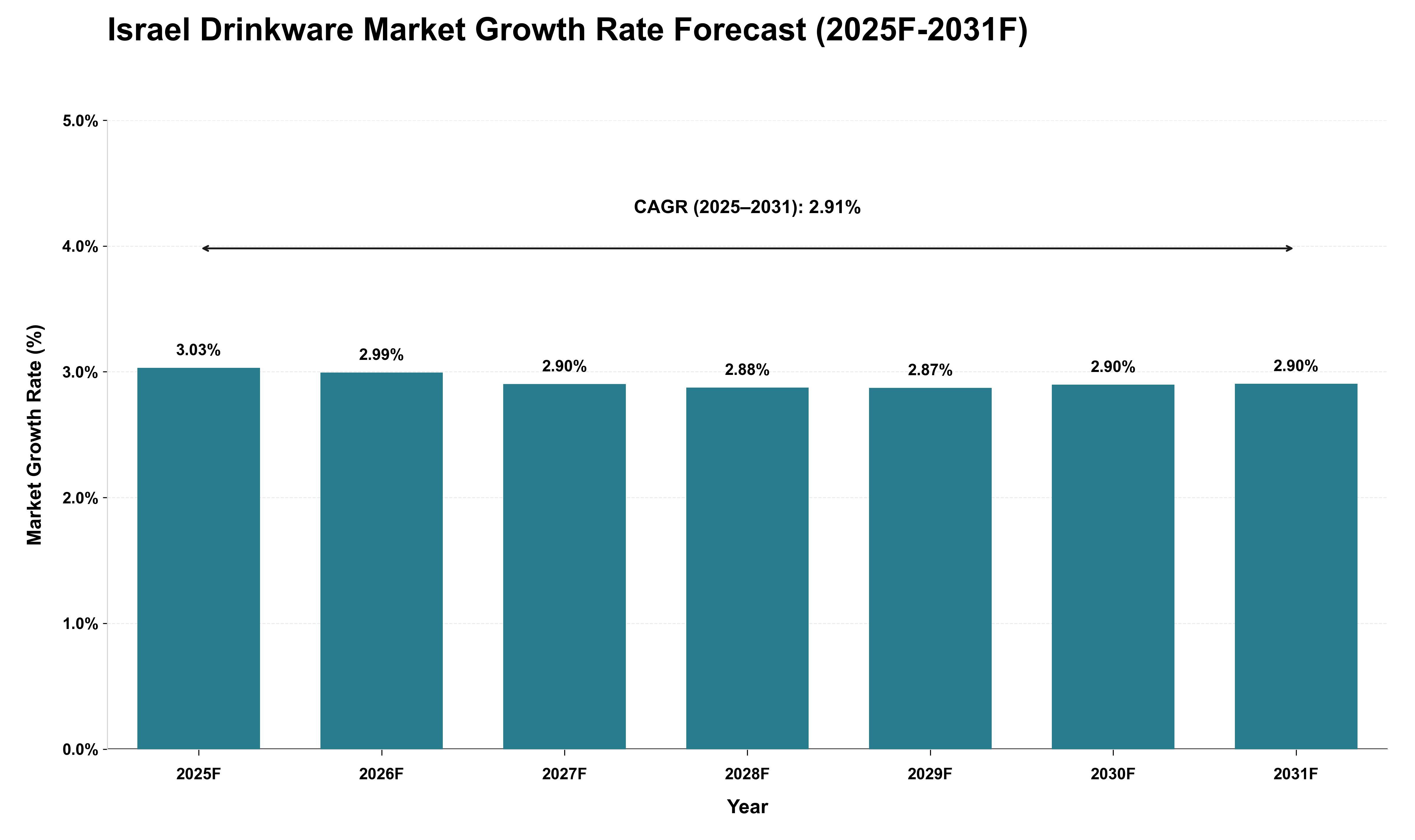
The Israel drinkware market will experience a compound annual growth rate (CAGR) of 2.91% from 2025 to 2031, driven primarily by evolving consumer preferences towards sustainable and innovative materials. As technological advancements in manufacturing processes emerge, the market will likely see increased adoption of eco-friendly alternatives that cater to health-conscious consumers. Additionally, the anticipated rise in disposable income will enhance purchasing power, further stimulating demand for premium drinkware products. Import dependencies may influence pricing dynamics, particularly as global supply chains adapt to shifting trade policies and environmental regulations. The gradual decline in growth rates over the forecast period suggests a transition towards more stable consumption patterns, reflecting cyclical trends typical of consumer goods markets where product differentiation and brand loyalty become increasingly significant factors influencing market performance.
Key Highlights of the Report:
- Israel Drinkware Market Outlook
- Market Size of Israel Drinkware Market, 2024
- Forecast of Israel Drinkware Market, 2031
- Historical Data and Forecast of Israel Drinkware Revenues & Volume for the Period 2021-2031
- Israel Drinkware Market Trend Evolution
- Israel Drinkware Market Drivers and Challenges
- Israel Drinkware Price Trends
- Israel Drinkware Porter`s Five Forces
- Israel Drinkware Industry Life Cycle
- Historical Data and Forecast of Israel Drinkware Market Revenues & Volume By Types for the Period 2021-2031
- Historical Data and Forecast of Israel Drinkware Market Revenues & Volume By Glass for the Period 2021-2031
- Historical Data and Forecast of Israel Drinkware Market Revenues & Volume By Stainless Steel for the Period 2021-2031
- Historical Data and Forecast of Israel Drinkware Market Revenues & Volume By Ceramic for the Period 2021-2031
- Historical Data and Forecast of Israel Drinkware Market Revenues & Volume By Polymer for the Period 2021-2031
- Historical Data and Forecast of Israel Drinkware Market Revenues & Volume By Other for the Period 2021-2031
- Historical Data and Forecast of Israel Drinkware Market Revenues & Volume By Applications for the Period 2021-2031
- Historical Data and Forecast of Israel Drinkware Market Revenues & Volume By Home for the Period 2021-2031
- Historical Data and Forecast of Israel Drinkware Market Revenues & Volume By Hotel for the Period 2021-2031
- Historical Data and Forecast of Israel Drinkware Market Revenues & Volume By Restaurant for the Period 2021-2031
- Historical Data and Forecast of Israel Drinkware Market Revenues & Volume By Others for the Period 2021-2031
- Historical Data and Forecast of Israel Drinkware Market Revenues & Volume By Product Types for the Period 2021-2031
- Historical Data and Forecast of Israel Drinkware Market Revenues & Volume By Water bottle for the Period 2021-2031
- Historical Data and Forecast of Israel Drinkware Market Revenues & Volume By Tumblers for the Period 2021-2031
- Historical Data and Forecast of Israel Drinkware Market Revenues & Volume By Shakers for the Period 2021-2031
- Historical Data and Forecast of Israel Drinkware Market Revenues & Volume By Infusers for the Period 2021-2031
- Historical Data and Forecast of Israel Drinkware Market Revenues & Volume By Mugs & Cups for the Period 2021-2031
- Israel Drinkware Import Export Trade Statistics
- Market Opportunity Assessment By Types
- Market Opportunity Assessment By Applications
- Market Opportunity Assessment By Product Types
- Israel Drinkware Top Companies Market Share
- Israel Drinkware Competitive Benchmarking By Technical and Operational Parameters
- Israel Drinkware Company Profiles
- Israel Drinkware Key Strategic Recommendations






































