Italy Energy Harvesting Market: Import Trend Analysis
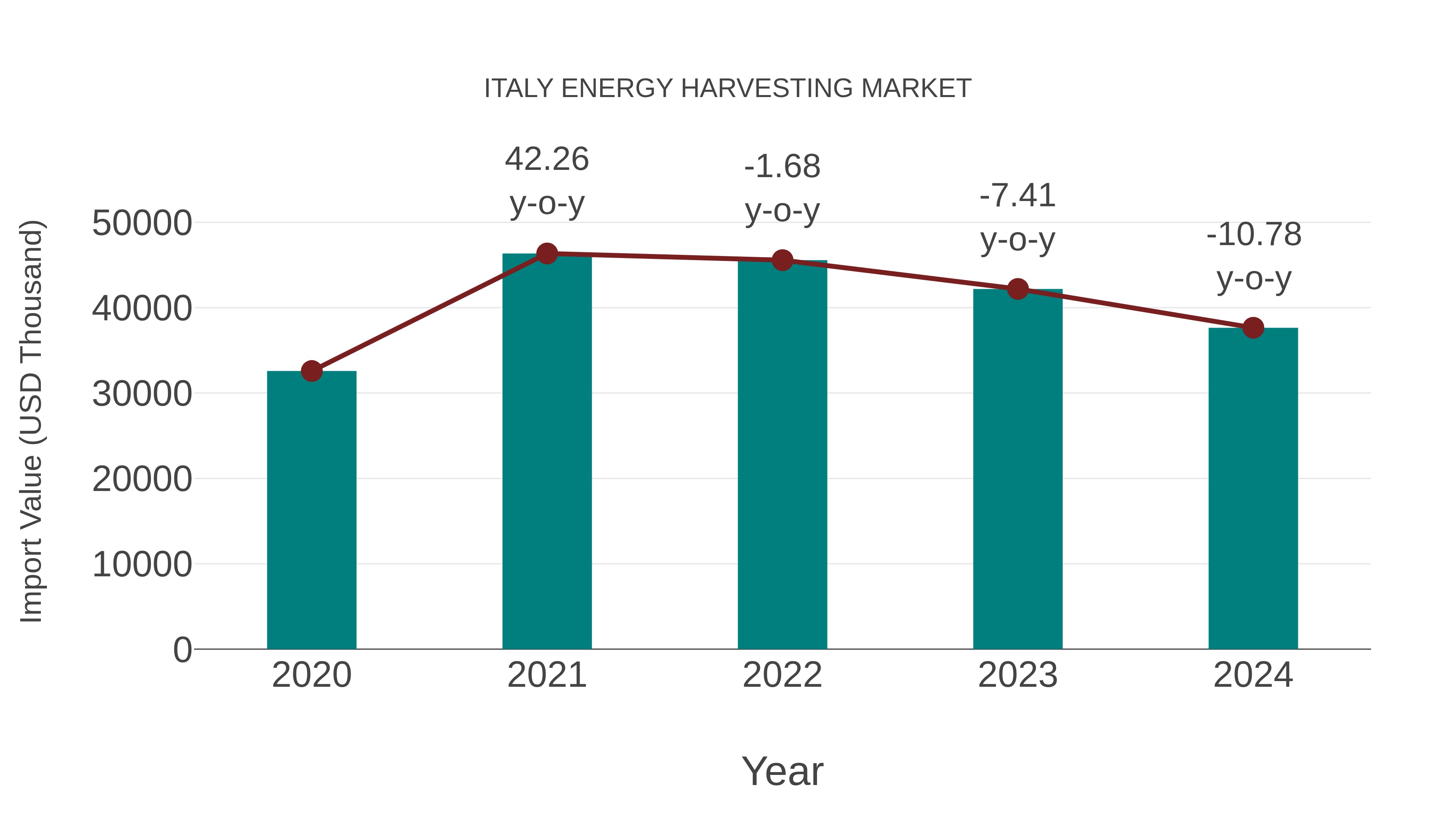
In 2024, Italy energy harvesting Market: Import Trend Analysis saw a significant uptick in imports, driven by a surge in demand for renewable energy solutions. The country import trend reflected a growing emphasis on sustainable energy sources, positioning Italy as a key player in the global energy harvesting Market: Import Trend Analysis.
Italy Energy Harvesting Market Overview
The Italy energy harvesting market is experiencing steady growth driven by the increasing adoption of renewable energy sources and the government`s efforts to reduce carbon emissions. The market is dominated by solar energy harvesting technologies, followed by wind and hydroelectric sources. The push towards sustainability and energy efficiency in various industries such as construction, agriculture, and automotive is fueling the demand for energy harvesting solutions. Key players in the market include Enel Green Power, E.ON Italia, and Eni SpA. Government incentives and favorable policies supporting renewable energy investments are expected to further boost the growth of the energy harvesting market in Italy in the coming years.
Italy Energy Harvesting Market Trends
In Italy, the energy harvesting market is experiencing growth driven by the increasing demand for renewable energy sources. Solar energy remains a key focus in the market, with advancements in photovoltaic technology leading to more efficient solar panels. Wind energy is also gaining traction, with the country`s favorable wind conditions supporting the development of wind farms. Additionally, there is a growing interest in other forms of energy harvesting such as kinetic and thermal energy, as companies explore innovative ways to capture and convert wasted energy into usable electricity. The government`s support through incentives and policies promoting renewable energy sources further boosts the market. Overall, the Italy energy harvesting market is witnessing a shift towards sustainable and eco-friendly energy solutions.
Italy Energy Harvesting Market Challenges
In the Italy energy harvesting market, some challenges faced include the high initial investment costs associated with implementing energy harvesting technologies, which can deter potential adopters. Additionally, there is a lack of standardization in the industry, leading to compatibility issues between different energy harvesting systems and devices. Moreover, the intermittent nature of renewable energy sources, such as solar or wind, poses a challenge in ensuring consistent and reliable power generation. Regulatory hurdles and complex permitting processes also hinder the widespread adoption of energy harvesting technologies in Italy. Overall, overcoming these challenges will require increased investment in research and development, as well as collaboration between industry stakeholders to drive innovation and create a more conducive environment for the growth of the energy harvesting market in Italy.
Italy Energy Harvesting Market Investment Opportunities
In Italy, the energy harvesting market presents promising investment opportunities, particularly in the renewable energy sector. Solar power generation is a key area for growth, with Italy being one of the leading countries in solar energy production. Investing in solar panel installations and solar farms can yield attractive returns, supported by government incentives and favorable regulatory frameworks promoting renewable energy adoption. Additionally, wind energy projects offer potential for investment, leveraging Italy`s coastal and mountainous regions for wind power generation. With a growing focus on sustainability and reducing carbon emissions, investing in energy harvesting technologies in Italy can not only generate financial returns but also contribute to the country`s transition towards a greener energy landscape.
Italy Energy Harvesting Market Government Policy
In Italy, government policies related to energy harvesting focus on promoting renewable energy sources and reducing greenhouse gas emissions. The government has implemented various incentives and support mechanisms to encourage the development of renewable energy projects, including solar, wind, and biomass. Italy has set ambitious renewable energy targets, aiming to increase the share of renewable energy in total energy consumption to 28% by 2030. Additionally, the government offers feed-in tariffs, tax incentives, and grants to support renewable energy investments. There are also regulations in place to ensure the integration of renewable energy into the grid and promote energy efficiency. Overall, Italy`s energy harvesting market is supported by a comprehensive framework of policies aimed at transitioning towards a more sustainable and environmentally friendly energy sector.
Italy Energy Harvesting Market Future Outlook
The Italy energy harvesting market is poised for significant growth in the coming years, driven by increasing environmental concerns, government initiatives promoting clean energy, and advancements in technology. The market is expected to witness a surge in demand for energy harvesting solutions across various sectors such as building automation, industrial automation, transportation, and consumer electronics. Key trends such as the adoption of IoT devices, the integration of energy harvesting technologies in wearable devices, and the focus on sustainable energy sources will further propel market growth. With a strong emphasis on reducing carbon emissions and achieving energy efficiency targets, Italy is likely to see a rise in investments in renewable energy solutions, making it a favorable market for energy harvesting technologies.
Key Highlights of the Report:
- Italy Energy Harvesting Market Outlook
- Market Size of Italy Energy Harvesting Market,2025
- Forecast of Italy Energy Harvesting Market, 2032
- Historical Data and Forecast of Italy Energy Harvesting Revenues & Volume for the Period 2022-2032F
- Italy Energy Harvesting Market Trend Evolution
- Italy Energy Harvesting Market Drivers and Challenges
- Italy Energy Harvesting Price Trends
- Italy Energy Harvesting Porter's Five Forces
- Italy Energy Harvesting Industry Life Cycle
- Historical Data and Forecast of Italy Energy Harvesting Market Revenues & Volume By Sensor for the Period 2022-2032F
- Historical Data and Forecast of Italy Energy Harvesting Market Revenues & Volume By IR & Temperature for the Period 2022-2032F
- Historical Data and Forecast of Italy Energy Harvesting Market Revenues & Volume By Pressure for the Period 2022-2032F
- Historical Data and Forecast of Italy Energy Harvesting Market Revenues & Volume By Humidity for the Period 2022-2032F
- Historical Data and Forecast of Italy Energy Harvesting Market Revenues & Volume By Component for the Period 2022-2032F
- Historical Data and Forecast of Italy Energy Harvesting Market Revenues & Volume By Controller & Transistor for the Period 2022-2032F
- Historical Data and Forecast of Italy Energy Harvesting Market Revenues & Volume By Capacitor & Battery for the Period 2022-2032F
- Historical Data and Forecast of Italy Energy Harvesting Market Revenues & Volume By Application for the Period 2022-2032F
- Historical Data and Forecast of Italy Energy Harvesting Market Revenues & Volume By Industrial for the Period 2022-2032F
- Historical Data and Forecast of Italy Energy Harvesting Market Revenues & Volume By Automation for the Period 2022-2032F
- Historical Data and Forecast of Italy Energy Harvesting Market Revenues & Volume By Transportation for the Period 2022-2032F
- Historical Data and Forecast of Italy Energy Harvesting Market Revenues & Volume By Consumer electronics for the Period 2022-2032F
- Italy Energy Harvesting Import Export Trade Statistics
- Market Opportunity Assessment By Sensor
- Market Opportunity Assessment By Component
- Market Opportunity Assessment By Application
- Italy Energy Harvesting Top Companies Market Share
- Italy Energy Harvesting Competitive Benchmarking By Technical and Operational Parameters
- Italy Energy Harvesting Company Profiles
- Italy Energy Harvesting Key Strategic Recommendations






































