Italy Glufosinate Market: Import Trend Analysis
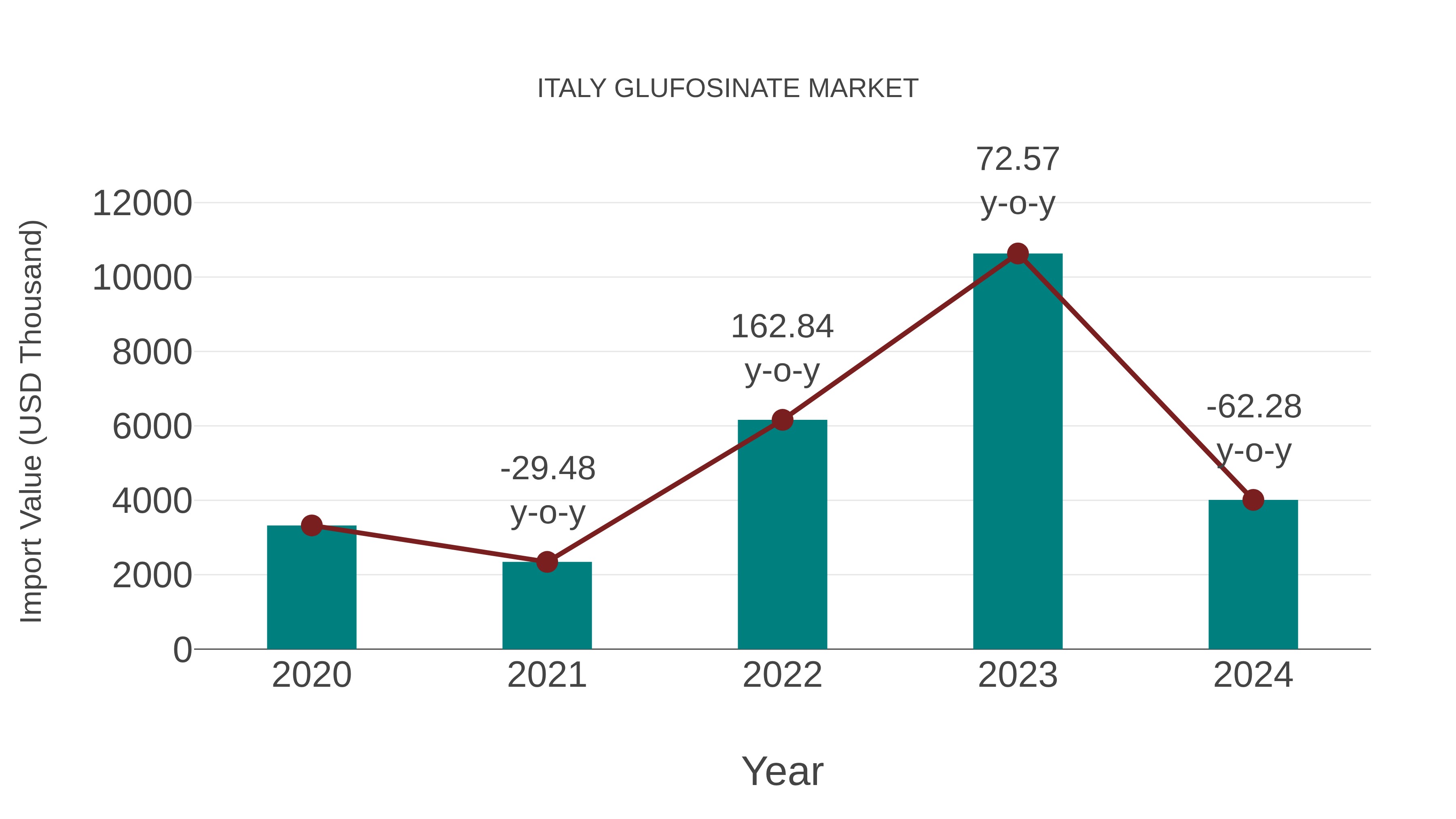
In 2024, Italy glufosinate Market: Import Trend Analysis saw a notable increase in imports. This trend was driven by rising demand for the herbicide within the country. Italy import data for glufosinate reflected a growing reliance on foreign suppliers to meet domestic needs.
Italy Glufosinate Market Synopsis
The Italy Glufosinate market is experiencing steady growth due to the increasing demand for herbicides in the agriculture sector. Glufosinate is a widely used non-selective herbicide that is effective in controlling a broad spectrum of weeds. The market is driven by the shift towards sustainable farming practices, as Glufosinate is considered less harmful to the environment compared to other herbicides. Additionally, the rising adoption of genetically modified crops that are resistant to Glufosinate is contributing to market growth. Key players in the Italy Glufosinate market include Bayer AG, BASF SE, and Syngenta AG, who are focusing on product innovations and strategic partnerships to gain a competitive edge in the market. Overall, the Italy Glufosinate market is poised for further expansion in the coming years.
Italy Glufosinate Market Trends
The Italy Glufosinate market is witnessing growth due to the increasing adoption of herbicides in the agriculture sector for weed control. Farmers are shifting towards more sustainable and environmentally friendly practices, driving the demand for Glufosinate as a non-selective herbicide. The trend towards organic farming is also creating opportunities for Glufosinate as it is considered a safer alternative to other chemical herbicides. Additionally, the government`s initiatives to promote sustainable agriculture and the rising awareness among farmers about the benefits of using herbicides are further fueling market growth. With advancements in technology and product innovation, there is a potential for the Italy Glufosinate market to expand further in the coming years.
Italy Glufosinate Market Challenges
In the Italy Glufosinate market, one of the key challenges faced is the increasing regulatory scrutiny and restrictions on the use of agrochemicals. Italy has been placing greater emphasis on environmental protection and human health safety, leading to stricter regulations on pesticide usage. This regulatory environment poses a challenge for Glufosinate manufacturers and distributors who must navigate complex approval processes and ensure compliance with evolving standards. Additionally, competition from alternative herbicide products and the need to constantly innovate to meet changing market demands also present challenges for companies operating in the Italy Glufosinate market. Overall, staying abreast of regulatory changes, adapting to market dynamics, and maintaining product efficacy are crucial challenges in this industry.
Italy Glufosinate Market Investment Opportunities
The Italy Glufosinate market is primarily driven by the increasing demand for herbicides in the agriculture sector to enhance crop yield and quality. The growing adoption of genetically modified (GM) crops that are tolerant to glufosinate herbicides is also a significant factor driving market growth. Additionally, the rising focus on sustainable farming practices and the need for efficient weed control solutions are further boosting the demand for glufosinate in Italy. Government initiatives to promote modern farming techniques and advancements in agricultural technology are expected to drive the market further. Moreover, the ease of application and effectiveness of glufosinate in controlling a broad spectrum of weeds further contribute to its growing popularity among Italian farmers.
Italy Glufosinate Market Government Polices
The Italy Glufosinate Market is regulated by the European Union`s regulations on pesticide use, including the approval and monitoring of active substances such as glufosinate. Italy, as an EU member state, follows these regulations and enforces them through its national legislation. The main policy framework governing the market includes the Sustainable Use of Pesticides Directive, which aims to reduce the risks and impacts of pesticide use on human health and the environment. Additionally, Italy has its own regulations on pesticide registration, labeling, and usage, which apply to glufosinate products. The government also promotes integrated pest management practices to minimize reliance on chemical pesticides like glufosinate. Compliance with these policies is crucial for companies operating in the Italy Glufosinate Market to ensure product registration and market access.
Italy Glufosinate Market Future Outlook
The future outlook for the Italy Glufosinate market is positive, with continued growth expected in the coming years. Factors such as increasing demand for herbicides due to rising agricultural activities, and the growing adoption of genetically modified crops that are resistant to glufosinate, are likely to drive market expansion. Additionally, advancements in biotechnology and research efforts to develop more effective and sustainable herbicide solutions are anticipated to further propel market growth. However, regulatory challenges and environmental concerns surrounding the use of glufosinate may pose some limitations to market expansion. Overall, the Italy Glufosinate market is projected to witness steady growth driven by technological advancements and increasing agricultural activities, with a focus on sustainable and environmentally-friendly solutions.
Key Highlights of the Report:
- Italy Glufosinate Market Outlook
- Market Size of Italy Glufosinate Market, 2025
- Forecast of Italy Glufosinate Market, 2032
- Historical Data and Forecast of Italy Glufosinate Revenues & Volume for the Period 2022 - 2032F
- Italy Glufosinate Market Trend Evolution
- Italy Glufosinate Market Drivers and Challenges
- Italy Glufosinate Price Trends
- Italy Glufosinate Porter's Five Forces
- Italy Glufosinate Industry Life Cycle
- Historical Data and Forecast of Italy Glufosinate Market Revenues & Volume By Crop Type for the Period 2022 - 2032F
- Historical Data and Forecast of Italy Glufosinate Market Revenues & Volume By Genetically Modified Crops for the Period 2022 - 2032F
- Historical Data and Forecast of Italy Glufosinate Market Revenues & Volume By Conventional Crops for the Period 2022 - 2032F
- Historical Data and Forecast of Italy Glufosinate Market Revenues & Volume By Form for the Period 2022 - 2032F
- Historical Data and Forecast of Italy Glufosinate Market Revenues & Volume By Liquid Formulation for the Period 2022 - 2032F
- Historical Data and Forecast of Italy Glufosinate Market Revenues & Volume By Dry Formulation for the Period 2022 - 2032F
- Historical Data and Forecast of Italy Glufosinate Market Revenues & Volume By Application for the Period 2022 - 2032F
- Historical Data and Forecast of Italy Glufosinate Market Revenues & Volume By Agricultural for the Period 2022 - 2032F
- Historical Data and Forecast of Italy Glufosinate Market Revenues & Volume By Non Agricultural for the Period 2022 - 2032F
- Italy Glufosinate Import Export Trade Statistics
- Market Opportunity Assessment By Crop Type
- Market Opportunity Assessment By Form
- Market Opportunity Assessment By Application
- Italy Glufosinate Top Companies Market Share
- Italy Glufosinate Competitive Benchmarking By Technical and Operational Parameters
- Italy Glufosinate Company Profiles
- Italy Glufosinate Key Strategic Recommendations






































