Italy Home Networking Device Market: Import Trend Analysis
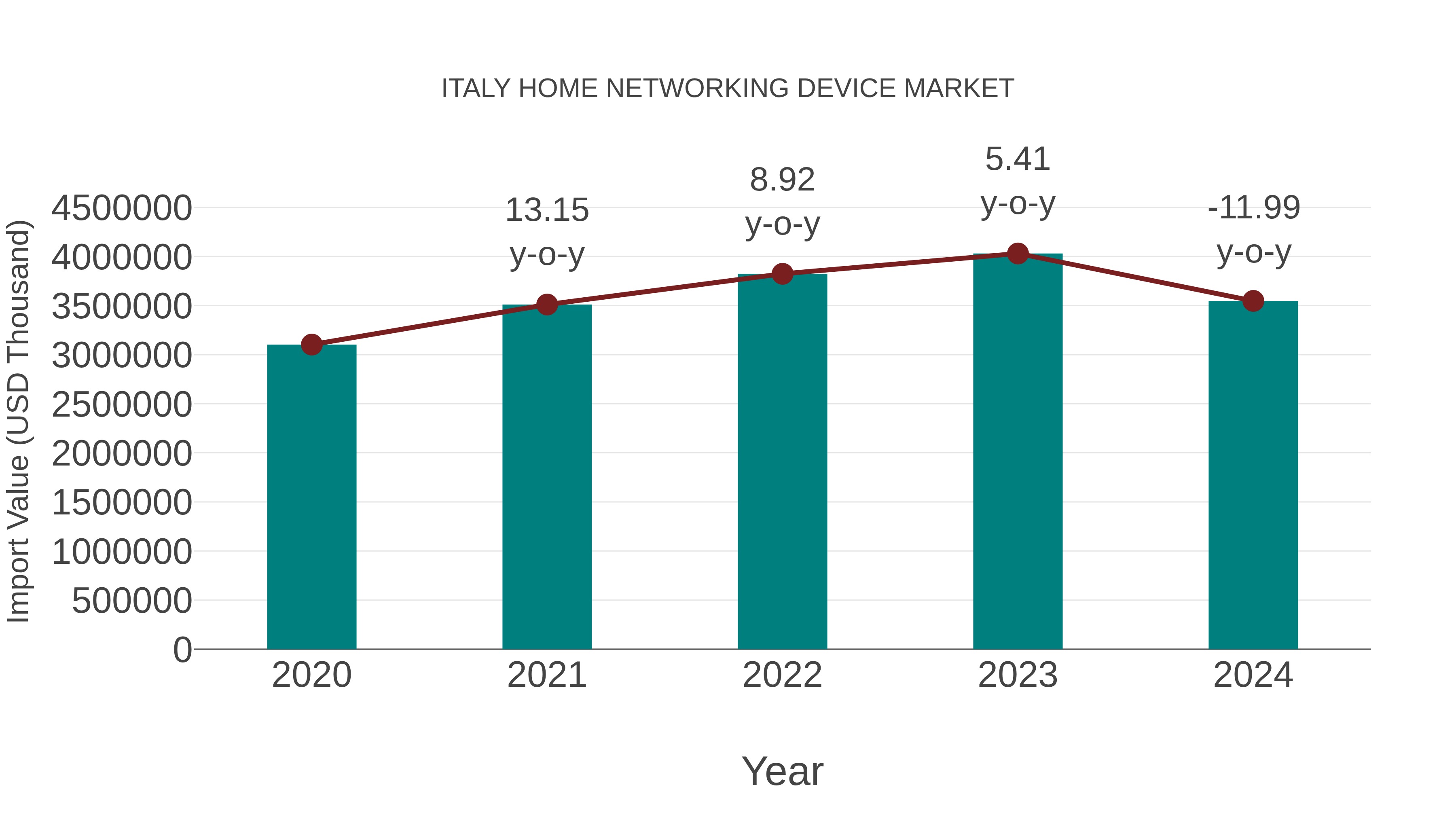
In 2024, Italy home networking device Market: Import Trend Analysis saw a steady increase in imports. The trend indicated a growing demand for networking products within the country. Italy import data reflected a positive outlook for the Market: Import Trend Analysis during that period.
Italy Home Networking Device Market Overview
The Italy home networking device market is experiencing steady growth driven by increasing demand for smart home technologies and the rise in remote working trends. Consumers are investing in devices such as Wi-Fi routers, mesh systems, range extenders, and powerline adapters to enhance their home network connectivity and support multiple devices. The market is characterized by a competitive landscape with key players including TP-Link, Netgear, D-Link, and Asus competing on factors like price, performance, and technological innovation. The adoption of high-speed internet services and the proliferation of IoT devices are further fueling the demand for home networking devices in Italy. As consumers seek seamless connectivity and reliable network performance, manufacturers are focusing on developing advanced solutions to cater to evolving consumer needs in the Italian market.
Italy Home Networking Device Market Trends
Currently, the home networking device market in Italy is experiencing a strong trend towards smart home technology and connectivity. Consumers are increasingly seeking devices that can seamlessly integrate with their home networks to create a more efficient and convenient living environment. This includes smart speakers, smart thermostats, security cameras, and other IoT devices that can be controlled remotely via smartphone apps or voice assistants. There is also a growing demand for faster and more reliable networking solutions to support the increasing number of connected devices in households. Additionally, there is a focus on energy efficiency and sustainability, driving the adoption of networking devices that help reduce energy consumption. Overall, the Italy home networking device market is moving towards a more interconnected and intelligent home ecosystem.
Italy Home Networking Device Market Challenges
In the Italy home networking device market, challenges arise due to the increasing complexity of home networks, compatibility issues, and the need for seamless connectivity across various devices. Consumers often face difficulties in setting up and managing their home networks, especially when incorporating different brands and types of devices. Additionally, the rapid advancement of technology leads to obsolescence of older devices, requiring frequent upgrades to ensure compatibility and security. Competition among manufacturers and the proliferation of smart home devices further add to the challenges by creating a fragmented market with a wide range of options for consumers to choose from. As a result, companies in the Italy home networking device market need to innovate constantly, provide user-friendly solutions, and offer reliable customer support to stay competitive in this dynamic industry.
Italy Home Networking Device Market Investment Opportunities
The Italy home networking device market offers promising investment opportunities due to the increasing demand for smart home solutions and the growing adoption of connected devices. Investments in advanced Wi-Fi systems, smart home hubs, and home automation devices are particularly attractive as consumers seek to enhance their home connectivity and control. Additionally, the rise of remote work and online learning has further fueled the need for reliable and high-performance networking devices, presenting opportunities for investors to capitalize on this trend. With the Italian market showing potential for growth in the home networking sector, strategic investments in innovative technologies and solutions can position investors well to benefit from the evolving consumer preferences and market dynamics.
Italy Home Networking Device Market Government Policy
In Italy, government policies related to the home networking device market focus on ensuring the security and privacy of consumer data. The Italian government has implemented regulations that require manufacturers to comply with strict data protection standards and ensure that devices are secure from cyber threats. Additionally, there are guidelines in place to promote interoperability among different devices to enhance the overall user experience and encourage innovation in the market. The government also encourages the adoption of energy-efficient technologies to reduce the environmental impact of home networking devices. Overall, the regulatory framework in Italy aims to safeguard consumer interests, promote technological advancement, and create a competitive and sustainable home networking device market.
Italy Home Networking Device Market Future Outlook
The future outlook for the Italy home networking device market appears promising, driven by the increasing adoption of smart home technologies, growing internet penetration, and the rise in remote work and online learning trends. Consumers are seeking reliable and high-speed connectivity solutions to support their connected devices, creating a demand for advanced home networking devices such as routers, extenders, and mesh systems. Additionally, the proliferation of Internet of Things (IoT) devices and the emergence of 5G technology are expected to further fuel market growth. However, factors such as data privacy concerns, cybersecurity risks, and price sensitivity among consumers could present challenges for market expansion. Overall, the Italy home networking device market is poised for steady growth in the coming years as technology continues to play a central role in people`s daily lives.
Key Highlights of the Report:
- Italy Home Networking Device Market Outlook
- Market Size of Italy Home Networking Device Market,2025
- Forecast of Italy Home Networking Device Market, 2032
- Historical Data and Forecast of Italy Home Networking Device Revenues & Volume for the Period 2022-2032F
- Italy Home Networking Device Market Trend Evolution
- Italy Home Networking Device Market Drivers and Challenges
- Italy Home Networking Device Price Trends
- Italy Home Networking Device Porter's Five Forces
- Italy Home Networking Device Industry Life Cycle
- Historical Data and Forecast of Italy Home Networking Device Market Revenues & Volume By Product Type for the Period 2022-2032F
- Historical Data and Forecast of Italy Home Networking Device Market Revenues & Volume By Routers for the Period 2022-2032F
- Historical Data and Forecast of Italy Home Networking Device Market Revenues & Volume By Modems for the Period 2022-2032F
- Historical Data and Forecast of Italy Home Networking Device Market Revenues & Volume By Wi-Fi Extenders for the Period 2022-2032F
- Historical Data and Forecast of Italy Home Networking Device Market Revenues & Volume By Smart Hubs for the Period 2022-2032F
- Historical Data and Forecast of Italy Home Networking Device Market Revenues & Volume By Technology Type for the Period 2022-2032F
- Historical Data and Forecast of Italy Home Networking Device Market Revenues & Volume By Dual-band and Tri-band for the Period 2022-2032F
- Historical Data and Forecast of Italy Home Networking Device Market Revenues & Volume By Cable and DSL for the Period 2022-2032F
- Historical Data and Forecast of Italy Home Networking Device Market Revenues & Volume By Mesh and Signal Boosters for the Period 2022-2032F
- Historical Data and Forecast of Italy Home Networking Device Market Revenues & Volume By AI-integrated and Voice-controlled for the Period 2022-2032F
- Historical Data and Forecast of Italy Home Networking Device Market Revenues & Volume By End User for the Period 2022-2032F
- Historical Data and Forecast of Italy Home Networking Device Market Revenues & Volume By Residential Users for the Period 2022-2032F
- Historical Data and Forecast of Italy Home Networking Device Market Revenues & Volume By Homeowners and Renters for the Period 2022-2032F
- Historical Data and Forecast of Italy Home Networking Device Market Revenues & Volume By Large Homeowners for the Period 2022-2032F
- Historical Data and Forecast of Italy Home Networking Device Market Revenues & Volume By Smart Home Enthusiasts for the Period 2022-2032F
- Historical Data and Forecast of Italy Home Networking Device Market Revenues & Volume By Application for the Period 2022-2032F
- Historical Data and Forecast of Italy Home Networking Device Market Revenues & Volume By High-speed Internet Access for the Period 2022-2032F
- Historical Data and Forecast of Italy Home Networking Device Market Revenues & Volume By Internet Connectivity for the Period 2022-2032F
- Historical Data and Forecast of Italy Home Networking Device Market Revenues & Volume By Network Coverage Expansion for the Period 2022-2032F
- Historical Data and Forecast of Italy Home Networking Device Market Revenues & Volume By Connected Home Automation for the Period 2022-2032F
- Italy Home Networking Device Import Export Trade Statistics
- Market Opportunity Assessment By Product Type
- Market Opportunity Assessment By Technology Type
- Market Opportunity Assessment By End User
- Market Opportunity Assessment By Application
- Italy Home Networking Device Top Companies Market Share
- Italy Home Networking Device Competitive Benchmarking By Technical and Operational Parameters
- Italy Home Networking Device Company Profiles
- Italy Home Networking Device Key Strategic Recommendations






































