Italy Hot Tub Market: Import Trend Analysis
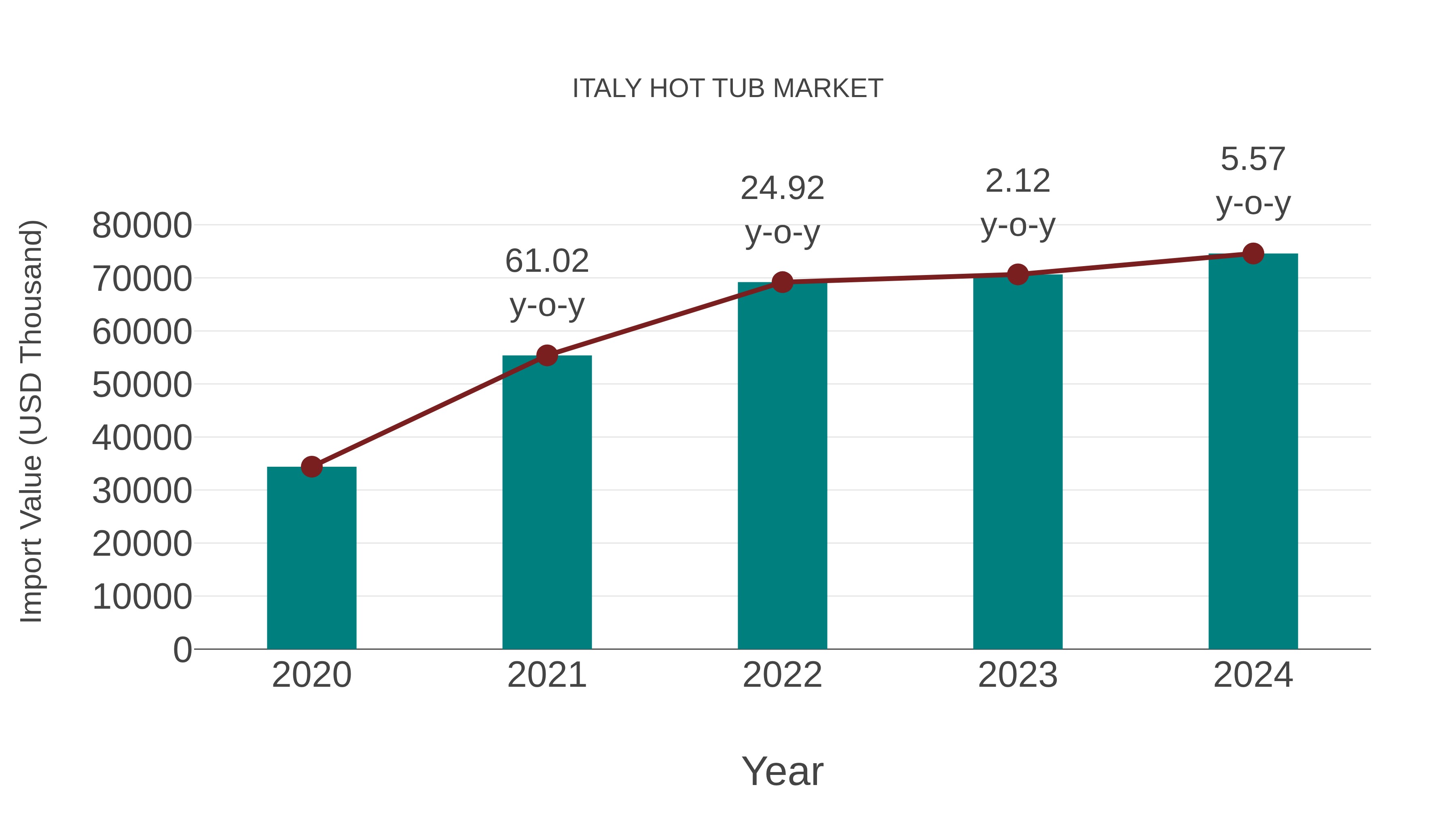
In 2024, Italy hot tub Market: Import Trend Analysis saw a significant increase in imports, driven by a growing demand for high-quality products. The trend indicates a shift towards imported hot tubs, reflecting consumers` preference for diverse options and advanced features in the Market: Import Trend Analysis.
Italy Hot Tub Market Overview
The hot tub market in Italy is experiencing steady growth, driven by increasing consumer demand for relaxation and wellness products. The market is characterized by a wide range of offerings, from affordable inflatable hot tubs to high-end luxury models with advanced features. Key trends in the Italian hot tub market include a growing focus on energy efficiency, eco-friendly materials, and smart technology integration. Italian consumers are increasingly seeking hot tubs that provide therapeutic benefits, such as hydrotherapy and aromatherapy. The market is also influenced by the country`s strong cultural tradition of enjoying outdoor living spaces, which has led to a rise in demand for outdoor hot tubs and spa installations. Overall, the Italy hot tub market presents opportunities for manufacturers to innovate and cater to evolving consumer preferences for wellness and relaxation products.
Italy Hot Tub Market Trends
The Italy hot tub market is experiencing several key trends. Firstly, there is a growing demand for energy-efficient and environmentally friendly hot tubs, driven by increasing consumer awareness of sustainability. Additionally, there is a shift towards smart hot tubs equipped with features such as Wi-Fi connectivity, app control, and integrated speakers for a more personalized and convenient user experience. Another trend is the popularity of compact and space-saving hot tub models, catering to urban dwellers with limited outdoor space. Furthermore, wellness-focused features such as hydrotherapy jets, aromatherapy systems, and LED lighting are also in high demand as consumers seek relaxation and stress relief benefits from their hot tubs. Overall, the Italy hot tub market is evolving to meet the needs of modern consumers looking for advanced technology, sustainability, and wellness features in their hot tubs.
Italy Hot Tub Market Challenges
In the Italy hot tub market, some of the key challenges faced by companies include intense competition from both domestic and international manufacturers, economic uncertainty impacting consumer spending, and changing consumer preferences towards more customized and eco-friendly products. Regulatory hurdles related to safety and environmental standards also pose challenges for manufacturers in terms of compliance and cost implications. Additionally, the seasonality of the hot tub market in Italy, with demand peaking during the summer months, can lead to fluctuations in sales and require effective marketing strategies to sustain business throughout the year. Overall, companies operating in the Italy hot tub market need to navigate these challenges by continuously innovating, adapting to evolving consumer trends, and ensuring compliance with regulations to remain competitive in the industry.
Italy Hot Tub Market Investment Opportunities
The Italy hot tub market presents promising investment opportunities due to the increasing demand for wellness and relaxation products. With a growing trend towards self-care and home-based leisure activities, hot tubs are becoming popular among Italian consumers seeking to enhance their well-being. Investing in the Italy hot tub market could be lucrative as the country`s tourism industry also contributes to the demand for luxury amenities like hot tubs in vacation rentals and resorts. Additionally, advancements in technology have led to the development of energy-efficient and smart hot tubs, appealing to environmentally conscious consumers. Partnering with established hot tub manufacturers or retailers in Italy, or introducing innovative and sustainable hot tub solutions to the market, could result in a successful investment venture within this niche and evolving industry.
Italy Hot Tub Market Government Policy
In Italy, government policies related to the hot tub market primarily focus on ensuring product safety and compliance with regulations. Hot tub manufacturers are required to adhere to specific standards set by the European Union, such as the CE marking for electrical safety and energy efficiency. Additionally, there are regulations in place to monitor water quality and hygiene standards to protect consumers. The Italian government also encourages the use of environmentally friendly materials and energy-efficient technologies in hot tub production to promote sustainability. Overall, the regulatory framework aims to safeguard consumer interests, promote market transparency, and uphold industry standards within the hot tub market in Italy.
Italy Hot Tub Market Future Outlook
The future outlook for the Italy hot tub market appears promising, driven by a growing trend towards wellness and relaxation, coupled with an increasing focus on home improvement and luxury living. As consumers seek to create personalized spa-like experiences within their own homes, the demand for hot tubs is expected to rise. Additionally, advancements in technology have led to more energy-efficient and customizable hot tub options, appealing to a broader range of consumers. The tourism industry in Italy, known for its thermal spas and wellness retreats, also influences the popularity of hot tubs among residents and visitors alike. Overall, the Italy hot tub market is poised for steady growth as the emphasis on self-care and lifestyle enhancements continues to shape consumer preferences.
Key Highlights of the Report:
- Italy Hot Tub Market Outlook
- Market Size of Italy Hot Tub Market,2025
- Forecast of Italy Hot Tub Market, 2032
- Historical Data and Forecast of Italy Hot Tub Revenues & Volume for the Period 2022-2032F
- Italy Hot Tub Market Trend Evolution
- Italy Hot Tub Market Drivers and Challenges
- Italy Hot Tub Price Trends
- Italy Hot Tub Porter's Five Forces
- Italy Hot Tub Industry Life Cycle
- Historical Data and Forecast of Italy Hot Tub Market Revenues & Volume By Type for the Period 2022-2032F
- Historical Data and Forecast of Italy Hot Tub Market Revenues & Volume By Inflatable for the Period 2022-2032F
- Historical Data and Forecast of Italy Hot Tub Market Revenues & Volume By Portable for the Period 2022-2032F
- Historical Data and Forecast of Italy Hot Tub Market Revenues & Volume By Swim Spa for the Period 2022-2032F
- Historical Data and Forecast of Italy Hot Tub Market Revenues & Volume By Wooden for the Period 2022-2032F
- Historical Data and Forecast of Italy Hot Tub Market Revenues & Volume By Seating Capacity for the Period 2022-2032F
- Historical Data and Forecast of Italy Hot Tub Market Revenues & Volume By 2-4 Seats for the Period 2022-2032F
- Historical Data and Forecast of Italy Hot Tub Market Revenues & Volume By 5-6 Seats for the Period 2022-2032F
- Historical Data and Forecast of Italy Hot Tub Market Revenues & Volume By 7+ Seats for the Period 2022-2032F
- Historical Data and Forecast of Italy Hot Tub Market Revenues & Volume By Others for the Period 2022-2032F
- Historical Data and Forecast of Italy Hot Tub Market Revenues & Volume By Material for the Period 2022-2032F
- Historical Data and Forecast of Italy Hot Tub Market Revenues & Volume By Acrylic for the Period 2022-2032F
- Historical Data and Forecast of Italy Hot Tub Market Revenues & Volume By Fiberglass for the Period 2022-2032F
- Historical Data and Forecast of Italy Hot Tub Market Revenues & Volume By Vinyl for the Period 2022-2032F
- Historical Data and Forecast of Italy Hot Tub Market Revenues & Volume By Others for the Period 2022-2032F
- Historical Data and Forecast of Italy Hot Tub Market Revenues & Volume By Application for the Period 2022-2032F
- Historical Data and Forecast of Italy Hot Tub Market Revenues & Volume By Residential for the Period 2022-2032F
- Historical Data and Forecast of Italy Hot Tub Market Revenues & Volume By Commercial for the Period 2022-2032F
- Historical Data and Forecast of Italy Hot Tub Market Revenues & Volume By Others for the Period 2022-2032F
- Historical Data and Forecast of Italy Hot Tub Market Revenues & Volume By Distribution Channel for the Period 2022-2032F
- Historical Data and Forecast of Italy Hot Tub Market Revenues & Volume By Online Retail for the Period 2022-2032F
- Historical Data and Forecast of Italy Hot Tub Market Revenues & Volume By Specialty Stores for the Period 2022-2032F
- Historical Data and Forecast of Italy Hot Tub Market Revenues & Volume By Supermarkets for the Period 2022-2032F
- Historical Data and Forecast of Italy Hot Tub Market Revenues & Volume By Others for the Period 2022-2032F
- Italy Hot Tub Import Export Trade Statistics
- Market Opportunity Assessment By Type
- Market Opportunity Assessment By Seating Capacity
- Market Opportunity Assessment By Material
- Market Opportunity Assessment By Application
- Market Opportunity Assessment By Distribution Channel
- Italy Hot Tub Top Companies Market Share
- Italy Hot Tub Competitive Benchmarking By Technical and Operational Parameters
- Italy Hot Tub Company Profiles
- Italy Hot Tub Key Strategic Recommendations






































